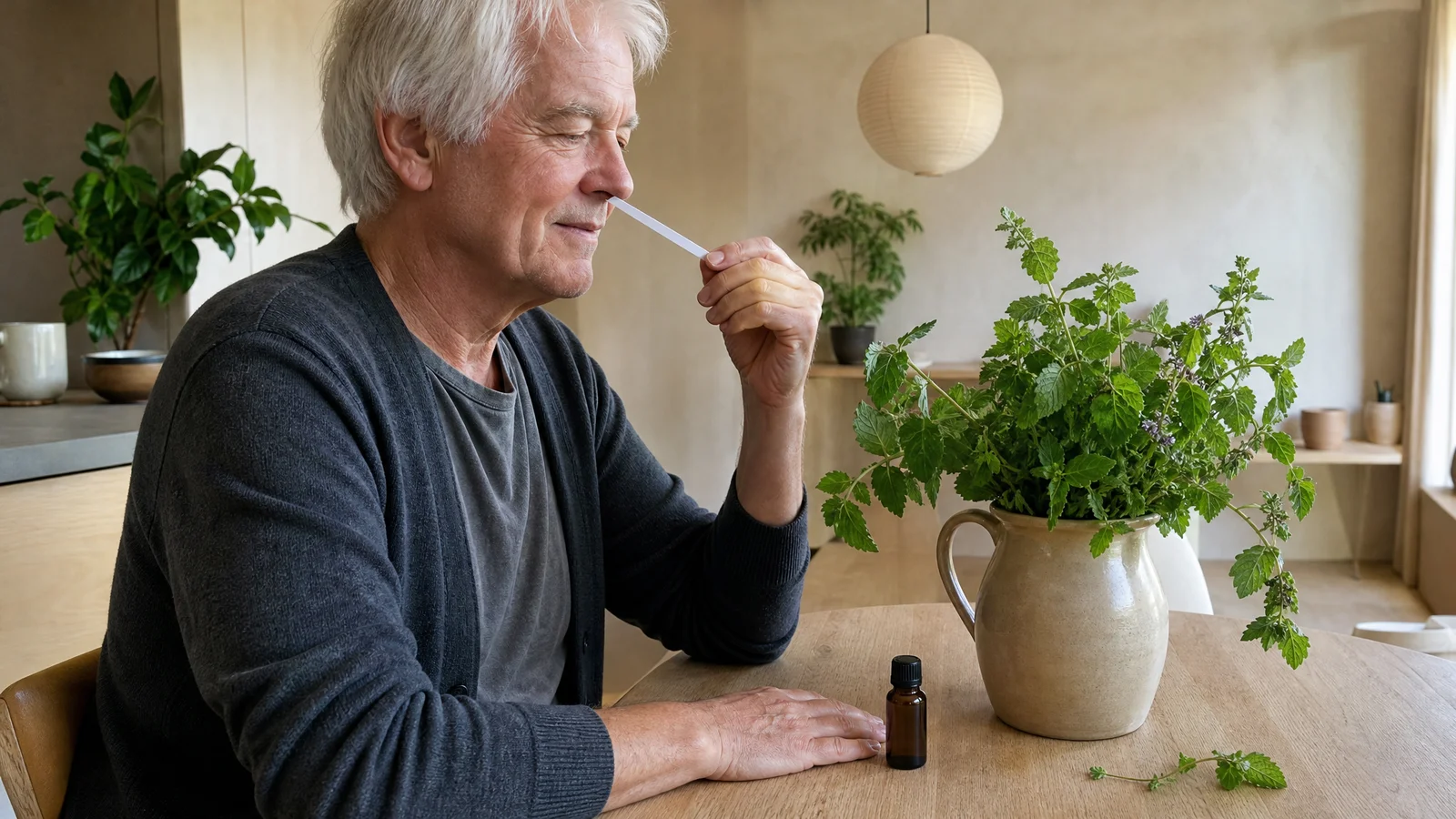
Melissa Oil FAQ: Straight Answers to Common Questions
Melissa is one of those oils people ask careful questions about, partly because it is rare and partly because the name comes with a few look-alikes. These are the questions we would expect from someone standing at the counter, answered as plainly as we can.
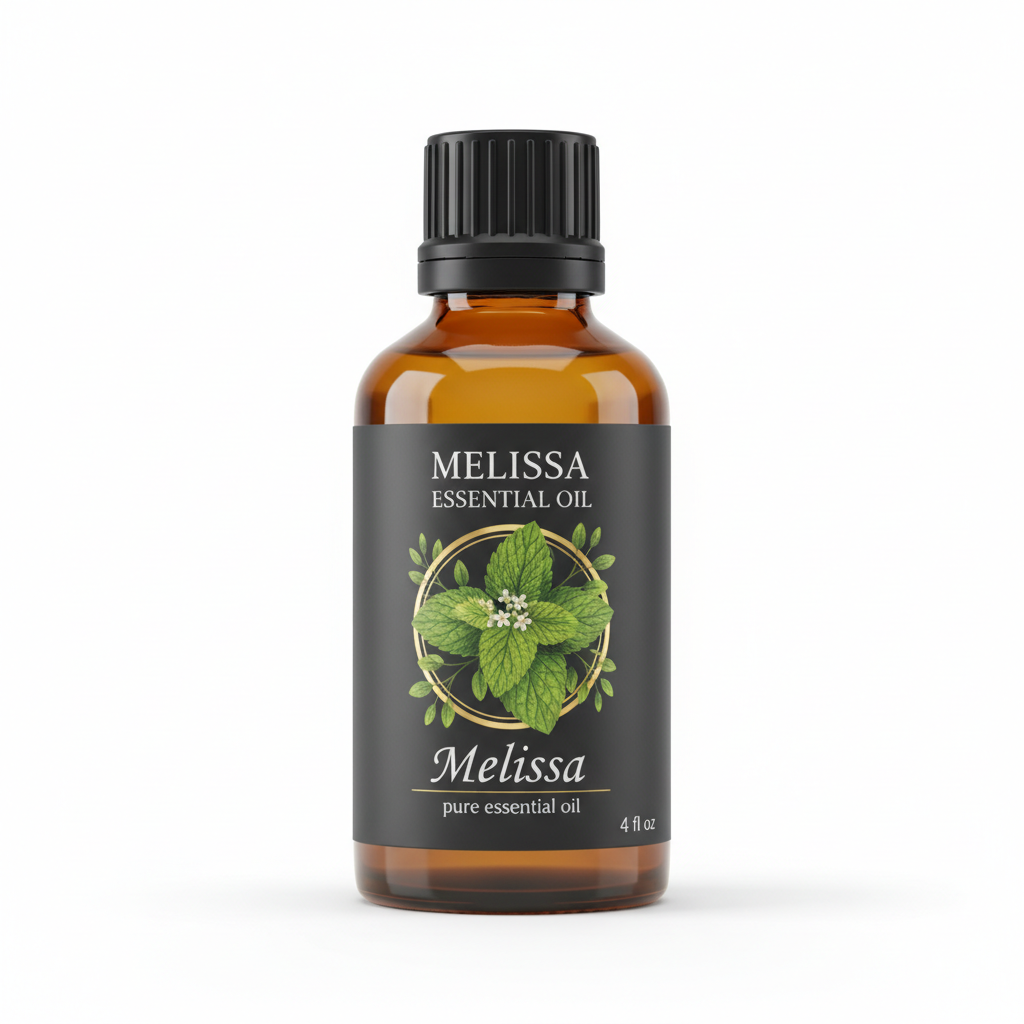
Melissa Essential Oil
Our own Melissa Essential Oil, in sizes from 0.5 oz to bulk.
From $23.99
Shop Now →Is melissa oil the same as lemon balm oil?
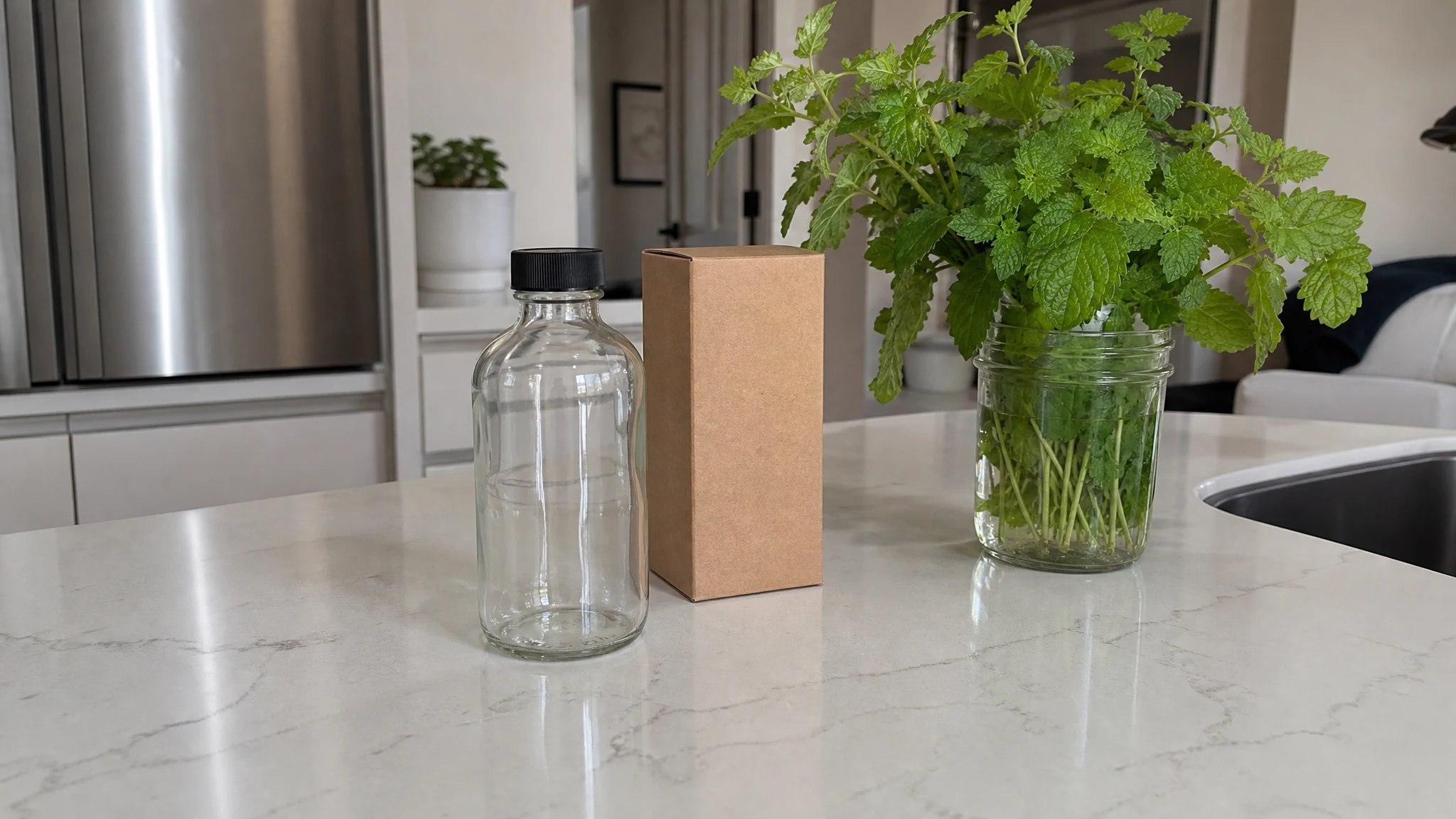
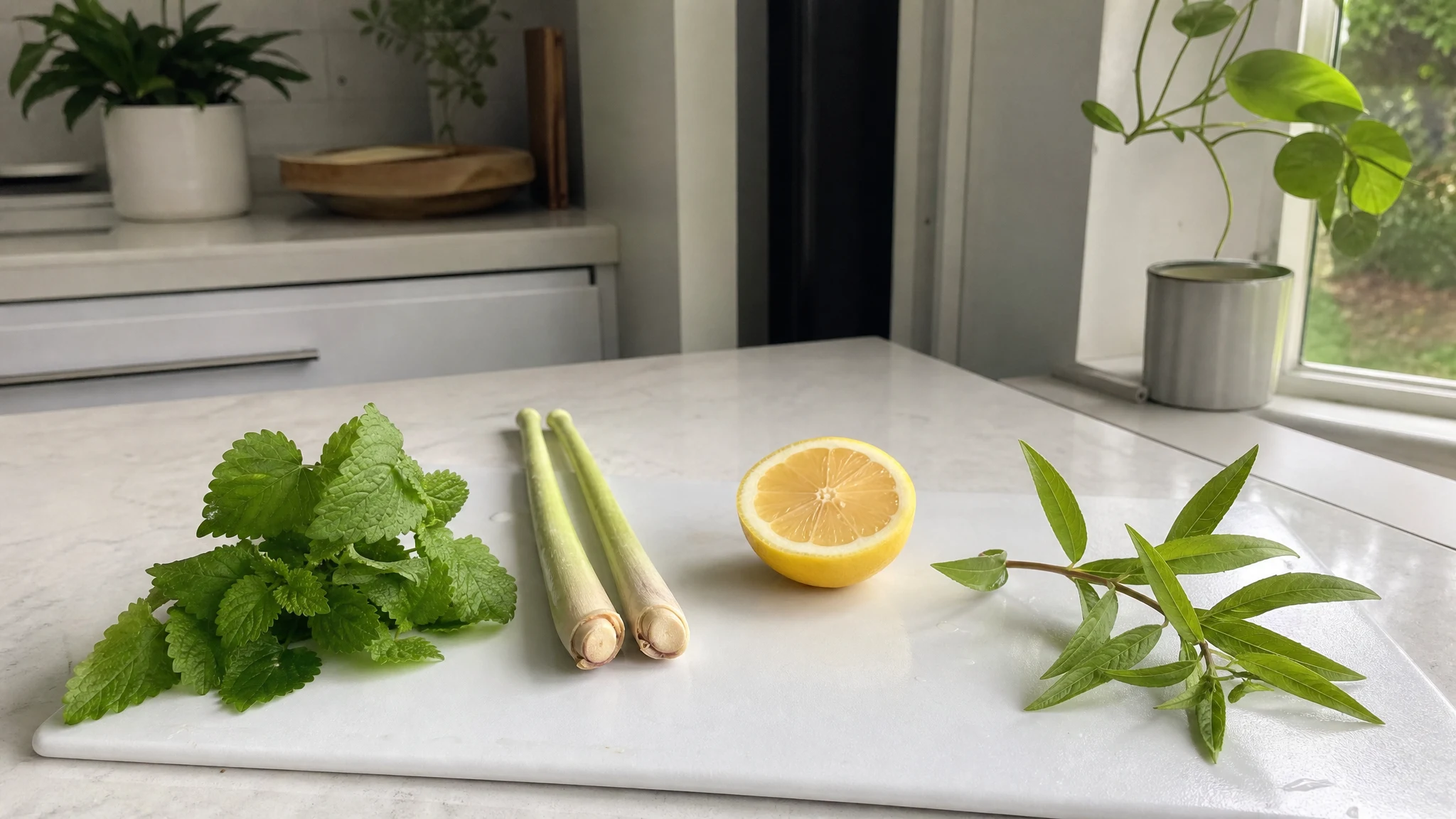
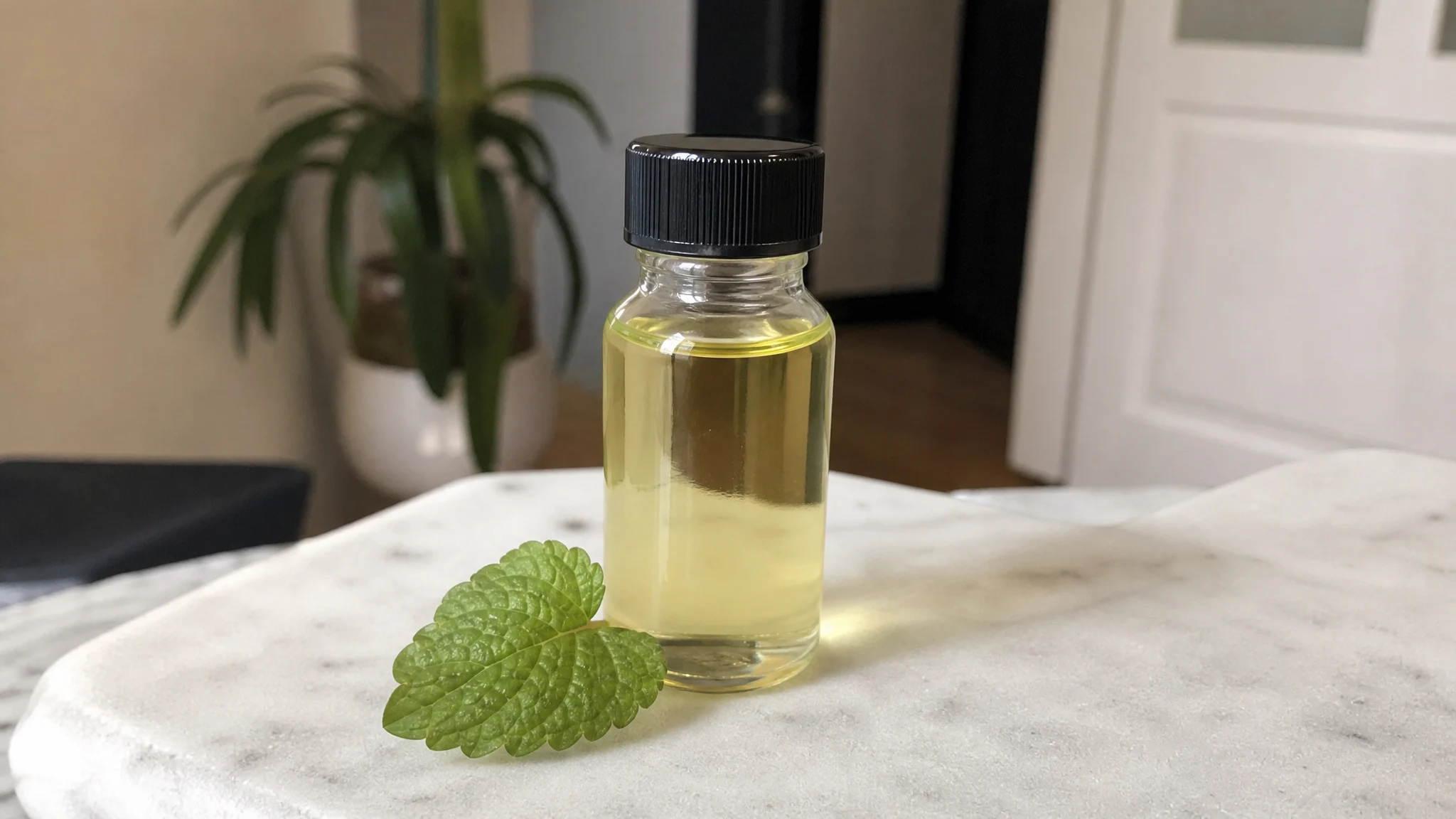
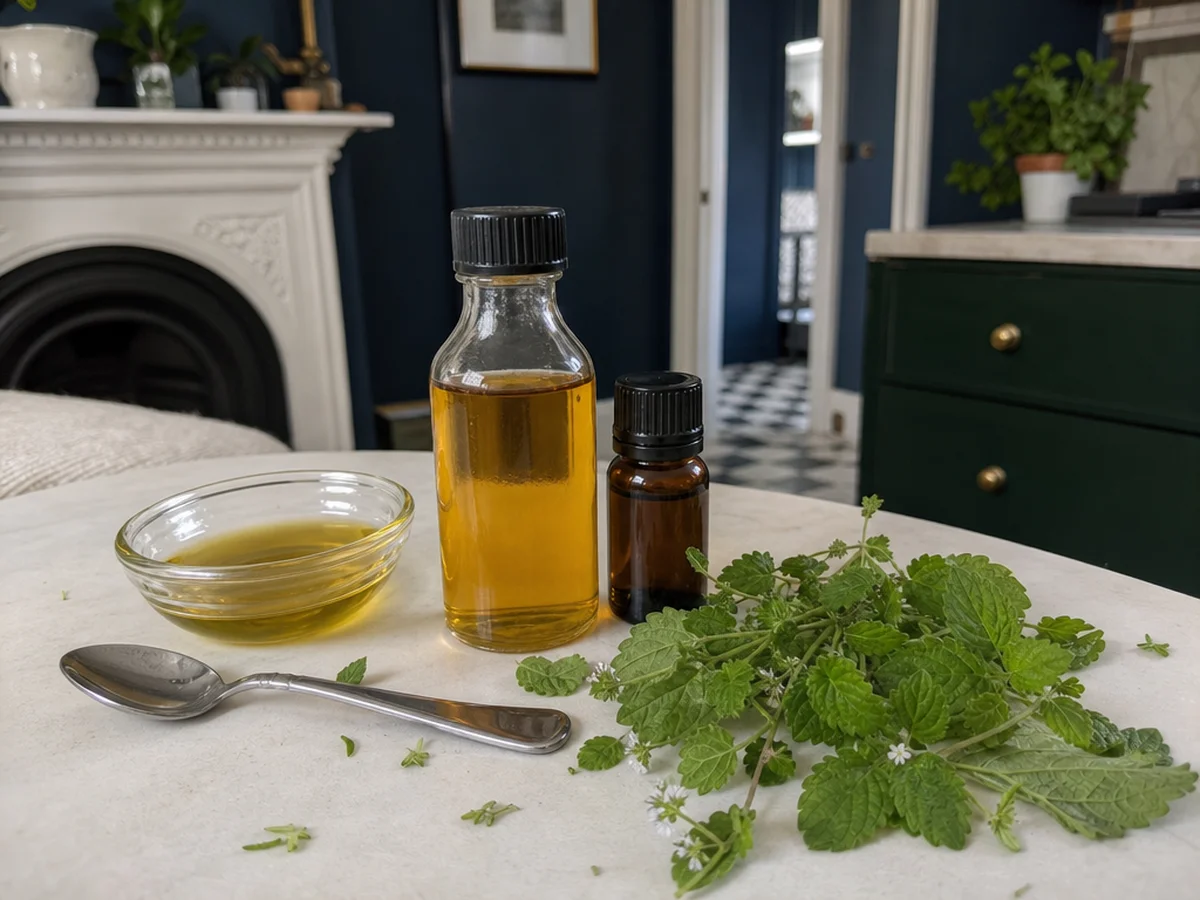
Melissa and lemon balm are two names for the same plant, Melissa officinalis, a member of the mint family that the 2022 Petrisor review also lists as honey balm and balm mint. Our Melissa Essential Oil is steam-distilled Melissa officinalis, sold neat. The confusion comes from labels: "lemon balm oil" on some products means a vegetable oil steeped with the herb, and the FDA notes that there is no regulatory definition for "essential oils", so the name alone does not tell you what is in a bottle. We untangle that in our infused oil comparison.
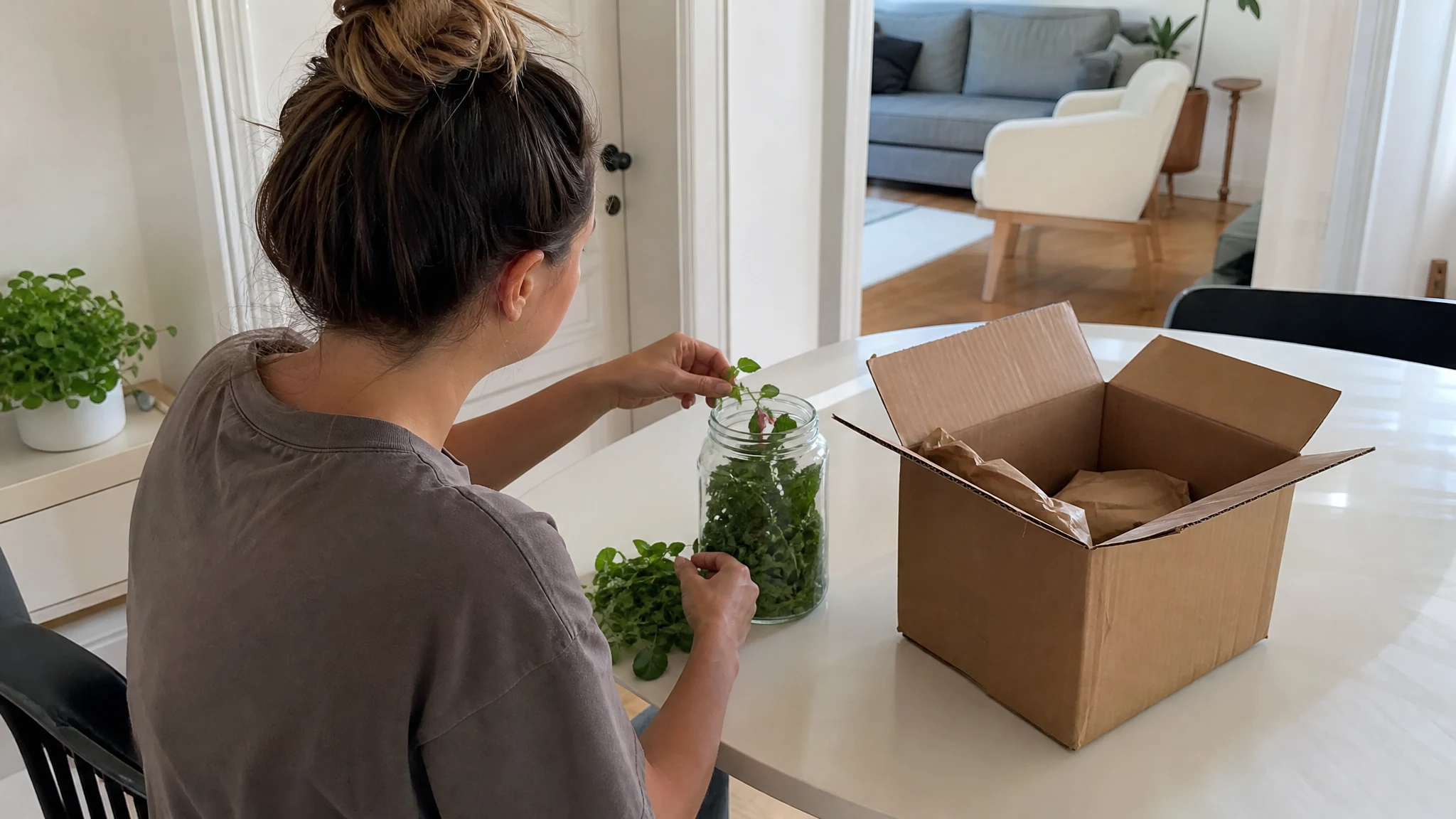
Why does it take so much herb?
Because the plant holds very little oil, and reports vary a great deal. The Petrisor review collects figures from about 0.01% up to 0.72% of the herb's weight. Take the 0.17% figure from one of the studies it cites: a kilogram of herb gives under two grams of oil. That is the idea behind our line that tons of fresh herb yield only ounces of oil, and it is why melissa is treated as a precious oil. Our piece on how it is made does the sums in more detail.
What does it smell like?
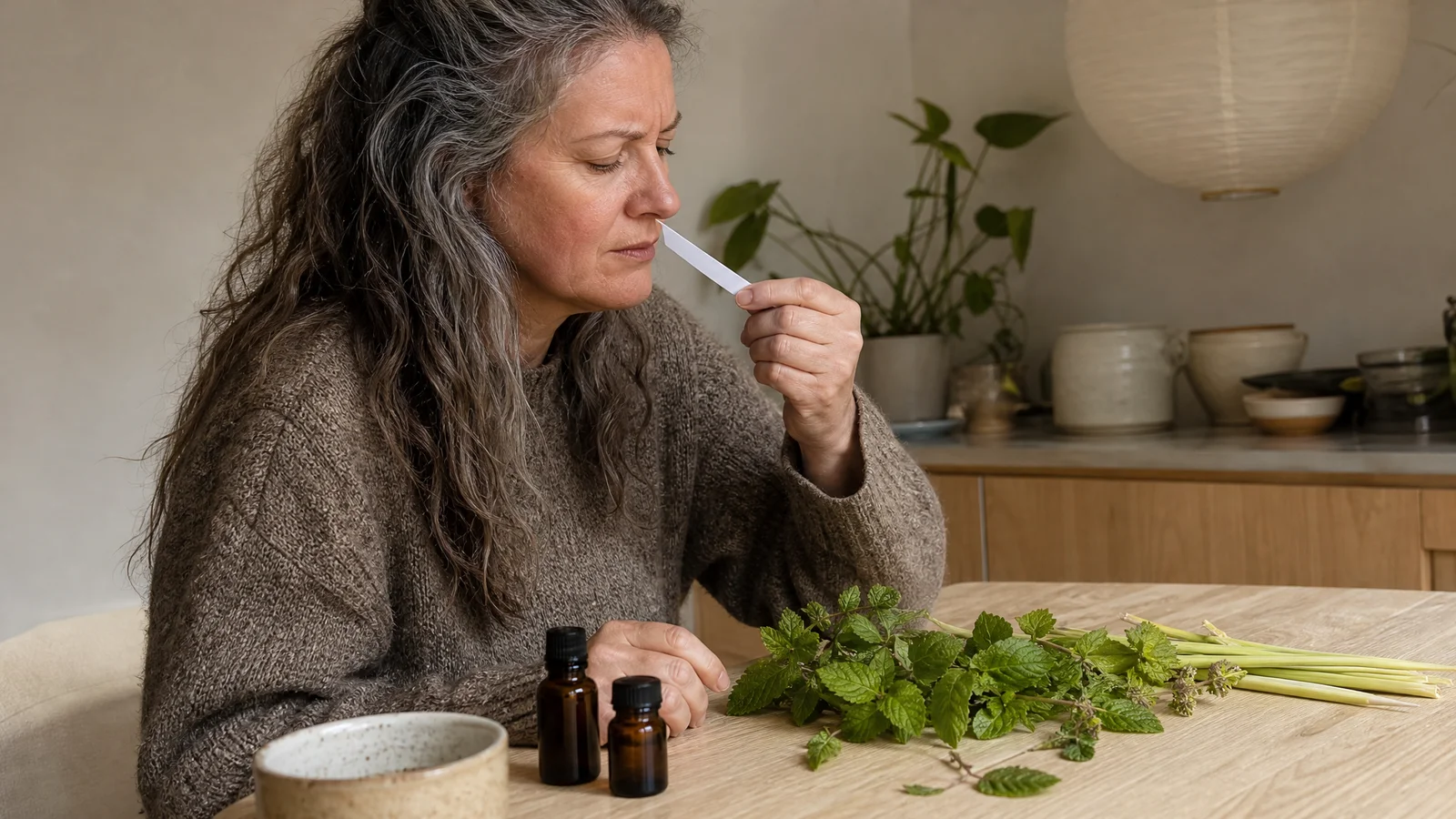
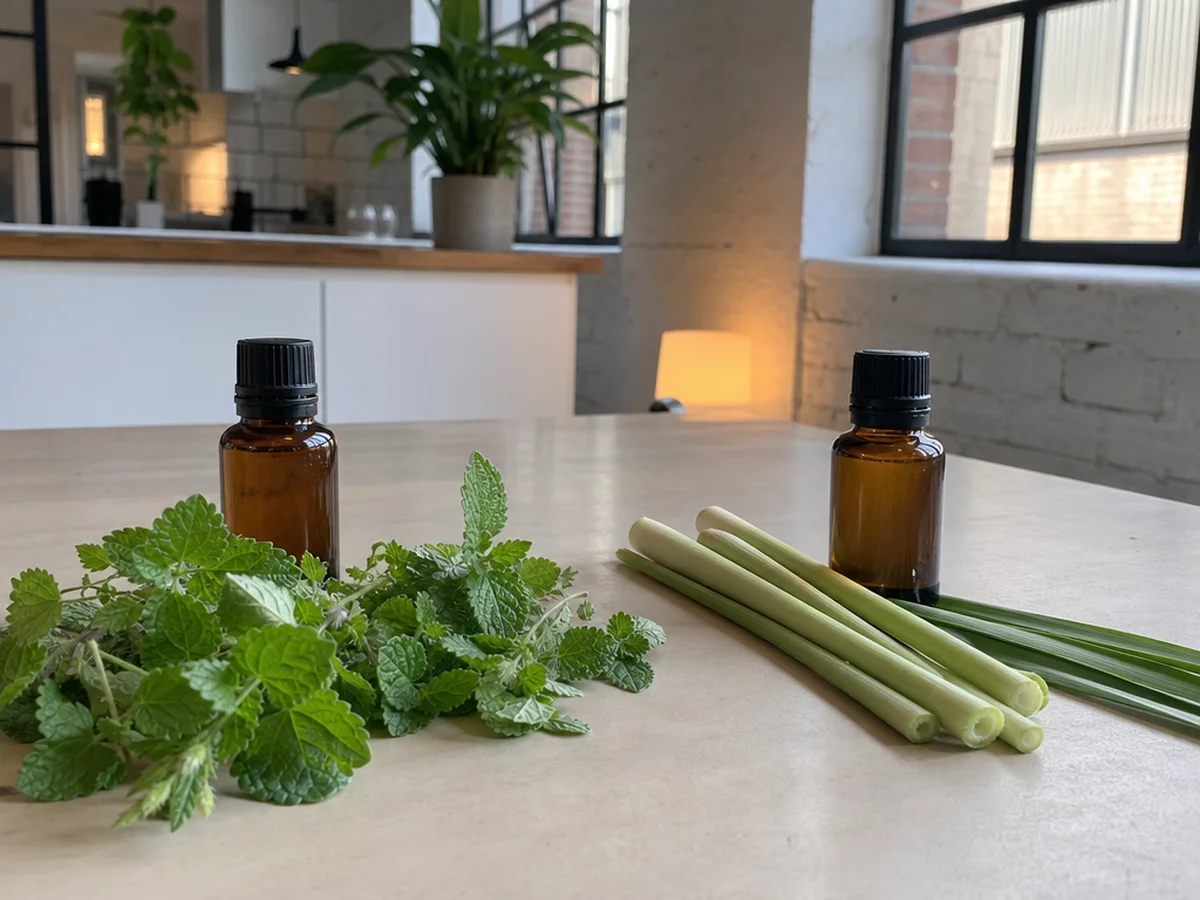
We describe the aroma as delicate, lemony and herbal: a bright citrus lift over a soft green heart. It is rounder, greener and more delicate than lemongrass or litsea, which come from different plants. The lemon note comes mostly from citral, the pair of molecules geranial and neral, which the review reports at very different levels from one oil to the next. That variation is part of why two melissa oils can smell a little different.
How much can go on skin?
Our dilution guidance is 0.5% to 2% in a carrier oil, with a patch test first, which works out to roughly 3 to 12 drops per ounce. Melissa is potent, so most people stay near the low end. For perspective, IFRA's standard for melissa oil, which is aimed at sensitization, sets 0.15% in body creams, oils and lotions, and that is under one drop per ounce of carrier. So we start low, at or below our minimum, and we never treat 2% as a target. If you have eczema or a fragrance allergy, a dermatologist is the right person to ask. The comparison is laid out in our skin and citral guide.
Can I swallow it?
No. Our label says not for internal use, and we do not suggest swallowing it in any form. Lemon balm tea and a drop of concentrated oil are very different things; we explain why in our ingestion guide.
What about pregnancy, children and pets?
We cannot call it suitable for any of them. We recommend keeping it away from eyes, children and pets. The ASPCA's professional guidance, Are Essential Oils Dangerous to Pets?, says not to use a diffuser in a house with birds and notes that oils are absorbed through skin and mucous membranes. For pregnancy, ask your obstetrician or midwife (our pregnancy guide explains what the references say), your paediatrician for children, and a veterinarian for animals.
Is it a sleep or mood product?
No. We sell an external aroma oil and make no claims about sleep, mood, anxiety or cold sores. The FDA's Aromatherapy page explains that what makes a product a drug is its intended use, and it counts claims such as helping you sleep among drug claims. Most lemon balm research uses extracts rather than the oil, and our extract versus oil guide separates the two.
How do I store it?
Tightly capped, in a cool, dark place. We say it typically keeps for 1 to 2 years that way. The Tisserand Institute's page on oxidation, Is my bottle of essential oil oxidized or no longer good to use?, agrees: heat, light and moisture speed oxidation, most oils keep at least one to two years, and refrigeration roughly doubles that. Air matters too, so as a bottle empties, move the oil to a smaller one. Our storage guide has the details.
How can I tell a good melissa oil?
Not from smell or one number alone. The Certificate of Analysis we publish for one batch lists a relative density of 0.888, a refractive index of 1.484 and an optical rotation of -1.08 degrees, each within the standard printed beside it. Those physical measurements are a useful first screen. If you need to know the oil's chemistry, ask for a GC-MS report from any seller, and if you want one from us, ask in writing through our contact page before ordering. Researchers use chiral and isotope gas chromatography to tell real citral oils from imitations, as in Nhu-Trang and colleagues' 2006 paper, which is why we point you to our guide to reading a COA. If you are weighing larger sizes, our bulk page and guide to buying melissa oil in bulk cover what to check.
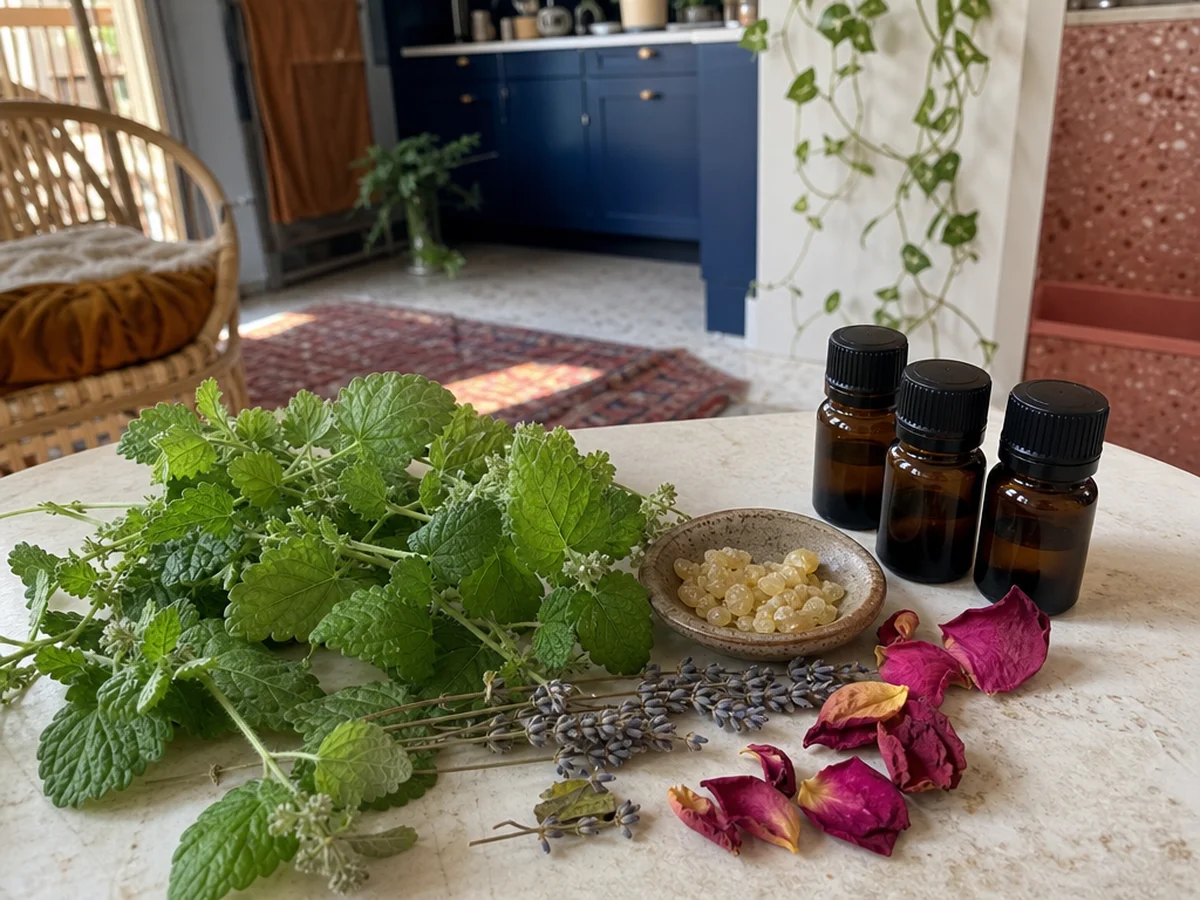
One last tip before you open the bottle
Set out what you need first: a clean paper strip, a pencil, a scale if you have one, and somewhere to put the cap so it does not roll away. Then open the bottle, smell it, and write down what you notice before you read anybody's description, ours included. Your own words for an oil are the ones you will remember when you come back to it.
If your question is not here, write to us. We are happy to talk it through.
Melissa Essential Oil
Melissa Essential Oil from our own shop, in sizes from 0.5 oz to bulk.
From $23.99
Shop Now →Sources & Further Reading
- Petrisor G et al., 2022. Melissa officinalis: Composition, Pharmacological Effects and Derived Release Systems-A Review. Int J Mol Sci. PMC8998931
- FDA. Fragrances in Cosmetics. fda.gov
- FDA. Aromatherapy. fda.gov
- IFRA Standards, 51st Amendment: Melissa oil (genuine Melissa officinalis L.), Amendment 49. ifrafragrance.org
- ASPCApro. Are Essential Oils Dangerous to Pets? aspcapro.org
- Tisserand Institute. Is my bottle of essential oil oxidized or no longer good to use? tisserandinstitute.org
- Nhu-Trang TT, Casabianca H, Grenier-Loustalot MF, 2006. Authenticity control of essential oils containing citronellal and citral by chiral and stable-isotope gas-chromatographic analysis. Anal Bioanal Chem. PMID 17089103