Real Melissa Oil: What Smell and Paperwork Can Tell You
Could you tell real melissa oil from a lemony look-alike by smell? Almost certainly not, and that is not a failing of your nose. Melissa itself varies so much from plant to plant that even experts lean on instruments.
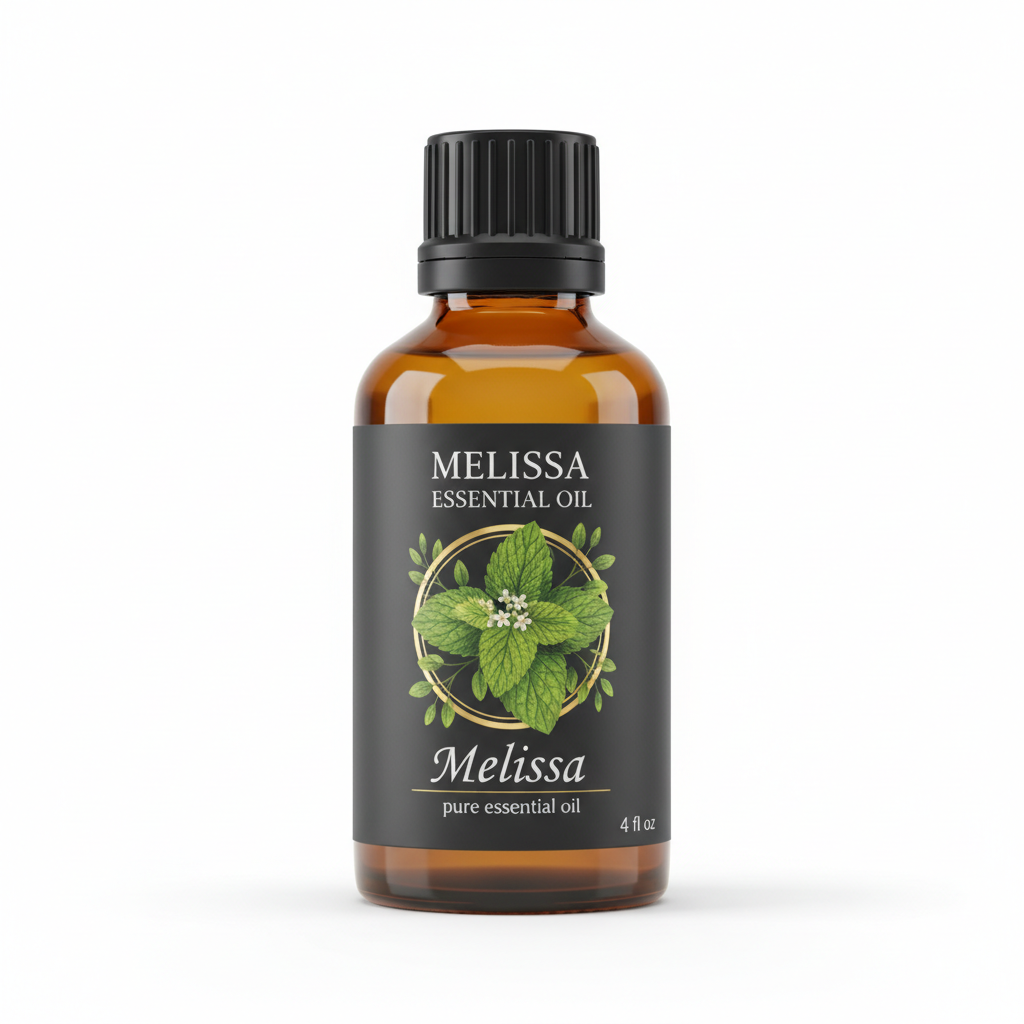
Melissa Essential Oil
Our own Melissa Essential Oil, in sizes from 0.5 oz to bulk.
From $23.99
Shop Now →Why smell is a poor judge
A 2022 review compiled published analyses of Melissa officinalis oil. Geranial, one of the two citral molecules, ranged from about 6% to 51%, neral from about 4% to 35%, and citronellal from under 1% to 20%. The review describes a citral type and a germacrene D type, notes that one subspecies carries major citral and another only traces, and reports samples from Tunisia and Greece lacking citral. So a faintly lemony bottle is not proof of a fake, and a bright, clean lemon bottle is not proof of the real thing, since lemongrass and citronella-type oils are also citral-rich. It is telling that IFRA's standard is titled "Melissa oil (genuine Melissa officinalis L.)": the word "genuine" exists because other citral sources do.
We make no claim about how often melissa oil on sale is substituted. Our lemon-scented oils comparison shows how the usual suspects differ.
What analysts use
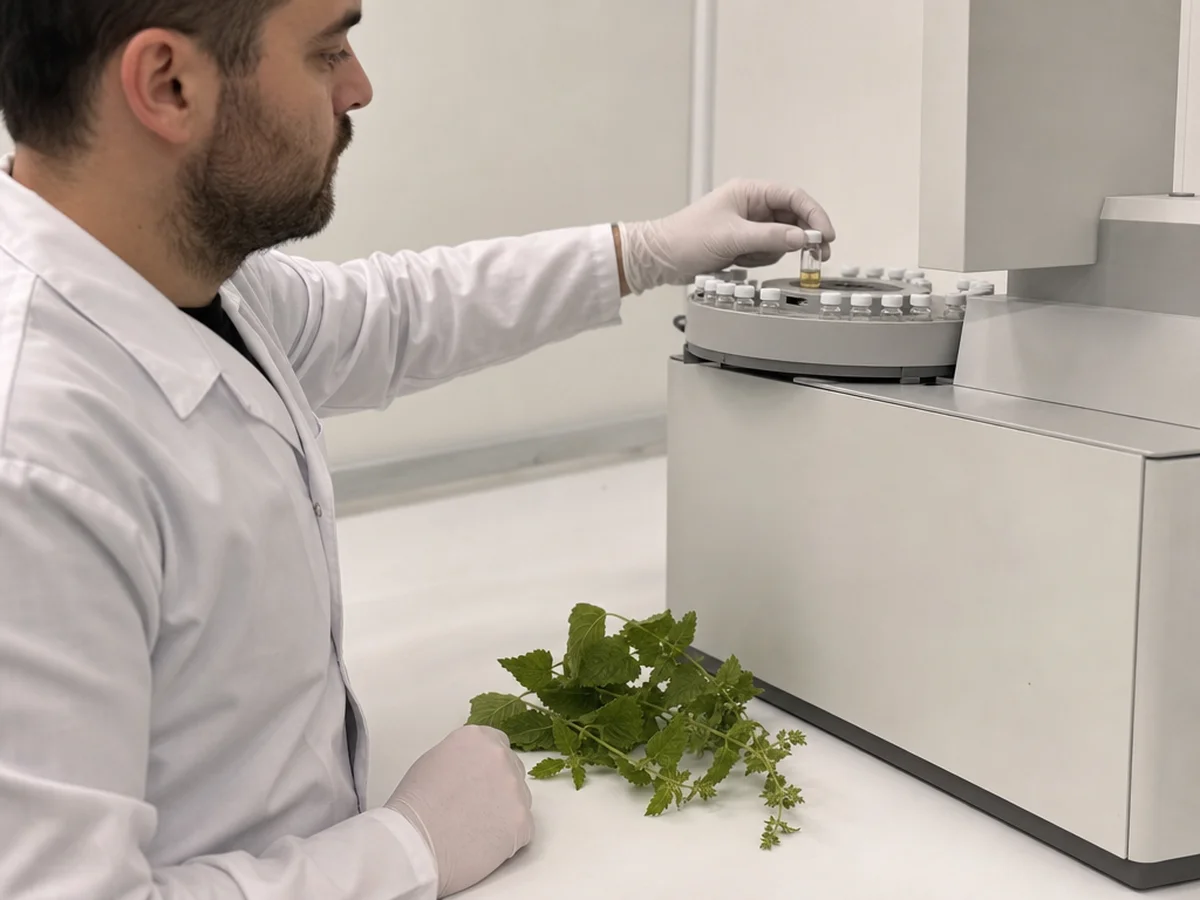
A 2006 paper in Analytical and Bioanalytical Chemistry describes using chiral gas chromatography and isotope-ratio mass spectrometry on oils containing citral and citronellal, including lemon balm, to assess origin and detect adulteration. The sensible reading is that an ordinary GC-MS report, which lists what is in the oil, is the first document worth asking for, while chiral and isotope work is a specialist service you might commission for a drum, not for a diffuser bottle. For how melissa and litsea cubeba get told apart, see this comparison.
A smelling session worth doing
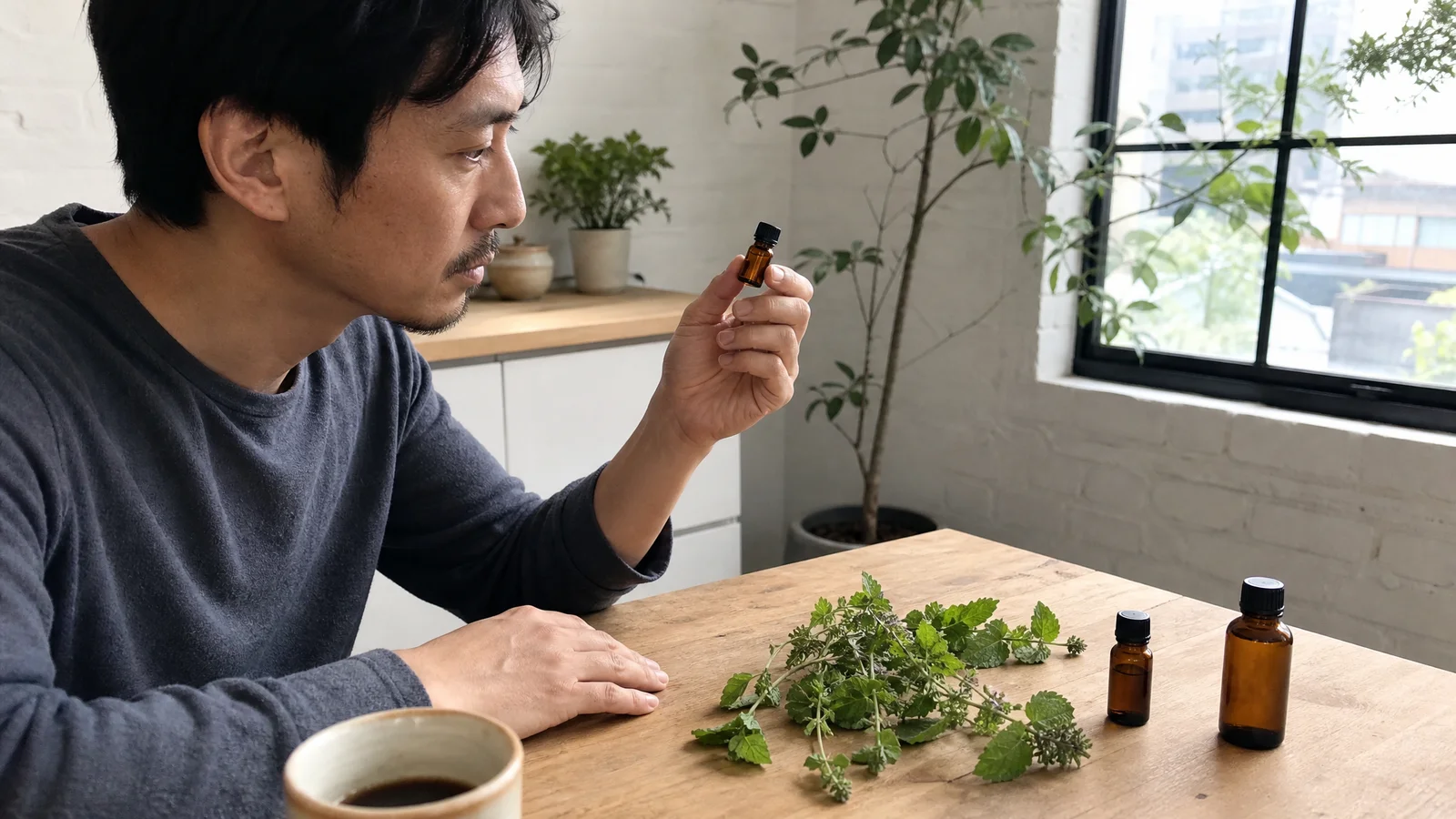
Smell cannot settle identity, but it is still worth practising, because it teaches you what you own. Set out strips of paper, label each in pencil with the oil's name, and put one drop on each. Smell the first, wait a minute, and come back to it, then do the next. Between oils, give your nose a rest for a minute or two. Write down what you notice: the first bright impression, what is left after ten minutes, and what is left after an hour.
Do this with whatever lemon-scented oils you already own. You are not trying to catch anything out. You are building a reference in your own head, so the next time a bottle smells unexpectedly different, you notice it.
A ladder of checks
- The label. It shows the seller names the species. It does not show which chemotype it is.
- Smell. It catches a gross mismatch with oils you know, but not where the citral came from.
- Price. On its own it tells you nothing about composition.
- A certificate of physical constants. It shows one batch met its printed ranges for properties such as density and refractive index.
- A batch GC-MS. It lists constituents, including citral, tied to a lot number.
- Chiral or isotope analysis. It gives evidence on whether the constituents are natural to the plant.
Where our paperwork sits
We sell one melissa oil, steam-distilled Melissa officinalis. The Certificate of Analysis we publish for one batch lists a relative density of 0.888 (printed range 0.880 to 0.910), a refractive index of 1.484 (1.470 to 1.500) and an optical rotation of -1.08 degrees (-35 to +5), with appearance and smell marked "Complies." It does not include GC-MS or a citral figure, so it describes those constants for that batch and nothing more. Notice how wide the printed rotation window is: 40 degrees. That is normal for a variable natural material, but it also means "within range" is a gentle test of identity. If you want constituent data, ask us in writing through the contact page before ordering, and judge our answer as you would anyone's. Our supplier documentation checklist lists the questions, and our COA guide reads a report line by line.
Keeping a paper trail at home
Once you do have a batch document, keep it with the bottle. Save the file, note the batch number, and write the date you opened the bottle on the label. If you later make a product from it, jot the bottle's batch number next to the recipe. It takes a minute, and it means that if something smells different a year from now, you can trace it to a specific bottle instead of guessing.
A sensible order of operations
- Decide what is at stake. A diffuser blend and a product that stays on skin for hours call for different evidence, and since citral is a skin sensitizer, identity matters most for leave-on use.
- Ask for a batch document, and match its batch number to the bottle.
- Start with a small bottle or sample so any gap between nose and paperwork shows up cheaply. If you own lemongrass, smell the two side by side; we describe ours as delicate, lemony and herbal, rounder and greener than lemongrass. That is a rough sanity check, not a measurement.
- Dilute by published limits. Our dilution guidance is 0.5% to 2% in a carrier with a patch test, but IFRA's limit for body products is 0.15%, so we start at the lower figure; see the skin post.
Authenticity belongs to a batch, and the best way to establish it is to put a batch-specific document in your hands, whoever the seller.
Melissa Essential Oil
Melissa Essential Oil from our own shop, in sizes from 0.5 oz to bulk.
From $23.99
Shop Now →Sources & Further Reading
- Petrisor et al., Melissa officinalis: Composition, Pharmacological Effects and Derived Release Systems-A Review, Int J Mol Sci, 2022
- Nhu-Trang, Casabianca and Grenier-Loustalot, Authenticity control of essential oils containing citronellal and citral by chiral and stable-isotope gas-chromatographic analysis, Anal Bioanal Chem, 2006 (abstract)
- IFRA, IFRA Standards (51st Amendment compendium), entry Melissa oil (genuine Melissa officinalis L.)