How to Read a Melissa Oil Label: What Matters
A melissa oil label is a short document, and most of what buyers hope it proves is not required to be on it. The botanical name, the dilution wording and the word "tested" each say less than they seem to, and each can be checked with one question to the seller. Reading from the top down is the quickest way to see which lines carry information.
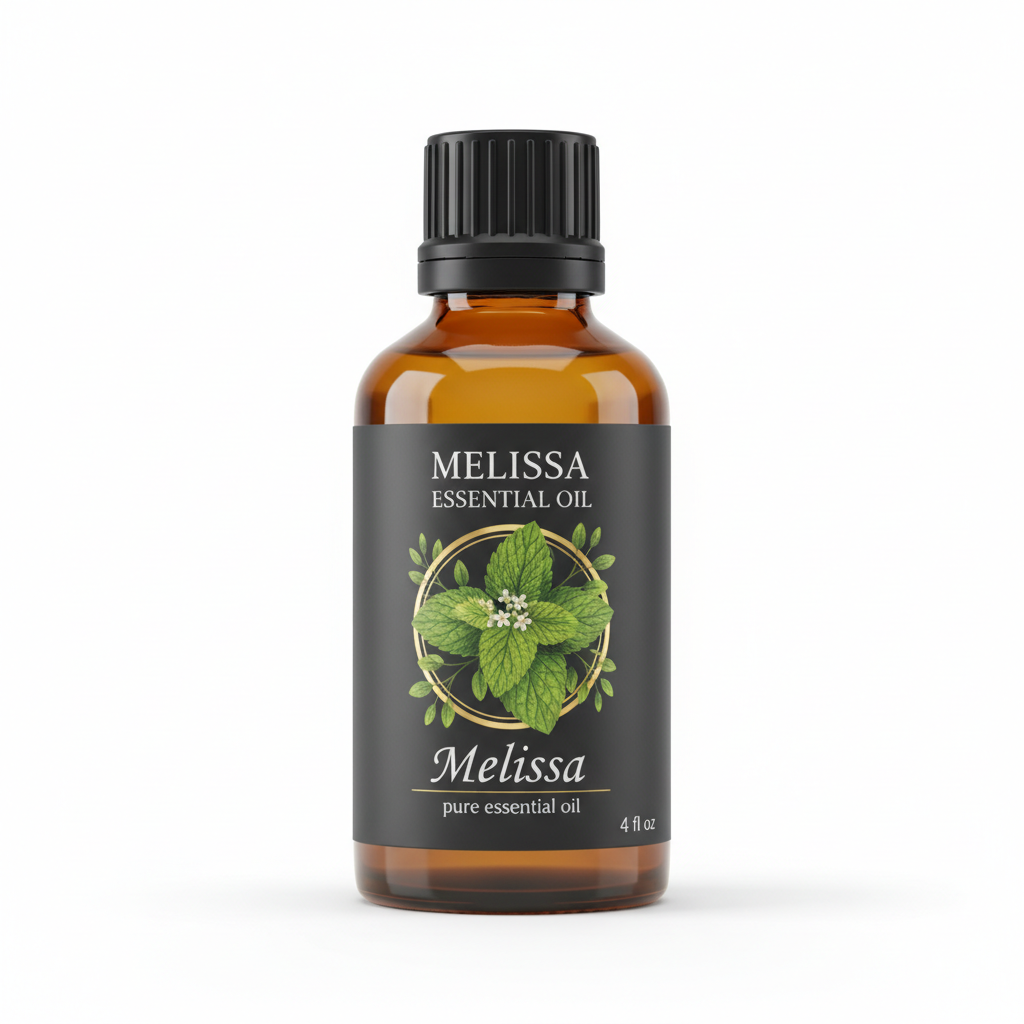
Melissa Essential Oil
Our own Melissa Essential Oil, in sizes from 0.5 oz to bulk.
From $23.99
Shop Now →What US rules require, and what they leave to the seller
A cosmetic label lists ingredients in descending order of predominance under 21 CFR 701.3, and that section lets fragrance ingredients be listed simply as "fragrance". The FDA adds on its fragrance page that there is no regulatory definition for "essential oils". Its aromatherapy page says there are no regulations defining "natural" or "organic" for cosmetics either. So a bottle of melissa oil is not obliged to carry a botanical name, a country, a dilution figure, a batch number or a test result. Whatever is printed beyond the minimum is the seller's own statement, which makes the extras worth reading closely.
The botanical name: necessary, not sufficient
Melissa officinalis is the right species for melissa oil, and a label without it deserves a question. But the species does not fix the chemistry. A 2022 review by Petrisor and colleagues compiles published geranial from 6.22% to 51.21% and neral from 4.28% to 35.02%, describes a citral chemotype and a germacrene D chemotype, and notes that the subspecies altissima carries only traces of citral. Two bottles that both say Melissa officinalis can differ widely in the compound that drives the safety limit.
It also helps to know that IFRA titles its standard for the oil "Melissa oil (genuine Melissa officinalis L.)". The word is part of the standard's name and says which material the limits apply to, not a grade a seller can award itself. The checks that tell look-alikes apart are in our post on what you can verify.
Dilution wording is where the numbers hide
A pre-diluted bottle changes every figure in your recipe. A bottle sold as a 5% blend, used as though it were neat oil, puts 5% on the skin, which is about 33 times IFRA's 0.15% maximum for body products and 2.5 times the top of our own 0.5% to 2% guidance. Our guidance is for skin use in a carrier oil with a patch test first, and with melissa we would start at the low end of it, because the oil is rich in citral and IFRA's figure for leave-on body products is lower than our range. We do not call any percentage safe for everyone. Our skin and citral post sets the numbers side by side.
Percentages can also be ambiguous: by weight, by volume, or in drops. On any diluted product, look for a stated percentage and the carrier it is in. We cover the neat versus pre-diluted question in its own post.
"Tested" is a claim, not a result
Think of testing language as a ladder. At the bottom, "tested" or "lab-verified" says nothing about method, laboratory or batch. One rung up, a certificate of analysis tied to a batch number lists named tests with ranges. At the top, a GC-MS report names the lab and gives a percentage for each compound. Only the upper rungs can be checked against the bottle in your hand.
The Certificate of Analysis we publish covers one batch of our Melissa Essential Oil: Melissa officinalis, leaf, steam distilled, appearance and smell marked as complying, a relative density of 0.888, a refractive index of 1.484 and an optical rotation of -1.08 degrees, each shown against a printed range, with a best-by date of 07/30/2028. If you want constituent data such as citral before you order, ask us in writing through the contact page.
Claims about what the oil does
The FDA says products are regulated mainly by their intended use, judged from labeling, websites and advertising, and that a product intended only to cleanse or beautify is a cosmetic while therapeutic claims can make it a drug. Plant origin does not change that. Our oil is sold for its aroma and as a cosmetic ingredient, and we make no therapeutic claim for melissa. A label promising that an oil relieves, calms or treats something is making a claim regulators examine closely, and a medical question belongs with a physician or pharmacist, not a bottle.
Hold the bottle in your hand
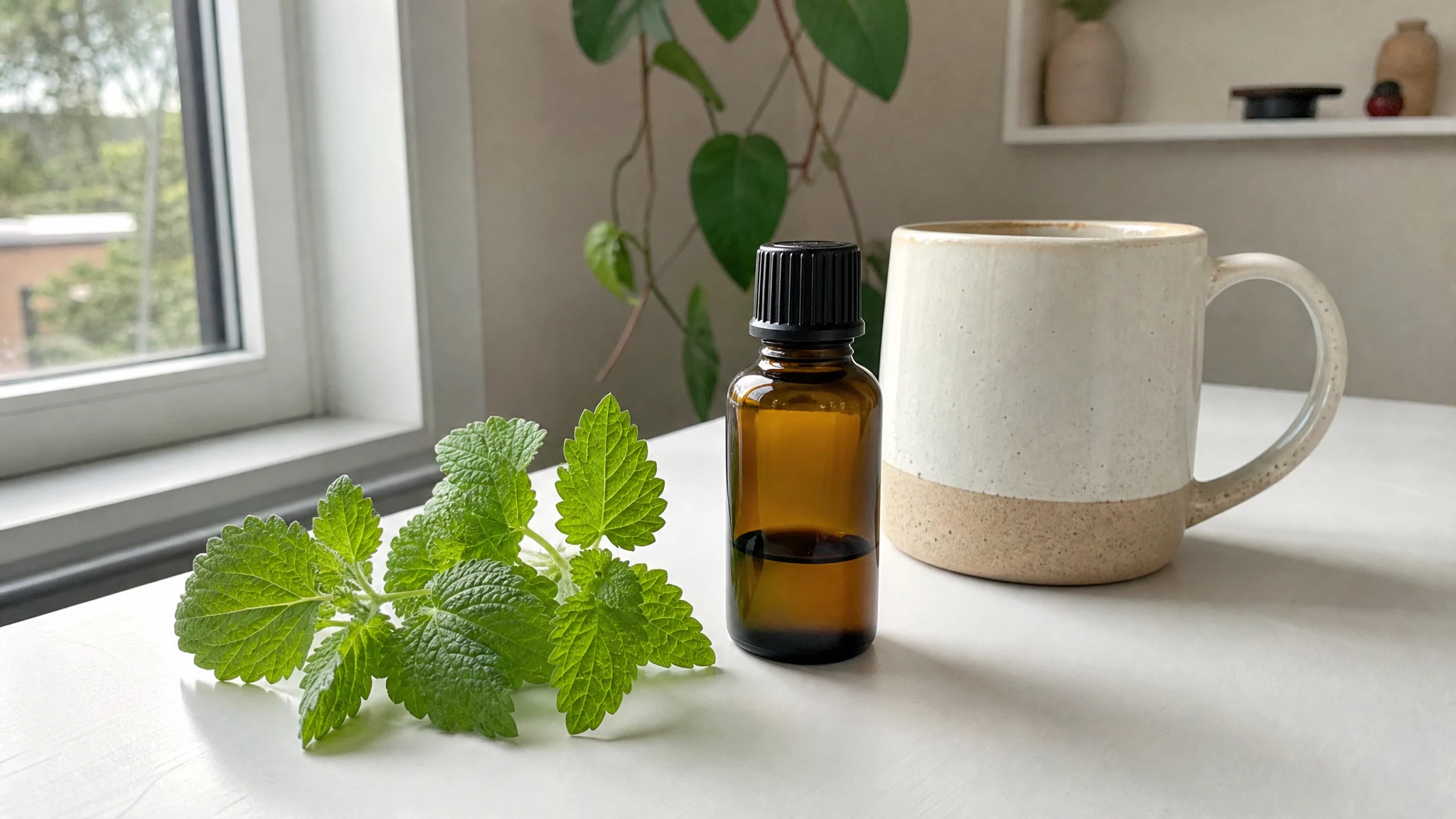
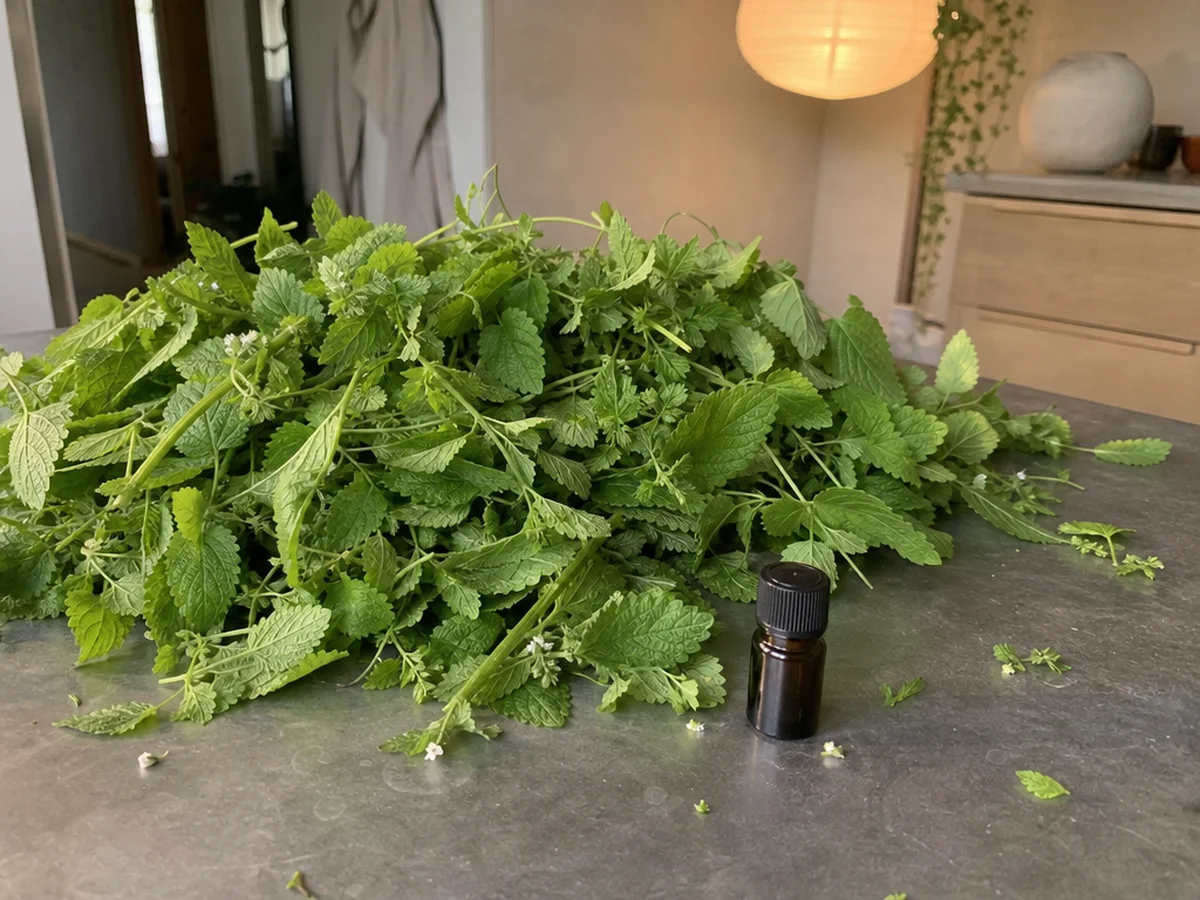
A label is also a physical object. Turn the bottle around and see whether the print is legible without squinting. Check that the cap closes snugly and that the glass is dark. These small things tell you whether someone cared about the person using the oil at the other end, and we think that kind of care is worth looking for in any seller, ours included.
Safety lines worth finding
A responsible label gives a dilution range, says to keep the oil away from eyes, children and pets, says it is not for internal use, and gives storage advice. Ours says all of that, plus to patch test on a small area first. If you have eczema, a fragrance allergy or broken skin, a dermatologist or allergist is the right person to ask before any leave-on use. Our documentation checklist covers what to request from a supplier when a label cannot answer your question.
A good label answers the questions above before you ask them, and where it cannot, a written question to the seller costs nothing.
Melissa Essential Oil
Melissa Essential Oil from our own shop, in sizes from 0.5 oz to bulk.
From $23.99
Shop Now →Sources & Further Reading
- 21 CFR § 701.3 - Designation of ingredients, via Cornell Legal Information Institute. 21 CFR § 701.3 - Designation of ingredients
- FDA, Fragrances in Cosmetics. Fragrances in Cosmetics | FDA
- FDA, Aromatherapy. Aromatherapy | FDA
- Petrisor G et al., Melissa officinalis: Composition, Pharmacological Effects and Derived Release Systems - A Review. Int J Mol Sci 2022, PMC8998931
- IFRA, Melissa oil (genuine Melissa officinalis L.), Amendment 49 (2020), pages 151 to 153 of the IFRA Standards 51st Amendment. IFRA Standards, 51st Amendment