Young Living Melissa Oil: How to Read the Page
Search for melissa oil and two brand names rise to the top almost at once: Young Living and doTERRA. Both sell through member networks, both have the kind of pages that repay a slow read, and neither page reads quite the way a shelf label does. We take Young Living's own product page as the worked example here, because it loaded when we asked for it. doTERRA's melissa page was blocked for us, so we leave it out and suggest you run the same questions over it as soon as you open it.
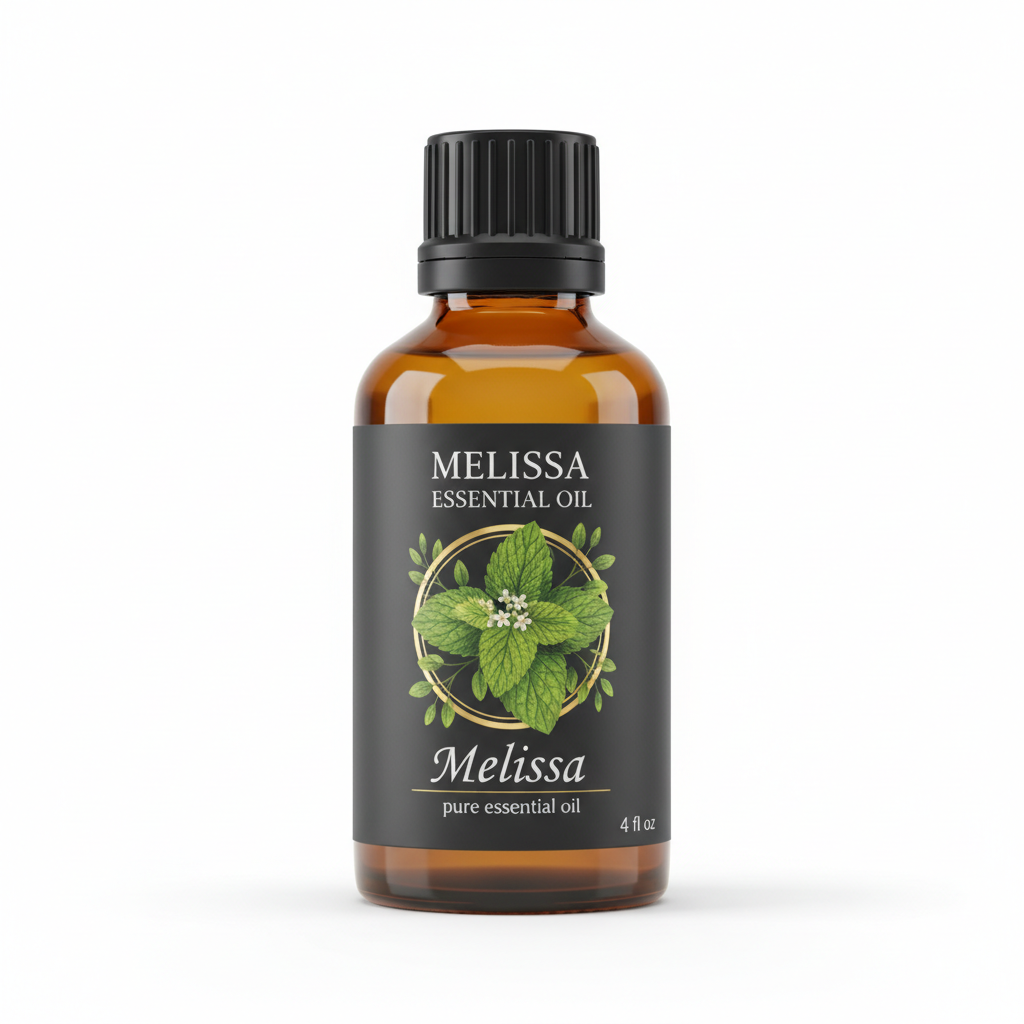
Melissa Essential Oil
Our own Melissa Essential Oil, in sizes from 0.5 oz to bulk.
From $23.99
Shop Now →What Young Living's page says
As we read its EU product page on 5 November 2026 (regional pages differ, and pages change), Young Living describes its melissa as Melissa officinalis leaf oil, steam distilled from plants grown at its St. Maries Lavender Farm and Distillery in Idaho. The directions say to apply to the desired area and, in case of sensitivity, to dilute 5 drops in 15 ml of its V-6 carrier. The ingredient line ends "May contain: Citral, Citronellol, Geraniol, Limonene, Linalool". The item was marked as not currently available to buy, offered only to registered Brand Partners or through its Loyalty Rewards Programme. The description speaks of a calm atmosphere and a sense of emotional balance.
That is more provenance than many listings give. It names the species, the plant part, the method and a place, and it is upfront that the oil contains citral.
A farm name is provenance, not a lab report
A named farm tells you where the seller says the plant grew. It does not tell you the citral share of the lot you receive, and melissa is an oil where that matters. The 2022 Petrisor review compiles published geranial from 6.22% to 51.21% and neral from 4.28% to 35.02%, so two samples of the same species can sit a long way apart. The "may contain" wording on the page is accurate for exactly that reason, and it is also unquantified. For a number you can calculate with, you need a batch analysis, which our documentation checklist explains how to request.
Reading the dilution line against the published limits
The page's own sentence is easy to turn into a percentage. Five drops is about 0.25 ml at the usual convention of 20 drops to the millilitre, and with 15 ml of carrier that comes to roughly 1.6%. That is our arithmetic, not a figure on the page. For comparison, IFRA's standard for melissa oil sets a maximum of 0.15% in body lotions, creams and oils, driven by skin sensitization. IFRA's limits are an industry standard for fragrance suppliers rather than a rule for someone mixing at home, but they show where the assessors drew the line, and 1.6% sits about ten times above it.
Our own guidance is 0.5% to 2% in a carrier oil with a patch test first. For melissa, because the oil is so rich in citral, we start at the low end of that range, and for anything left on the skin we would go lower, nearer IFRA's figure. We do not call any percentage safe for everyone, and our skin and citral post lays out the numbers in full.
Mood wording and what regulators look at
Words like calm atmosphere and emotional balance are common across the essential oil world, so it helps to know how they are read. The FDA says an aromatherapy product is regulated mainly by its intended use, judged from labeling, websites and advertising, and that therapeutic claims can turn a cosmetic into a drug. We keep our own copy to aroma: our Melissa Essential Oil is sold as a cosmetic ingredient with a delicate, lemony, herbal scent, and we make no therapeutic claim for it. If you have a medical question about melissa, a physician or pharmacist is the right person to ask.
A reading habit worth keeping
We like reading product pages slowly, with a pencil. Underline what is specific, such as a species, a method or a place, and circle what is general, such as a mood or an adjective. You'll notice how much of a page is the second kind. That does not make a page bad, but it helps you see where the facts are, and where you need to ask for more.
The same questions for every seller
Nothing on a brand page tells you that an independent seller is better or worse. What differs is where the evidence sits, so ask each seller the same things: which species and plant part, which method, which batch document, which laboratory, what citral percentage, and what stated dilution if the bottle is diluted. Young Living's page answers the first two and gives a dilution instruction. The page does not mention a batch analysis, so that is the one thing to request.
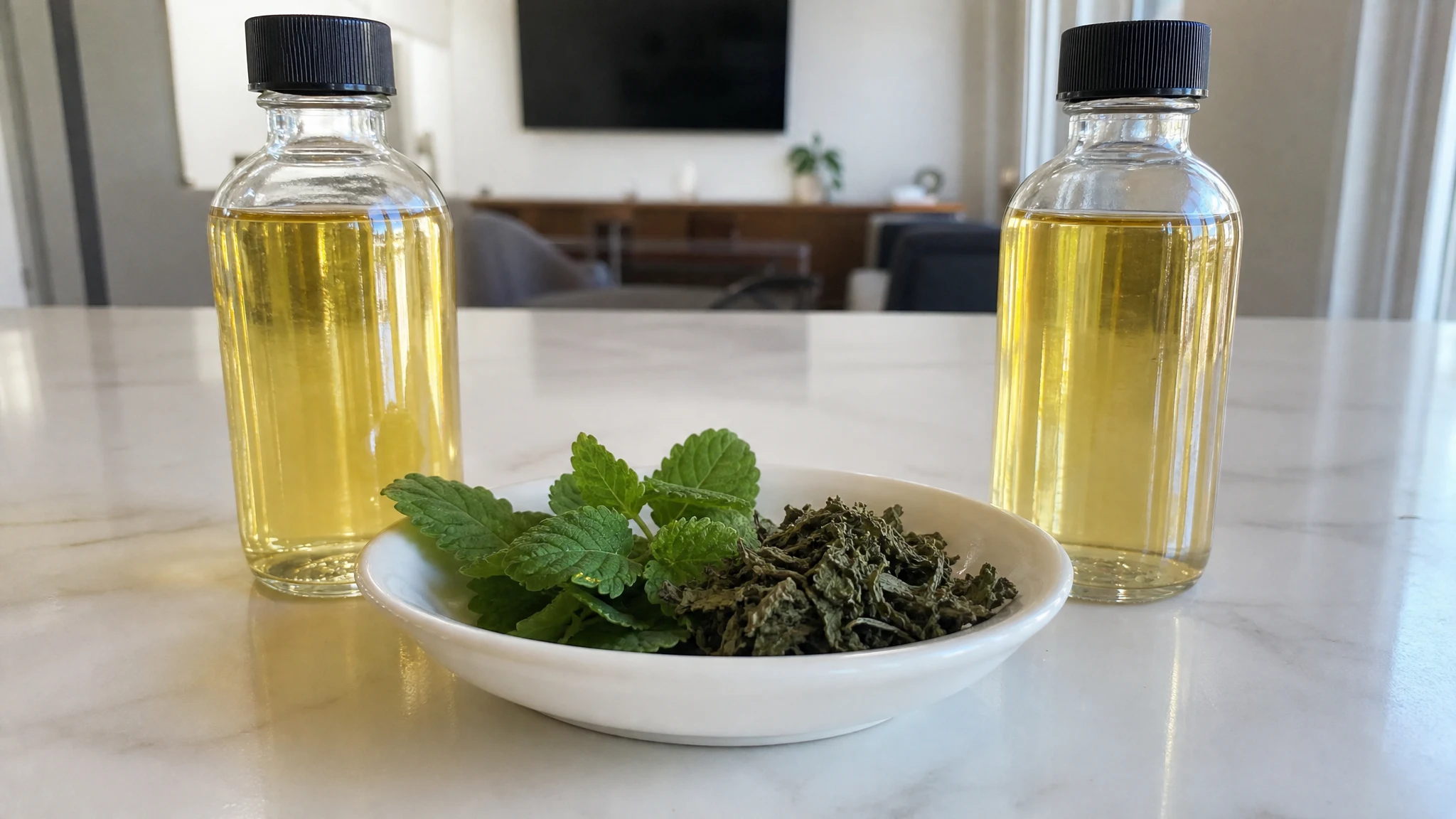
Here is where we stand on the same list. We sell one melissa oil, sold neat, steam-distilled Melissa officinalis. The Certificate of Analysis we publish covers one batch and lists a relative density of 0.888, a refractive index of 1.484 and an optical rotation of -1.08 degrees. If you need constituent data, ask us in writing through the contact page before you order, and our wholesale page offers sample bottles you can evaluate in your own product. Our buying questions turn the list into something you can carry to any seller.
If you do want a side-by-side later, make the columns species, plant part, method, batch document, laboratory, citral percentage and stated dilution, and fill them in only from pages and documents you have in hand. Choose the seller whose paperwork you can read, not the one whose name you recognise.
Melissa Essential Oil
Melissa Essential Oil from our own shop, in sizes from 0.5 oz to bulk.
From $23.99
Shop Now →Sources & Further Reading
- Young Living, EU site, Melissa essential oil product page, read 5 November 2026. Melissa | Young Living Essential Oils
- FDA, Aromatherapy. Aromatherapy | FDA
- Petrisor G et al., Melissa officinalis: Composition, Pharmacological Effects and Derived Release Systems - A Review. Int J Mol Sci 2022, PMC8998931
- IFRA, Melissa oil (genuine Melissa officinalis L.), Amendment 49 (2020), pages 151 to 153 of the IFRA Standards 51st Amendment. IFRA Standards, 51st Amendment