Melissa vs Lemongrass vs Citronella: Lemony Oils Compared
Melissa, lemongrass and citronella all smell lemony to someone, so it is tempting to file them as three grades of one oil. They are three different plants with three different chemistries, and the differences decide what each is good for, how much of each belongs in a product, and what question to ask before you buy.
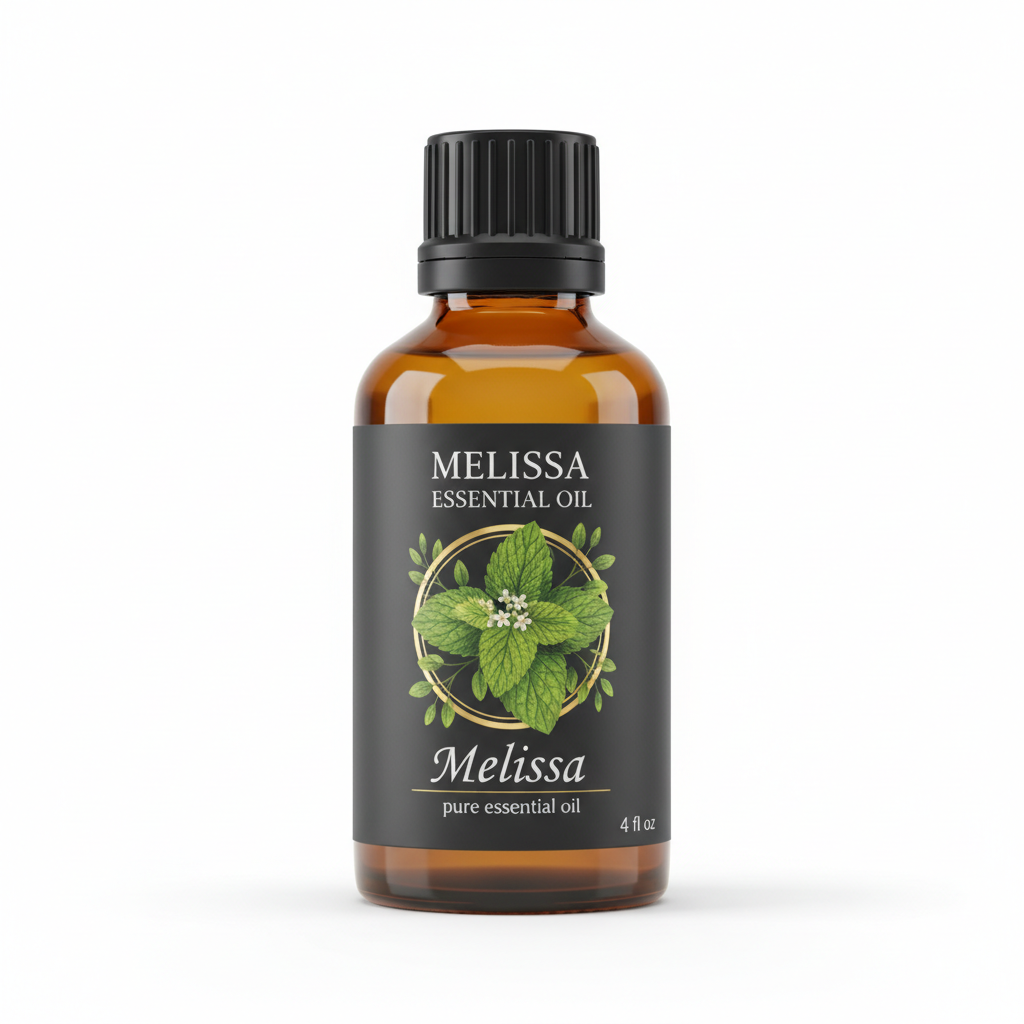
Melissa Essential Oil
Our own Melissa Essential Oil, in sizes from 0.5 oz to bulk.
From $23.99
Shop Now →Different plants, different molecules
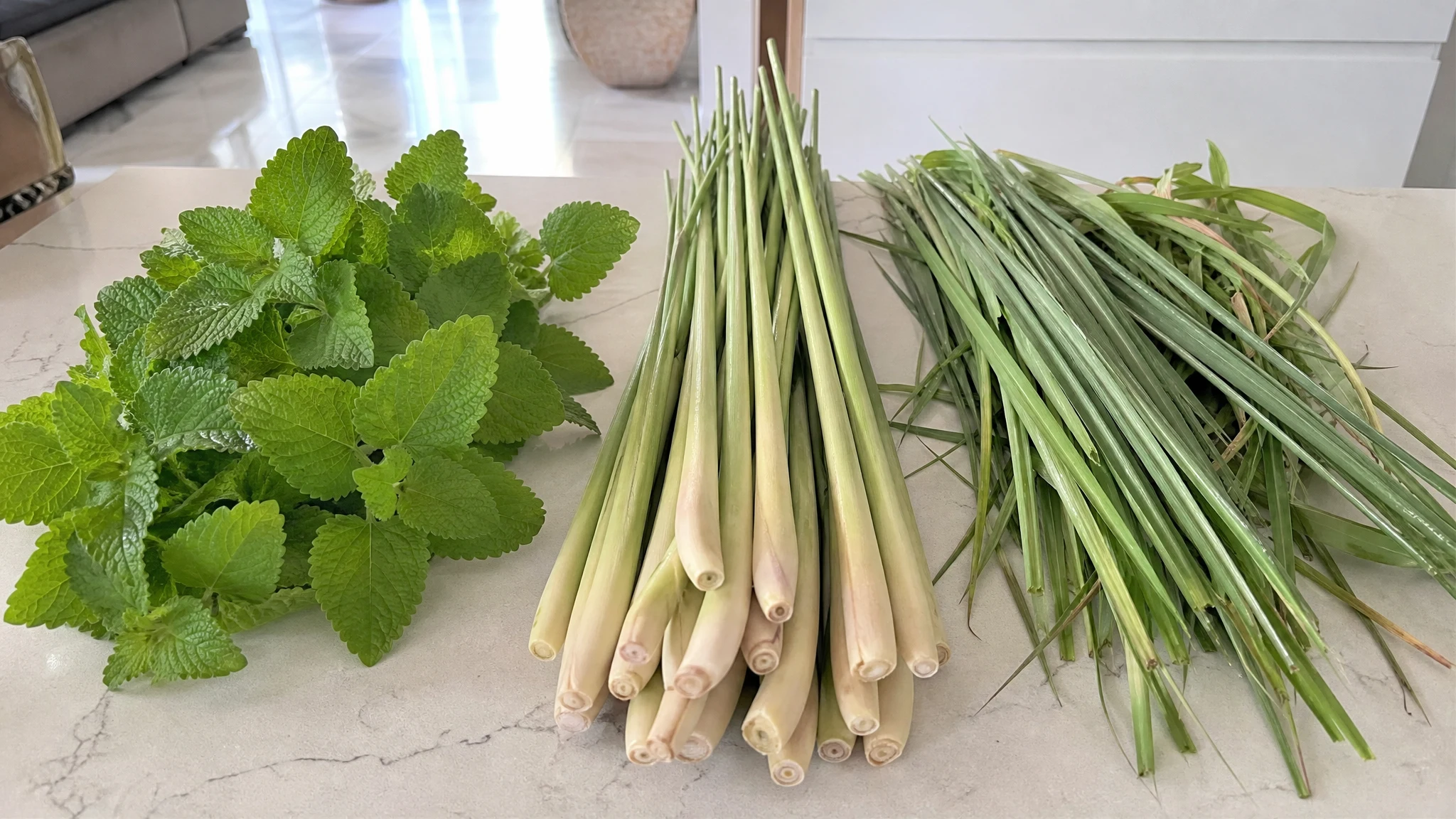
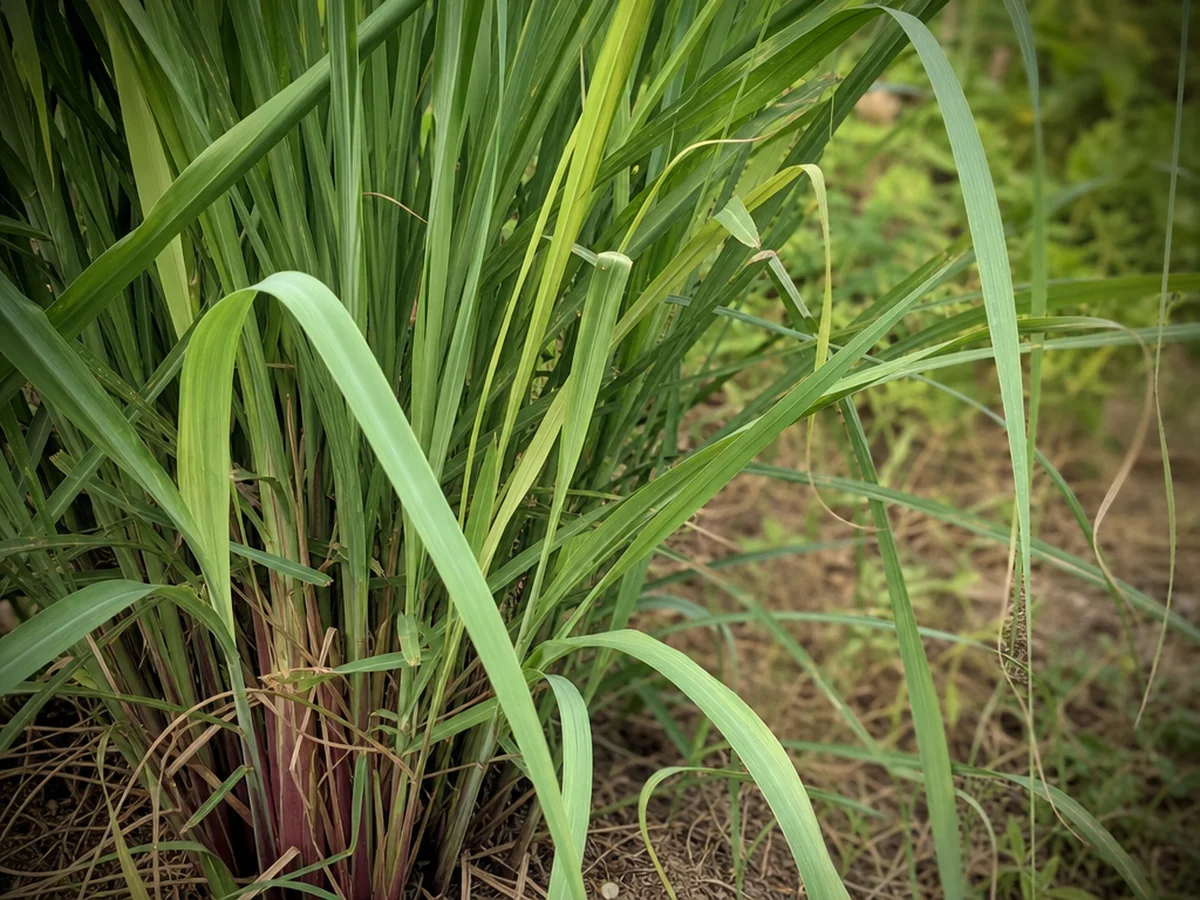
Melissa oil comes from Melissa officinalis, a leafy mint-family herb. Lemongrass and citronella come from grasses in the genus Cymbopogon. The practical picture is in the analyses. Melissa and lemongrass share citral, the pair of molecules called geranial and neral, while citronella is built on other compounds. The figures below are samples from the literature, not our oil, and the ranges are wide because each paper measured different material.
| Oil | What the analysis found | Material behind the number |
|---|---|---|
| Melissa | Geranial 6.22 to 51.21%, neral 4.28 to 35.02%, citronellal 0.4 to 20.3% | Range compiled from published analyses (Petrisor et al., 2022) |
| Lemongrass | Citral (neral plus geranial) 40.7 to 75.4% | 11 commercial dried leaf samples from Brazil (Barbosa et al., 2008) |
| Citronella, Java type | Dominated by citronellal, 30.8% | One commercial oil, Indonesia (Elmi et al., 2025) |
| Citronella, Ceylon type | Dominated by geraniol, 21.5% | One commercial oil, Sri Lanka (Elmi et al., 2025) |
Where the mix-up comes from
Reasoning from that table, the overlap is real but partial. Melissa and lemongrass both carry neral and geranial, so a lemony top note is common to both, and melissa also holds some citronellal, a thread toward citronella. The same Elmi study shows how far a commercial bottle can wander from a textbook picture: its lemongrass oil held 32.5% citral alongside 39.9% of a different aldehyde, lower in citral than the lowest Brazilian sample above. That is one bottle, not the whole trade, but it makes the point that neither a name on a label nor a quick sniff settles identity when the ranges are this wide. How analysts tell melissa from other citral sources is covered in our post on what you can check and in the melissa and litsea comparison. The lemon-scented oils guide sets six lemony oils side by side.
How the safety numbers differ
IFRA, the fragrance industry's safety body, treats melissa as an oil in its own right: its standard for melissa oil names skin sensitization as the driver and allows 0.15% in body lotions, creams and oils, 0.60% in fine fragrance and 1.2% in bar soap. Lemongrass and citronella do not appear to have standards under their own names in the compendium we read. Their citral and citronellal are handled as constituents, and IFRA's citral standard gives 0.15% in body lotions, hand creams and face moisturizers, 0.60% in fine fragrance and 1.2% in bar soap. Reasoning from that, the citral in a lemongrass oil is what the limits are about, and anyone blending two citral-rich oils should plan for the citral to add up, since IFRA's own annex on how contributions from other sources are counted is where the exact rule lives.
These standards are written for fragrance suppliers, not for a person mixing at a kitchen table, but they are the clearest public statement of where assessors drew the line. For us, that is why our dilution guidance of 0.5% to 2% in a carrier oil, with a patch test first, comes with a starting point at the low end for melissa, and lower again for lotions and butters left on the skin.
Citronella is bought for a different job
People reach for citronella mainly for outdoor use against insects, which is not something we address or make any claim about for any oil. What we can report is how the US EPA treats such products: it lists citronella oil among ingredients it judged minimal risk and exempt from registration as a repellent, notes that those products have not been evaluated for effectiveness, and says repellents without an EPA registration number have not been evaluated by EPA at all. If insect protection is the goal, a registered repellent is the route with documents behind it.
A side-by-side sniff
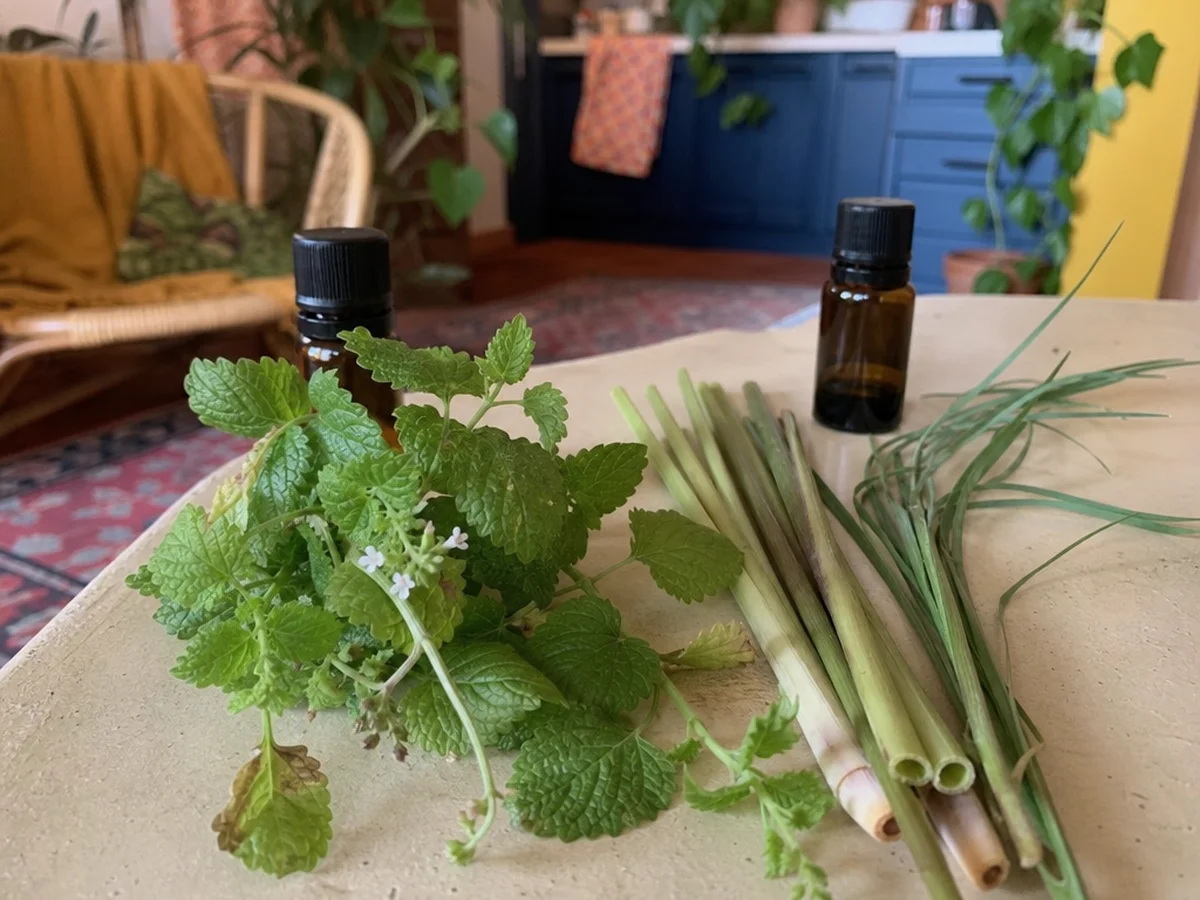
If you have more than one of these oils within reach, try a simple comparison. Put a drop of each on its own paper strip, label the strips in pencil, and sniff one at a time with a minute of rest between them. We describe our melissa as rounder, greener and more delicate than lemongrass, and a strip beside a strip is the quickest way to decide whether that is the lemon you want. Which one you prefer is personal, and it is a better guide to the bottle you will reach for again than any chart.
Choosing at the shelf
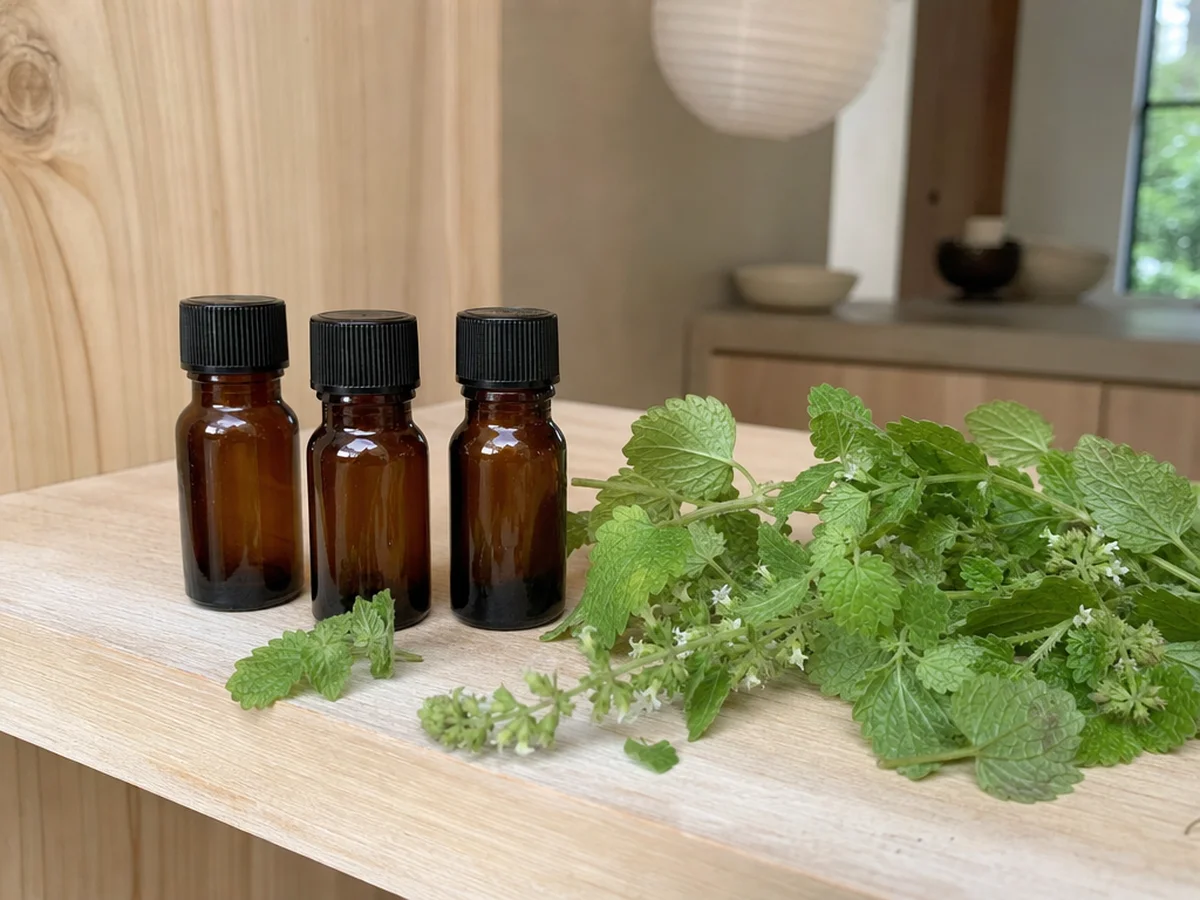
Decide the job first. If you want a soft lemon-and-herb note for a diffuser blend or a perfume, our melissa has that character: we describe the aroma as delicate, lemony and herbal, rounder, greener and more delicate than lemongrass or litsea. If you want a sharp citrus lift or a repellent product, a different oil or a registered product serves you better, and we do not sell either, so a craft or supply shop is the place to go. Read the botanical name, because a Cymbopogon name tells you grass. And if the use is leave-on, ask the seller for constituent data for the batch in your hand. The Certificate of Analysis we publish for one batch lists relative density, refractive index and optical rotation rather than constituents, so our COA reading guide shows what a GC-MS page adds, and we are glad to hear from you in writing through the contact page if you need it.
Lemony is a family resemblance, not an identity, and a few minutes with the analyses is the quickest way to see where each oil really sits.
Melissa Essential Oil
Melissa Essential Oil from our own shop, in sizes from 0.5 oz to bulk.
From $23.99
Shop Now →Sources & Further Reading
- Petrisor G et al., Melissa officinalis: Composition, Pharmacological Effects and Derived Release Systems - A Review. Int J Mol Sci 2022, PMC8998931
- Barbosa LCA et al., Evaluation of the Chemical Composition of Brazilian Commercial Cymbopogon citratus (D.C.) Stapf Samples. Molecules 2008, PMC6244952
- Elmi A et al., Exploring the Antibacterial Potency of Cymbopogon Essential Oils: Liposome Encapsulation and Phytochemical Insights (abstract record). Antibiotics 2025, Europe PMC MED/40426575
- IFRA, Melissa oil (genuine Melissa officinalis L.) and Citral standards, Amendment 49 (2020), in the IFRA Standards 51st Amendment. IFRA Standards, 51st Amendment
- US EPA, Regulation of Skin-Applied Repellents. Regulation of Skin-Applied Repellents | US EPA