Melissa Oil vs CO2 Extract: What Is the Difference?
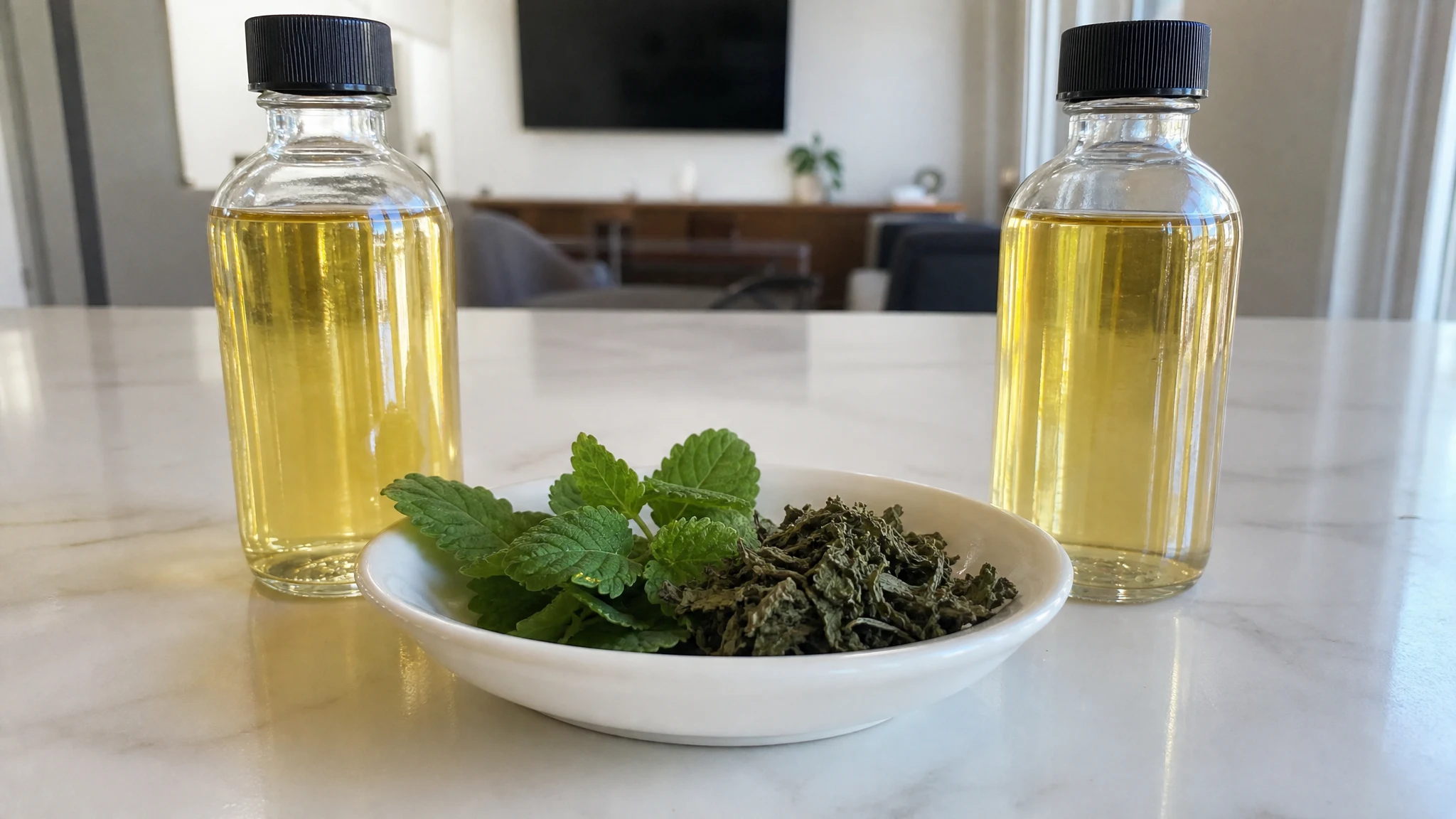
Lemon balm gives us more than one kind of aromatic material, and it helps to know which one you are holding. Steam-distilled melissa oil and a CO2 extract of the same plant share a name and a leaf, but they are made differently and should not be treated as stand-ins for each other.
Melissa Essential Oil
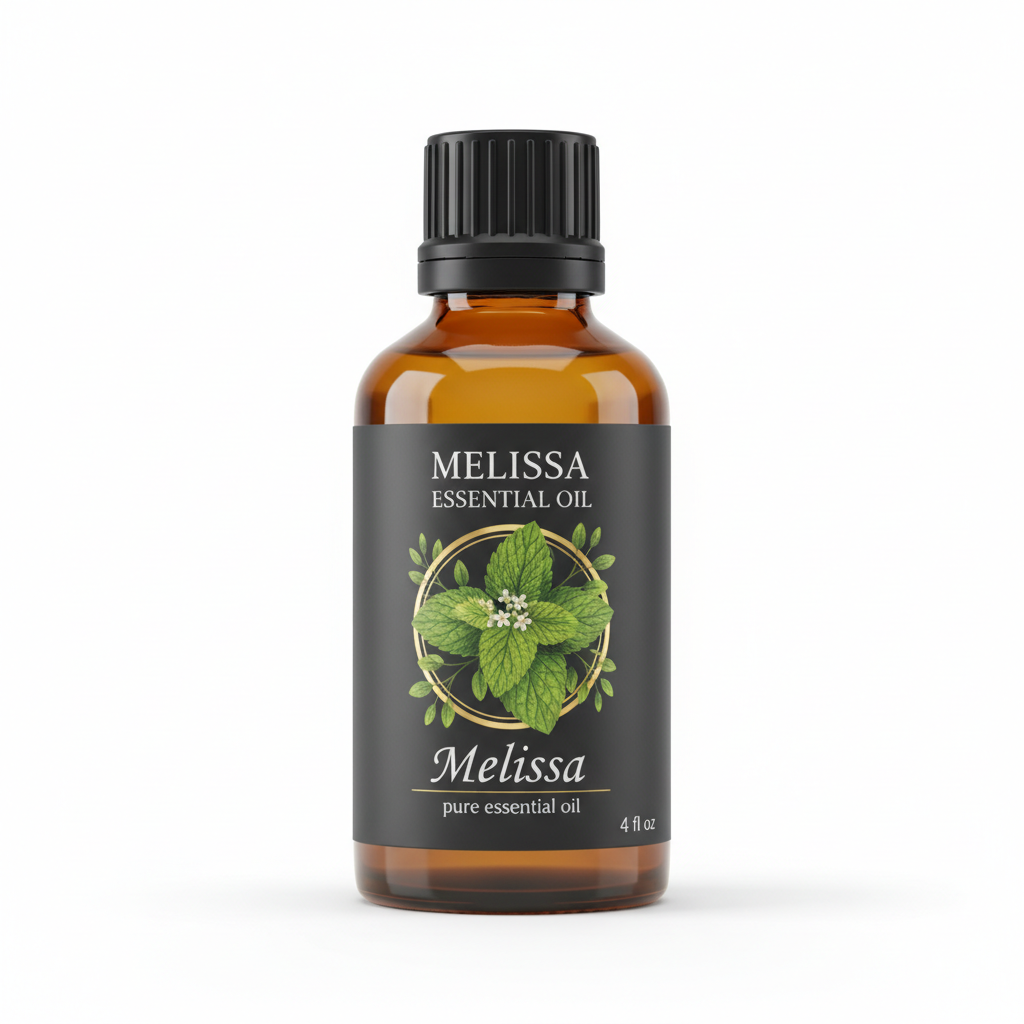
Our own Melissa Essential Oil, in sizes from 0.5 oz to bulk.
From $23.99
Shop Now →Two ways to capture a leaf's aroma
Steam distillation does what the name suggests: steam passes through the plant, carries the volatile aroma compounds away, and the oil is separated from the water afterwards. It is the method behind the oil we sell, steam-distilled Melissa officinalis, and the Certificate of Analysis we publish for one batch lists the extraction method as steam distilled.
A CO2 extract uses carbon dioxide held under pressure. A 2026 review of essential oil quality in the journal Plants describes carbon dioxide becoming supercritical at around 31 C and 7.38 MPa, and treats what comes out as "CO2 extracts or volatile-rich fractions" rather than classical essential oils. Depending on the settings, the same review explains, supercritical CO2 can also bring along waxes, pigments, fatty acids and similar material. In plain English, a CO2 extract can be a fuller, more varied mixture than a distilled oil, because the process is gathering more than the lightest aromatic molecules. The trade-off the review points to is that steam distillation is a lower-cost method that can lose some very volatile compounds, while supercritical equipment is expensive.
Those are general points, drawn from a review that covers many plants. They do not tell us which method gives the better lemon balm material, and we would not claim either one smells greener, truer or finer than the other.
Smelling the difference yourself
If you ever have both materials side by side, the simplest education is a paper strip each. Dip, wait a few seconds for the first rush to settle, then sniff at a comfortable distance. Notice how quickly each reaches you, whether it feels light or heavy, and what is left on the strip after an hour. Write your impressions down before you read any description. Our melissa is delicate, lemony and herbal, a bright lift over a soft green heart; whatever you find in another material, let your nose judge it on its own terms rather than as a copy. Keep the strips for a day and sniff them once more; the second impression is often the more honest one.
Why yield numbers do not line up
You may see yields quoted to suggest that CO2 is more efficient. A review of lemon balm extraction methods cites one study with a CO2 extract yield of 1.43%. Distilled oil yields in the lemon balm literature are far lower, roughly 0.01% to 0.72% in one trial of 28 accessions. But the 1.43% counts everything the CO2 dissolved, not only aroma, so it is a different measurement. Both figures simply confirm the same thing: a lot of leaf goes into a little of either material. We cover that side in how melissa oil is made.
What this means for formulating
This is the practical heart of the question. IFRA's Standard is titled "Melissa oil (genuine Melissa officinalis L.)," and it sets limits such as 0.15% for body products and 0.60% for fine fragrance, with skin sensitization as the reason. It is written for the oil. Whether a CO2 extract falls under that Standard, another one, or none is something to confirm with the extract's maker, and we would not carry our oil's numbers over by assumption.
If you are shopping for a CO2 extract, a good set of questions would be:
- Can you share a GC-MS composition report for this lot?
- Which safety limits or allergen statements do you apply to this material?
- What is the carrier or solvent, if any?
Our supplier documentation checklist works for any seller, and our guide to reading a COA explains what the report is telling you. For the oil, the batch Certificate of Analysis we publish lists a relative density of 0.888, a refractive index of 1.484 and an optical rotation of -1.08 degrees; if you want GC-MS data, ask us in writing through the contact page before ordering.
Which should you reach for?
If you are making soap, lotion or perfume and want to work from a published standard, the steam-distilled oil is the straightforward choice, because the limits were written for it. Our skin dilution guidance is 0.5% to 2% in a carrier, but for leave-on body products we start at the lower end, since IFRA's figure there is 0.15%; the skin and citral post compares them. If a CO2 extract appeals to you for its own character, it deserves its own documentation and its own dose, worked out with the supplier. And if your interest is in lemon balm studies, remember that extract trials and essential oil trials are different things, as this post explains. We sell an external cosmetic oil and make no health claims for it.
A word on keeping them
Different materials may ask for different handling, so treat the label and the maker's instructions as the final word for anything that is not our oil. For ours, the guidance is the usual: tightly capped, cool, dark, and out of reach of children and pets. Write the material's name on each bottle in plain words, so nobody mixes up two jars that came from one plant.
Same plant, two materials, two sets of paperwork: knowing which one you have is most of the battle.
Melissa Essential Oil
Melissa Essential Oil from our own shop, in sizes from 0.5 oz to bulk.
From $23.99
Shop Now →Sources & Further Reading
- Youchret-Zallez et al., Essential Oil Quality in Medicinal and Aromatic Plants: Linking Plant Biosynthesis, Matrix Selection and Extraction Strategy, Plants (Basel), 2026
- Awlqadr et al., Bioactive Compounds, Medicinal Benefits, and Contemporary Extraction Methods for Lemon Balm (Melissa officinalis), Food Sci Nutr, 2025
- Petrisor et al., Melissa officinalis: Composition, Pharmacological Effects and Derived Release Systems-A Review, Int J Mol Sci, 2022
- IFRA, IFRA Standards (51st Amendment compendium), entry Melissa oil (genuine Melissa officinalis L.)