Lemon Balm Studies: What They Actually Tested
Search for lemon balm research and you will find a long list of studies that sound relevant to a bottle of melissa essential oil. Look closely and most of them are about something else: a dried leaf in a capsule, a standardized extract taken by mouth, or a tea. The essential oil is a different material, and the studies that actually used it are fewer, smaller and less consistent than the headlines suggest. Here is a way to tell them apart.
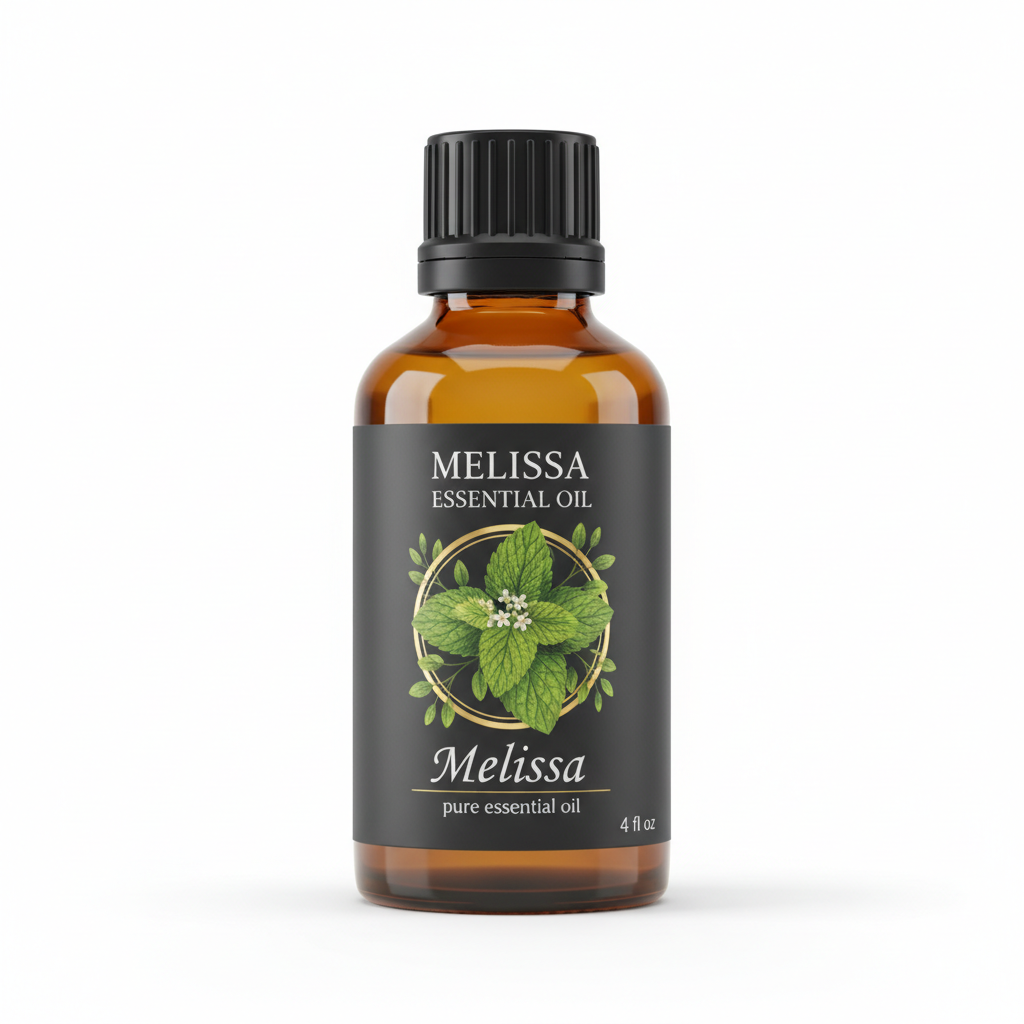
Melissa Essential Oil
Our own Melissa Essential Oil, in sizes from 0.5 oz to bulk.
From $23.99
Shop Now →A quick note on where we stand. We sell an external cosmetic aroma oil and we make no claim that it does anything the studies below measured. The research is still worth understanding.
Extract is not oil
Take one of the best known early studies. In 2002, researchers gave 20 healthy young adults single doses of a standardized lemon balm extract, 300, 600 or 900 mg, or a matching placebo, in a randomised, double-blind crossover design. The results were mixed: attention accuracy was better after 600 mg, memory measures were lower at some times and doses, self-rated calmness was higher at early time points after the lowest dose, and alertness was lower after the highest dose (Modulation of mood and cognitive performance following acute administration of Melissa officinalis (lemon balm)). The extract was swallowed. Nothing in that study involved essential oil on skin or in the air, so it says nothing about what an aroma oil does.
That is the pattern in much of this literature, and a 2024 review of lemon balm and psychological well-being looks at human trials of lemon balm preparations (Clinical Efficacy and Tolerability of Lemon Balm (Melissa officinalis L.) in Psychological Well-Being: A Review). The takeaway is simple: before you cite a study, check what the participants actually took, how much, and by which route.
The trials that did use the oil
A few studies used melissa essential oil as an aromatherapy treatment, mostly in people living with dementia. The best known is a 2002 trial of 72 residents of care facilities in the UK with clinically significant agitation and severe dementia. Melissa oil or sunflower oil was mixed into a base lotion and applied to the face and arms twice a day by caregivers for four weeks. Agitation scores fell by 35% in the melissa group against 11% for the placebo lotion, and no significant side effects were observed (Aromatherapy as a safe and effective treatment for the management of agitation in severe dementia: the results of a double-blind, placebo-controlled trial with Melissa). The authors called for further controlled trials.
Reviews are where the story gets more careful. A Cochrane review of aromatherapy for dementia covered 13 studies with 708 participants. Lemon balm was used in four of them. The reviewers wrote that they had not found any convincing evidence that aromatherapy is beneficial for people with dementia, though they noted many limitations in the data. Results from the stronger studies were inconsistent, conduct or reporting problems meant half the studies could not contribute to the conclusions, and harms were very poorly reported (Aromatherapy for dementia).
That is not the same as saying nothing happened for anyone. It means the evidence, as pooled, does not settle the question, and one promising trial is not the same as an established result. The studies were also in a specific group of people under care, so they cannot be carried over to the general reader at home.
How to read the next headline
- Ask what was used. Extract, leaf, tea or essential oil are different materials.
- Ask how it was used. Swallowed, inhaled and applied to skin are different routes.
- Ask who took part. Healthy volunteers, patients and care residents are different groups.
- Ask how many. Twenty people and seventy-two people are small numbers for firm conclusions.
- Prefer reviews. A systematic review weighs the studies together, which is more reliable than a single result.
If you or someone you care for has a health concern such as agitation, memory problems, anxiety or trouble sleeping, please talk to a doctor or other qualified health professional rather than relying on an aroma oil. We would much rather you ask than guess.
A habit worth building
Next time a headline about lemon balm catches your eye, try this. Skip the summary and open the study page itself. Look for the methods section and find three things: what the participants took, how much, and for how long. Then look at who they were and how many there were. It takes a couple of minutes, and you will find that many headlines lose their shine when you see that the study was about a capsule, or a tea, or a very small group.
That is not cynicism. It is the same careful attention we like to give the oil: what is in this bottle, how much of it, and what is it for. We would love for you to enjoy the aroma without needing a study to justify it.
What we do say about melissa
What we are comfortable saying is simple. Melissa essential oil has a delicate, lemony, herbal aroma, and we describe it that way and nothing more. If you are curious about the bigger research landscape, our write-up of the cold sore research reports another set of studies in the same spirit, and our article on ingesting melissa oil covers why we say our oil is for external use only. Curious about the plant's long story? See the short history of lemon balm.
Good science is slow and careful, and a bit of patience with a headline is usually rewarded.
Melissa Essential Oil
Melissa Essential Oil from our own shop, in sizes from 0.5 oz to bulk.
From $23.99
Shop Now →Sources & Further Reading
- Modulation of mood and cognitive performance following acute administration of Melissa officinalis (lemon balm), Pharmacology Biochemistry and Behavior, 2002
- Aromatherapy as a safe and effective treatment for the management of agitation in severe dementia: the results of a double-blind, placebo-controlled trial with Melissa, Journal of Clinical Psychiatry, 2002
- Aromatherapy for dementia, Cochrane Database of Systematic Reviews, 2020
- Clinical Efficacy and Tolerability of Lemon Balm (Melissa officinalis L.) in Psychological Well-Being: A Review, Nutrients, 2024