Melissa Oil Skin Dilution: Why We Start at 0.15%
Melissa oil is one of those oils where a single molecule decides how we talk about skin. Our general dilution range for skin use is 0.5% to 2% in a carrier oil with a patch test first, roughly 3 to 12 drops per ounce. For melissa specifically, the fragrance industry's own standard sits lower, and so do we: we begin at 0.15%, about one drop in an ounce of carrier.
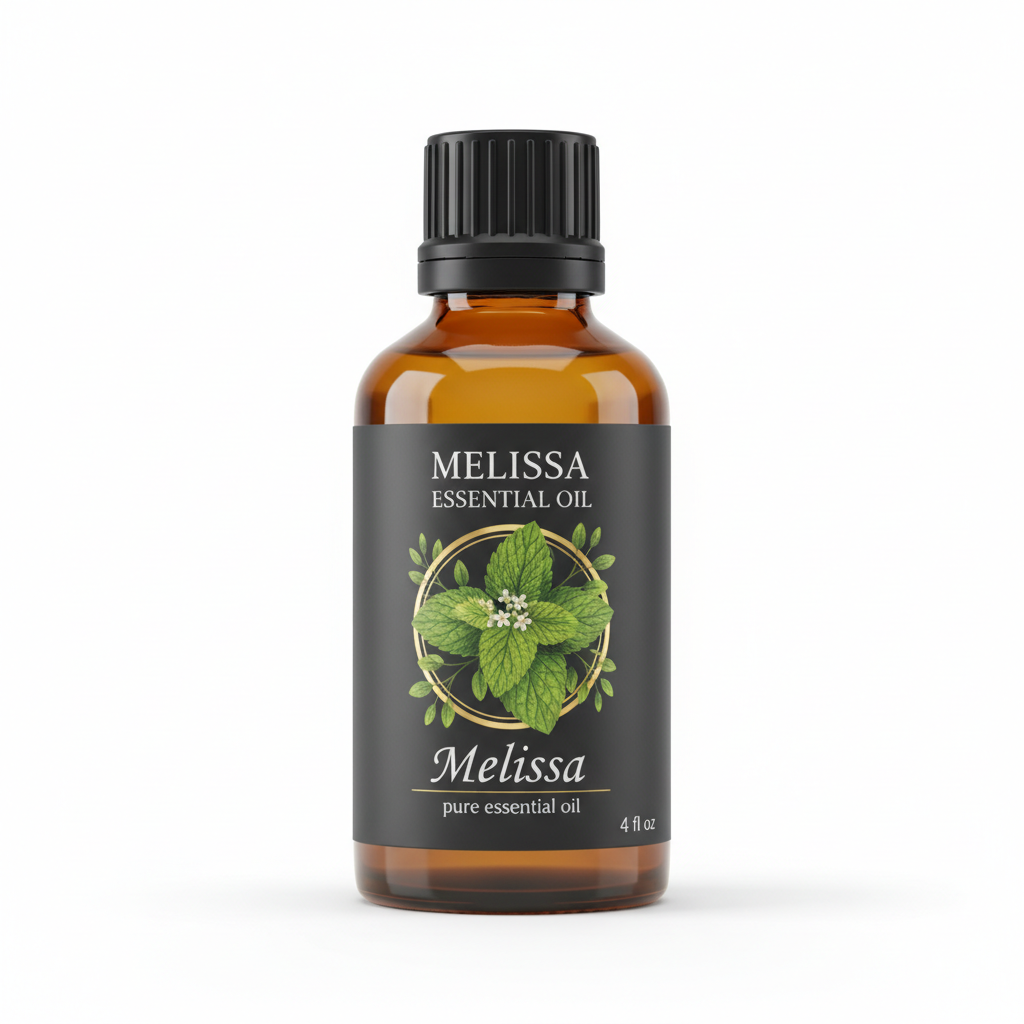
Melissa Essential Oil
Our own Melissa Essential Oil, in sizes from 0.5 oz to bulk.
From $23.99
Shop Now →Where 0.15% comes from
IFRA publishes a Standard titled "Melissa oil (genuine Melissa officinalis L.)", a restriction based on dermal sensitisation. For body creams, oils and lotions (its Category 5A) the maximum is 0.15% of the finished product. The same figure covers facial and baby products in the 5B to 5D categories, fine fragrance is 0.60%, bar soap and similar rinse-off products 1.2%, and candles have no restriction (IFRA Standards, 51st Amendment). IFRA's guidance document places "body creams, oils, lotions of all types" in 5A, which makes a massage or body oil you blend at home a 5A product.
It is a voluntary industry standard that binds fragrance suppliers, not someone mixing at a kitchen table. We treat it as the clearest public statement of where the people who assess fragrance materials draw the line, and a good reason to begin at the lower figure.
Why citral gets the attention
Melissa oil's main aromatic molecules are geranial and neral, which together make citral. It is the same molecule that gives the oil its bright lemon note, and it is also a recognised skin sensitiser. Published analyses of melissa oil put geranial from about 6% to 51% and neral from about 4% to 35%, and describe both a citral type and a germacrene D type of oil (Petrisor and colleagues, 2022). So two oils sold as melissa can carry very different amounts of citral, and a conservative starting point is simply sensible.

A word on what sensitisation means. The Tisserand Institute describes irritation as inflammation that fades quickly once the oil is removed, and sensitisation as the priming of the immune system that later produces an allergic reaction, one that can last days or weeks. More dilution usually stops irritation from recurring, but it may not stop an allergy once someone is primed. That is why leave-on limits for sensitisers are set low and stay low.
Two studies give a feel for the science. A review of the human data for citral put the no-effect level for inducing sensitisation at 1400 micrograms per square centimetre of skin (Lalko and Api, 2008). That is a figure for citral itself, and it is the kind of threshold limits like IFRA's are built around. In a mouse assay of several essential oils, lemongrass oil and citral alone gave very similar potency, and the authors concluded that each oil behaved much like its main component (Lalko and Api, 2006). Melissa oil was not in that study. Applying it here is reasoning, not a finding: the more citral in the oil, the more it will behave like citral.
What the numbers mean in a bottle
The arithmetic is simple. Our oil's relative density on the Certificate of Analysis we publish for one batch is 0.888, and a rough convention is 20 drops per millilitre. One ounce of carrier is about 26 to 27 g, so 0.15% is about 0.04 g of oil, close to a single drop. The 0.5% bottom of our general range is about 3 drops per ounce, and 2% is about 12. Droppers vary, so weighing is better than counting.
Our recommendation follows from that. For a body oil or lotion, begin at or below 0.15%. Patch test on a small area first. Keep it away from eyes, children and pets, and do not take it internally. Anyone with eczema, broken skin or a history of fragrance reactions is better served by a dermatologist or allergist than by a home patch test, and the 2% end of the range is not something we would present as a safe level for melissa.
Make the patch test part of the routine
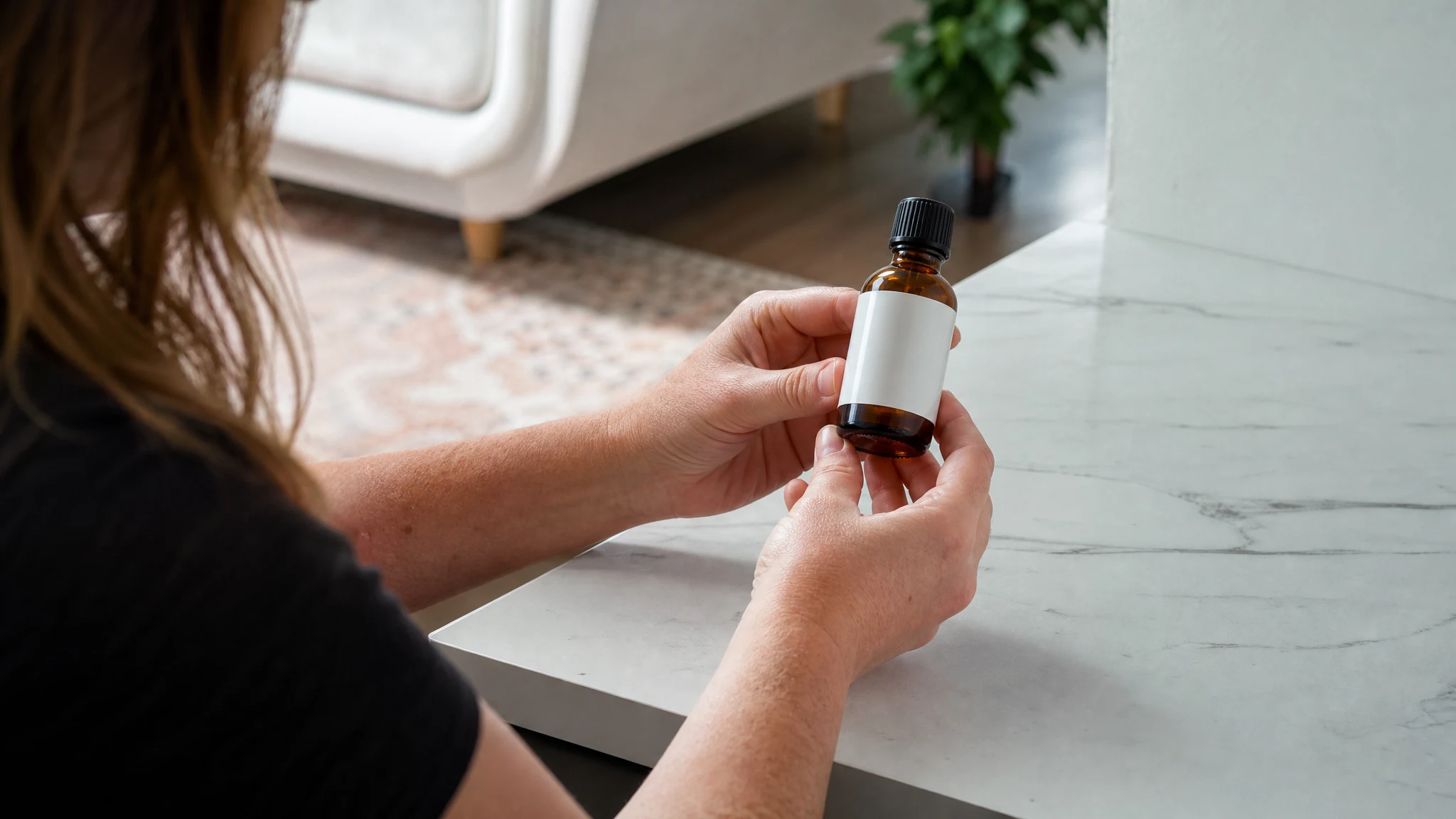
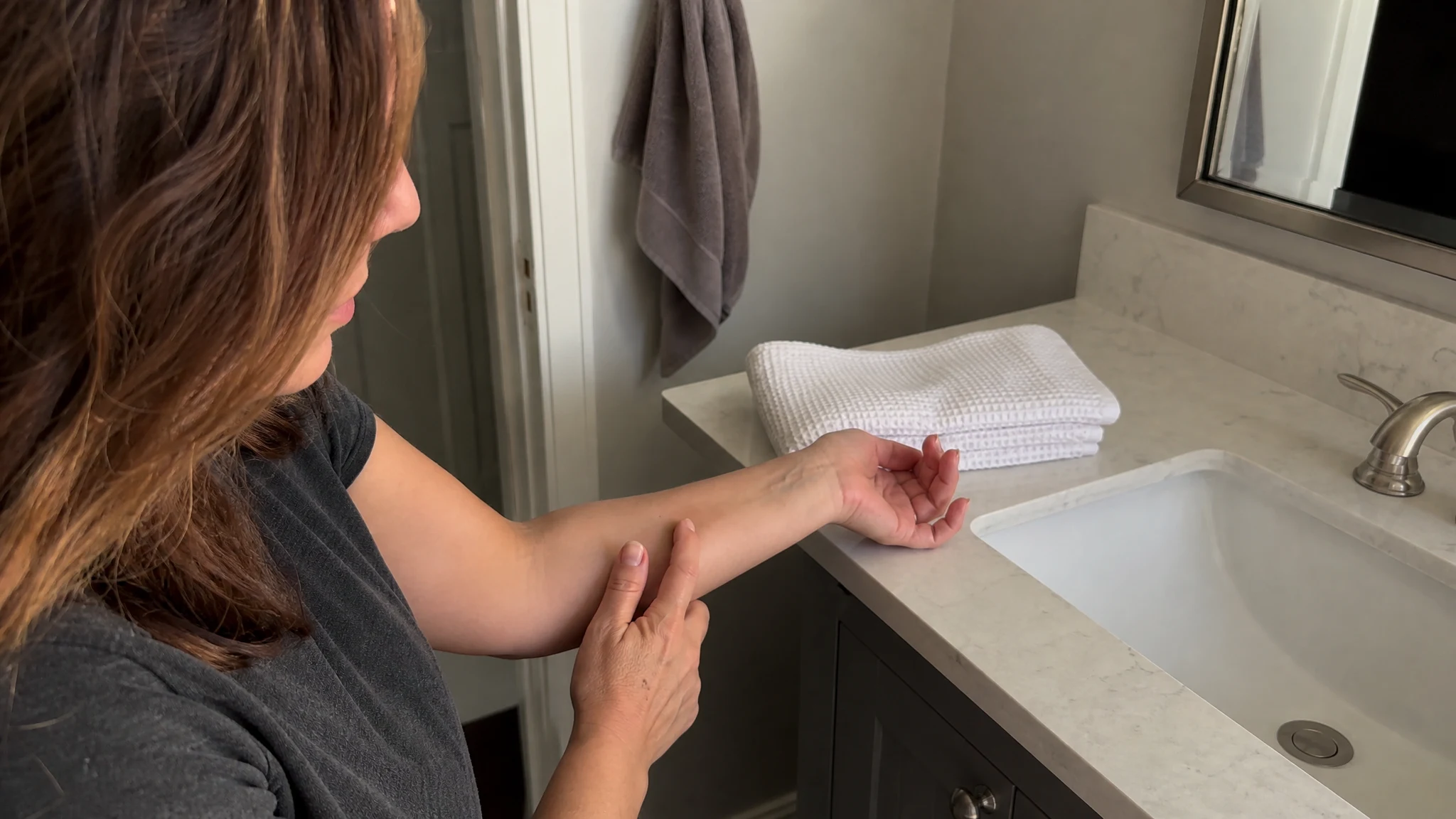
The patch test is the dull step people skip, so make it part of the routine rather than an afterthought. Mix your small batch, label the jar with the date and the percentage, and try a small dab on a small area before you use it more widely. Choose a day when you are not rushing, because a patch test only helps if you give it time. If anything looks or feels wrong, wash it off and stop using it. Keep the jar for next time: if you liked the scent at 0.15%, you now have a baseline to adjust from by nose.

Perfume and other formats
The 0.15% figure is a body-product number. Fine fragrance has a higher ceiling of 0.60%, which is a reason melissa suits perfume-style work better than a daily lotion, and our perfumery guide shows how far that ceiling stretches. For soap, see our cold process article. If you sell what you make, labelling and category questions belong with a regulatory consultant, and our allergen labelling article covers the paperwork side. We sell an external cosmetic oil and make no claim that it helps with any condition.
Starting small is easy with an oil this aromatic. A trace of lemon and green herb is already the point, and you can always add a little more of your own blend later.
Melissa Essential Oil
Melissa Essential Oil from our own shop, in sizes from 0.5 oz to bulk.
From $23.99
Shop Now →Sources & Further Reading
- IFRA Standards - 51st Amendment (Melissa oil (genuine Melissa officinalis L.)). IFRA, 2024. ifrafragrance.org
- Guidance for the Use of IFRA Standards. IFRA, 2023. IFRA guidance PDF
- Melissa officinalis: Composition, Pharmacological Effects and Derived Release Systems-A Review. Petrisor G, et al. Int J Mol Sci, 2022. PMC8998931
- Irritation and allergic reactions - Tisserand Institute. tisserandinstitute.org
- Citral: identifying a threshold for induction of dermal sensitization. Lalko J, Api AM. Regul Toxicol Pharmacol, 2008. PubMed 18353514
- Investigation of the dermal sensitization potential of various essential oils in the local lymph node assay. Lalko J, Api AM. Food Chem Toxicol, 2006. PubMed 16324777