How to Read a Melissa Oil Certificate of Analysis
A Certificate of Analysis looks like a page of numbers, and it is easy to nod at it and move on. It is worth a slower look, because each line answers a specific question, and knowing which question tells you what to ask a supplier for next. We will read ours first, then look at what a GC-MS report would add.
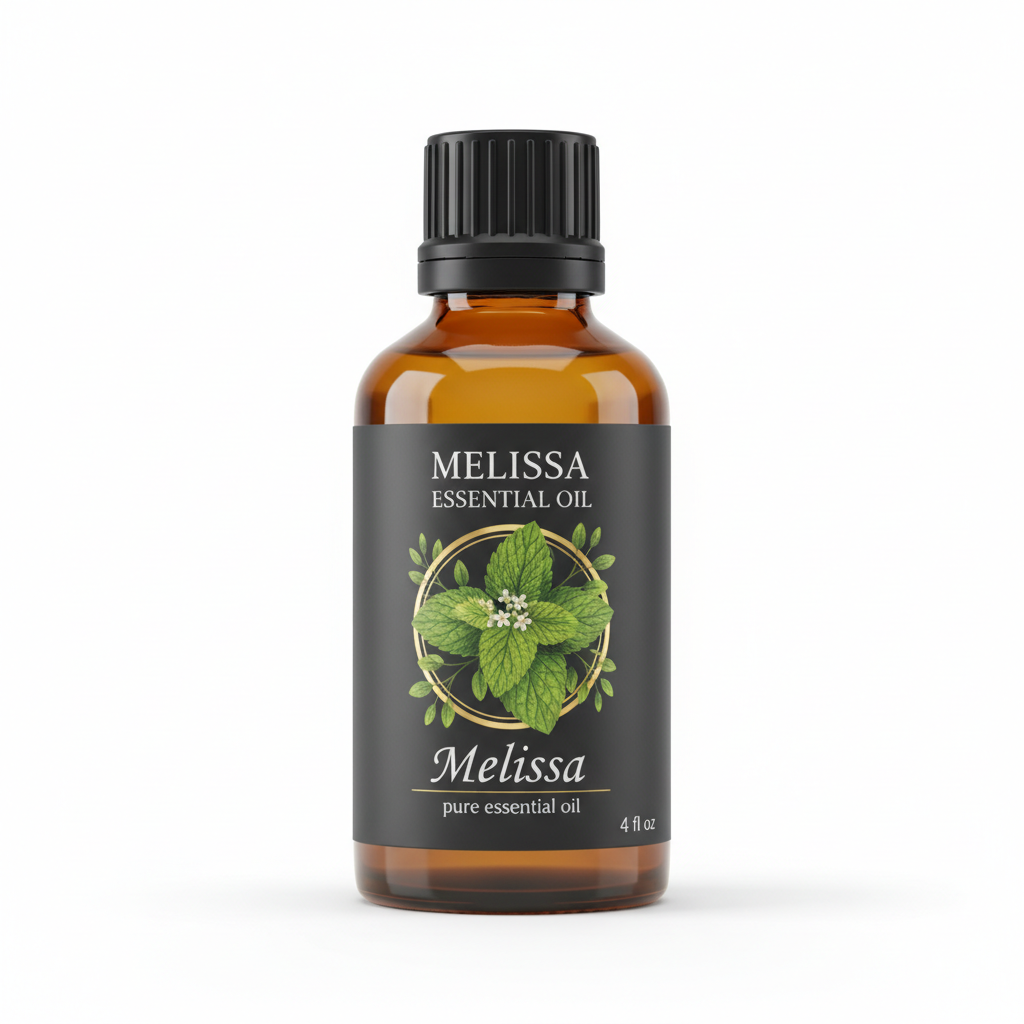
Melissa Essential Oil
Our own Melissa Essential Oil, in sizes from 0.5 oz to bulk.
From $23.99
Shop Now →Our certificate, line by line
The certificate we publish covers one batch, MELQGCMOUSC003A, listed as Melissa officinalis, parts used leaf, steam distilled, with a best-by date of 07/30/2028. It states its criterion as Pharmacopoeia. Everything below refers to that batch, and a certificate always describes the batch it names.
| Line | Result | Stated range | What it tells you |
|---|---|---|---|
| Appearance | Complies | Colorless to yellow liquid | The oil looks as expected: no haze, no dark color |
| Smell | Complies | Floral, fruity, herbal | The aroma was checked against that description |
| Relative density at 20 C | 0.888 | 0.880 to 0.910 | A milliliter weighs about 0.888 g |
| Refractive index at 20 C | 1.484 | 1.470 to 1.500 | How the oil bends light, a broad fingerprint |
| Optical rotation at 20 C | -1.08 degrees | -35 to +5 degrees | How the oil twists polarized light |
The relative density is the number you can put to work straight away. Because a milliliter weighs about 0.888 grams, a one-ounce bottle holds roughly 26 grams of oil, which is why we like to weigh when we measure small amounts for a recipe. The other lines are more like a handshake: they say the oil sits where a melissa oil is expected to sit on each physical measure.
What physical numbers can and cannot say
Density, refractive index and rotation are quick, inexpensive measurements, and they do a good job of catching gross differences. What they describe is the oil as a whole, not what it is made of. Several lemon-scented oils are built around the same family of molecules, so a physical measure alone is a general fingerprint. When you need to know what is in the bottle, the tool for that is gas chromatography with mass spectrometry, GC-MS.
Start with the boring parts
When a certificate lands in your inbox, resist the urge to jump straight to the numbers. Read the header first: the product name, the botanical name, the batch number and the date. Then check that the batch number matches the one on your bottle. It sounds obvious, but this is the step that gives every other line its meaning. A beautiful table that belongs to a different batch is just a nice picture.
Next, look at how the page is laid out. A good certificate states what was measured, the result and the range it is held against, so you can see at a glance whether a number sits inside the line. A page that gives only results, with nothing to compare them to, leaves you guessing.
What a GC-MS report adds
GC-MS separates the oil into its individual compounds and lists each with a percentage. To see why that is useful, look at two published analyses of melissa oil. A commercial oil bought in a pharmacy in Ankara in 2025 came out with geranial at 18.3%, neral at 11.3%, beta-caryophyllene at 16.7%, caryophyllene oxide at 12.7% and citronellal at 8.6% (Chemical Profiling and Antimicrobial Prospective of Commercial Essential Oils from Selected Lamiaceae Genera). Dried leaves from Algiers, distilled in a laboratory, gave geranial 45.06%, neral 31.72% and citronellal 6.42% (Minerals, Essential Oils, and Biological Properties of Melissa officinalis L.). Same species, quite different tables.
That spread is the first thing to understand about a GC-MS report: it describes one sample, and melissa varies a great deal. A review of the literature reports geranial anywhere from about 6% to 51% and neral from about 4% to 35% (Melissa officinalis: Composition, Pharmacological Effects and Derived Release Systems-A Review). So a single table is not a benchmark for the whole species. It becomes meaningful when it names the batch you are buying.
Three habits for reading any GC-MS table
- Know what the percentage means. Most tables show share of peak area, not grams per 100 grams. The Ankara paper states that no internal standard was used and that its values are best read as qualitative or semi-quantitative.
- Check how compounds were identified. A good report says which column and reference library were used, not just a list of names.
- Look at the total. If identified compounds add up to 90%, a tenth of the oil is unnamed, which is normal but worth noticing.
The same Ankara paper adds a useful caution: standard GC-MS cannot rule out sophisticated synthetic spiking, so a clean-looking table is supportive, not conclusive. Specialist methods exist for that question, and a seller has to commission them separately.
Keep a small file
If you make products, we suggest keeping a folder, paper or digital, for each oil you use. Put the certificate in it, along with the batch number and the date you received the oil. When a customer or a colleague asks a question months later, you will be glad you did. It takes two minutes at the time and can save an afternoon of hunting.
What to ask before you order
Decide what you need the document for. If you are scenting a small project, the lines on a certificate like ours may be all you need. If you are a formulator working with limits for sensitizing compounds such as citral, or you are costing a batch, you will want composition. In that case, ask in writing before you order. For our oil, you can reach us through the contact page and tell us which lot and which data you need. Our supplier documentation checklist is a handy list of what to request from any seller, and our composition article shows why a citral figure matters.
A certificate is a good start to a conversation, and the best ones are the ones you know how to read.
Melissa Essential Oil
Melissa Essential Oil from our own shop, in sizes from 0.5 oz to bulk.
From $23.99
Shop Now →Sources & Further Reading
- Chemical Profiling and Antimicrobial Prospective of Commercial Essential Oils from Selected Lamiaceae Genera, Molecules, 2026
- Minerals, Essential Oils, and Biological Properties of Melissa officinalis L., Plants, 2021
- Melissa officinalis: Composition, Pharmacological Effects and Derived Release Systems-A Review, International Journal of Molecular Sciences, 2022