What Does Melissa Oil Smell Like?
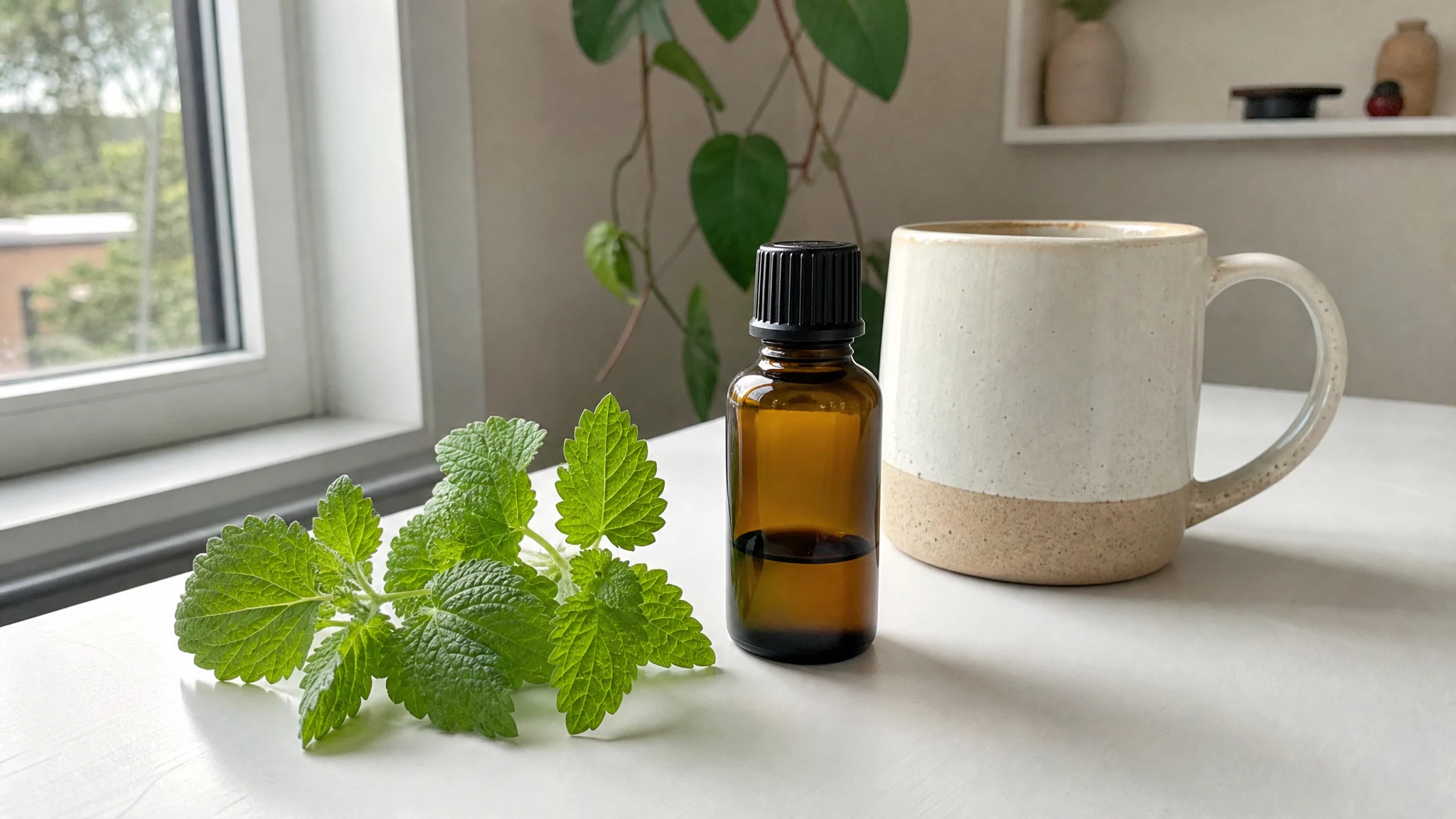
Open a bottle of melissa oil and lemon arrives first, but not the sharp, zesty lemon of a peel. It is softer and greener, closer to crushed lemon balm leaves than to a squeezed fruit. That difference is the whole character of the oil, and it has a chemical explanation.
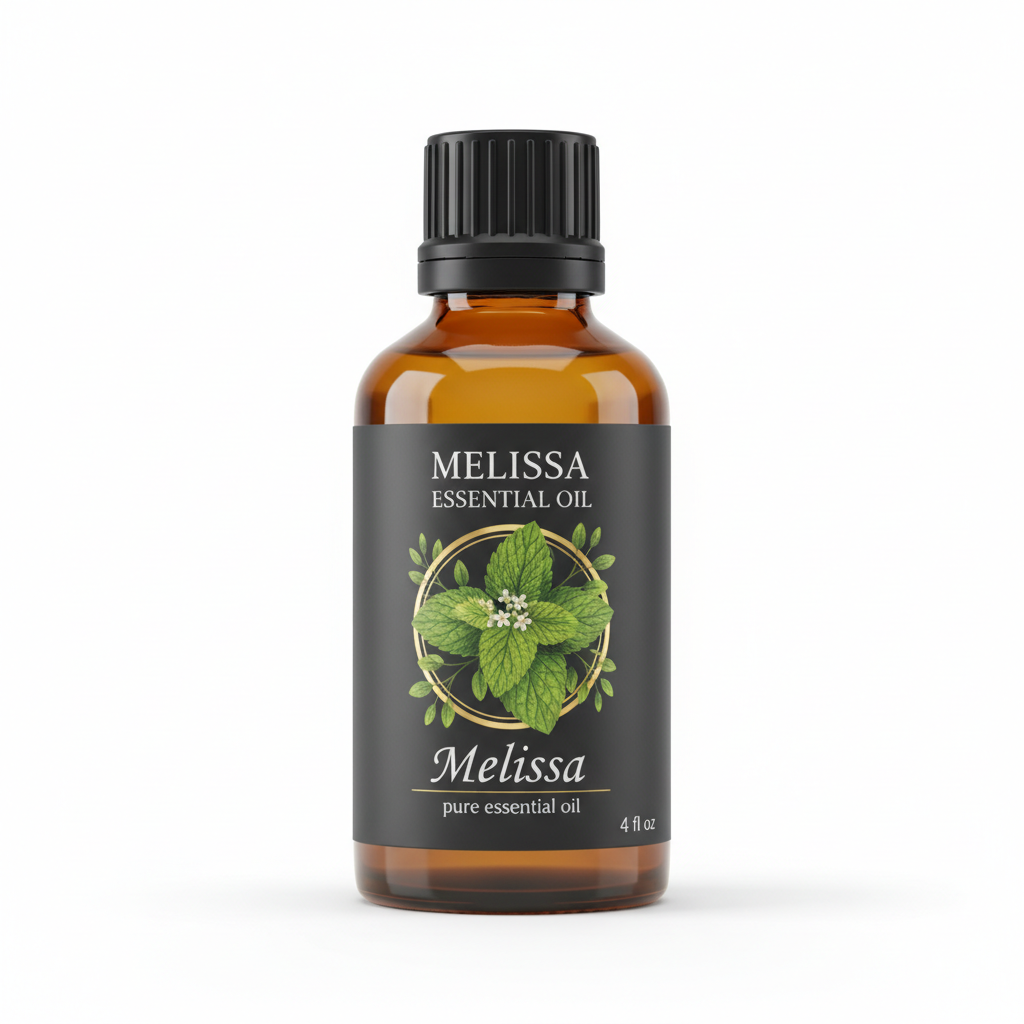
Melissa Essential Oil
Our own Melissa Essential Oil, in sizes from 0.5 oz to bulk.
From $23.99
Shop Now →Where the lemon comes from
A review of the oil's composition ties the fresh lemon odour to citral, the pair of molecules geranial and neral, along with smaller amounts of citronellal and geranyl acetate (Petrisor and colleagues, 2022). Citral is the same lemon-scented molecule found in lemongrass and litsea, which is why those oils get compared with melissa so often. Our own description of our oil is delicate, lemony and herbal, a bright citrus lift over a soft green heart. We describe it as rounder, greener and more delicate than lemongrass or litsea, which come from different plants.
In perfumery terms we place it from top to middle. That means it opens bright and then settles into something leafier, which is a very pleasant arc for a single oil. A little goes a long way, so one drop on a strip tells you most of what you need.
Why no two bottles of melissa smell identical
Melissa oil is unusually variable. The same review compiles reported geranial from about 6% to 51% and neral from about 4% to 35%, describes a citral type and a germacrene D type, and notes that one Greek study found citral and citronellal missing altogether. In another comparison a French population gave geranial at about 7% where a German one gave about 39%. It is reasonable to expect that an oil with a fraction of the citral will present less lemon than one with several times as much. That is an inference, not a measured scent result, but it is why we encourage smelling over reading.
Chemistry cannot fully settle it either. A 2025 review of odour science concludes that no universal map links chemical structure to perceived smell, and that perceived qualities vary with individual experience and language (Doty, 2025). A GC-MS report tells you what is in the bottle. Your nose tells you what you will experience. Our composition explainer sets the analyses side by side if you want to look at the chemistry.
A blotter test worth doing
A review of essential oils in perfumery describes top notes as the first to be noticed and the quickest to fade, lasting 5 to 10 minutes or up to about 30, with middle notes lasting up to an hour (Sharmeen and colleagues, 2021). Using those timings, here is a simple way to meet the oil properly.
- Put one drop on an unscented paper strip and hold it a hand's width from your nose. The bottle's headspace is the most concentrated version of the oil you will ever smell.
- Come back at about 30 minutes, after the top-note window, and notice what is left.
- Try again after a few hours. A green, herbal trace after the lemon has gone is the oil's heavier heart.
- If you already own a lemongrass or litsea strip, set it alongside. You are comparing the shape of the scent, not its strength.
For the chemistry behind the look-alikes, see our comparisons of melissa and litsea cubeba and lemon-scented oils.
Words that help when you smell it
If you are new to describing scents, a few words may help. Try asking yourself whether the smell is sharp or soft, juicy or leafy, sweet or green. Melissa lands on the soft, leafy and green side of lemon. Some people compare it to lemon balm tea, some to a cut herb bunch on a kitchen counter, and some to a clean, light citrus. There is no wrong answer. A small notebook beside your oils, with one line of your own words for each, is one of the nicest ways to learn your nose.
Keeping the freshness
Citral is the part of the scent most open to change. A review of flavour compound stability describes citral as highly susceptible to acid-driven rearrangement and to oxidation, especially with light and heat (Weerawatanakorn and colleagues, 2015). That work looked at food and drink systems, so applying it to an oil in an amber bottle is an inference, but a sensible one: the molecule behind the lemon is the one that drifts when it meets air, warmth and light.
The Tisserand Institute gives the practical version. Oxidation changes an oil's smell and takes away some brightness and freshness, heat, light, air and moisture speed it up, and most oils stay good for at least one to two years. Our copy says typically one to two years kept tightly capped in a cool, dark place. Writing the date you opened the bottle on the label costs nothing, and it is the only way to tell later whether the scent has shifted. For storage ideas, see how to store melissa oil.
Giving it a fair chance
Clear your nose first. Smell something neutral, such as your own sleeve, and avoid trying it right after coffee or a strong candle. Smell the strip a few times over the first hour, rather than once, and take a breath of fresh air between sniffs. A delicate oil needs a calm nose.
Who it suits
If you want a loud, simple lemon, lemongrass will shout louder. Melissa is for people who like their citrus rounded and a little herbal, and who enjoy an oil that changes over the first hour. Smell it against the lemon oils you already know, give it time, and decide on what is left on the strip.
Melissa Essential Oil
Melissa Essential Oil from our own shop, in sizes from 0.5 oz to bulk.
From $23.99
Shop Now →Sources & Further Reading
- Melissa officinalis: Composition, Pharmacological Effects and Derived Release Systems-A Review. Petrisor G, et al. Int J Mol Sci, 2022. PMC8998931
- Odors as cognitive constructs: history of odor classification and attempts to map odor percepts to physical and chemical parameters. Doty RL. Chem Senses, 2025. doi.org/10.1093/chemse/bjaf022
- Essential Oils as Natural Sources of Fragrance Compounds for Cosmetics and Cosmeceuticals. Sharmeen JB, et al. Molecules, 2021. PMC7865210
- Reactivity and stability of selected flavor compounds. Weerawatanakorn M, et al. J Food Drug Anal, 2015. PMC9351765
- Is my bottle of essential oil oxidized or no longer good to use? Tisserand Institute. tisserandinstitute.org