Lemon Scented Oils Compared: Melissa, Lemongrass and More
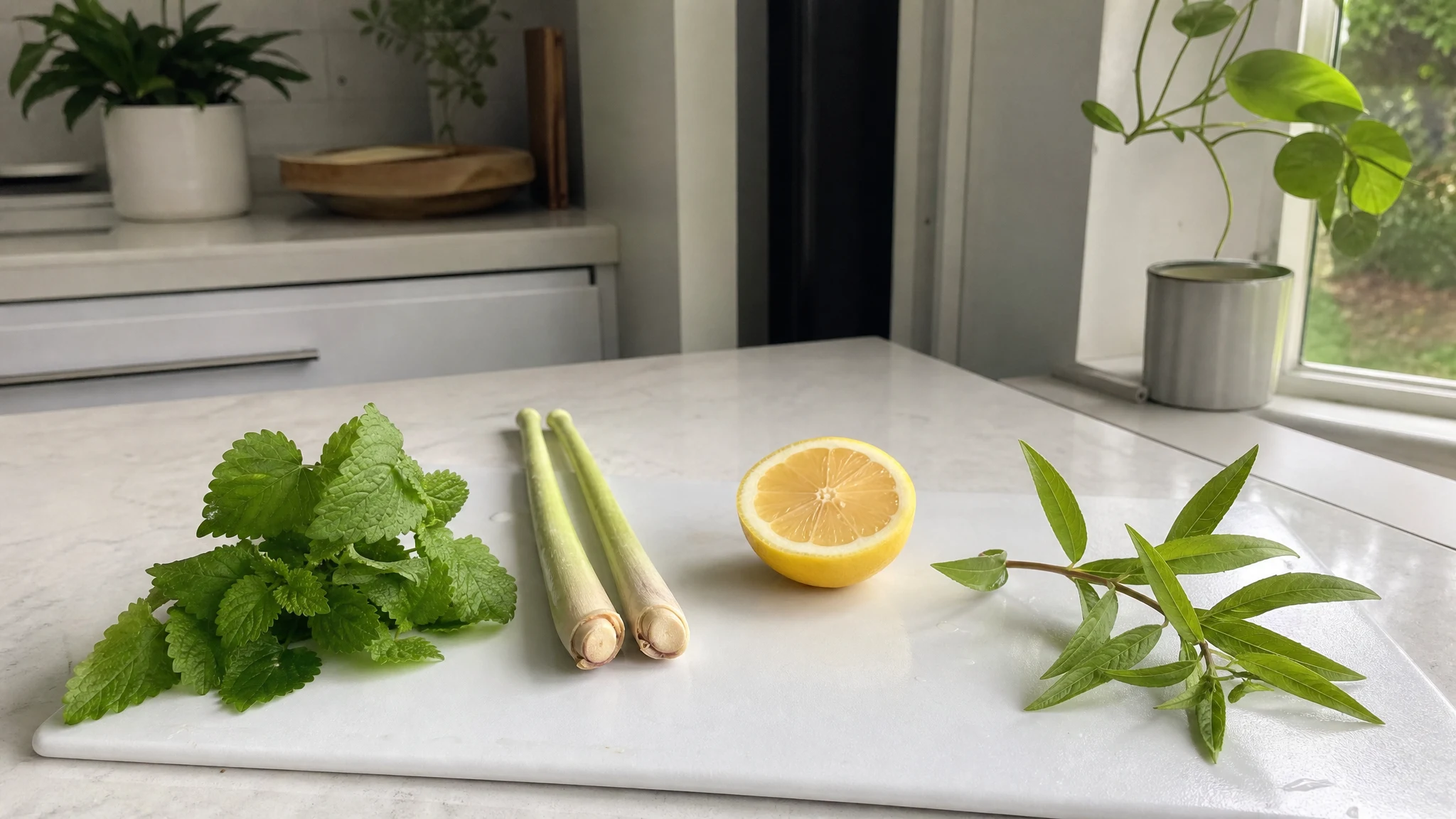
Plenty of oils get called lemon-scented, yet only one of them gets its lemon from limonene, the molecule in a squeezed peel. The rest lean on citral, the pair of aldehydes neral and geranial, and the share of citral in the bottle shapes both the scent and how much of the oil you can use. Here is how five of them compare, and where melissa stands among them.
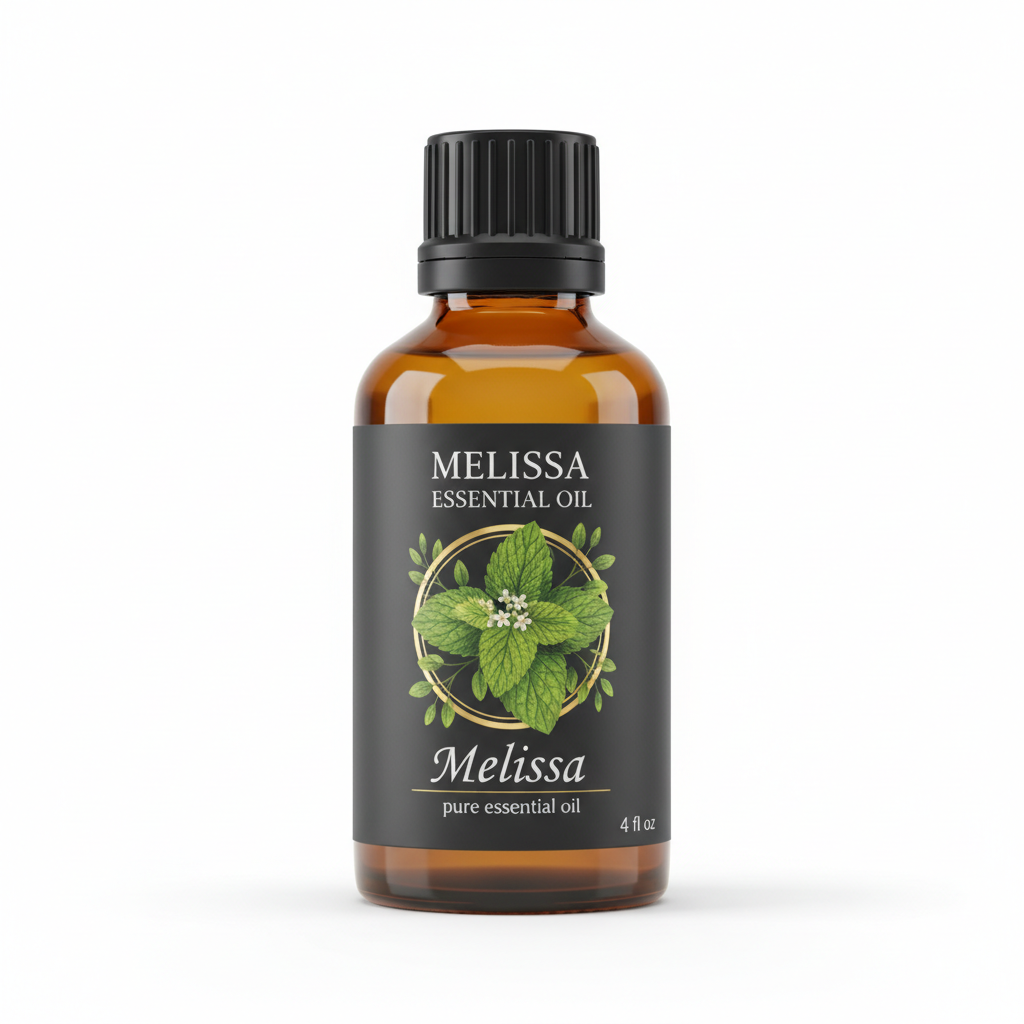
Melissa Essential Oil
Our own Melissa Essential Oil, in sizes from 0.5 oz to bulk.
From $23.99
Shop Now →Where each lemon note comes from
| Oil | Lemon note comes from | Reported figures |
|---|---|---|
| Lemon, cold-pressed peel | Limonene | Limonene about 60 to 73%; citral only about 2 to 3% |
| Lemon myrtle leaf | Citral | Citral about 80 to 97% |
| Litsea cubeba fruit | Citral | Neral plus geranial about 79 to 87% in eight Chinese samples |
| Lemongrass leaf | Citral | About 41 to 75% in eleven Brazilian commercial leaf samples |
| Melissa herb | Citral, with citronellal and caryophyllene | Geranial about 6 to 51% and neral about 4 to 35% across published analyses |
The figures come from published analyses of specific samples, not oils in general: an EFSA opinion for lemon (EFSA, 2021), a review of lemon myrtle (Southwell, 2021), eight litsea samples (Si and colleagues, 2012), commercial lemongrass leaf (Barbosa and colleagues, 2008) and a review of melissa (Petrisor and colleagues, 2022). They are not our oil, whose Certificate of Analysis lists density, refractive index and optical rotation.
Two things stand out. Lemon is the odd one out, a fruity, limonene-led oil with little citral. And melissa has one of the widest spreads of the citral oils, because it ranges from a lot of citral to very little depending on where and how it was grown, while lemon myrtle and litsea stay in a tighter band. Lemon verbena is a sixth lemon-scented oil that behaves quite differently in perfumery, covered in our melissa and lemon verbena article.
Why the citral share matters to makers
Citral is a recognised fragrance allergen, and IFRA limits it in finished products: 0.15% in body creams, oils and lotions, 0.60% in fine fragrance and 1.2% in bar soap and reed diffusers (Categories 5A, 4, 9 and 10A, with placements from IFRA's guidance). Divide the limit by an oil's citral share and you have the most of that oil the standard allows, if it is your only citral source. An oil with about 75% citral gives roughly 0.2% in a lotion, 0.8% in a cologne and 1.6% in a soap. As a worked ounce of cologne, about 5 drops of such an oil by our arithmetic (20 drops per millilitre), while a lotion permits one or two. The more citral per drop, the fewer drops.
That arithmetic is also why our own skin guidance for melissa starts low. Our general dilution range of 0.5% to 2% is broader than the lotion figure above, and for melissa we begin near 0.15%. Details are in our skin article, and perfume maths is in our perfumery guide.
Choosing by use
- A bold lemon note in a cleaner or rinse-off product: expressed lemon, which is limonene-led and so sidesteps the citral caps. You will find it at a supply shop, since we sell melissa only.
- Cold process soap: citral oils fit within the Category 9 figure, though how much scent survives saponification is a separate matter, covered in our soap article.
- Cologne and fine fragrance: citral oils work within a fraction of a percent. Melissa and lemongrass leave a little more room than litsea or lemon myrtle, which carry more citral per drop.
- Leave-on body products: the tightest figures of all. If you want a lemon note here, check the type of lemon oil and the standard that applies to it.
- Reed diffusers: Category 10A with a 1.2% citral cap.
A side-by-side smelling plan
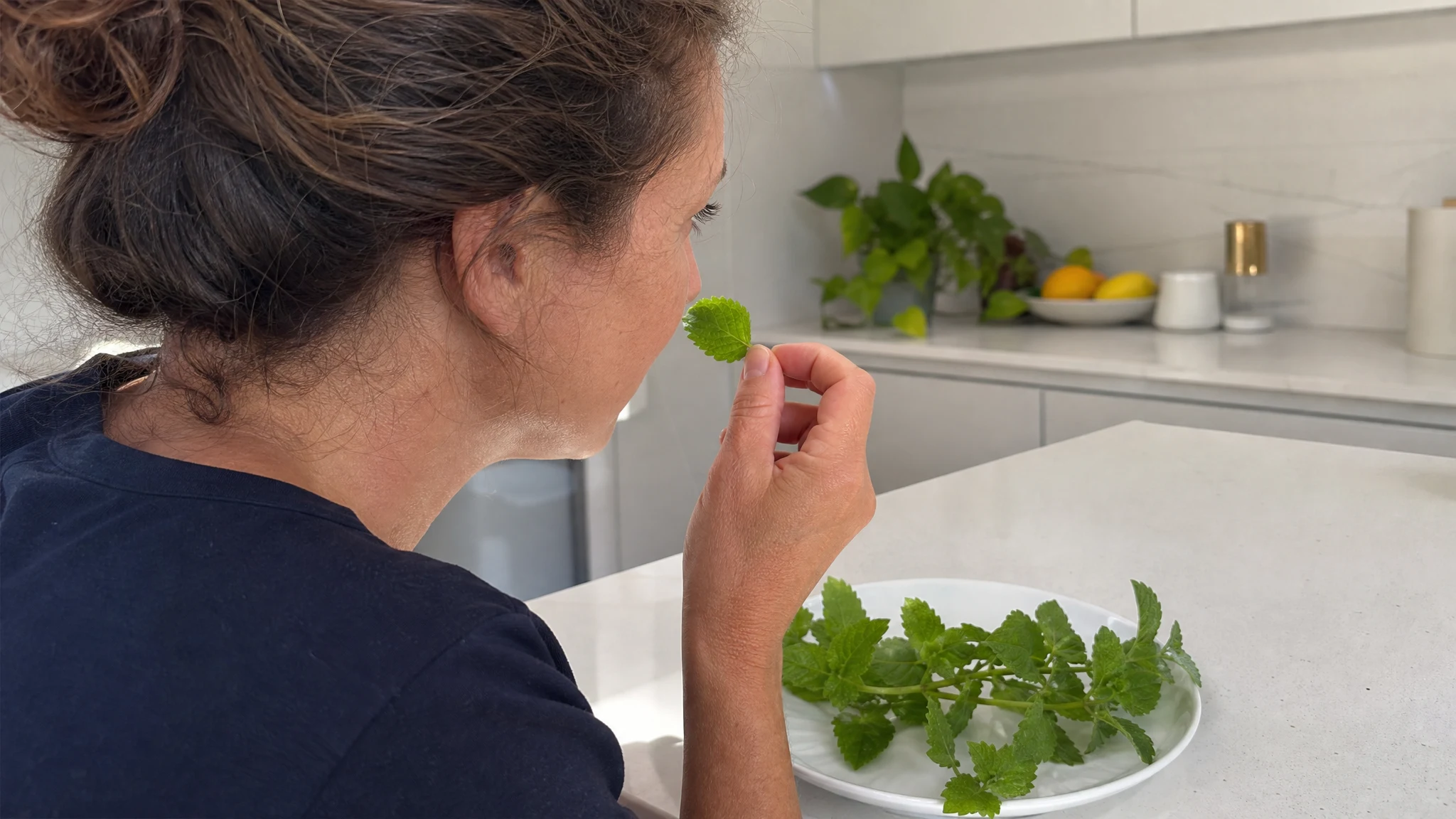
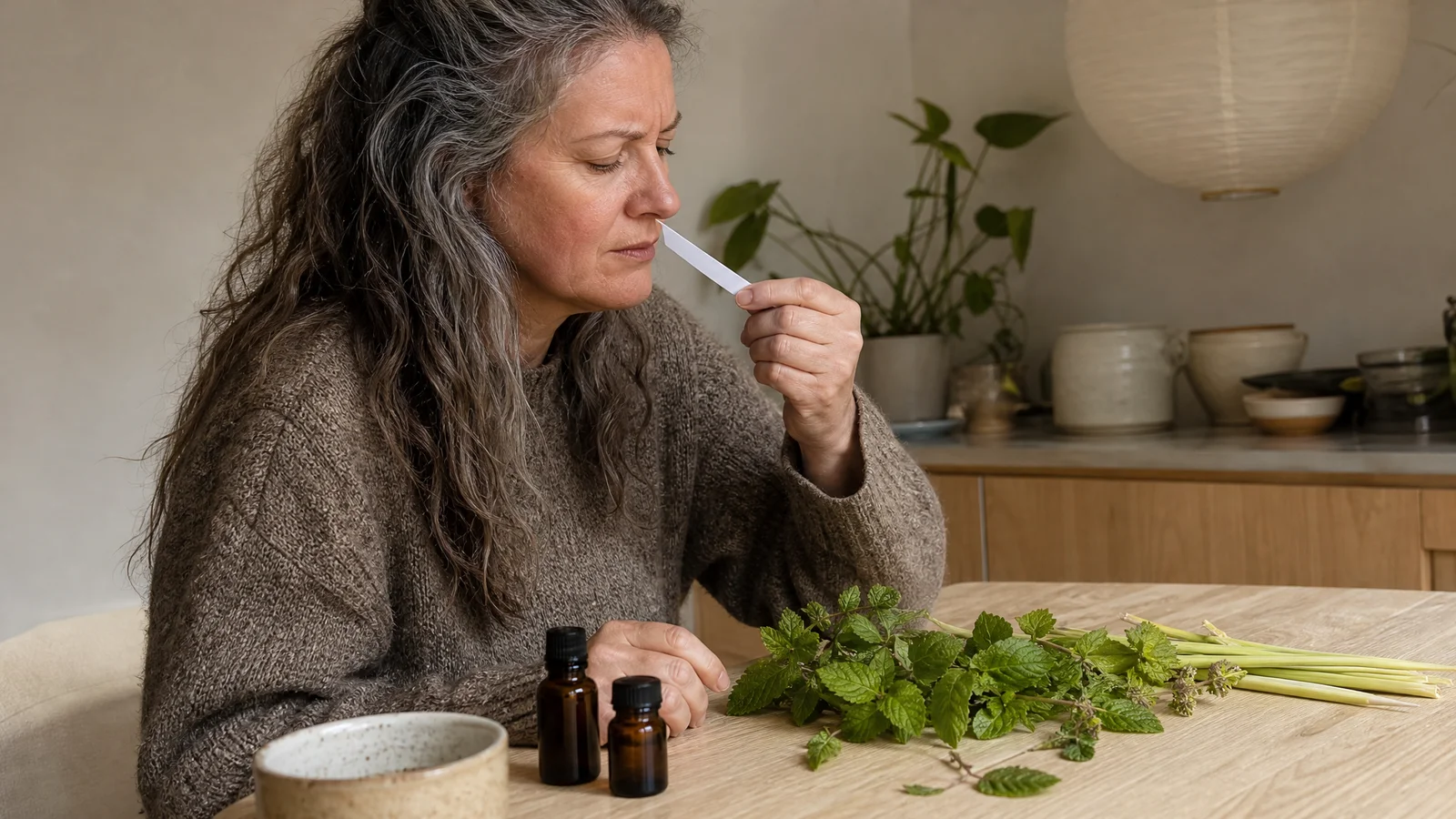
Numbers are useful, but the best way to learn these oils is to smell them together. Put one drop of each on its own strip of paper and label every strip in pencil. Start with the softest-smelling oil you own and move toward the boldest, with a minute's rest between each so your nose does not tire. Smell again after ten minutes and after an hour, because the first impression and the lasting one can be quite different.
Keep your notes short: fruit, grass, garden, sharp, soft, and anything else that comes to mind. It does not have to be fancy, and you may find your own words more useful than anyone's description.
Keeping your lemon oils straight
Because several of these oils look and smell alike at a glance, label every bottle clearly. If you decant a little into a smaller bottle, write the common name and the botanical name on it, along with the date. Lemon-scented oils can end up side by side on a shelf, and a clearly labelled bottle saves you from mixing up two with very different limits.
Where melissa fits
We describe our melissa as rounder, greener and more delicate than lemon-scented oils such as lemongrass or litsea, which come from different plants. That is a description of aroma and a preference, not a measurement. The practical differences are the ones above, plus yield: melissa oil is reported at about 0.01% to 0.72% of the plant, while lemon myrtle leaf is reported at 1.1% to 3.2% and the lemongrass leaf samples run about 0.2% to 1.3% of dry weight. That is a good part of why melissa is the rarer, softer one.
If you want to go oil by oil, we compare melissa and lemon, melissa and litsea, and melissa, lemongrass and citronella.
The best test is still the nose. Put a strip of each lemon oil you own side by side, and notice which one reads as fruit, which as grass and which as a garden.
Melissa Essential Oil
Melissa Essential Oil from our own shop, in sizes from 0.5 oz to bulk.
From $23.99
Shop Now →Sources & Further Reading
- Safety and efficacy of feed additives consisting of expressed lemon oil and its fractions from Citrus limon (L.) Osbeck and of lime oil from Citrus aurantiifolia (Christm.) Swingle for use in all animal species (FEFANA asbl). EFSA J, 2021. PMC8085978
- Backhousia citriodora F. Muell. (Lemon Myrtle), an Unrivalled Source of Citral. Southwell I. Foods, 2021. PMC8305781
- Chemical composition of essential oils of Litsea cubeba harvested from its distribution areas in China. Si L, et al. Molecules, 2012. PMC6268156
- Evaluation of the chemical composition of Brazilian commercial Cymbopogon citratus (D.C.) stapf samples. Barbosa LCA, et al. Molecules, 2008. PMC6244952
- Melissa officinalis: Composition, Pharmacological Effects and Derived Release Systems-A Review. Petrisor G, et al. Int J Mol Sci, 2022. PMC8998931
- IFRA Standards - 51st Amendment (Citral). IFRA, 2024. ifrafragrance.org
- Guidance for the Use of IFRA Standards. IFRA, 2023. IFRA guidance PDF