Lemon Balm Oil vs Melissa Essential Oil: What Differs
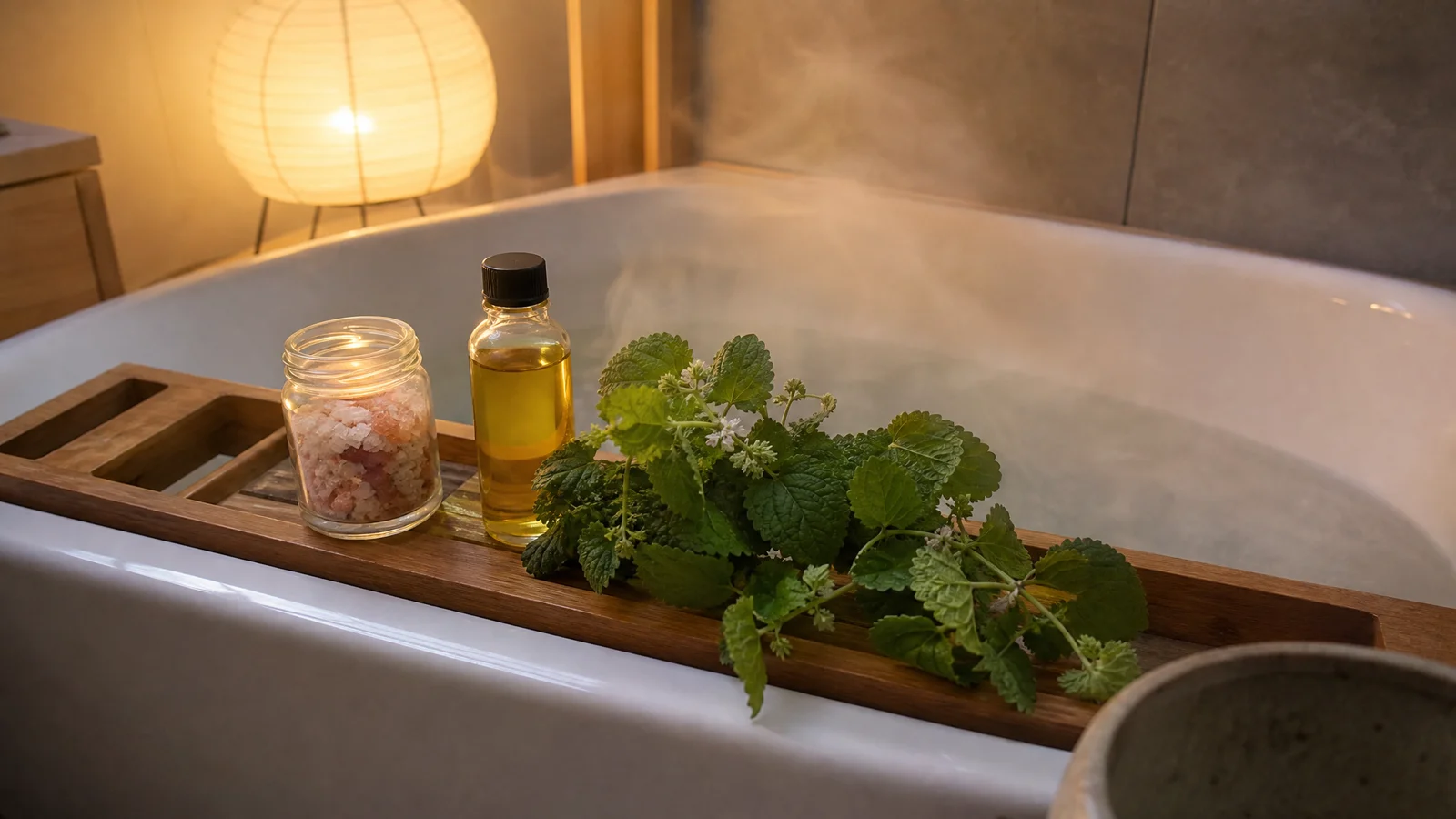
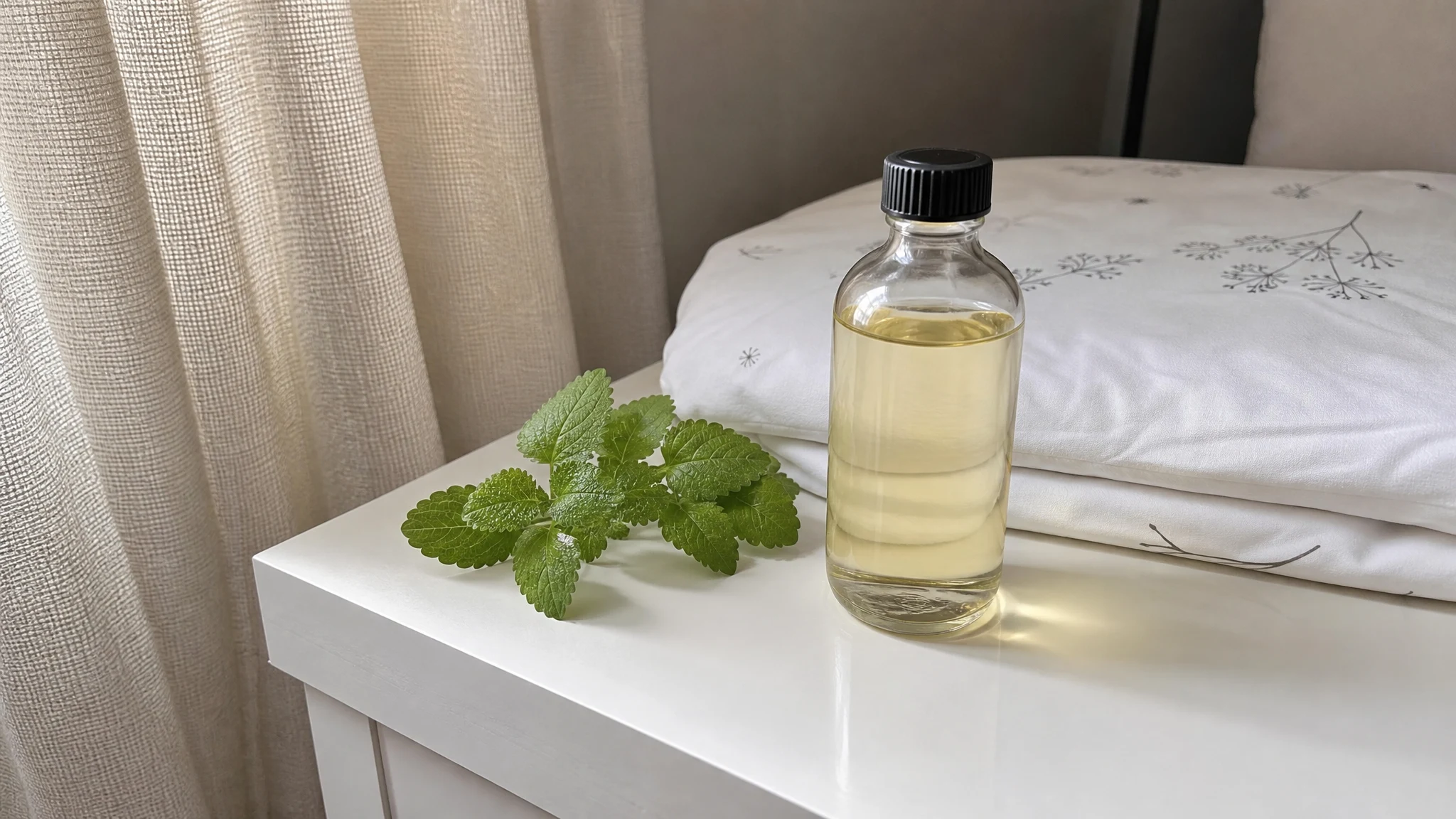
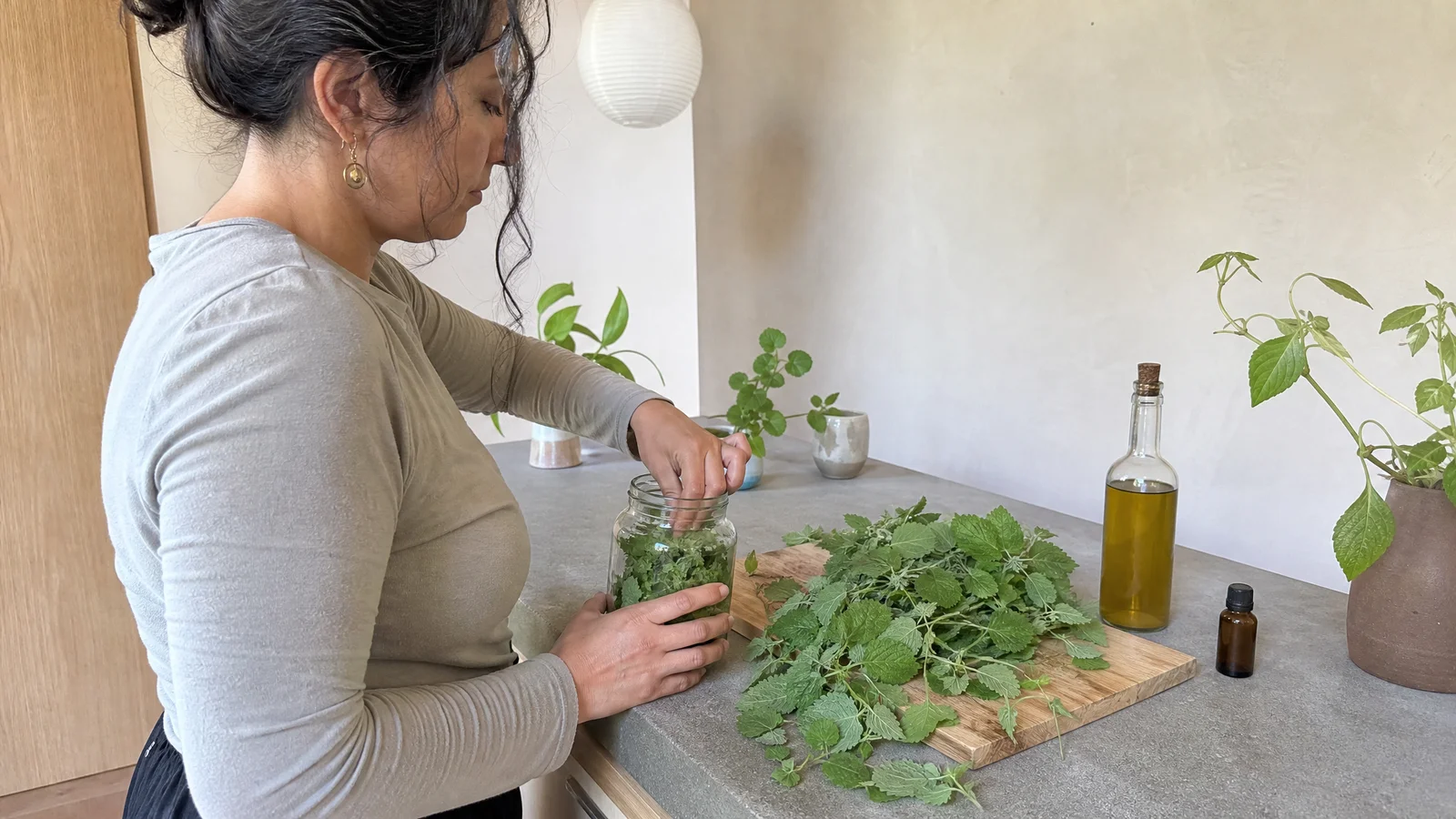
Search for "lemon balm oil" and you will find two quite different things sharing one name. One is a vegetable oil that has spent time with lemon balm leaves; the other is the essential oil we sell, steam-distilled from the same plant and measured in drops. Same herb, very different bottles, and it helps to know which one a recipe or a label really means.
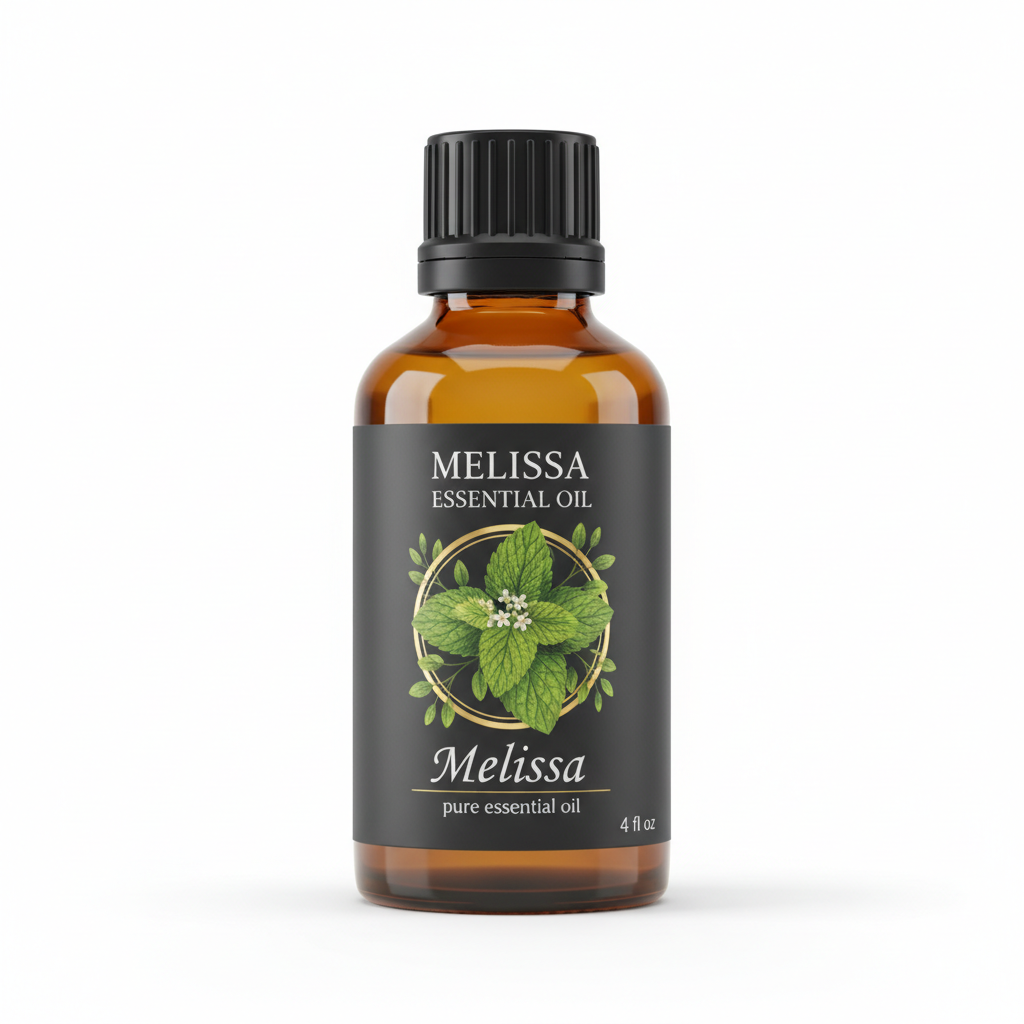
Melissa Essential Oil
Our own Melissa Essential Oil, in sizes from 0.5 oz to bulk.
From $23.99
Shop Now →One plant, several products
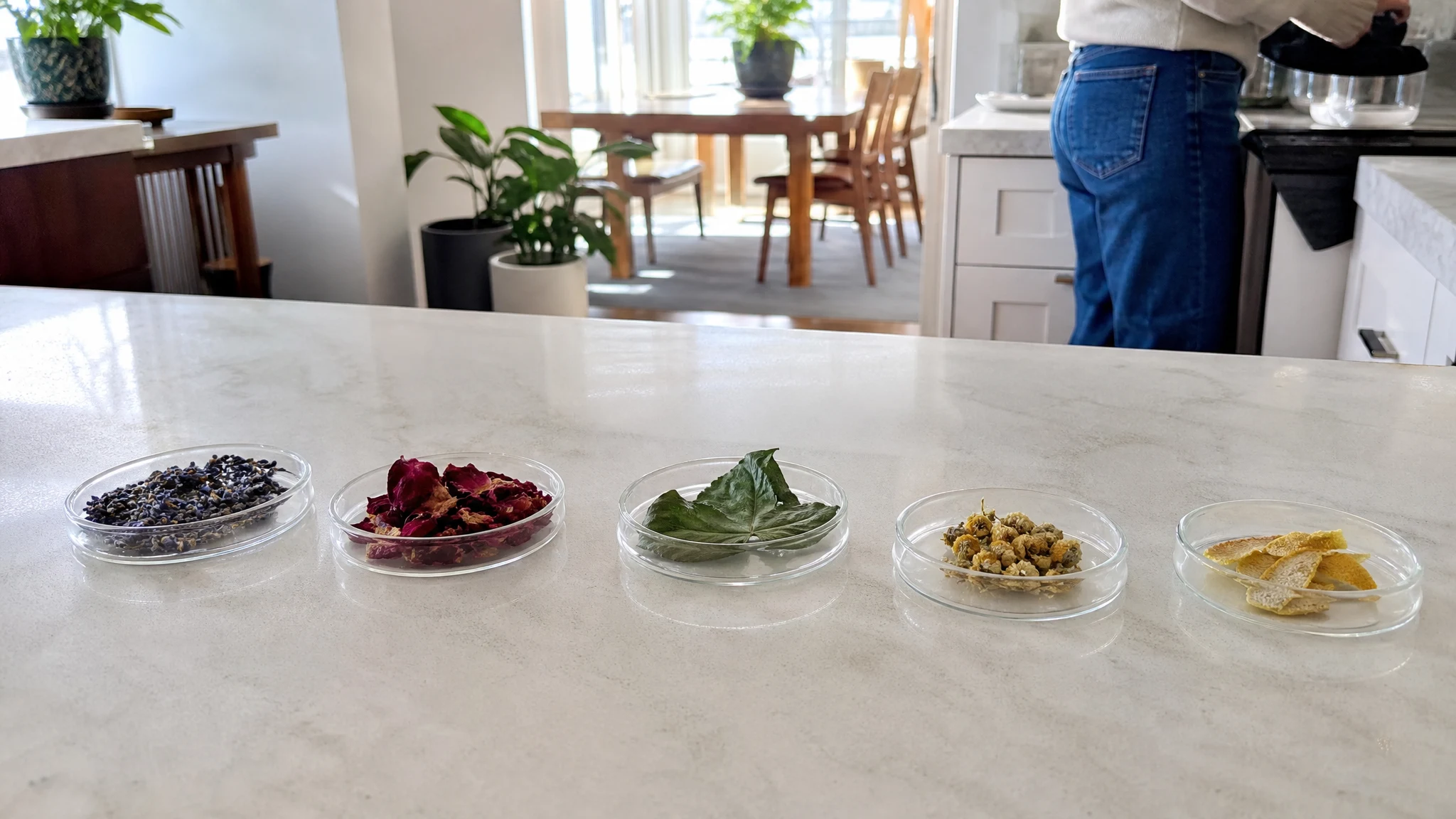
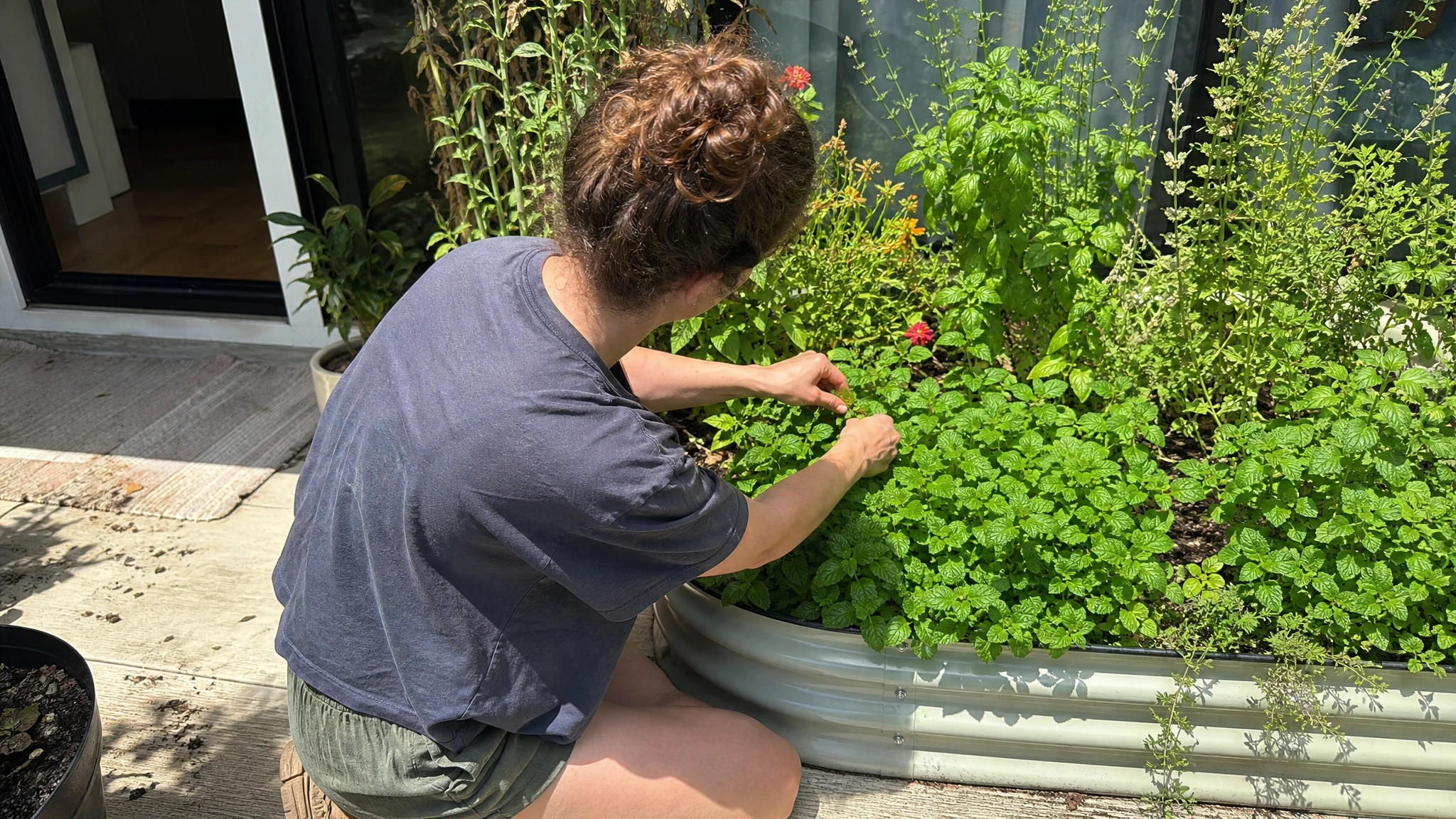
Lemon balm and melissa are two names for Melissa officinalis, a mint-family herb that the 2022 Petrisor review also lists under the names honey balm and balm mint. What you get depends on how the plant is handled. Our oil is the steam-distilled essential oil, sold neat. An infused oil, a hydrosol, a CO2 extract and dried leaf are all different products again, and we do not sell any of them.
Labels will not always sort this out for you. The FDA notes on its fragrances page that there is no regulatory definition for "essential oils," so "lemon balm oil" on a front label can mean either. The ingredient list is the better guide. An infused oil lists a carrier such as sunflower or jojoba first. An essential oil lists the botanical name.
Why the distilled oil is the concentrated one
The Petrisor review gathers yields of essential oil from lemon balm herb, and the numbers are small: figures such as 0.17%, 0.34% and 0.37% turn up, with one set of 28 accessions ranging from 0.01% to 0.72%. Our arithmetic from the middle of those figures says it takes roughly 270 to 590 grams of herb to make a single gram of oil. That is the reason a bottle of melissa oil is potent and a little goes a long way, and it is why we suggest weighing it rather than counting drops.
The same review reports that the oil's citral, the lemon-scented pair of geranial and neral, varies widely between studies, from about 6% to 51% for geranial and 4% to 35% for neral. Citral is what gives melissa its bright lemony lift, and it is also why leave-on use needs a light hand. The Certificate of Analysis we publish for one batch lists a relative density of 0.888, a refractive index of 1.484 and an optical rotation of -1.08 degrees; if you need GC-MS or citral figures for your own project, ask us in writing through the contact page before ordering.
What an infused oil is good for
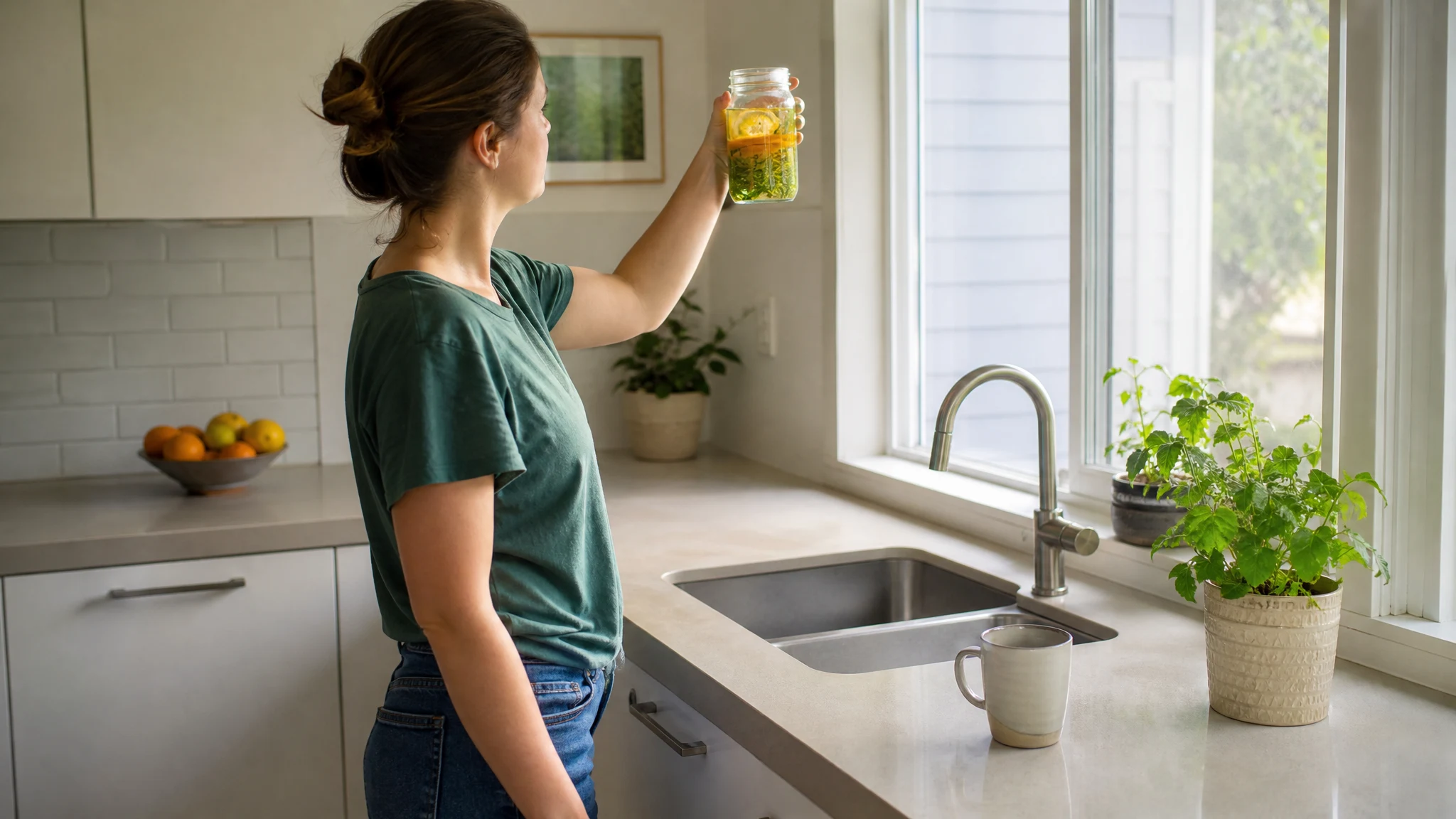
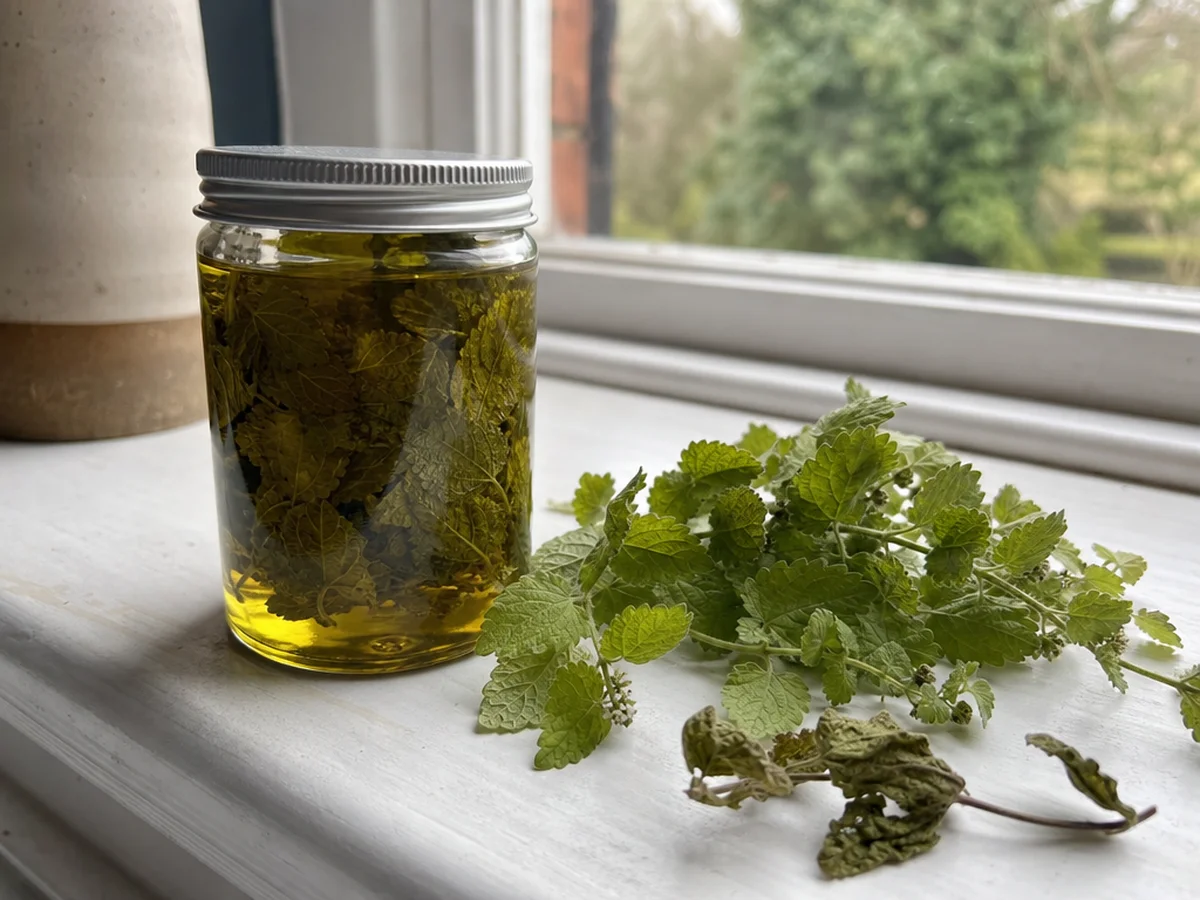
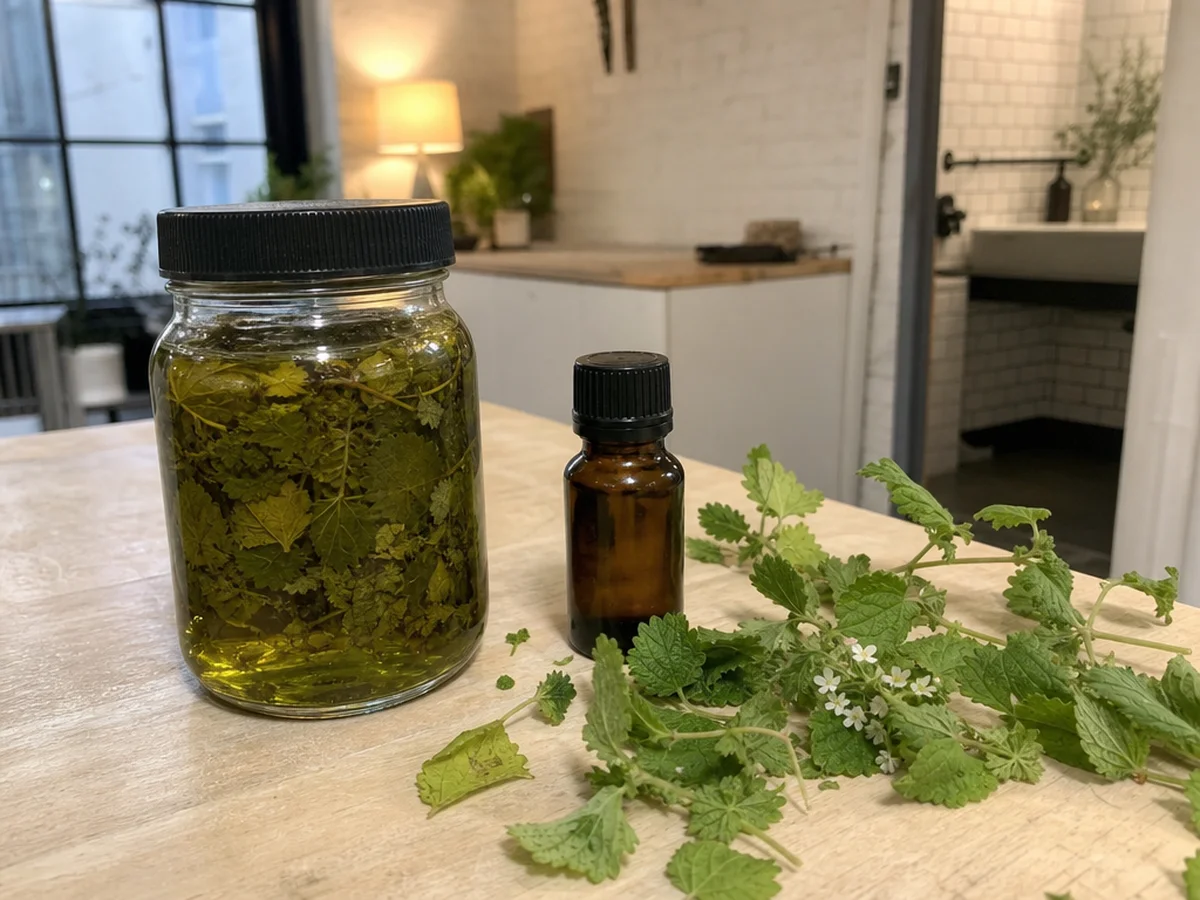
An infused oil is a plant-flavored carrier. It suits a balm or salve where you want a gentle herbal touch in the base, and its scent will be soft compared with the essential oil. We know of no published analysis of how much of the volatile oil, citral included, actually moves from leaf into a vegetable oil, so the honest description is "a carrier with an unmeasured amount of plant character." That is a perfectly good thing to make, as long as nobody expects it to behave like the distillate.
There is one rule worth knowing before you start. The CDC's botulism prevention page says to refrigerate homemade oils made with garlic or herbs and to throw them away after 4 days. It is written about food, and it makes no split between fresh and dried herb, so we treat any homemade herbal oil as a short-lived, refrigerated item. A leaf-filled jar on a sunny windowsill is the version to skip.
Using the essential oil on skin
Because the distilled oil is concentrated, the numbers matter. Our own dilution guidance is 0.5% to 2% in a carrier with a patch test first. For melissa, the IFRA standard is lower for leave-on products: 0.15% of the finished product in body creams, oils and lotions, with dermal sensitization as the reason. So we start at the lower figure and suggest you do the same. At 0.15%, an ounce of carrier takes a little under one drop, which is why a small scale makes this oil much easier to use. Our skin and citral guide walks through the comparison, and the handmade products guide sets out limits by product type.
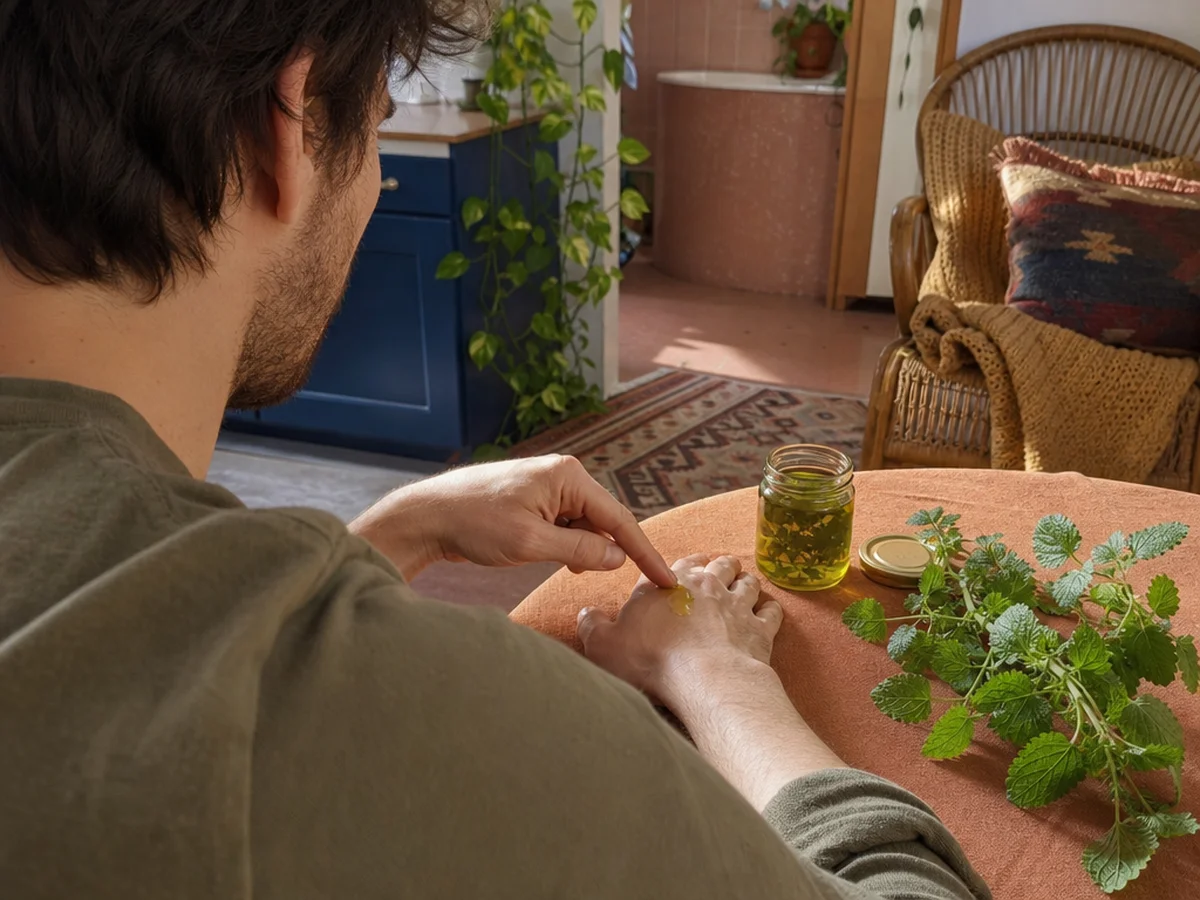
Anyone who is pregnant, or choosing something for a child, or who has eczema or a fragrance allergy should check with their doctor or dermatologist first; our pregnancy and breastfeeding article covers what is on record.
What to expect from the scent
If you smell a jar of lemon balm infused in a carrier oil next to a bottle of melissa essential oil, expect them to be quite different experiences. The infused oil is mostly the smell of the carrier, with a faint, green, leafy note in the background. The essential oil is bright, lemony and strongly focused, and a single drop on a paper strip will fill a small room with scent. If you are making a balm and hoping for a distinct lemon aroma, that is something to plan for rather than a disappointment to discover at the end.
Choosing between them
- You want the scent of melissa: only the distilled oil has it. Weigh it, and keep it within the limit for the product you are making.
- You want a plant-flavored base for a balm: an infused oil fits, treated as a perishable. You will find carrier oils and dried herb at a craft shop or grocery.
- You want a water-based product: that is a hydrosol, which our hydrosol comparison covers.
If you like both a gentle carrier and a real melissa aroma, the simplest route is to keep the two jobs apart: pick the carrier you like and add a weighed amount of essential oil under the limit. You get the scent where you want it and know exactly how much is in the jar.
Melissa Essential Oil
Melissa Essential Oil from our own shop, in sizes from 0.5 oz to bulk.
From $23.99
Shop Now →Sources & Further Reading
- Petrisor G. et al., 2022. Melissa officinalis: Composition, Pharmacological Effects and Derived Release Systems-A Review. International Journal of Molecular Sciences.
- US FDA. Fragrances in Cosmetics.
- US CDC. Botulism Prevention.
- IFRA, January 2024. The complete IFRA Standards (Melissa oil, genuine Melissa officinalis L., Amendment 49).