Melissa Oil vs Hydrosol: Which Do You Need?
Distil melissa and you collect two things: the essential oil that floats, and the scented water underneath. That water is the hydrosol, and it is not a weak melissa oil. It is a different product with its own composition, its own strength and its own handling needs, which is why the two should never be swapped for each other in a recipe. We sell the essential oil, so this is a guide to choosing between them and to knowing where each belongs.
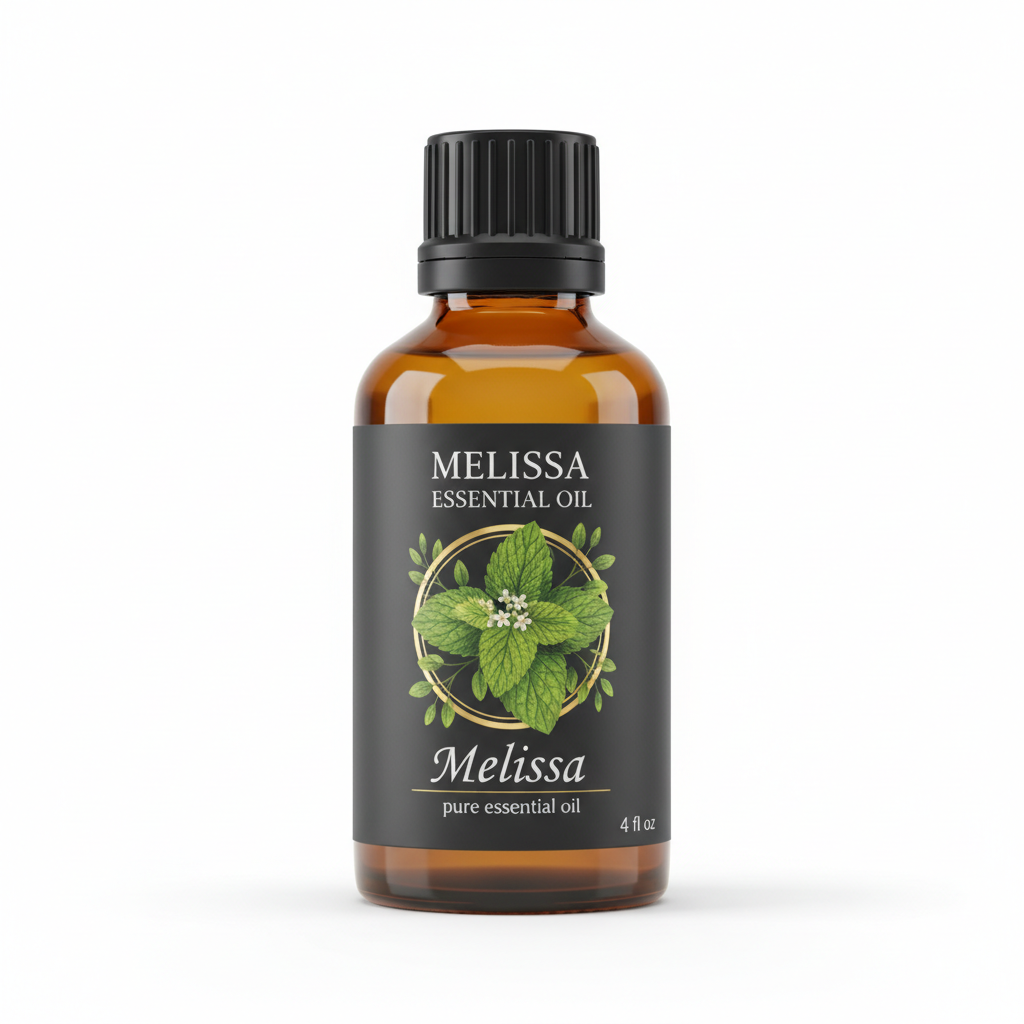
Melissa Essential Oil
Our own Melissa Essential Oil, in sizes from 0.5 oz to bulk.
From $23.99
Shop Now →How different the strengths really are
When steam or water distillation condenses, two layers form, and the hydrosol is the watery one. A 2024 review in Molecules describes hydrosols as dilute, with traces of essential oil usually under 1 g per litre, and as acidic, with a pH between 3.5 and 6.5. One gram per litre is 0.1% by weight. Our oil is sold neat, so at the top of that range it is a thousand times more concentrated.
Here is a way to picture it, and it is our arithmetic rather than a measurement. An ounce of hydrosol is about 0.03 litre, so at the review's upper figure it holds under 30 mg of oil-type material. One drop of our oil weighs about 44 mg, going by the relative density of 0.888 on our published COA batch and the usual 20 drops to the millilitre. A whole ounce of hydrosol can carry less of that material than a single drop of the oil. Dilution maths for one therefore cannot be borrowed for the other.
Not a scaled-down copy
You might expect a hydrosol to smell like a faint version of the oil. Often it does not, because compounds divide between water and oil according to how well they dissolve in each. A 2026 study in BMC Plant Biology compared oils and hydrosols in seven mint-family plants, melissa among them, and concluded that hydrosols should not be regarded simply as diluted forms of the oils. The two were analysed by different methods in that work, so the author treats the percentages as qualitative rather than directly comparable, but the message holds: a hydrosol has a character of its own, and it can be an appealing one for the people who seek it out.
Water changes the handling
A neat oil and a water-based product face different problems. Microbes can grow in water, and the FDA's page on microbiological safety lists water among the ways cosmetics become contaminated, and an ineffective preservation system among the risks. That is why the Molecules review says hydrosols should be kept in sealed, aseptic containers in a cool place, and why a preserved water product has a working life rather than an open-ended one. Our shelf-life guidance of typically 1 to 2 years in a cool, dark, tightly capped bottle describes a neat oil and does not carry over to anything with water in it.
Why oil never stands in for a hydrosol
Shaking a little melissa oil into water does not make a hydrosol. Essential oils are not water soluble: the Tisserand Institute's bath-safety page explains that they float as a film that clings to skin, which is why dispersants such as polysorbate 20 exist. The oil stays as undiluted droplets, and if you spray or splash it you are applying the concentrate. If you want an oil in a water-based product, that is a formulation job involving a proper dispersant, a preservative and a cosmetic chemist's judgment, not a bottle and a shake.
Meeting a hydrosol for the first time
If you have only ever known melissa as a bottle of oil, a hydrosol can be a surprise. People who seek hydrosols out tend to enjoy them as something soft and quiet, a different thing from the oil, and we think that is the fair way to appreciate them: on their own terms. We do not sell one, so we will not tell you what yours will smell like. The simple test is to smell it before you read the label, then read the label, and see whether the two agree. A good seller will be glad to answer questions about what is in the bottle, and a hydrosol is no exception.
Choosing, and where to look
If you want a concentrated aroma ingredient for a diffuser, a perfume, a balm or an oil blend, the essential oil is the right form, diluted by you to the level your product needs. Our dilution guidance for skin is 0.5% to 2% in a carrier oil with a patch test, and for melissa we start at the low end and go lower for anything left on the skin, since IFRA's limit for body products is 0.15%. If instead you want the water-borne aroma of the plant, a hydrosol is what you are after, and it comes from a botanical or aromatherapy supplier. We cannot vouch for anyone else's product, so ask them in writing which species it is, whether it is the water layer of a distillation, which preservative is in it and at what percentage, its pH, and the production date.
Infused oils and CO2 extracts are different products again, covered in our posts on infused oil versus melissa oil and oil versus CO2 extract. For the plant itself and the distillation behind the oil, see what melissa essential oil is and how melissa oil is made.
Two products from one still, two different jobs: pick the one that matches what you are making.
Melissa Essential Oil
Melissa Essential Oil from our own shop, in sizes from 0.5 oz to bulk.
From $23.99
Shop Now →Sources & Further Reading
- Almeida HHS et al., Unlocking the Potential of Hydrosols: Transforming Essential Oil Byproducts into Valuable Resources. Molecules 2024, PMC11477756
- Ozliman S, Volatile compounds of volatile oils and hydrosols: intra-specific comparison in seven Lamiaceae species. BMC Plant Biology 2026, PMC13274111
- FDA, Microbiological Safety and Cosmetics. Microbiological Safety and Cosmetics | FDA
- Tisserand Institute, Bath Safety: how to use essential oils safely in the bath. Bath Safety: how to use essential oils safely in the bath
- IFRA, Melissa oil (genuine Melissa officinalis L.), Amendment 49 (2020), pages 151 to 153 of the IFRA Standards 51st Amendment. IFRA Standards, 51st Amendment