Melissa vs Litsea Cubeba: How to Tell Them Apart
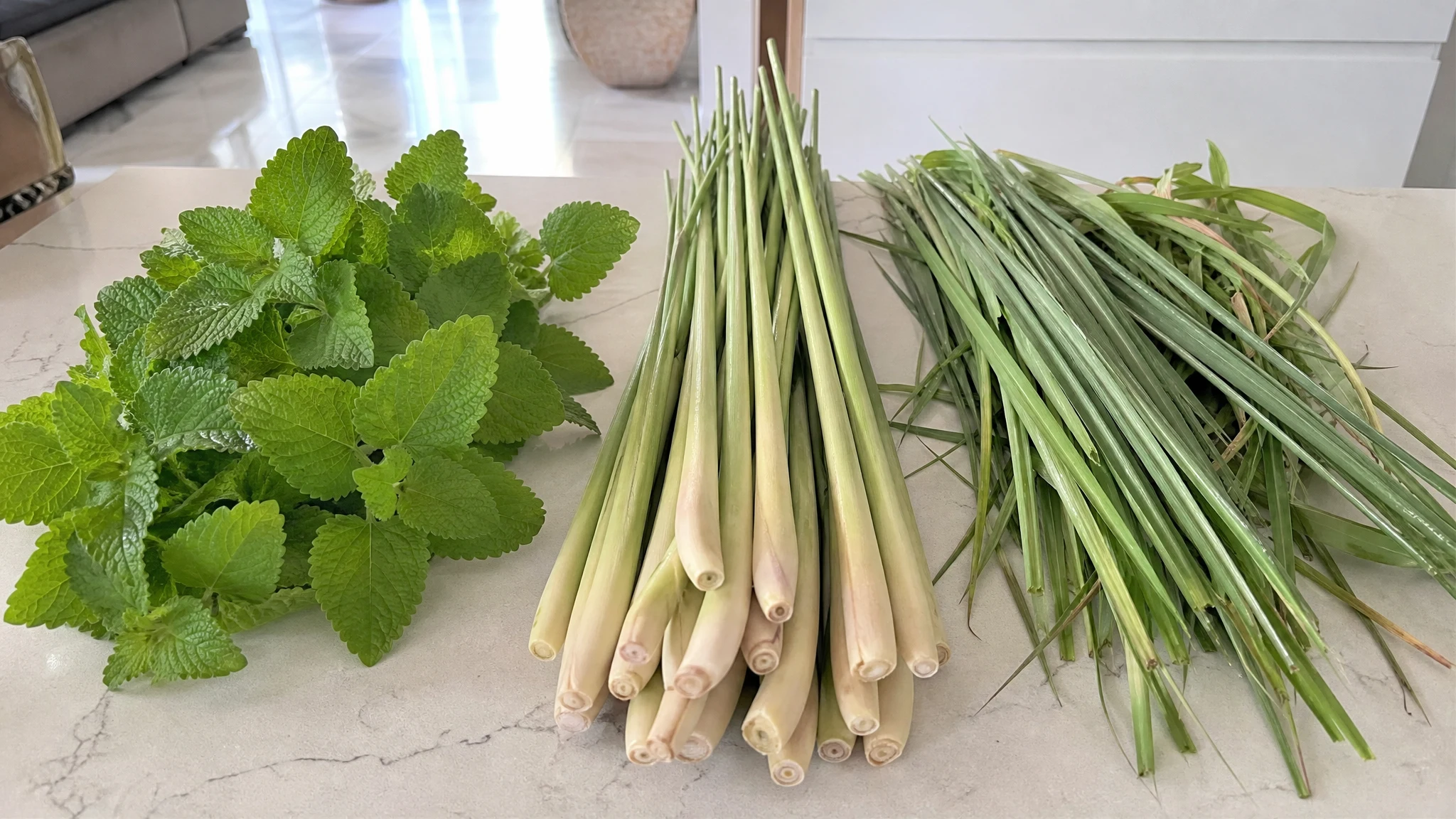
Ask anyone who works with lemon-scented oils what they worry about, and litsea cubeba will come up. Also called May Chang, it is a citral-rich oil that smells lemony, costs far less to produce than melissa, and so becomes the obvious suspect whenever someone wonders whether a lemon-balm oil is what it claims to be. The honest answer to "how do you tell them apart?" is more interesting than a smell test.
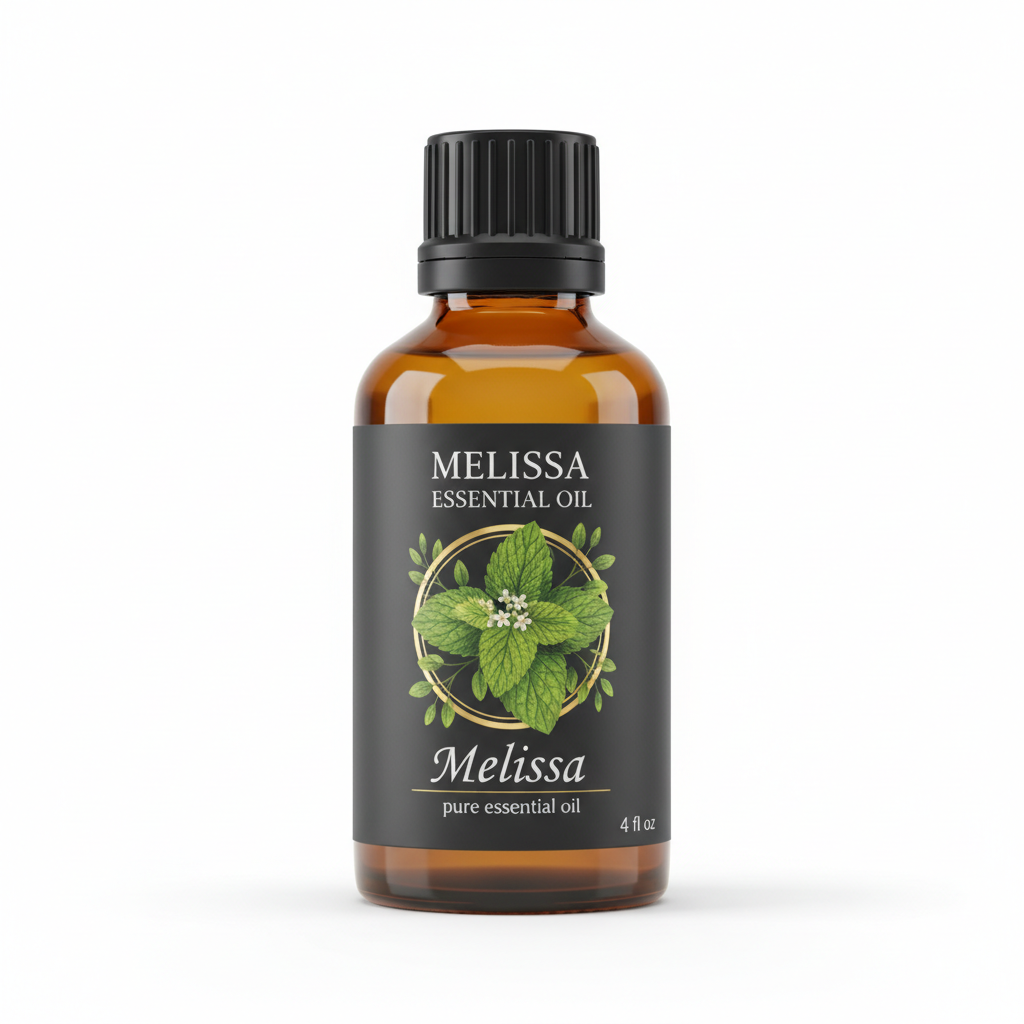
Melissa Essential Oil
Our own Melissa Essential Oil, in sizes from 0.5 oz to bulk.
From $23.99
Shop Now →Why the two get compared
Both oils are built largely on citral, the combination of neral and geranial that gives lemon its sweet, bright edge. In a study of litsea fruit oil from eight sites across China, those two compounds together made up 78.7% to 87.4% of the oil, and the fruit gave 3% to 4.6% oil by weight (Si et al., 2012). Melissa tells a different story. A review of published analyses puts geranial at about 6% to 51% and neral at about 4% to 35%, depending on where and how the plant was grown and distilled (Petrisor et al., 2022), and herb yields are a small fraction of one percent.
That gap in yield is why people reach for litsea as a stand-in. It is reasoning, not an accusation about any seller: when a material takes a great deal of plant to make, a cheaper oil with a similar smell becomes tempting. The litsea study above gives 3% to 4.6% oil from the fruit; the melissa review compiles herb yields from about 0.01% up to 0.72%.
What a certificate with three numbers can and cannot tell you
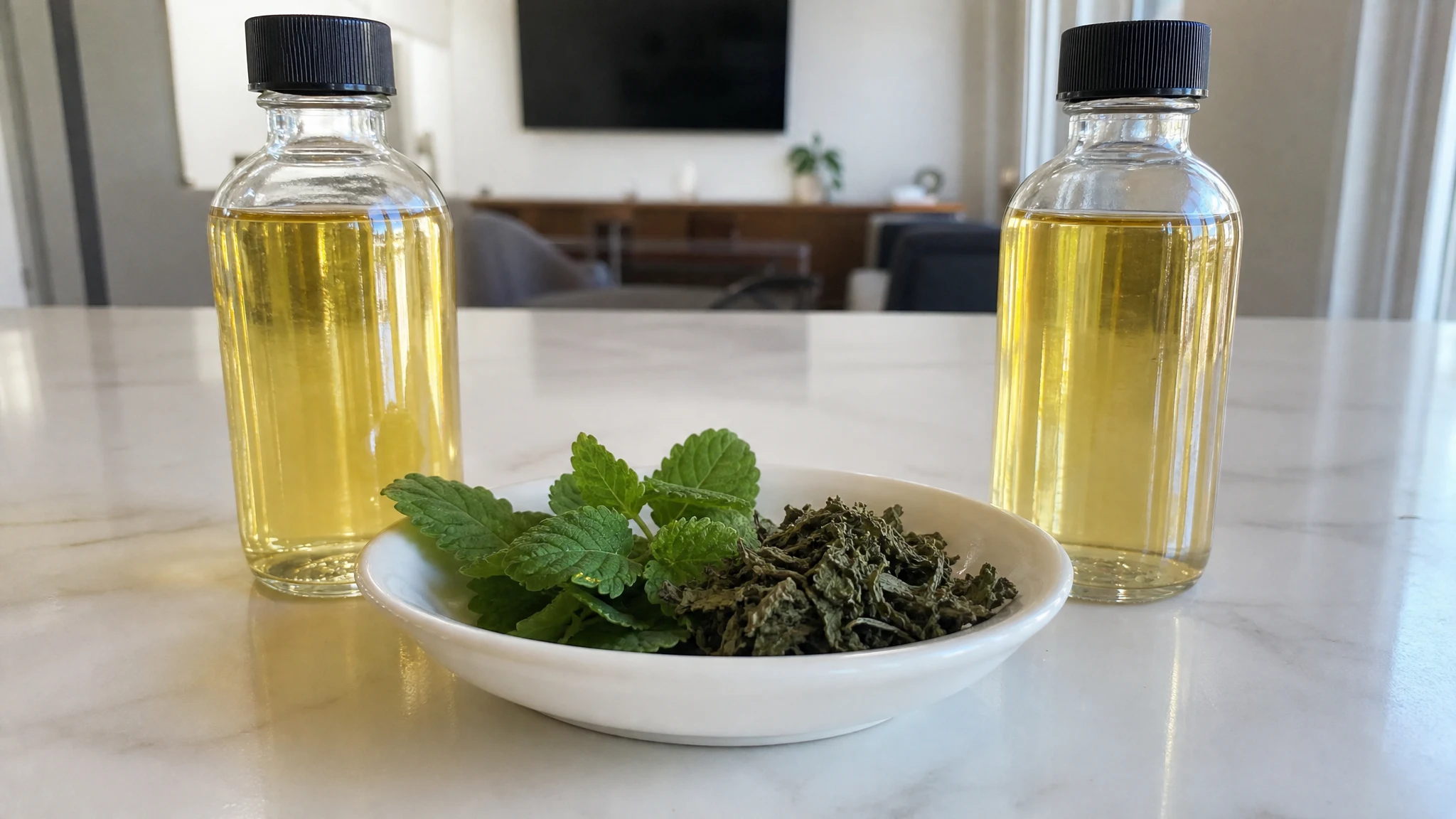
The Certificate of Analysis we publish for one batch of our melissa lists relative density 0.888, refractive index 1.484 and optical rotation -1.08 degrees, each within the standard range printed beside it. Those are real, useful measurements, and they are also bulk properties. Citral itself has a density of about 0.885 to 0.897 and a refractive index of about 1.486 to 1.490, and it is not optically active (PubChem). So any oil in which citral is the main ingredient will tend to land in a similar neighbourhood. Reasoning from that, density and refractive index describe "a citral-type oil" far better than they describe "melissa."
We think that is worth saying plainly, because it is how a careful buyer should read any short certificate, ours included. Three physical constants are a sensible first check on a batch. They are not a fingerprint.
What does separate them: the peaks
Gas chromatography with mass spectrometry (GC-MS) sorts an oil into its individual compounds and gives each a percentage. This is where the plants part ways. Melissa carries a meaningful share of heavier compounds such as beta-caryophyllene alongside citronellal, while litsea's two citral aldehydes take up the large majority of the oil, leaving only about 13% to 21% for everything else. A profile that is mostly citral with a thin tail is a different animal from one with a broad woody-green shoulder.
Melissa also refuses to be a single fixed recipe. The same review notes citral-rich versions, versions with germacrene D taking the lead, and reports of material from some regions with little or no citral at all (Petrisor et al., 2022). A low or high citral figure on its own therefore settles nothing, and the shape of the whole report matters more than any one number.
The authenticity literature agrees that this is a job for specialist analysis. One study applied chiral gas chromatography and stable-isotope analysis to citral and citronellal oils, including lemon balm, lemongrass and litsea, to detect adulteration (Nhu-Trang et al., 2006). You do not need to run that yourself. You do need to know that it exists and that "does it smell lemony?" is not in the same league.
Let your nose be a first filter
None of the above means your nose is useless. Smell is a good first filter, even if it is not the final word. Put a drop of each oil on its own strip and compare. You'll notice litsea tends to arrive as a bright, fruity lemon, while melissa is softer and greener, with a herbal heart. If a bottle labeled melissa smells like a loud lemon candy, that is a good reason to ask questions, not a verdict.
What to ask any supplier for
If identity matters for what you are making, ask for a GC-MS report for the specific batch you will receive, with the laboratory name, the date and the percentages for neral, geranial, citronellal, beta-caryophyllene and caryophyllene oxide. Get the answer in writing and keep the batch number. That is the document that can settle the question, whichever oil you are buying. If you would like a GC-MS profile from us, ask in writing through the contact page before ordering, and we will tell you exactly what we can provide. Our supplier documentation checklist lists the full set, and our guide to reading a COA and GC-MS report explains the line items.
Why the difference matters beyond authenticity
Swapping one citral oil for the other changes more than the scent. Reasoning from the numbers above, the same weight of an oil that is 87% citral carries roughly twice the citral of one that is 43% citral. Citral is the component behind many of the skin-sensitization limits on lemon-note oils, so a formula built around one oil should not be moved to the other without redoing the sum. Our skin and citral post covers the dilution side. And for the wider family of lemony oils, our lemon-scented roundup adds lemongrass, lemon myrtle and verbena.
We sell melissa, which we describe as delicate, lemony and herbal, rounder and greener than litsea or lemongrass. If your project truly needs a litsea note, that is a different oil from a different supplier, and it deserves its own batch report too.
Melissa Essential Oil
Melissa Essential Oil from our own shop, in sizes from 0.5 oz to bulk.
From $23.99
Shop Now →Sources & Further Reading
- Si et al., 2012. "Chemical composition of essential oils of Litsea cubeba harvested from its distribution areas in China." Molecules. PMC6268156
- Petrisor et al., 2022. "Melissa officinalis: Composition, Pharmacological Effects and Derived Release Systems-A Review." Int J Mol Sci. PMC8998931
- Nhu-Trang, Casabianca and Grenier-Loustalot, 2006. "Authenticity control of essential oils containing citronellal and citral by chiral and stable-isotope gas-chromatographic analysis." Anal Bioanal Chem. PubMed 17089103
- PubChem. Compound record "Citral" (CID 638011), density and refractive index entries. pubchem.ncbi.nlm.nih.gov