Melissa Oil Supplier Documents: What to Ask For
A formulator buying melissa oil by the pound needs more than a certificate with three physical constants, and the reason is arithmetic, not bureaucracy. The safety maths for a finished product starts from what is in the oil, so the paperwork worth asking for depends on the question you are trying to answer. Here it is in the order a buyer actually works.
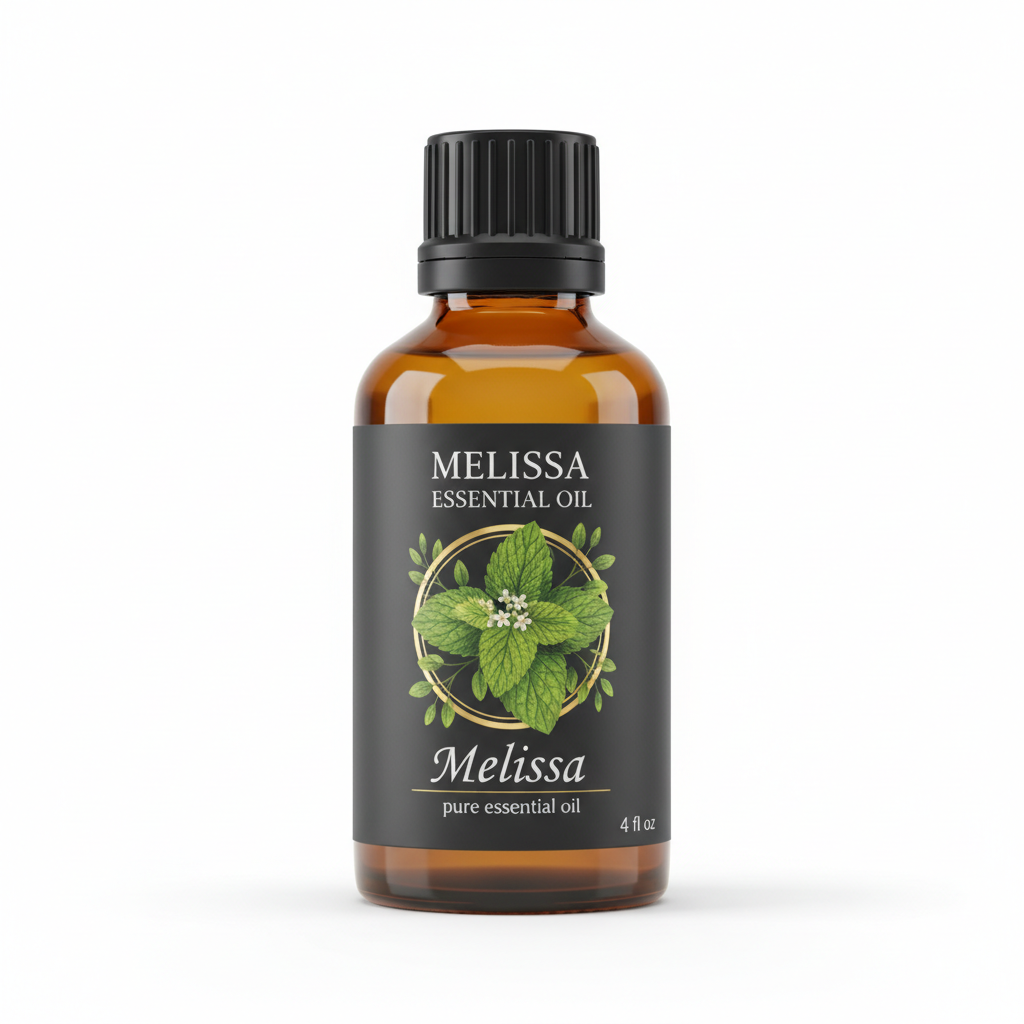
Melissa Essential Oil
Our own Melissa Essential Oil, in sizes from 0.5 oz to bulk.
From $23.99
Shop Now →Match the question to the document
| Your question | The document that answers it | Worth a second look if |
|---|---|---|
| Is this the batch I was sold, and does it fall in a stated range? | A certificate of analysis tied to a batch number | There is no batch number, or every line just says "complies" |
| What is in it, and how much citral? | A GC-MS report from a named laboratory | Percentages appear with no lab or method |
| How do I handle and store it? | A safety data sheet | Sections are missing or there is no preparation date |
| How much can go in a leave-on product? | The supplier's written statement on the IFRA standard, plus composition | An "IFRA certificate" is offered for the raw oil itself |
| What goes on my label? | Composition figures to calculate allergens from | "Allergen free" with no data behind it |
The certificate of analysis, read properly
A certificate reports tests on one batch, so the first check is that its batch number matches the bottle or drum in front of you. The second is the standard it measures against: a named monograph and edition can be looked up, which makes it the easiest kind to rely on. Our guide to reading a COA and GC-MS report walks through each line.
The safety data sheet
Under the US Hazard Communication Standard, manufacturers and importers of hazardous chemicals must supply a safety data sheet with sixteen headings in a fixed order, running from identification and hazards through handling, storage and physical properties to regulatory information and a final section that includes the date the sheet was prepared. When one arrives, check that it names the botanical you ordered, Melissa officinalis, and not a generic lemon balm or lemon oil entry, and that it carries a preparation date. A COA does not replace an SDS, and the reverse is true too.
IFRA: ask for conformity, not a certificate
This is the item people most often get wrong. IFRA's guidance explains that certificates of conformity are issued by suppliers of fragrance mixtures, and that where a standard already exists for a raw material, the supplier should not issue an IFRA certificate as such. Instead the supplier tells the customer how the material conforms to the standard, including any restricted materials present in the natural oil, because that information drives the calculation of the maximum use.
Melissa oil has its own standard. IFRA's limits for it name skin sensitization as the driver, and run from 0.15% in body lotions, face moisturizers, hand creams and baby products, through 0.60% in fine fragrance, to 1.2% in bar soap, with no restriction for candles. So the request to put to any supplier is simple: state in writing how this oil conforms to the IFRA standard for melissa oil, and give the citral content of this batch.
Why composition is the real prize
In the EU, citral is one of the fragrance allergens that must be named on a label once it passes 0.001% in a leave-on product or 0.01% in a rinse-off one, according to Austria's food and health agency AGES. Published analyses of melissa oil put geranial anywhere from 6.22% to 51.21%, with neral from 4.28% to 35.02% alongside it. Even at the lowest geranial figure, a body oil at 0.15% melissa carries about 0.009% citral, nine times the leave-on threshold, so citral gets named either way. What changes with the batch is how much, and that is exactly what a GC-MS page tells you and an "allergen free" line does not. Our allergen labeling walkthrough works a full lotion example.
A folder for every oil
Once the documents arrive, make a folder, paper or digital, for each oil you buy. File the certificate, any data sheet and the written answers you were given, and label each with the batch number and the date it arrived. Keep a copy of the email asking for them too, so you remember exactly what you asked. When you reorder, put the new paperwork beside the old and compare. It is not glamorous, but a clear answer is easy to spot once it is on file.
What we can put in your hands
The Certificate of Analysis we publish covers one batch of our Melissa Essential Oil, steam distilled: appearance and smell marked as complying, a relative density of 0.888, a refractive index of 1.484 and an optical rotation of -1.08 degrees, each shown against a printed range, with a best-by date of 07/30/2028. If you need composition data before you order, ask us in writing through the contact page, and tell us the product you are making so we can see what you are trying to calculate. Sample bottles are available through our wholesale page, which is a sensible first step before committing to a larger size. Our buying questions cover the rest of the checklist for any seller.
Whoever you buy from, the habit is the same: decide what you need to calculate, then ask for the one document that lets you calculate it.
A tidy folder and a short list of questions will take you further than any sales page.
Melissa Essential Oil
Melissa Essential Oil from our own shop, in sizes from 0.5 oz to bulk.
From $23.99
Shop Now →Sources & Further Reading
- OSHA, 29 CFR § 1910.1200 - Hazard communication, paragraph (g) on safety data sheets, via Cornell Legal Information Institute. 29 CFR § 1910.1200 - Hazard communication
- IFRA, Guidance for the use of IFRA Standards, section on the Certificate of Conformity. Guidance for the use of IFRA Standards
- IFRA, Melissa oil (genuine Melissa officinalis L.), Amendment 49 (2020), pages 151 to 153 of the IFRA Standards 51st Amendment. IFRA Standards, 51st Amendment
- AGES, New fragrance regulation in cosmetics. New fragrance regulation in cosmetics - AGES
- Petrisor G et al., Melissa officinalis: Composition, Pharmacological Effects and Derived Release Systems - A Review. Int J Mol Sci 2022, PMC8998931