How to Price Products Made with Melissa Oil
Put a costly oil in a product and you would expect it to swallow the budget. With melissa, something quieter happens: the published usage limits are so low that the oil often turns out to be one of the smaller items on your cost sheet. That changes how you should price, and it is easier to see with numbers.
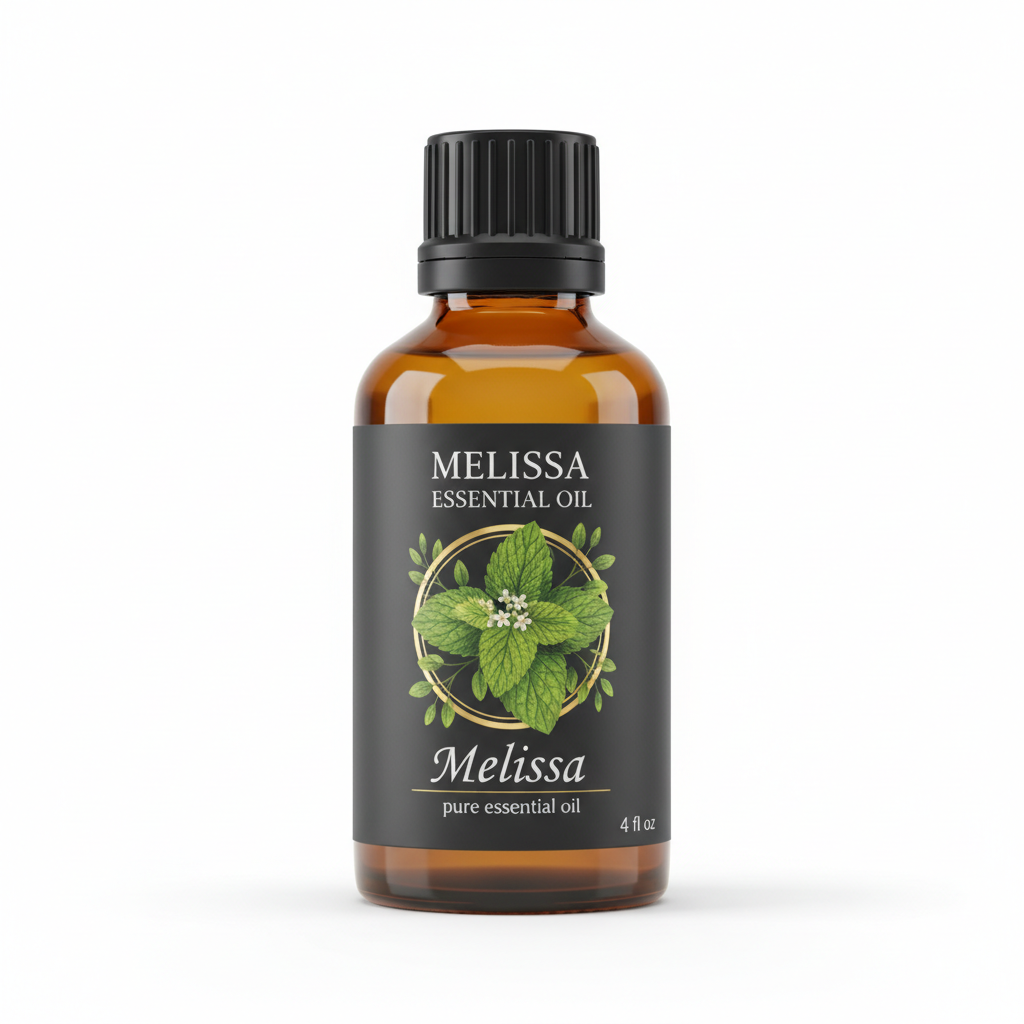
Melissa Essential Oil
Our own Melissa Essential Oil, in sizes from 0.5 oz to bulk.
From $23.99
Shop Now →The usage limit keeps the oil small
Every figure here is a placeholder, so swap in your own. Say melissa oil costs 1 per gram (divide the price per ounce on our shop page by 26.3 to get yours, since an ounce of the oil on our published COA batch weighs about 26.3 g). Say everything else in a 100 g unit, meaning the base, container, label, packaging and your time, comes to 8. For the oil amounts we use the IFRA maximums for melissa oil: 0.15% in body lotions and creams, 0.60% in fine fragrance, 1.2% in bar soap.
| 100 g unit | Oil used | Oil cost | Total cost per unit | Oil as a share of it |
|---|---|---|---|---|
| Body lotion or butter, 0.15% | 0.15 g | 0.15 | 8.15 | about 2% |
| Perfume, 0.60% | 0.6 g | 0.60 | 8.60 | about 7% |
| Bar soap, 1.2% | 1.2 g | 1.20 | 9.20 | about 13% |
Now suppose your real price per gram is ten times the placeholder. The shares climb to roughly 16%, 43% and 60%, so the oil matters a good deal more, yet the ceiling still caps how far it can run away from you. That is the practical gift of a low usage limit. The story around a rare ingredient is persuasive, but the cost line is set by grams per unit, and for melissa the limit sets the grams.
Why the sums are worth doing early
We are a small business ourselves, and we know how tempting it is to guess a price and hope. A scrappy spreadsheet done on a quiet evening, before you print labels or order tins, will save you from many unpleasant surprises later. It does not need to be fancy. A list of what goes into one unit, each with its cost, is enough to start. Once it is there, every decision gets easier, because you can change one line and see what happens.
Count the costs people forget
Two university extension publications agree on the first step of pricing. Mississippi State University Extension calls failing to account for total cost a common mistake that leads to underpricing, and defines it as variable costs (ingredients, direct labor, packaging, utilities) plus fixed costs such as rent, insurance and taxes. The University of Maine bulletin adds that your own time belongs in the cost at the hourly rate you want to earn. Both are written for small businesses in general, not for scented goods, but the method is the same for any ingredient.
Markup and margin are different numbers
This is where good products get underpriced. Maine's bulletin gives the clearest example: an item that costs 1.00 and sells for 1.50 carries a 50% markup on cost, but only a 33.3% margin on the selling price. Same 0.50 of profit, two very different percentages. If you want a given margin, the formula from Mississippi State is selling price = cost divided by (1 minus the margin you want).
Take the perfume at a total cost of 8.60. A 50% margin needs a price of 8.60 divided by 0.5, which is 17.20. A 50% markup on cost gives 12.90, which is really a 33.3% margin and about a quarter less price than you meant to charge.
The costs that hide in plain sight
When you list your costs, go through the product the way a customer would. Open the box. What did you pay for the container, the lid, the label, the tissue paper, the tape, the shipping box? How long did it take you to weigh, mix, pour, label and pack, and what is an hour of your time worth? Those small items add up faster than the oil does. It is common to look at the oil line first because the oil feels special, and then discover that the packaging is where the money went.
Keep a note of the date next to each cost, too. Prices drift, and a cost sheet from last spring may no longer match what you are paying.
Work backward from what your buyer will pay
The arithmetic runs in both directions, and the backward direction is the useful one. Suppose your buyers will pay at most 24 for the perfume direct, and you want a 50% margin. Total cost can then be 12, and with 8 of non-oil costs that leaves room for 4 of oil, far more than the 0.60 the ceiling allows. Now sell the same product through a retailer. The Maine bulletin warns that a retailer may double your wholesale price, so for a 24 shelf price you sell at 12, your total cost must come down to 6, and suddenly it is the container and the packaging, not the oil, that need attention.
The same product and the same oil sit in two different positions depending on the channel. If the sums do not work, change the container, the batch size or the margin, rather than reaching for a heavier oil load that would take you past the limit.
Once you have your own numbers, our batch maths shows how many units one bottle covers, the bottle size guide helps you pick a size, and our allergen labeling walkthrough covers the label side of selling.
Price the whole product, let the usage limit tell you how much oil it holds, and the rest is simply honest subtraction.
Melissa Essential Oil
Melissa Essential Oil from our own shop, in sizes from 0.5 oz to bulk.
From $23.99
Shop Now →Sources & Further Reading
- Mississippi State University Extension, Product Pricing and Breakeven Concept. Product Pricing and Breakeven Concept
- University of Maine Cooperative Extension, Bulletin #3000, Home-Based Business Fact Sheets Series: Basic Pricing Strategies for Small Businesses. Bulletin #3000, Home-Based Business Fact Sheets Series: Basic Pricing Strategies for Small Businesses
- IFRA, Melissa oil (genuine Melissa officinalis L.), Amendment 49 (2020), pages 151 to 153 of the IFRA Standards 51st Amendment. IFRA Standards, 51st Amendment