How Many Batches Does One Bottle of Melissa Oil Make?
Most people size up a bottle of melissa oil by its price tag. Makers size it up by a different number: how many batches it fills. Melissa is a strongly scented oil with low published usage limits, so a small bottle stretches much further than you might guess, and the arithmetic is worth five minutes before you choose a size.
Melissa Essential Oil
Our own Melissa Essential Oil, in sizes from 0.5 oz to bulk.
From $23.99
Shop Now →Start with grams, not ounces
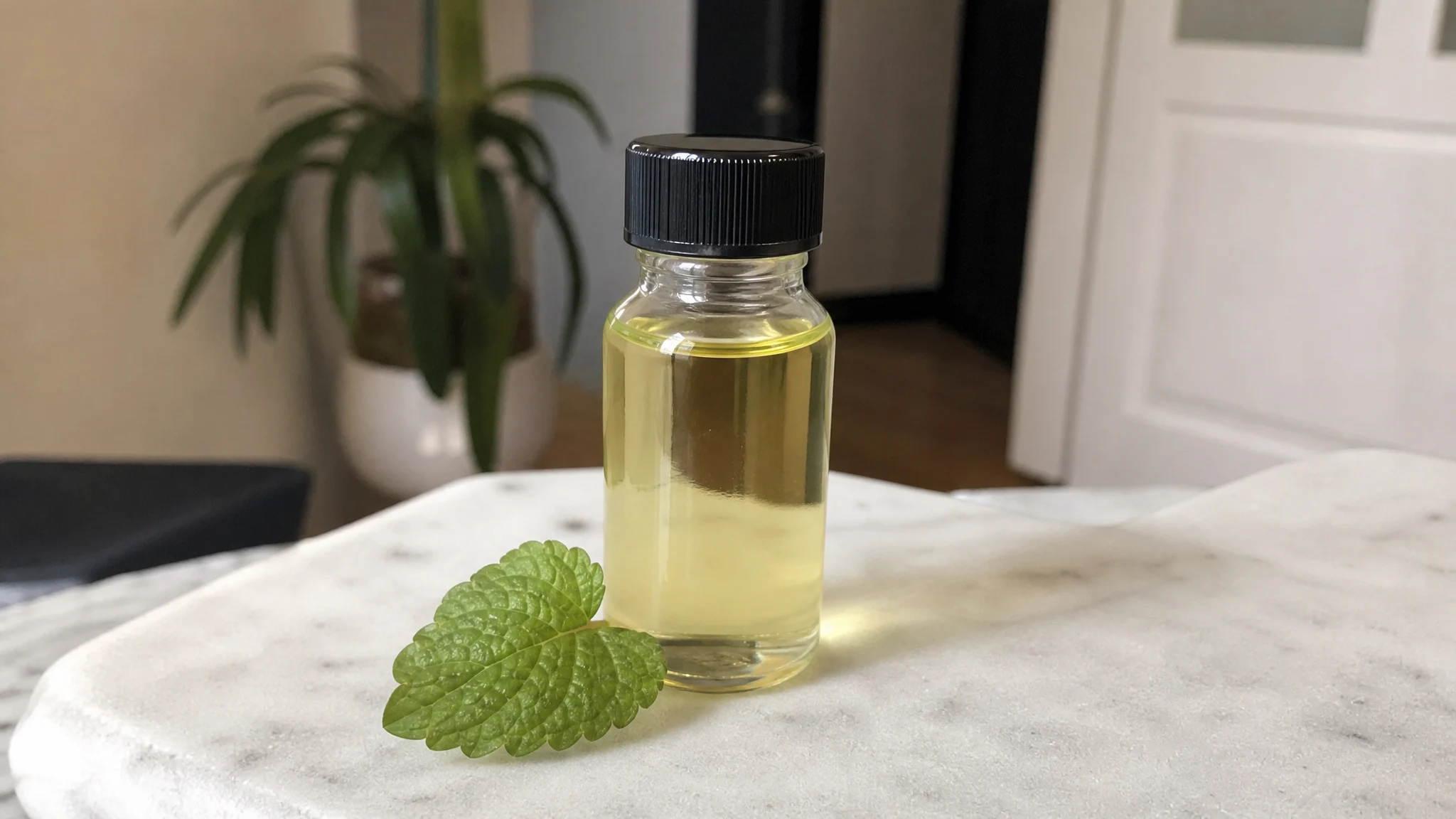
A kitchen scale beats a dropper here. On the batch covered by the Certificate of Analysis we publish, the relative density is 0.888, which makes one fluid ounce (29.57 ml) of oil weigh about 26.3 g. Drops vary from dropper to dropper, though 20 to the millilitre is the usual convention, so weigh whenever you can. Divide the price on our shop page by the grams in that bottle and you have your price per gram. Every cost below is simply grams multiplied by that figure.
Let the usage limit set the batch
For cosmetics, the ceiling that matters is the IFRA standard for melissa oil, which names skin sensitization as the reason for its limits. It gives a separate maximum for each product category: 0.15% of the finished product for body lotions, creams and oils, 0.60% for fine fragrance including solid perfume, 1.2% for bar soap, and no restriction for candles. IFRA's guidance document tells you which category a product belongs to. These are industry standards for fragrance makers, not laws for a home crafter, but they are the clearest public statement of where the assessors drew the line, so we build the examples on them.
| Product | IFRA ceiling | Oil in one batch | Batches from a 1 oz bottle |
|---|---|---|---|
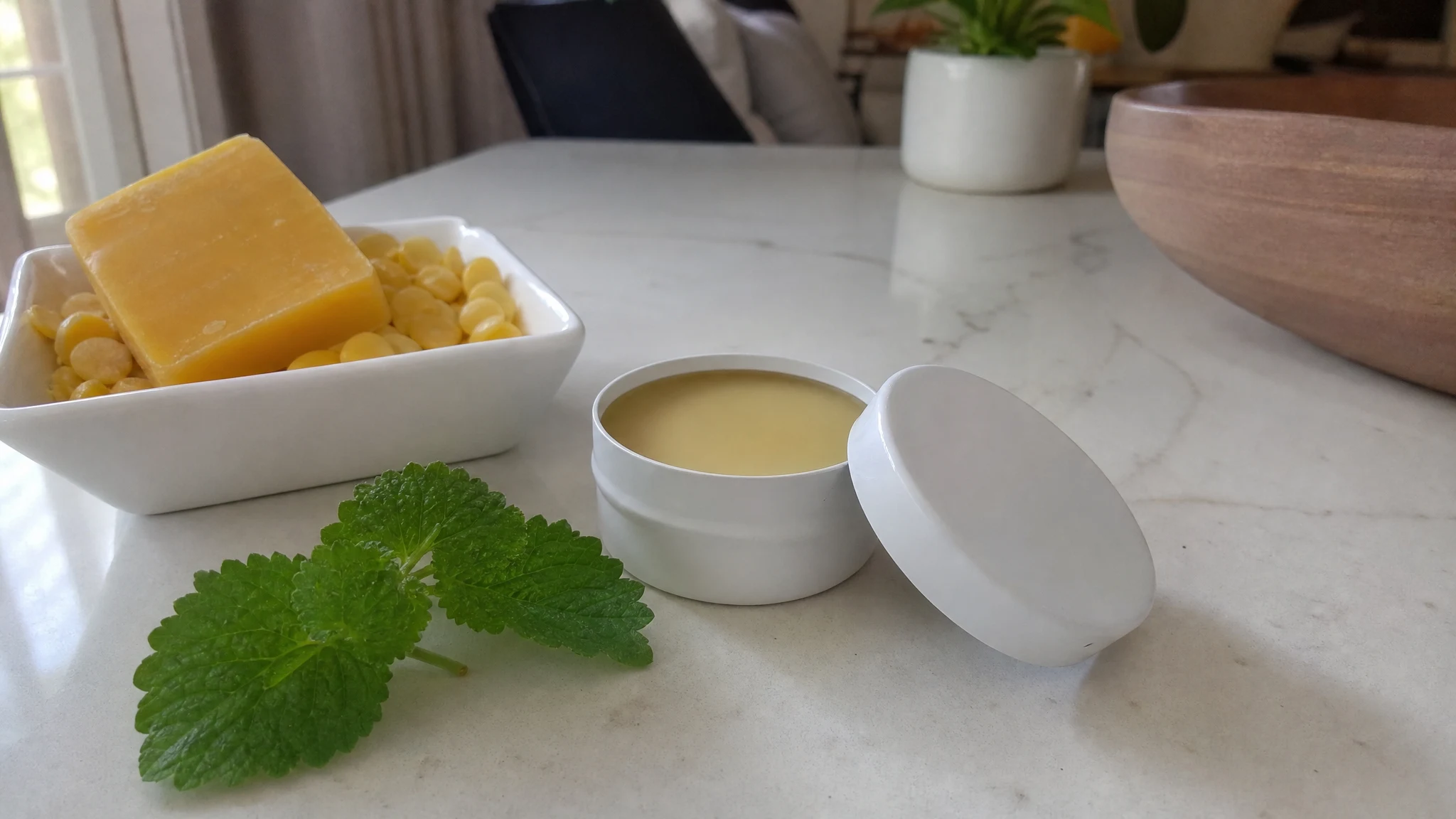
| Body butter, 100 g | 0.15% | 0.15 g | about 175 |
| Perfume or solid perfume, 100 g | 0.60% | 0.6 g | about 44 |
| Bar soap, 700 g batch | 1.2% | 8.4 g | about 3 |
That is our arithmetic at the ceiling, using the density above. Treat the ceilings as maximums rather than targets. Our own dilution guidance for skin is 0.5% to 2% in a carrier oil with a patch test first, and because melissa oil is built largely on citral we would start at the low end of that range, and for a lotion or body butter go lower still, toward the 0.15% figure. A balm that smells lovely at 0.1% also costs less to make.
Making a small bottle feel generous
There is a quiet pleasure in an oil that lasts. Because the amounts are so small, you can treat melissa as a finishing touch rather than the main event: one bottle, a handful of projects, the lid back on each time. Open it only when the scale is ready, work quickly, and cap it again straight away. A bottle that is open for thirty seconds a few times a year is far more likely to smell bright when you reach the bottom.
What a batch costs
Pick a round placeholder of 1 per gram, which is not our price, just a number that makes the sums easy to read, and substitute your own. The body butter batch then uses 0.15 of oil, the perfume 0.60, and the soap 8.4. The first two are rounding errors next to what you spend on butters, alcohol, containers and your own time. Soap is where the oil starts to show, simply because a soap batch is so much heavier than a jar of balm. If you want to see the whole picture, our pricing walkthrough carries the oil cost through to a selling price.
The same maths works backward, and it is the useful direction. Decide the batch you want to make, find its category ceiling, multiply, and you know the grams you need per batch. Our body butter formulation and cold process soap guide show those sums in full.
Matching the bottle to the way you work
A lotion maker using 0.15 g a batch would take roughly 87 batches to finish a 0.5 oz bottle, which holds about 13.1 g. That sounds like good news, and it is, with one thing worth planning around: oil in a bottle does not last forever. We describe melissa oil as typically keeping 1 to 2 years tightly capped in a cool, dark place, and the Tisserand Institute makes the same general point about air, heat and light being what ages an oil. So the sensible size is the one you will actually use within that window, not the largest one the per-ounce price rewards.
A soap maker running a few batches a month may land on a bigger bottle, a perfumer experimenting with accords on a smaller one. Our bottle size guide goes through the common cases, and the price guide explains why a herb that yields so little oil costs what it does.
A short log for the bottle
Stick a label on the bottle and write the date you opened it. Then keep a line for each batch:
- What you made and how big the batch was.
- How many grams of oil went in.
- What you thought of the scent a week later.
After a few entries you will know your own usage rate better than any table can tell you, and choosing the next bottle becomes an easy decision.
Whatever you make, do the sum for that product first, keep the rate under the ceiling for its category, and let the batch size, not the sticker, tell you how far a bottle goes.
Melissa Essential Oil
Melissa Essential Oil from our own shop, in sizes from 0.5 oz to bulk.
From $23.99
Shop Now →Sources & Further Reading
- IFRA, Melissa oil (genuine Melissa officinalis L.), Amendment 49 (2020), pages 151 to 153 of the IFRA Standards 51st Amendment. IFRA Standards, 51st Amendment
- IFRA, Guidance for the use of IFRA Standards (51st Amendment), product categories. Guidance for the use of IFRA Standards
- Tisserand Institute, Is my bottle of essential oil oxidized or no longer good to use? Is my bottle of essential oil oxidized or no longer good to use?
- Petrisor G et al., Melissa officinalis: Composition, Pharmacological Effects and Derived Release Systems - A Review. Int J Mol Sci 2022, PMC8998931