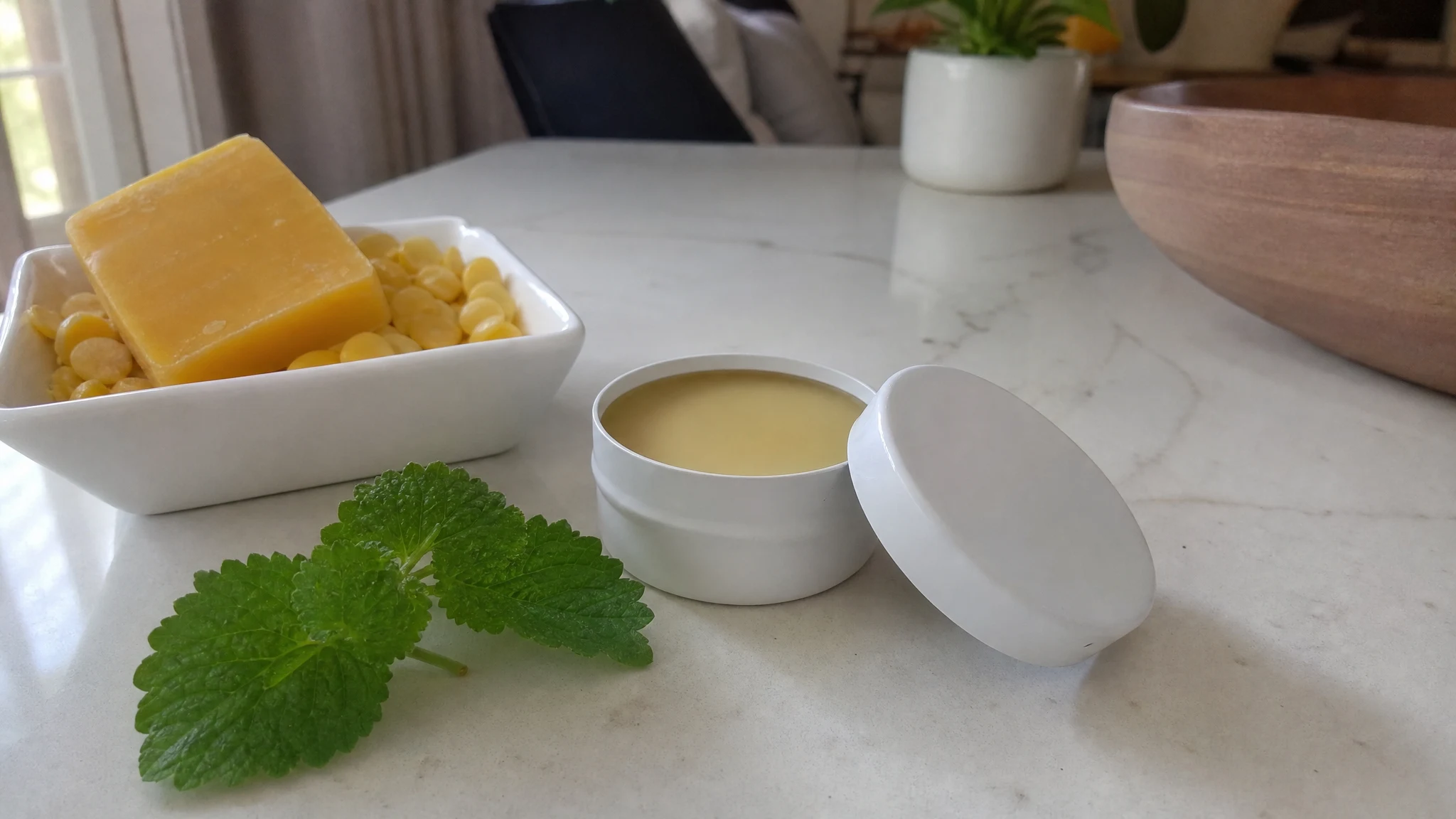
How to Make a Melissa Solid Perfume Balm
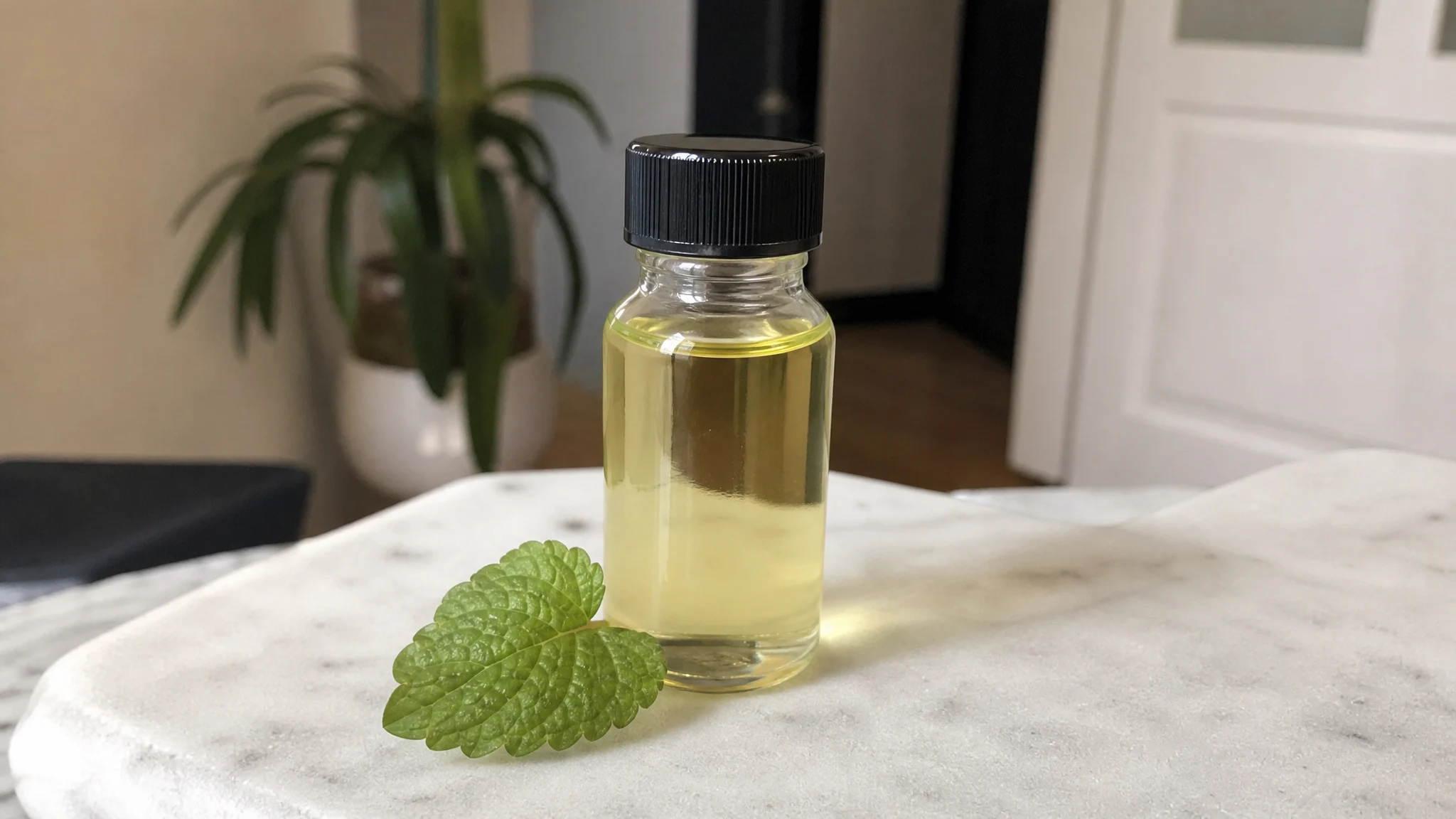
A melissa solid perfume is a half-gram job, not a drops-in-a-tin job. The fragrance rules for melissa oil are tight, and the lovely thing about that is how little you need: a 10 g tin holds about a single drop, and a small bottle of oil will fill a great many tins.
Melissa Essential Oil
Our own Melissa Essential Oil, in sizes from 0.5 oz to bulk.
From $23.99
Shop Now →Start with the number
IFRA's guidance places fine fragrance, solid perfume included, in category 4. The IFRA Standard for melissa oil allows 0.60% of the oil in a category 4 product, and names skin sensitization as the reason. Our dilution guidance for skin is 0.5% to 2% in a carrier oil, and for a pulse-point balm we would sit at the bottom of that range: 0.5% fits comfortably under 0.60%, while 2% is more than three times the ceiling. So in this formulation we use 0.5%.
That is also why we would leave this balm for pulse points only. IFRA's figure for body lotions and oils (category 5A) is 0.15%, so something you smooth over large areas of skin is a different product from a dab on the wrists.
The formulation, by weight
Here is a 100 g batch, enough for about ten 10 g tins. It is a worked formulation built from the published limit and simple arithmetic.
| Ingredient | Grams | Share |
|---|---|---|
| Ready-made balm base (wax and carrier oil, no water) | 99.5 | 99.5% |
| Melissa Essential Oil | 0.5 | 0.5% |
We do not sell the base, so look for one at a craft or soap-supply shop. Buying it ready-made is a good shortcut, because the supplier has already balanced the wax and oil for hardness. Because it contains no water, you also avoid preservative questions; adding a hydrosol or gel would change that, so keep it to wax, oil and our oil.
On the density from the batch on our published Certificate of Analysis (0.888), 0.5 g is about 0.56 ml, or around 11 drops at the common 20-drops-per-millilitre convention. Droppers vary, so weigh it on a scale if you can; that is the whole reason this recipe is written in grams.
Setting up before you melt
This is a project that rewards a tidy bench. Before you switch anything on, put out your scale, your tins with their lids off, a spoon or stirring stick, a paper towel and a small notebook. Wax sets quickly once it leaves the heat, and you do not want to be hunting for a lid with a jug of liquid base in your hand. Wipe the tins clean and dry, because stray water in a waterless balm is exactly what you are trying to avoid.
We also suggest weighing the melissa oil into a tiny clean dish or glass first, so it is ready the moment the base comes off the heat. Half a gram is not much, and having it measured and waiting means you can stir it in without rushing.
Method, in an order that looks after the oil
- Weigh the base into a heat-safe jug and melt it gently over hot, not boiling, water, stirring until clear.
- Take it off the heat before the oil goes in. The Tisserand Institute lists heat as one of the things that encourages oxidation, and a volatile, lemony oil is happiest added last rather than sitting in hot wax. That is our reasoning from their general guidance, not a melissa-specific test.
- Add 0.5 g of melissa oil, stir well and pour straight into tins.
- Let it set undisturbed, then cap it.
- Label with the date and "0.5% Melissa officinalis oil."
A word on borrowed recipes: many online solid perfume recipes are written for fragrance oils. One supplier recipe, DIY Solid Perfume Recipe from Wholesale Supplies Plus, adds fragrance oil at 10% of the base. Swapping melissa oil into that would land at roughly 17 times the IFRA figure, so take the base, method and container from a recipe like that and set the oil percentage yourself.
What to expect from the finished tin
Once the balm is set, open a tin and smell it. At this strength, you'll notice that it is gentle: a soft lemony, herbal whisper rather than a loud perfume. Rub a tiny bit between your fingers and the balm warms and melts, which is the whole point of a solid perfume. Give the tins a few days before you decide how you feel about the scent, since a freshly poured balm can smell a little different from one that has rested.
Keep the tins somewhere cool and out of direct sun, away from a sunny windowsill or a warm car. A wax balm that sits in the heat may soften, and a lemony oil is happiest cool and dark. Wipe the rim before you close the lid, so it does not stick.
Where it belongs, and where it does not
Keep it for wrists and behind the ears. The category 1 limit for lip products is 0.11%, so this is not a lip balm even if you reuse a lip tube as packaging. Keep it away from children and pets, patch test a small amount on your inner forearm first, and if you are pregnant or have eczema or a fragrance allergy, check with your midwife, physician or dermatologist before wearing it (our pregnancy post covers what is published). If you plan to sell tins, labeling is its own topic: see our post on cosmetic and drug claims.
On the scent side, we describe melissa as a delicate, lemony, herbal oil with a place from top to middle in a perfume. For how it sits in a fuller composition, our perfumery guide and accord structures go further, and the roll-on post covers the liquid version.
One oil, one base and one number you stay under: it may be the simplest perfume you ever make.
Melissa Essential Oil
Melissa Essential Oil from our own shop, in sizes from 0.5 oz to bulk.
From $23.99
Shop Now →Sources & Further Reading
- IFRA, IFRA Standards (51st Amendment compendium), entry Melissa oil (genuine Melissa officinalis L.)
- IFRA, Guidance for the Use of IFRA Standards (June 30, 2023)
- Tisserand Institute, Is my bottle of essential oil oxidized or no longer good to use?
- Wholesale Supplies Plus, DIY Solid Perfume Recipe