What to Blend with Melissa Oil: Partners That Work
Melissa opens bright and lemony, then settles into something greener and softer, as you would expect from lemon balm. That shape is exactly why blending with it is fun: it asks for partners that either hold up the soft green heart or rest beneath the citrus lift. Here is how we think about the usual candidates.
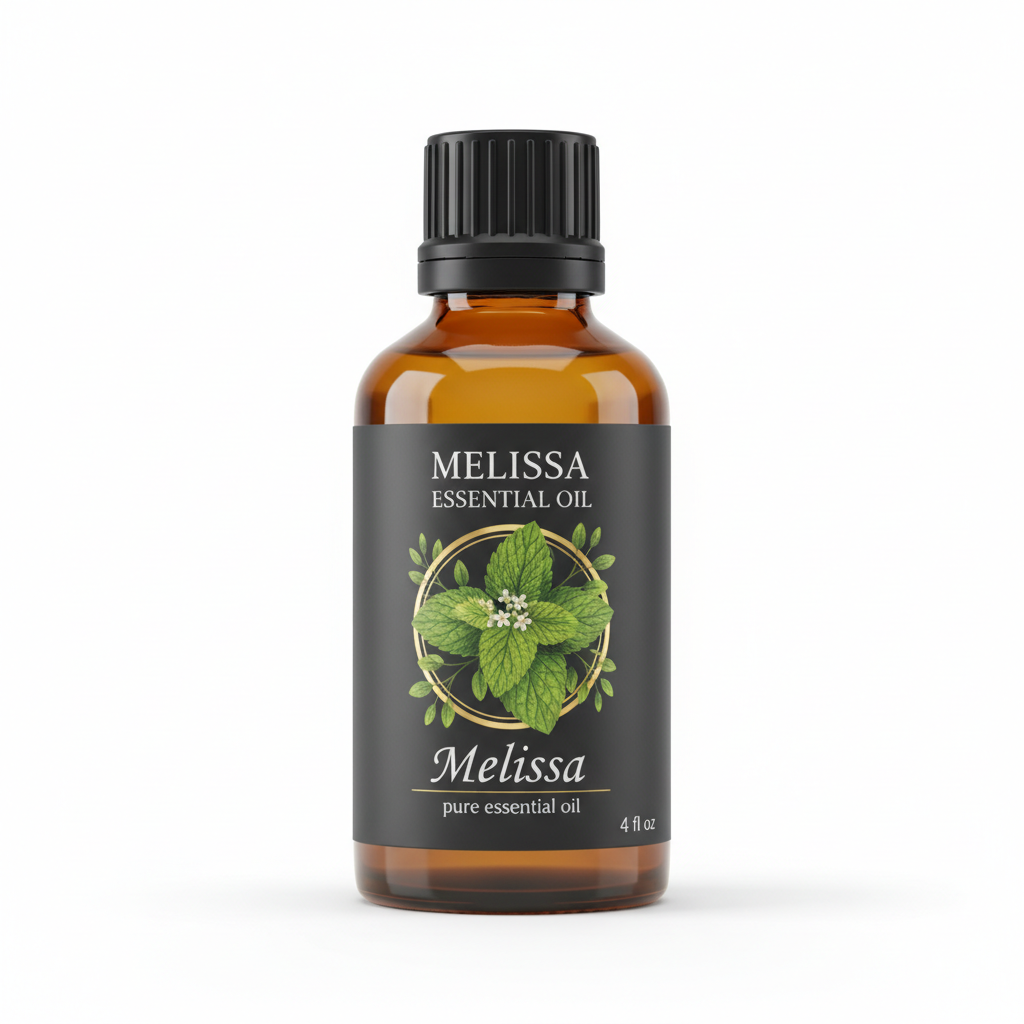
Melissa Essential Oil
Our own Melissa Essential Oil, in sizes from 0.5 oz to bulk.
From $23.99
Shop Now →Think in notes first
Perfumers sort scents by how long they linger. Top notes are the light, quick ones that last five to ten minutes and at most about half an hour, while middle notes give a blend its body and last up to roughly an hour (Essential Oils as Natural Sources of Fragrance Compounds for Cosmetics and Cosmeceuticals). We place melissa at top to middle, so it bridges both groups. That is useful to know: you are not choosing a partner to fill a hole at the top, you are choosing one to carry what is left once the first sparkle fades.
We recommend lavender, rose, geranium, chamomile, bergamot and ylang ylang as partners. All are oils you will find at a craft or supply shop, as we sell melissa only. Here is what each brings.
The partners, one at a time
Lavender: the easy first blend
Lavender is the one we suggest starting with. The review above describes lavender oil as a middle note with a sweet floral aroma, built largely on linalyl acetate (25% to 47%) and linalool, and that soft floral body is a lovely cushion under melissa's citrus. A single drop of melissa beside lavender in a diffuser is the pairing we describe for an evening blend, and it is forgiving because lavender is the larger voice and melissa is the accent.
Bergamot: more citrus, different character
Bergamot is a top note with a light, delicate citrus scent and a slightly floral, sweet edge, so it reinforces melissa's opening while being a little rounder. One thing to know: expressed bergamot oil is limited by IFRA because of phototoxicity, with a 0.40% cap in most skin product categories when its furocoumarin level is unknown (IFRA Standards library). The same review advises avoiding sun for at least 24 hours after applying photosensitizing oils. For a skin product, ask whoever sells your bergamot whether it is a furocoumarin-free grade; for a diffuser, none of that applies.
Geranium, rose and ylang ylang: the floral heart
Geranium and ylang ylang are both middle notes, which makes them good companions once melissa's top has thinned out. Geranium's rosy, green character echoes melissa's herbal side; ylang ylang is a floral middle note built on prenyl acetate, linalool and benzyl acetate. Rose oil leans on citronellol, geraniol and nerol, which is why it sits so comfortably beside melissa's green side. Go lightly with both until you know how they sit together; ylang ylang extracts have their own IFRA cap of 0.18% in body products.
Chamomile: a soft herbal bridge
The chamomile in the review is German chamomile, a middle note rich in bisabolol oxides and chamazulene. It adds a soft, herbal depth. Since the word chamomile can mean more than one plant, check the botanical name on whichever bottle you buy.
One rule that makes everything easier
Melissa often has the lowest allowance in a blend. IFRA's standard for melissa oil sets 0.15% for body creams, oils and lotions, and it names dermal sensitization as the concern. Several partners add citral of their own, geranium among them, so the practical approach is to fix the melissa amount first and fit everything else around it. In body products we start at or below that 0.15% line, even though our own dilution guidance for skin is 0.5% to 2% in a carrier. In a diffuser, melissa should be the smallest component and the one you add last.
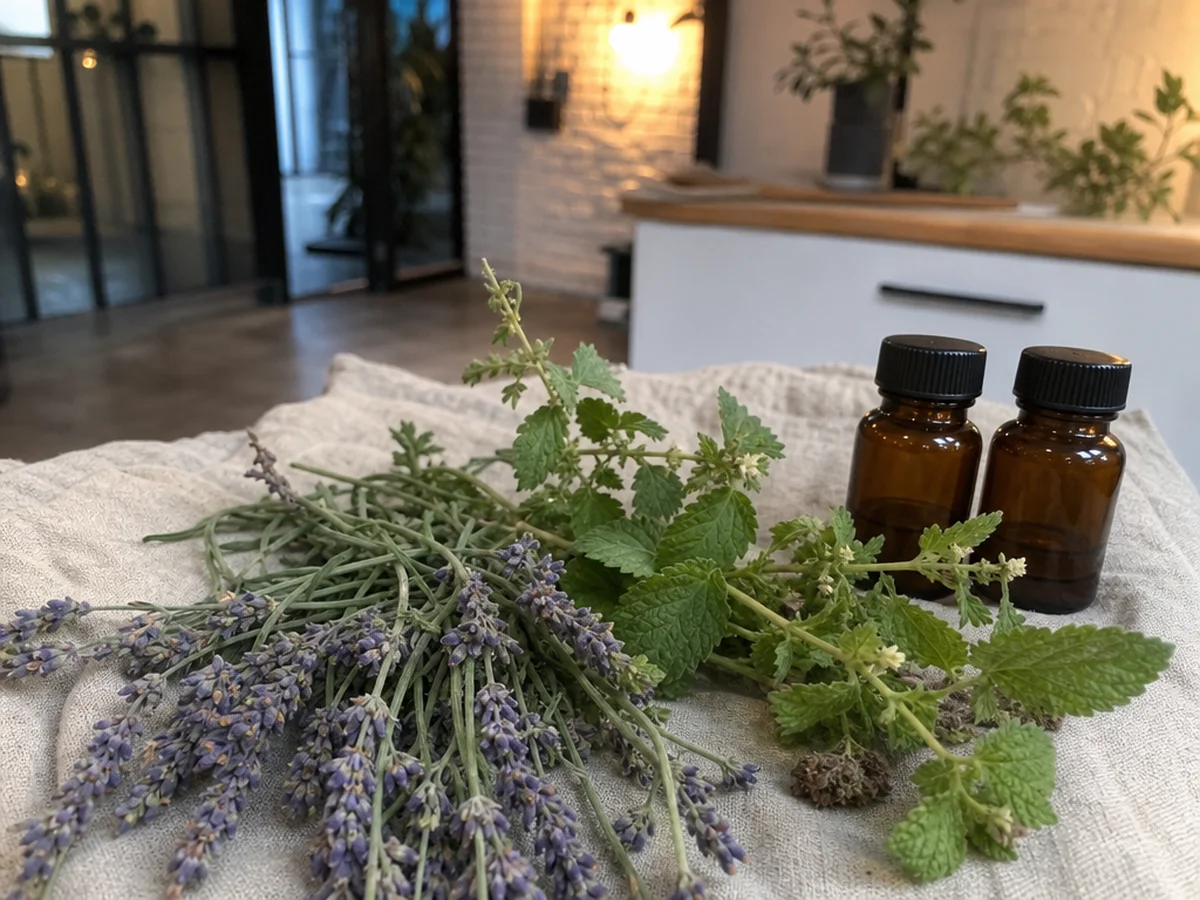
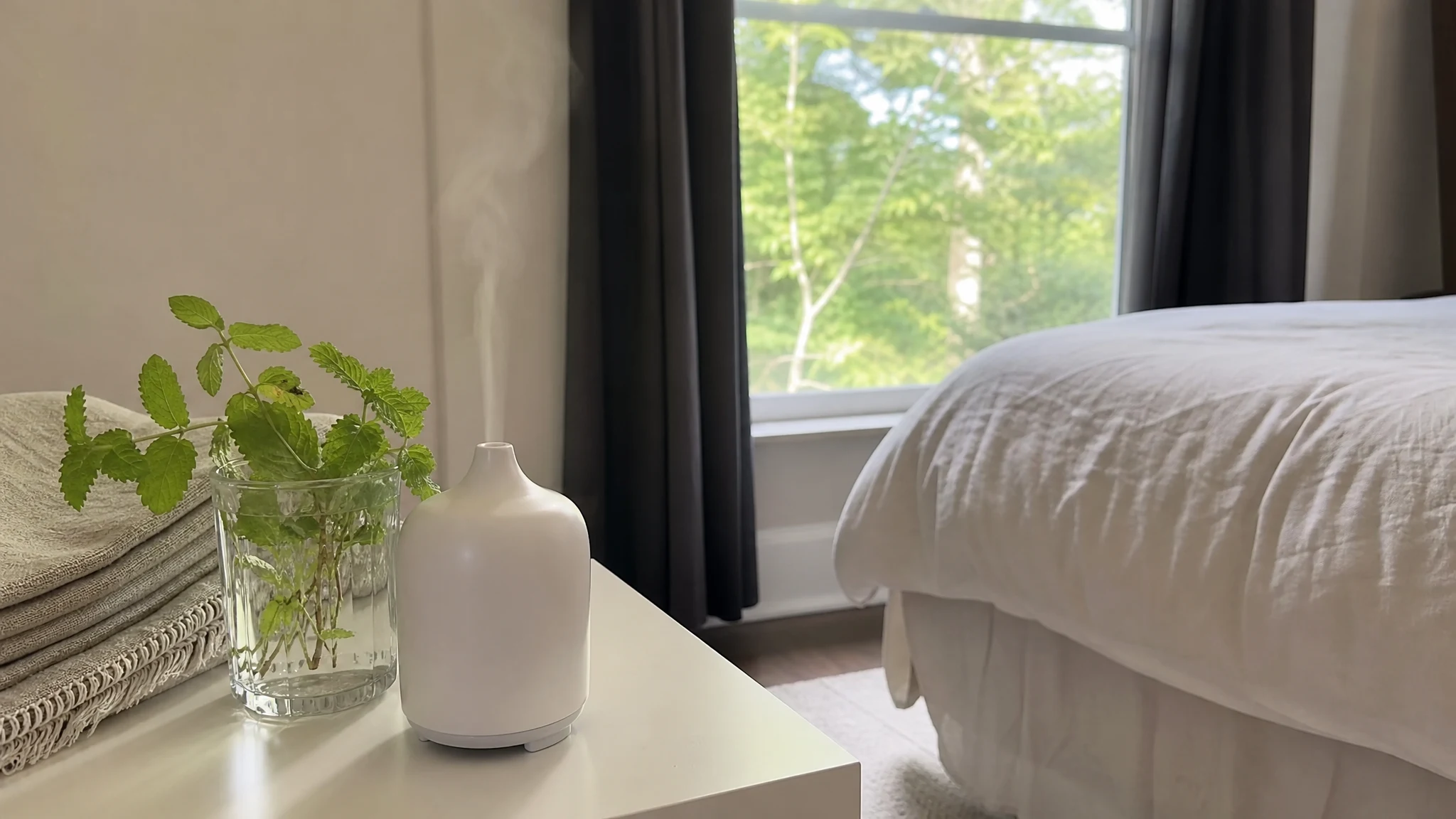
A simple proportion to start from, as a suggestion rather than a tested recipe: for a diffuser, one part melissa to two parts lavender, adding a bergamot drop if you want the citrus extended. Running it intermittently, 30 to 60 minutes on and off, is Robert Tisserand's recommendation, and it also stops your nose adapting before you have had a chance to enjoy the blend.
A tasting afternoon
If you have the partners within reach, set aside an afternoon for a tasting, the way you might for tea. Line up paper strips, one per oil, and put melissa on a fresh strip beside each partner in turn. Sniff right away, again after ten minutes, and again after an hour, and jot a word or two next to each: bright, round, green, sweet, thin. Our melissa is delicate, lemony and herbal, and you will notice that it plays differently depending on who stands next to it. Keep the strips in a jar lid so the notes stay with the scents. The favourites usually announce themselves.
Trust your nose
Everything above is a map, not a rule. Smell each oil separately on a paper strip, then together, and wait a few minutes for the top notes to clear before you decide. If you are building something for the skin, work out the amounts in grams first and check them against the limits, using our accord structures or the perfumery guide for worked examples. And if you want to know what is in melissa that sets those limits, our composition article explains it. If you blend often, our bulk sizes and guide to buying melissa oil in bulk cover larger quantities.
Start with lavender, keep melissa as the accent, and let the lemon do the talking.
Melissa Essential Oil
Melissa Essential Oil from our own shop, in sizes from 0.5 oz to bulk.
From $23.99
Shop Now →Sources & Further Reading
- Essential Oils as Natural Sources of Fragrance Compounds for Cosmetics and Cosmeceuticals, Molecules, 2021
- IFRA Standards library, IFRA
- Diffusion guidelines, Tisserand Institute