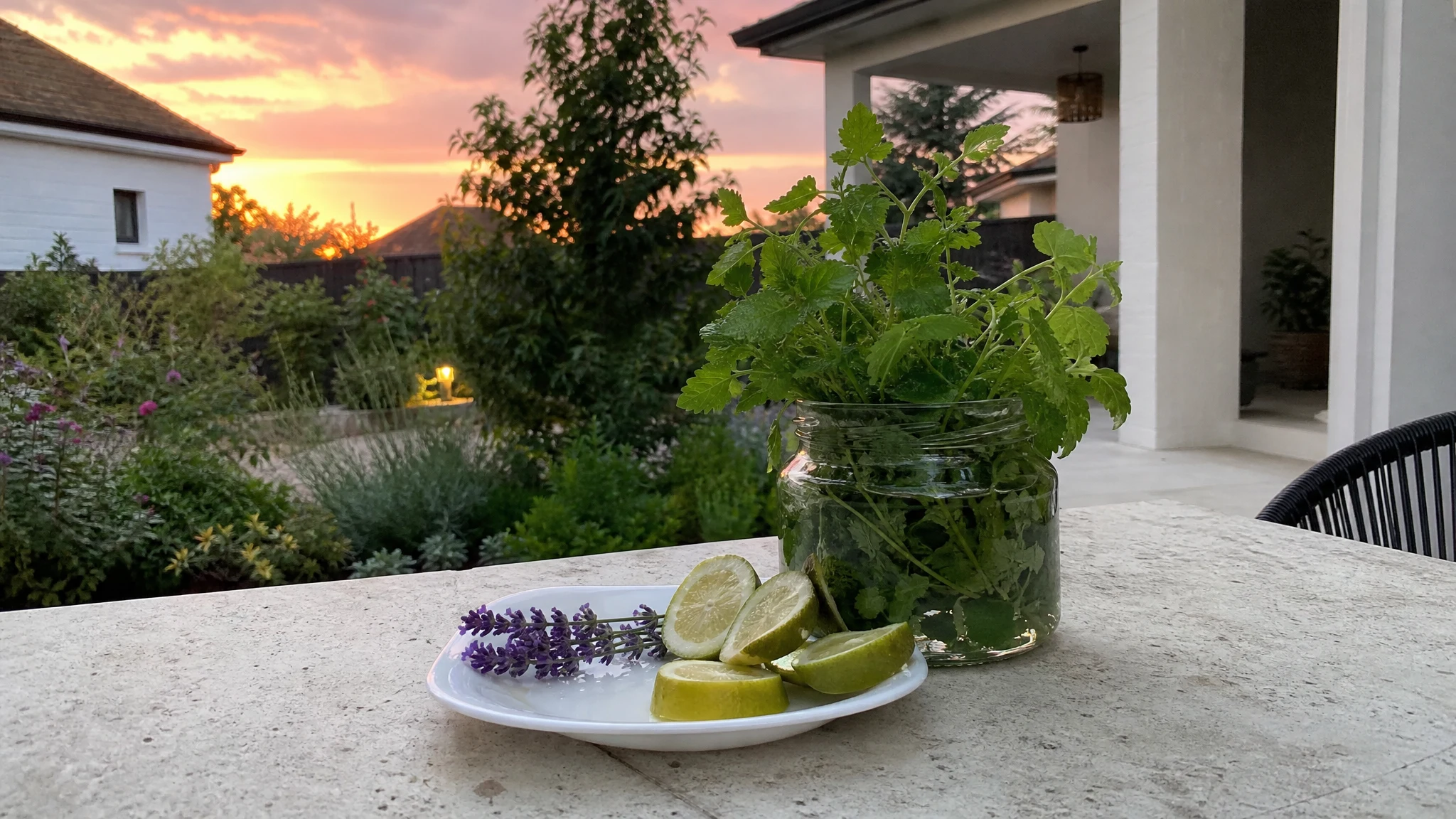
Melissa, Lavender and Bergamot Blend: Ratios and Limits
A melissa, lavender and bergamot blend is easy to imagine and easy to get lopsided. The surprise is which oil sets the ceiling: in a perfume, it is the bergamot, not the melissa, that caps how much blend the product can hold. The version here is worked out from published limits and fragrance-note timings, with the ratio offered as a suggestion for you to adjust by nose. We sell the melissa; lavender and bergamot come from another supplier.
Melissa Essential Oil
Our own Melissa Essential Oil, in sizes from 0.5 oz to bulk.
From $23.99
Shop Now →What each oil brings
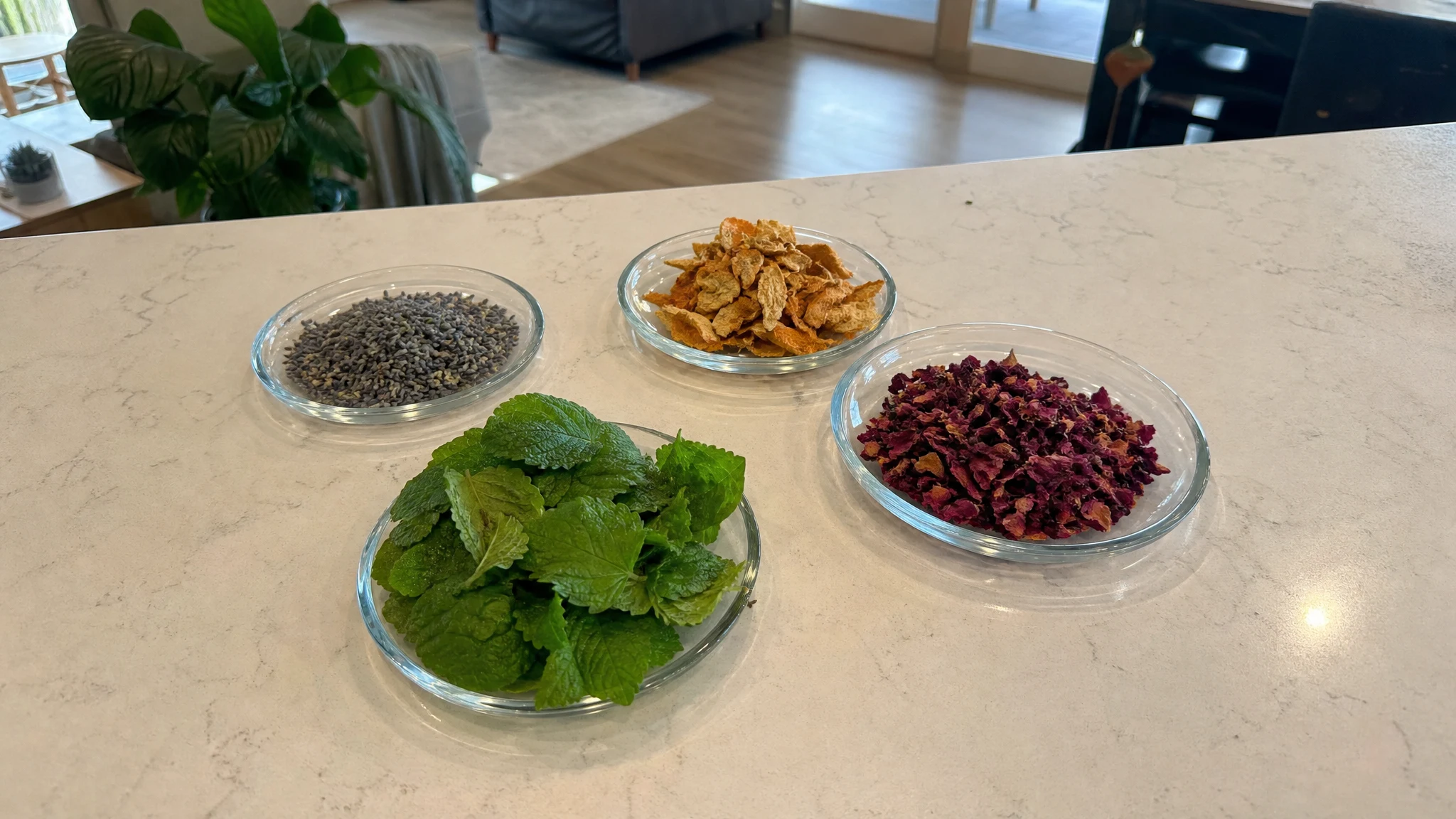
Melissa oil is described in the literature by its "fresh lemon odor" (Petrisor and colleagues, 2022). A review of oils in perfumery describes bergamot as a top note with a "light, delicate citrus-like scent with slightly floral/sweet/balsamic character", and lavender as a middle note with a "sweet floral aroma", its main constituents linalyl acetate and linalool. In that review top notes last 5 to 10 minutes, or up to about 30, and middle notes up to an hour (Sharmeen and colleagues, 2021). We place melissa from top to middle, a bright citrus lift over a soft green heart.
Reasoning from those timings, bergamot opens and fades first, lavender holds the middle, and melissa straddles the two, so its lemon is the thread between a citrus opening and a floral heart. With two lemony oils in the opening, the melissa is best kept small and the bergamot left to carry the brightness. Our oil is delicate, and a little goes a long way.
A starting ratio
As a suggestion, not a tested result, use one part melissa to two parts lavender to one part bergamot, by weight (25%, 50%, 25%). Melissa has the tightest published limits of the three, so keeping its share modest keeps the blend usable in the widest range of products. It also echoes the way we suggest using melissa in a diffuser: a single drop beside lavender, here with a citrus top. Drops of different oils weigh different amounts, so weigh if you want the ratio exact. Whether it smells right is your nose's call, and our scent profile article has a blotter method for it.
What the limits allow
We read IFRA's melissa oil Standard, its standards for bergamot oil expressed, citral and citronellal, and the category placements in IFRA's guidance. Melissa oil is capped at 0.15% in Categories 5A to 5D, 0.60% in Category 4, 1.2% in Category 9 and 4.2% in Category 10A. Expressed bergamot oil is capped at 0.40% in Categories 4 and 5A to 5D, because of phototoxicity when the furocoumarin level is unknown, and carries no restriction in Categories 9, 10A and 12. The citral cap in Category 10A is 1.2%. With melissa and bergamot each at 25% of the blend, dividing each cap by 0.25 gives the largest blend each product can hold:
| Product (IFRA category) | Melissa limit gives | Bergamot limit gives | Ceiling | Per 100 g: melissa / lavender / bergamot |
|---|---|---|---|---|
| Body lotion or oil (5A) | 0.60% | 1.6% | 0.60% | 0.15 g / 0.30 g / 0.15 g |
| Cologne, solid perfume (4) | 2.4% | 1.6% | 1.6% | 0.40 g / 0.80 g / 0.40 g |
| Bar soap (9) | 4.8% | none | 4.8% | 1.2 g / 2.4 g / 1.2 g |
| Reed diffuser liquid (10A) | 16.8% | none | 4.8% (citral cap) | 1.2 g / 2.4 g / 1.2 g |
Read the perfume row twice. The whole blend can be only 1.6% of the product, so the melissa lands at 0.40%, comfortably under its own 0.60%. If you buy a furocoumarin-free bergamot, IFRA's furocoumarin standard instead limits bergapten to 0.0015% (15 ppm) on skin exposed to UV, but only if the supplier has determined the level, so you would need their certificate. The reed diffuser row uses the worst case for citral, which caps melissa at 1.2% and the blend at 4.8%. Citral from any other lemon-note oil counts toward the same limit. For lavender, ask your supplier for an IFRA certificate for the batch you buy.
Smell the idea first
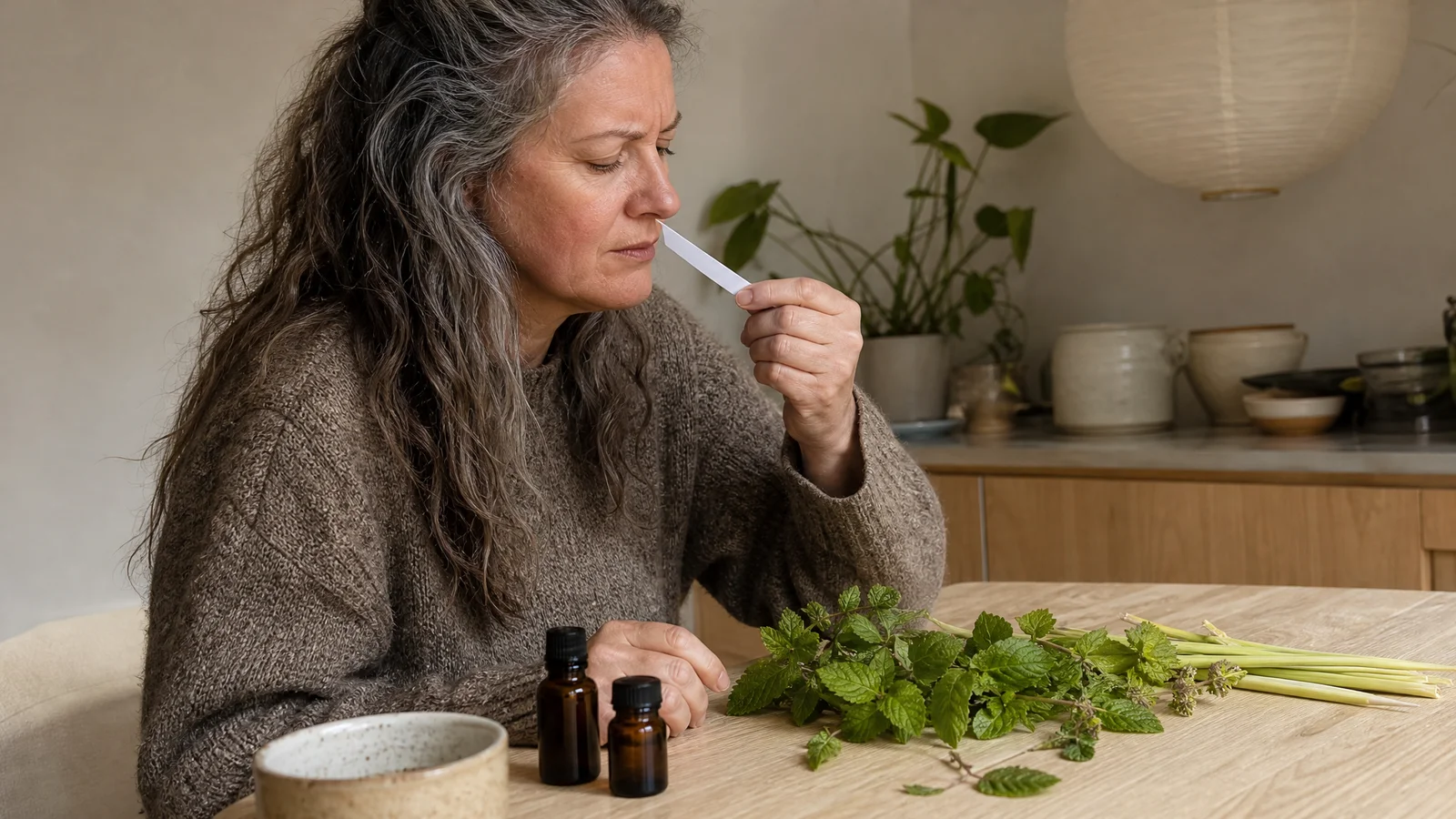
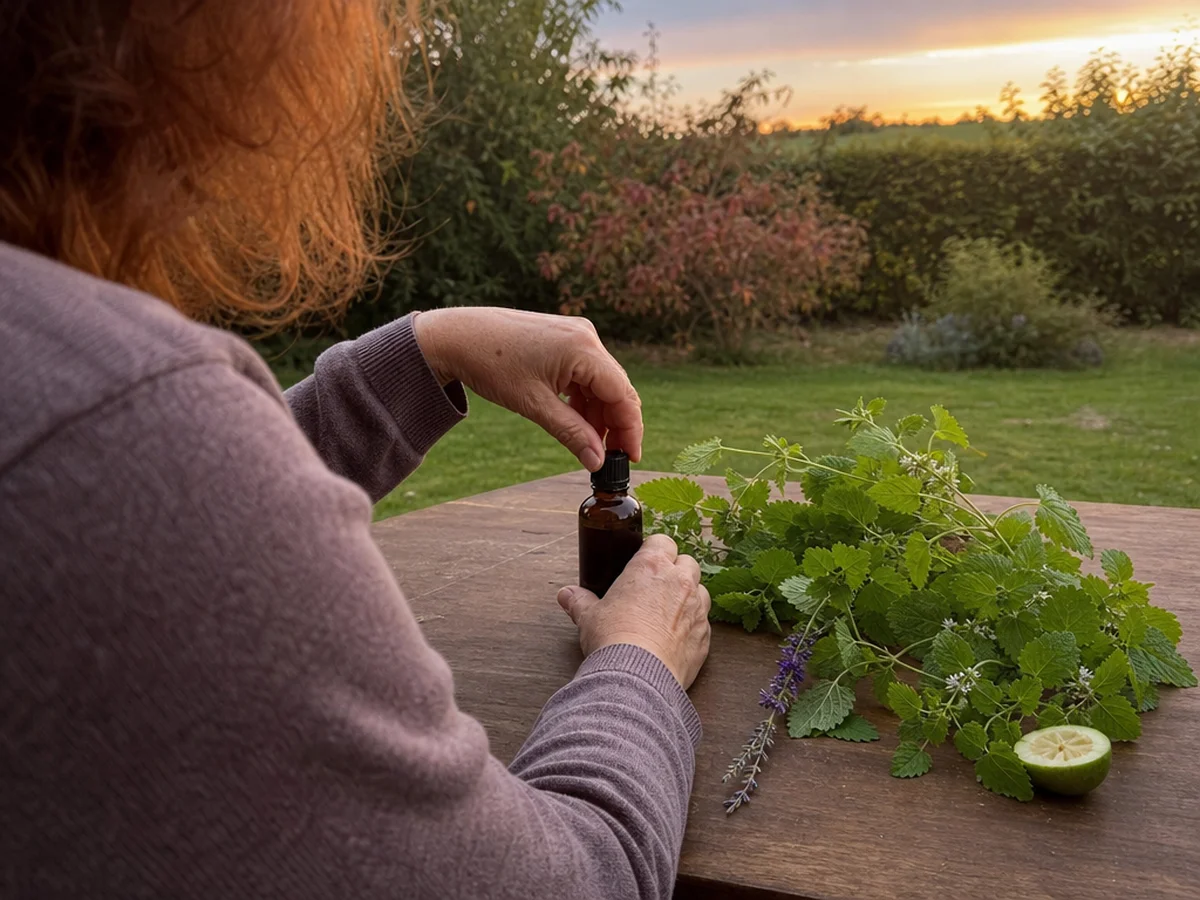
Before you mix anything, open the bottle of melissa and hold it a hand's width from your nose, then do the same with your lavender and your bergamot. Notice which one reaches you first and which is still there a few minutes later. Our melissa is delicate, a bright citrus lift over a soft green heart, so it tends to sit between the other two rather than shout over them. Writing down those first impressions tells you more about your ratio than any table can.
Making it
- Diffuser. The limits above are not written for water-based diffusers. The Tisserand Institute advises intermittent diffusion, about 30 to 60 minutes on and 30 to 60 minutes off, at barely noticeable levels. Keep to the 1:2:1 drop ratio and your device's instructions, and see our spring room article for the other formats.
- Skin products. Start at the ceiling in the table and go lower. The 5A row means 0.60% blend in a lotion, about 14 drops of blend in 100 g, of which 3 or 4 are melissa (a drop is about 0.044 g, from a relative density of 0.888 and 20 drops per millilitre). Our general dilution range of 0.5% to 2% is higher than melissa's own figure, so for this oil we begin lower. See our skin article.
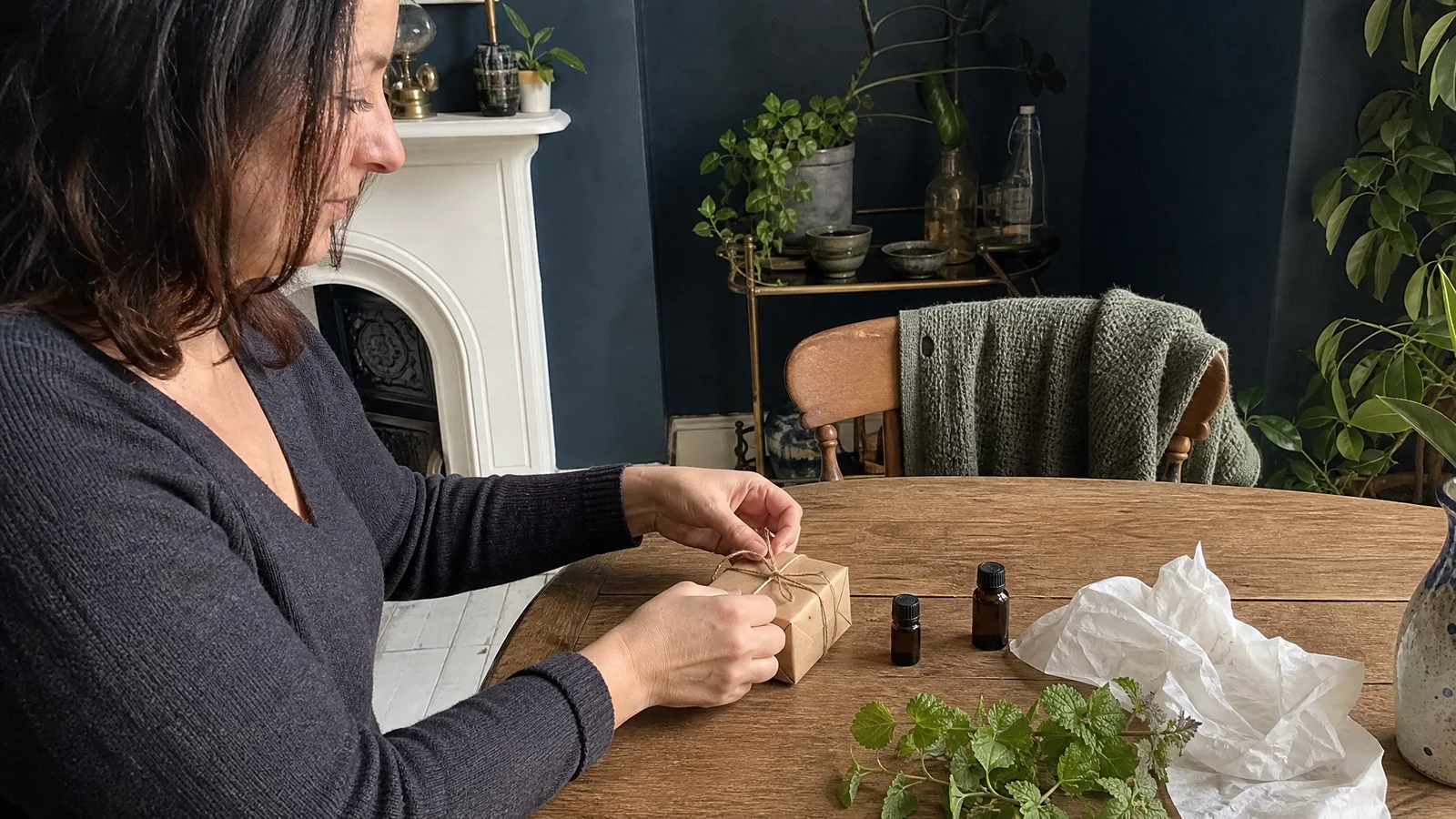
- Roll-ons and other formats. Redo the sum for whichever category fits. IFRA places fine fragrance, solid perfume included, in Category 4.
- Patch test, and mind the sun. Expressed bergamot is phototoxic, which is the reason for its limit. Anyone with a history of fragrance reactions should ask a dermatologist before putting any blend on skin.
For more perfume structures with the arithmetic done, try our five accords or the handmade products guide.
The blend itself is a few drops. The useful part is the habit: decide what the product is, find its ceiling, and let the oil with the lowest limit set the total.
Melissa Essential Oil
Melissa Essential Oil from our own shop, in sizes from 0.5 oz to bulk.
From $23.99
Shop Now →Sources & Further Reading
- Melissa officinalis: Composition, Pharmacological Effects and Derived Release Systems-A Review. Petrisor G, et al. Int J Mol Sci, 2022. PMC8998931
- Essential Oils as Natural Sources of Fragrance Compounds for Cosmetics and Cosmeceuticals. Sharmeen JB, et al. Molecules, 2021. PMC7865210
- IFRA Standards - 51st Amendment (Melissa oil; Bergamot oil expressed; Citral; Citronellal; Furocoumarins). IFRA, 2024. ifrafragrance.org
- Guidance for the Use of IFRA Standards. IFRA, 2023. IFRA guidance PDF
- Safety guidelines for diffusing essential oils at home. Tisserand Institute. tisserandinstitute.org