Is Melissa Oil Safe to Swallow? Tea vs Oil
Lemon balm is a tea, a garden herb and a flavouring, so it is fair to wonder why the same plant in a little amber bottle comes with "not for internal use" on the label. The short answer is that a cup of tea and a drop of essential oil are very different amounts of very different material. We do not recommend swallowing our Melissa Essential Oil in water, honey, capsules or anything else, and here is how we think about it.
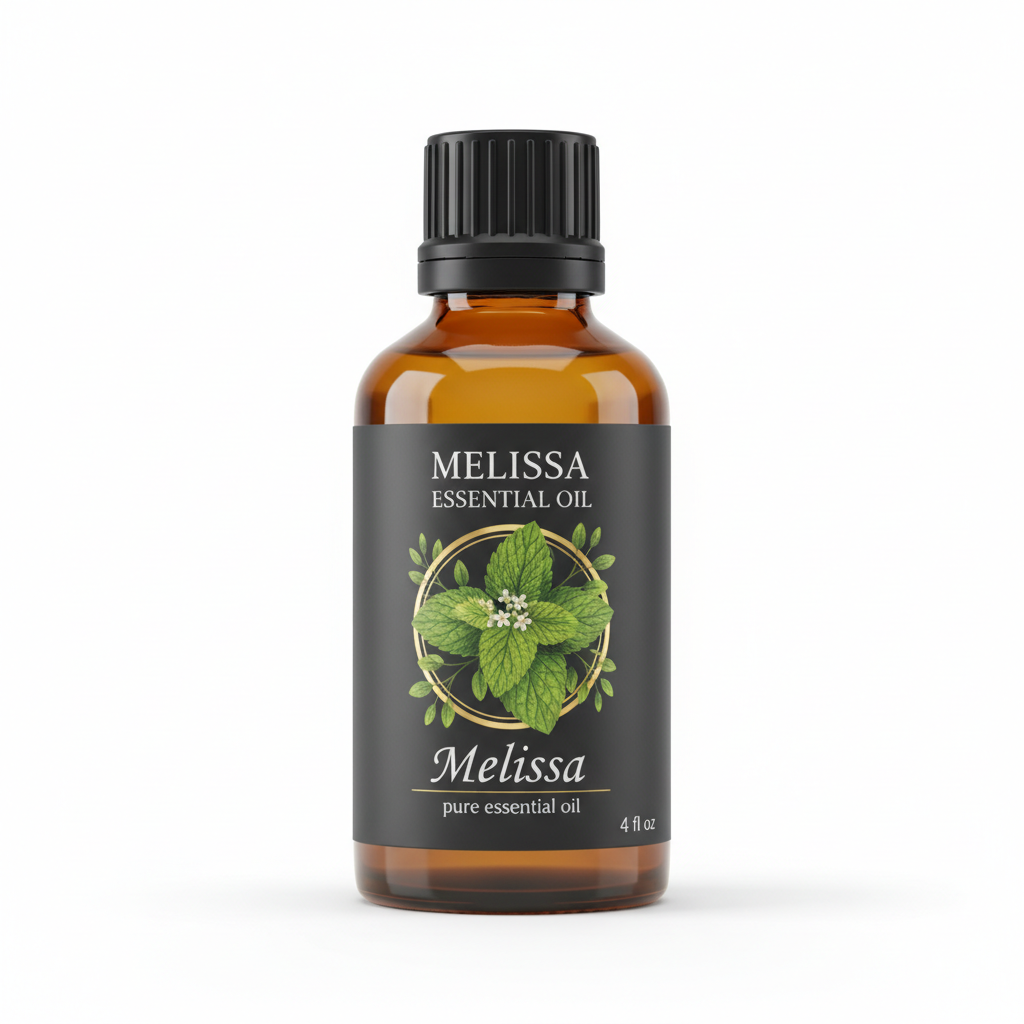
Melissa Essential Oil
Our own Melissa Essential Oil, in sizes from 0.5 oz to bulk.
From $23.99
Shop Now →The food-regulation entry people point to
In the US food regulations, 21 CFR 182.20 lists essential oils that are "generally recognized as safe for their intended use," and "Balm (lemon balm)," Melissa officinalis, is on that list. It is a real entry, and it is the one most often quoted. What it covers is a food ingredient used for its intended purpose in food. It does not describe taking a neat oil from a bottle, and our oil is a cosmetic aroma product, not a food ingredient. We do not offer food-grade documentation for it, so we leave that door closed.
The fragrance industry draws a similar line from the other direction. IFRA's standard for melissa oil allows 0.35% of the oil in products used in the mouth. In a 10 g product that is 35 mg, which is less than one drop (at the 0.888 relative density on the certificate of analysis we publish for one batch, a drop of about 0.05 ml weighs roughly 44 mg). That is a ceiling for a manufactured product, not a serving suggestion, but it shows how small the amounts are when the industry thinks about the mouth.
Why a cup of tea is a different thing
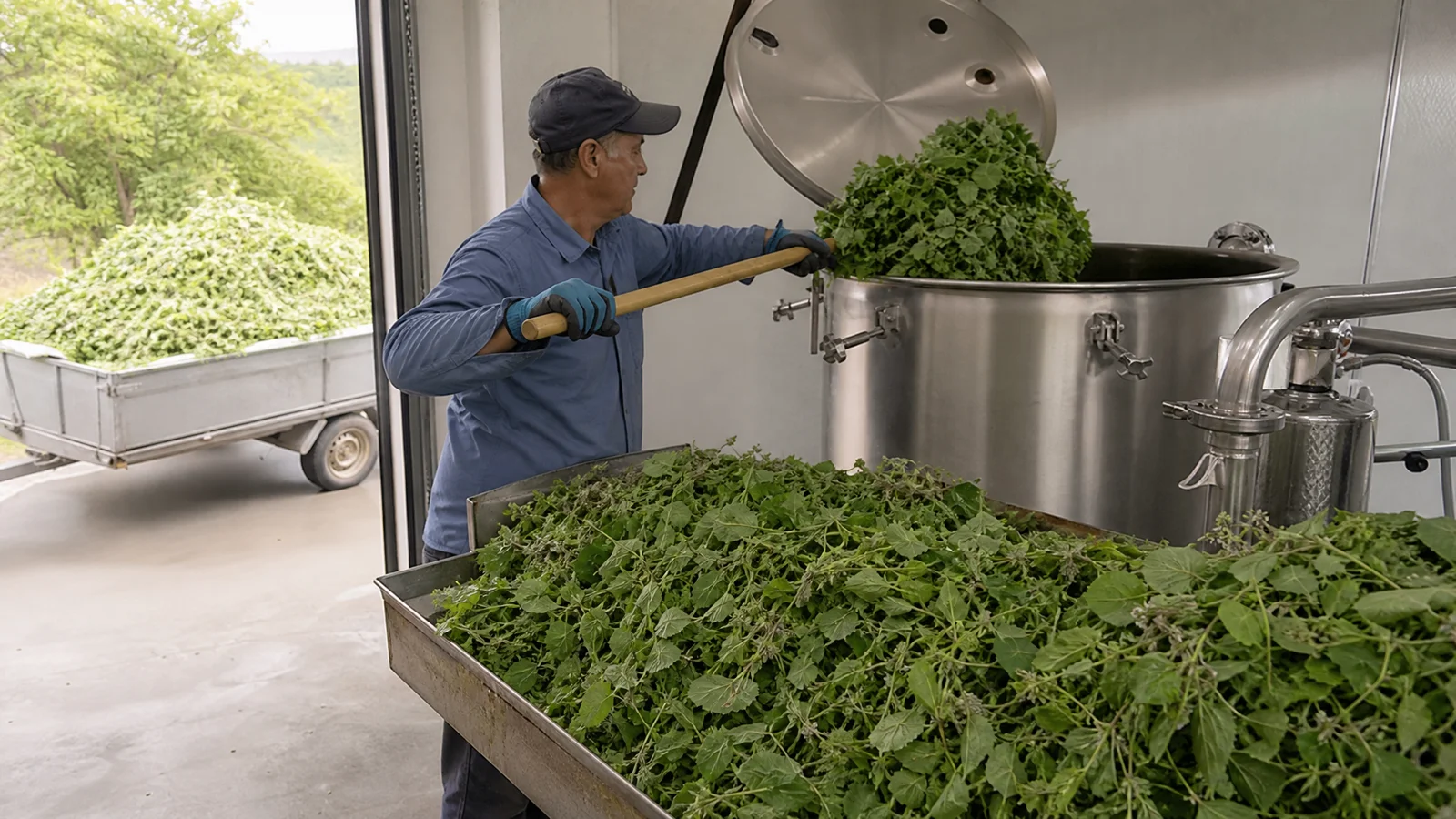
Here is the comparison that explains it best. Reviews of lemon balm report oil contents in the herb of roughly 0.08% to 0.20% in one study the Petrisor review collects (the review does not make the basis clear for every figure). Take a 2 g serving of leaf as an illustration. At those percentages it holds about 1.6 to 4 mg of oil, and a cup of tea would not extract all of it. One drop of the bottled oil, at about 44 mg, is therefore the oil from something like 11 to 27 servings of leaf, in a single drop. That is our arithmetic from two figures, not a measurement, but it is the plainest answer to "if the tea is fine, why not a drop?" Distilling is a way of concentrating, and a concentrate asks for different rules.
There is also a practical point. Oil floats on water, so a drop in a glass is still a concentrated drop at the first sip. And if you enjoy lemon balm as a drink, a fresh leaf in hot water gives you the lemony scent in a form made for it.
What poison centres see
Poison Control's page on essential oils is direct: it advises keeping bottles where children cannot find them and suggests that households with young children consider discarding them safely. For any swallowed oil, it points to the webPOISONCONTROL online tool or the poison help line at 1-800-222-1222 in the US, free, confidential and open around the clock.
The same pattern shows up in Australian data. A review of essential oil calls to the New South Wales Poisons Information Centre, reported by the University of Sydney, found exposures rising by more than 5 percent a year, with 63 percent of cases in children under 15. The authors describe the clear majority as accidental or as oils mistaken for medicines such as cough mixture. That covers essential oils in general, so it says who is most exposed and how, not what one drop of ours would do. It is a good reason to keep the cap on and the bottle up high.
If someone does swallow it
- Call the poison help line (1-800-222-1222 in the US) or use webPOISONCONTROL, and follow what they tell you. Outside the US, call your local poison centre or emergency number.
- Have the bottle in your hand: Melissa officinalis, roughly how much, who swallowed it, their age or weight, and when.
- Call emergency services if the person collapses, has a seizure or cannot breathe.
Keeping the bottle where it belongs
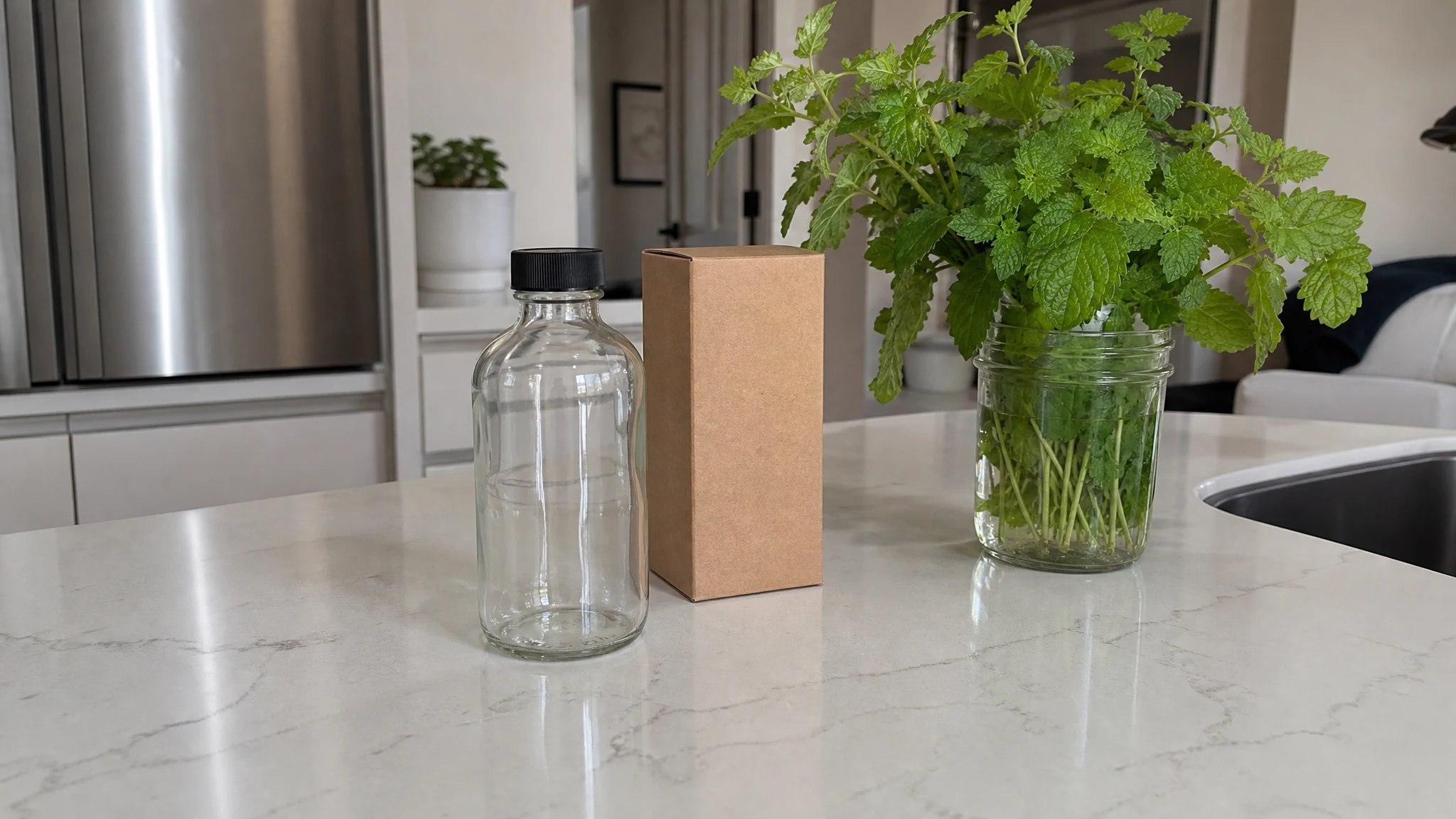
Most of the sensible advice here is about habit rather than knowledge. Keep the oil on a high shelf with the cap on, and keep it away from the kitchen counter, where an amber bottle can look a lot like a flavouring or a tincture. Never pour it into a glass, a water bottle or an unmarked jar, and if you decant a little into a smaller bottle, label that bottle clearly with the name of the oil and the words "not for internal use."
If you share a home, tell everyone in it what the bottle is. A houseguest who sees a lemon-herb label and a dropper may reasonably guess that it is something you eat. A quick word, and a spot on the shelf that is clearly not the pantry, takes care of that. We would much rather you feel a little fussy about this than find out the hard way.
Where to go instead
If you are curious about lemon balm as a tea or supplement, a pharmacist or physician is the right person, since they can check it against your medicines and health history. For flavouring food or drink, a flavour supplier selling food-grade material with its own documentation is the way to go. And for the aroma side, which is what we sell, start with our guides to melissa oil and skin, pregnancy and nursing and what the lemon balm studies really tested. Our FAQ collects the quick answers.
Our oil is made to be smelled and, diluted, used on skin. Keep it capped, high up and away from medicines and drinks, and let the label do the talking.
Melissa Essential Oil
Melissa Essential Oil from our own shop, in sizes from 0.5 oz to bulk.
From $23.99
Shop Now →Sources & Further Reading
- 21 CFR 182.20 - Essential oils, oleoresins (solvent-free), and natural extractives (including distillates). Electronic Code of Federal Regulations, Legal Information Institute. law.cornell.edu
- IFRA Standards, 51st Amendment: Melissa oil (genuine Melissa officinalis L.), Amendment 49. ifrafragrance.org
- Petrisor G et al., 2022. Melissa officinalis: Composition, Pharmacological Effects and Derived Release Systems-A Review. Int J Mol Sci. PMC8998931
- Poison Control. Essential oils: Poisonous when misused. poison.org
- University of Sydney. Essential oil poisoning calls on the rise, children most affected. sydney.edu.au