How to Buy Melissa Oil: Start With Your Use
Two people can type "buy melissa oil" into a search box and need completely different bottles of information. One wants a single drop in a room diffuser. The other is formulating a lotion for sale. The oil is the same; the number that limits how much of it can go into the product, and the paperwork worth asking for, are not. So before you pick a size or a supplier, pick your use.
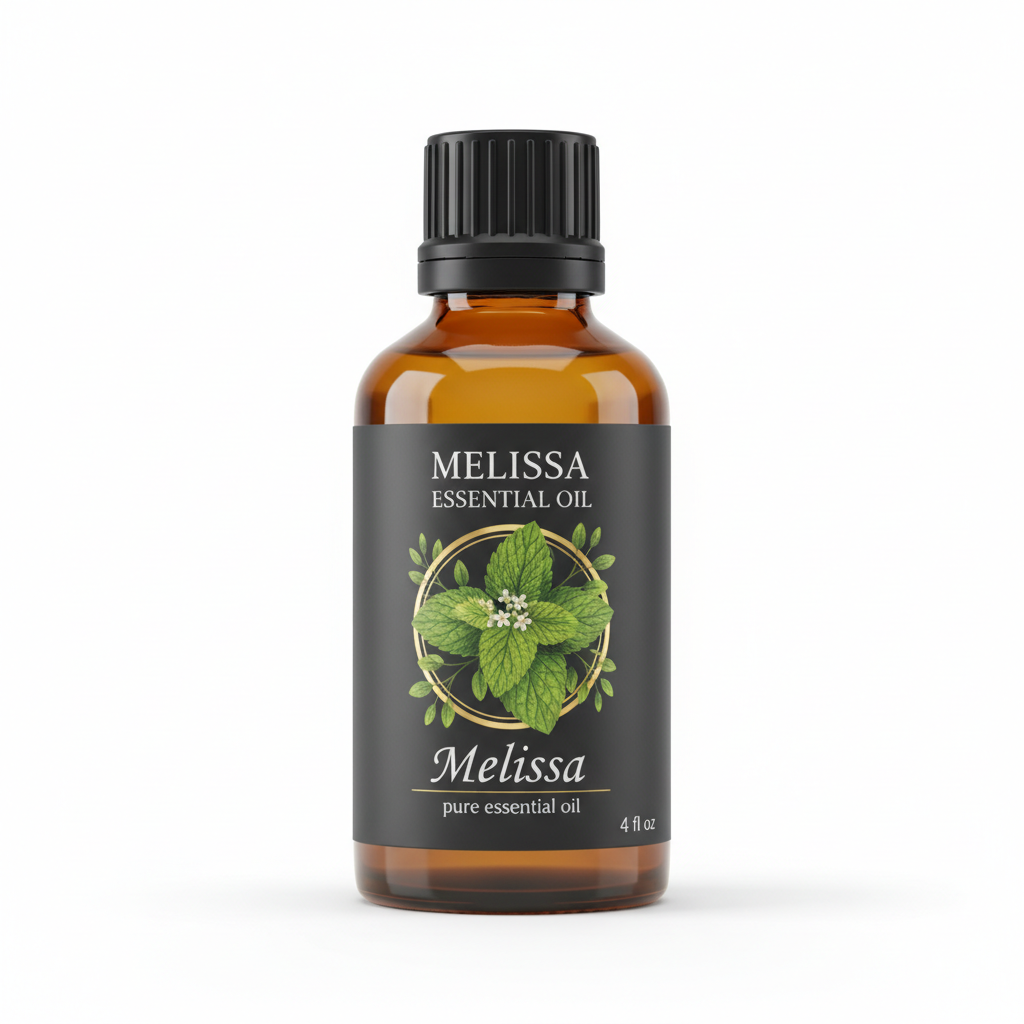
Melissa Essential Oil
Our own Melissa Essential Oil, in sizes from 0.5 oz to bulk.
From $23.99
Shop Now →The use sets the ceiling
The fragrance industry's IFRA standard for melissa oil gives a maximum percentage of the oil in the finished product for each product category, with dermal sensitization as the driving risk. IFRA's separate guidance document says which products fall in which category. Put together, they read like this:
| Product | IFRA category | Maximum melissa oil in the product |
|---|---|---|
| Body sprays and mists | 2 | 0.032% |
| Body creams, oils and lotions; hand cream; baby cream | 5A, 5C, 5D | 0.15% |
| Fine fragrance, solid perfume, cologne | 4 | 0.60% |
| Bar soap; bath oils and salts | 9 | 1.2% |
| Pillow spray | 11B | 2.3% |
| Reed diffuser oil, hard-surface cleaners | 10A | 4.2% |
| Candles | 12 | No restriction |
From the smallest number to the largest, that is a spread of well over a hundredfold. Reasoning from it, "how much melissa can I use?" has no answer until you name the product. Our own skin guidance is 0.5% to 2% in a carrier with a patch test, and for a leave-on body product the IFRA figure of 0.15% is lower, so that is where we would start. IFRA standards are voluntary for a home maker, but they are the clearest published yardstick for this oil. Our skin and citral post covers the precautions.
If you are scenting the air
Diffusing does not fall under a finished-product category, so the paperwork is light and the useful decision is the bottle. We describe the oil as delicate, lemony and herbal, and a little goes a long way: a single drop beside lavender is the sort of amount we have in mind for a diffuser. A half-ounce bottle is a long supply, and a small bottle has less time to sit open and oxidize. Our bottle size guide does the arithmetic, and our at-home use guide covers diffuser habits.
If you make leave-on skin products
This is the buyer with the lowest limit and the most reason to care about identity. Two FDA pages frame the context. One says there is no regulatory definition for essential oils, and that fragrance ingredients can be listed simply as "Fragrance." The other says aromatherapy products are regulated mainly according to their intended use, and that a plant origin does not keep a material from being regulated as a drug. In practice that means no agency checks what a bottle labeled "melissa" contains, and what you say about your product shapes how it is regulated. We make no therapeutic claim for our oil, and you should leave such claims off your label too.
Because citral content varies so widely (a 2022 review compiled geranial from about 6% to 51% and neral from about 4% to 35%), the document that would really inform this buyer is a constituent report tied to a batch number. The Certificate of Analysis we publish covers one batch and lists relative density 0.888, refractive index 1.484 and optical rotation -1.08 degrees, with no citral figure. If you need GC-MS, ask us in writing through the contact page before ordering. Our supplier documentation checklist lists what to request, and our allergen labelling post covers the label side.
If you make soap, bath products or candles
Here the IFRA ceilings are generous, so the dose limit stops being the main constraint and your base takes over. How much scent survives soap-making, and what your wax supplier recommends, are the next questions; our cold process soap post and cost per batch post work through them. For anything going into bathwater, add a dispersant to your shopping list at the craft shop, since oil poured straight in floats on the surface (see the Tisserand Institute's bath guidance below).
If you are buying in volume
We offer sample bottles you can evaluate in your own product, a free consultation form, private-label bottling with your own labels, custom formulations where we can help, and 5 lb, 25 lb and 400 lb sizes of the same oil our retail sizes hold. The sensible order is to buy a sample, run it through your process, then size up. Tell us what documents your market requires, in writing, through the wholesale page before you commit, and judge our answer the way you would judge anyone's: a filed document beats a sales-page adjective every time.
When the bottle arrives
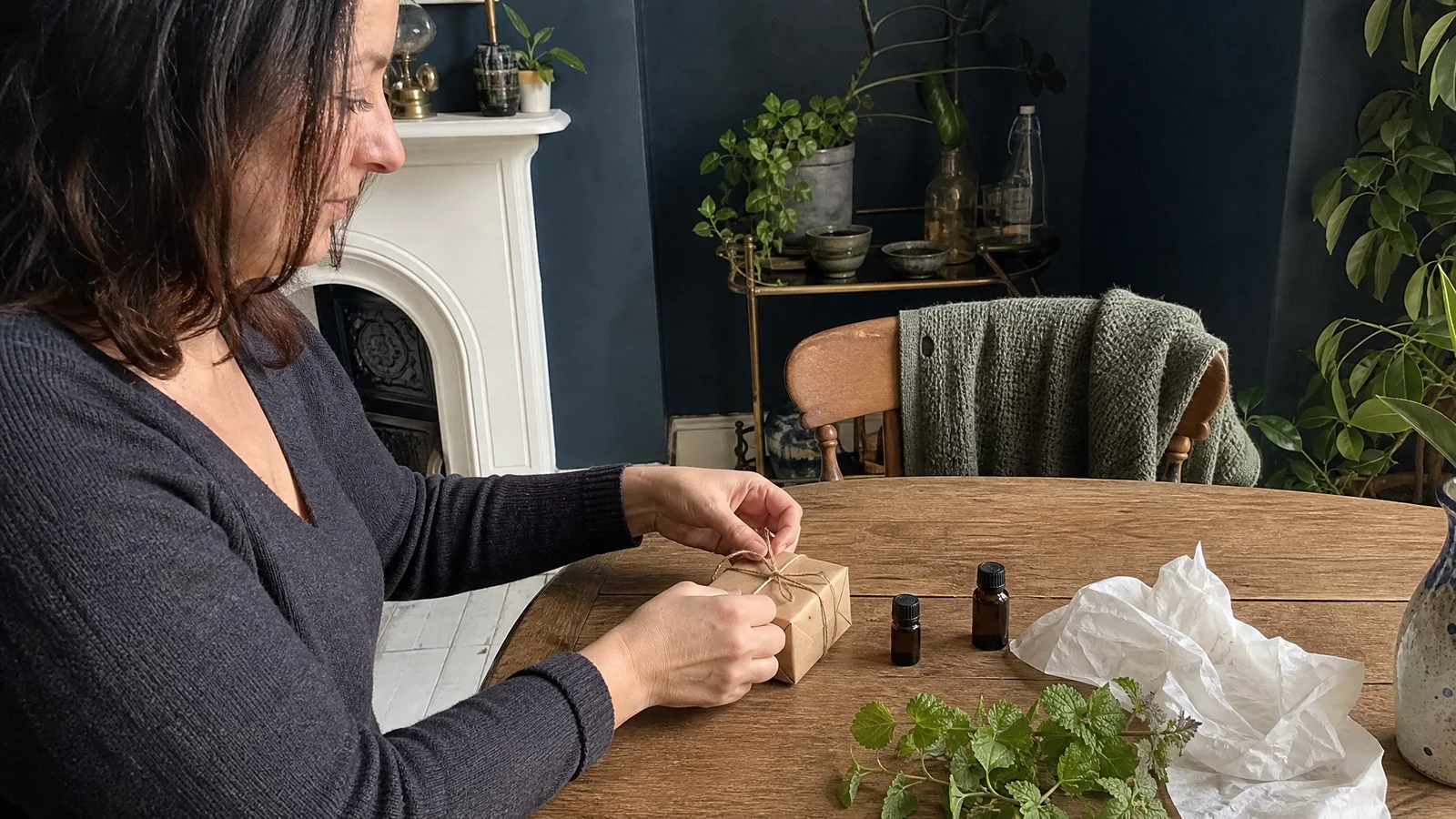
Whatever you bought it for, give the first minute some ceremony. Unscrew the cap and hold the bottle a hand's width from your nose rather than right under it, and notice the bright lemon first and the soft green behind it. Write the date on the label with a marker, and put the bottle back in a cool, dark cupboard with the cap on firmly. They are small habits, but they are the ones that decide whether the last drops still smell like the first.
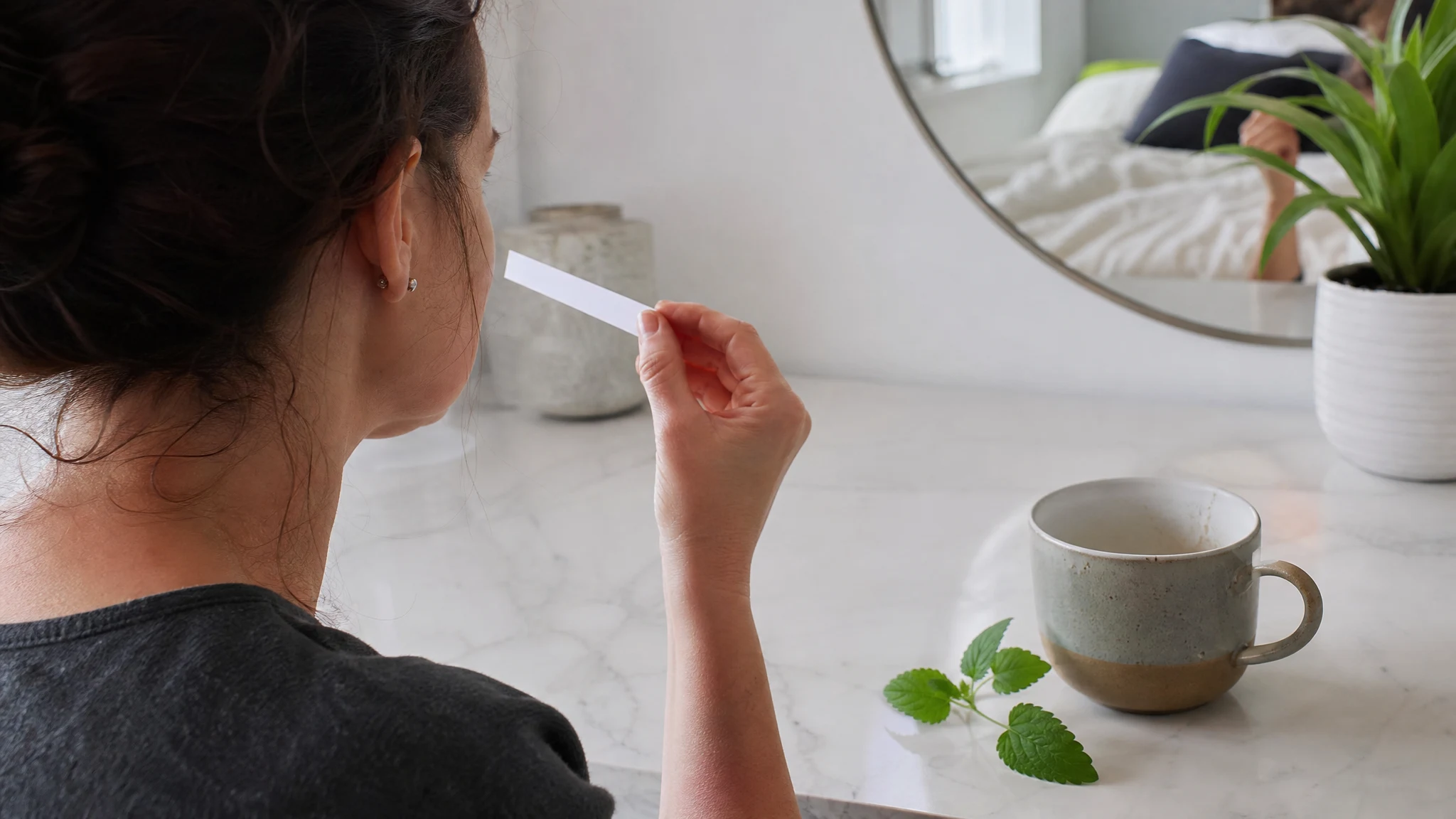
It is also worth smelling a drop on a strip of paper before you commit to a formula. Paper shows you how the scent opens and how it settles over an hour, and it costs almost nothing. If you are weighing two or three possible projects, jot down what you notice for each before deciding where the oil goes.
A short list of things we would skip
- Choosing by smell alone. Our identity checks post explains why a nose cannot settle identity.
- Treating price as a quality signal in either direction.
- Buying for a health purpose. We sell an external cosmetic oil, not a remedy, and anyone with a medical question should ask a physician or pharmacist.
Pick the use, find its number, and ask for the one document that would change your mind; the rest of the purchase gets easier from there.
Melissa Essential Oil
Melissa Essential Oil from our own shop, in sizes from 0.5 oz to bulk.
From $23.99
Shop Now →Sources & Further Reading
- IFRA. "Melissa oil (genuine Melissa officinalis L.)," Amendment 49 (2020), in IFRA Standards, 51st Amendment compendium. ifrafragrance.org
- IFRA. "Guidance for the use of IFRA Standards," 30 June 2023. ifrafragrance.org
- US FDA. "Fragrances in Cosmetics." fda.gov
- US FDA. "Aromatherapy." fda.gov
- Petrisor et al., 2022. "Melissa officinalis: Composition, Pharmacological Effects and Derived Release Systems-A Review." Int J Mol Sci. PMC8998931
- Tisserand Institute. "Bath Safety: how to use essential oils safely in the bath." tisserandinstitute.org