Citral in Melissa Lotion: A Maker's Worked Example
Make a lotion with melissa oil and one question arrives quickly: how much citral is in it? The answer swings from nothing to a figure hundreds of times above a labelling threshold, depending on a single number, the citral share of the oil. Working through one lotion shows exactly why that number matters and what to ask for.
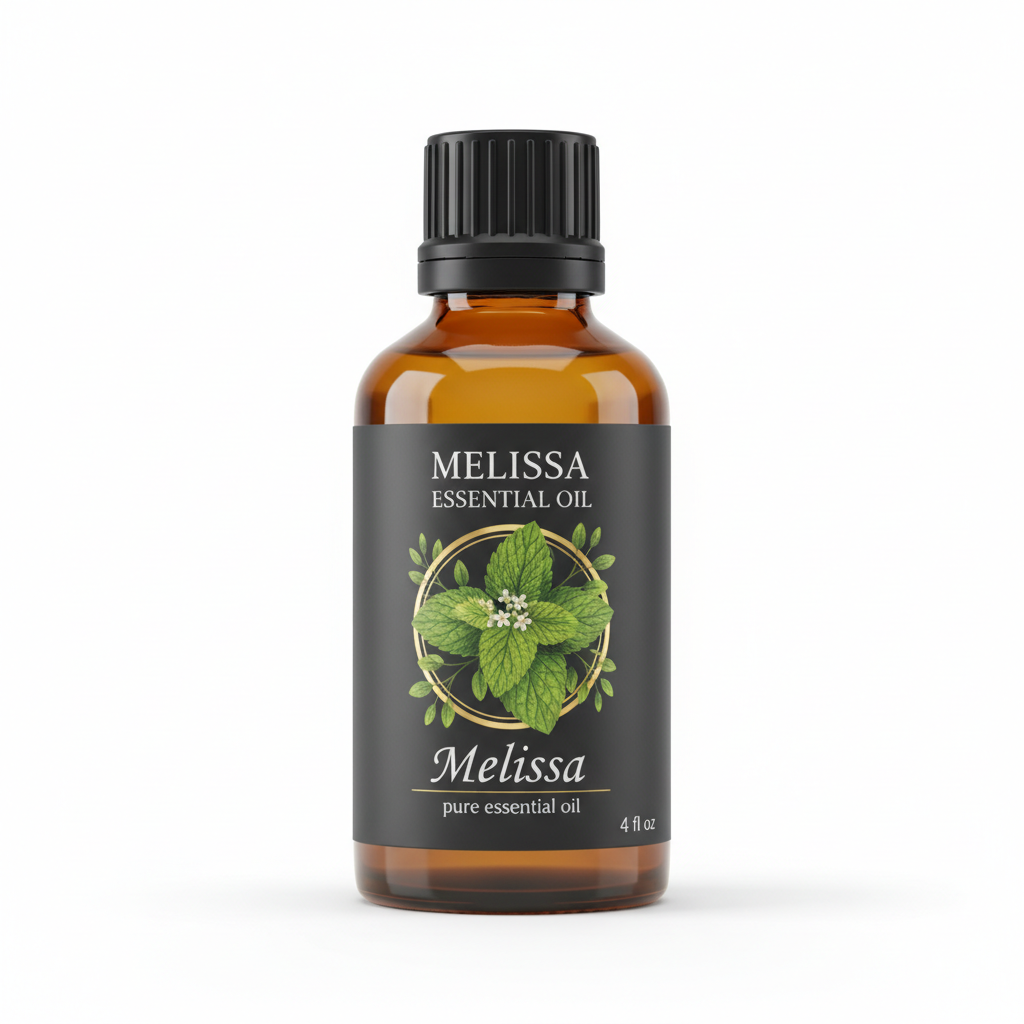
Melissa Essential Oil
Our own Melissa Essential Oil, in sizes from 0.5 oz to bulk.
From $23.99
Shop Now →Three rules that are easy to blur together
IFRA, the fragrance industry's self-regulation body, sets maximum concentrations of fragrance materials in finished products, category by category. Its own guidance calls observance of the Standards necessary for its Code of Practice but possibly not sufficient for regulatory compliance. EU labelling is law: a listed fragrance allergen must appear in the ingredient list once it passes 0.001% in a leave-on product or 0.01% in a rinse-off one. US labelling follows different rules again. A product can satisfy one and miss another, so it helps to keep them separate. This is general information, not legal advice.
The IFRA figures that apply
The 51st Amendment compendium holds two relevant Standards: one for melissa oil (genuine Melissa officinalis L.), driven by skin sensitisation, and one for citral, which covers neral and geranial. For body creams, oils and lotions (Category 5A) both sit at 0.15% of the finished product. For fine fragrance and solid perfume (Category 4) both are 0.60%, and for bar soap and similar rinse-off products (Category 9) both are 1.2%. The one that diverges is Category 3, products applied to the face with fingertips: melissa oil allows 0.65%, but citral allows only 0.10%. Category assignments come from IFRA's guidance document.
The missing number
Citral limits are written as percent citral, not percent oil, so you need the oil's citral share. Published analyses of melissa leaf oil put geranial anywhere from about 6% to 51% and neral from about 4% to 35%, with a few samples reporting no citral at all (Petrisor and colleagues, 2022). Two samples with typical values reach roughly 75% citral between them, and a low-citral oil might sit near 30%.
Take 100 g of lotion at 0.15% melissa oil. That is 0.15 g of oil, about three or four drops by our arithmetic (relative density of 0.888 and roughly 20 drops per millilitre). At 30% citral the lotion carries 0.045% citral. At 75% it carries about 0.11%. Against the EU labelling threshold of 0.001% for leave-on products, those are 45 and 110 times over, so a lotion made with melissa oil will have citral to declare in the EU in almost any realistic case. Against IFRA's Category 5A citral figure of 0.15%, both pass, and the melissa oil figure is the one that sets the ceiling.
In Category 3 the order flips. Citral's 0.10% limit divided by a 75% citral share allows only about 0.13% oil in the product, far less than the 0.65% melissa oil figure. IFRA's citral Standard also asks you to count citral from every other oil in the formula, so a lemongrass or lemon verbena addition shrinks the room again.
Where the EU and the US stand
The European Commission says Regulation (EU) 2023/1545 added 56 fragrance allergens to the individual-labelling list, that non-compliant products have not been allowed on the EU market since 31 July 2026, and that products already on the market may stay available until 31 July 2028 (European Commission). Citral has long been among the listed allergens, and whether other constituents of melissa oil are on the expanded list is a question for whoever checks your formula against Annex III.
In the US, the FDA says fragrance can be listed simply as "Fragrance" and that it does not have the same legal authority to require allergen labelling for cosmetics as for food (FDA, Fragrances in Cosmetics). Its page on the Modernization of Cosmetics Regulation Act lists fragrance allergen labelling among the rules the Act directs FDA to establish (FDA, MoCRA). Check the current status on the day you launch.
A maker's habit worth starting
Keep a notebook for every formula. Write down the weight of each ingredient in grams, the batch number from the oil's bottle, and the date. It can feel fussy for a first lotion, and it is the habit that turns later questions, labelling, scaling up, swapping one oil for another, into a quick job instead of a puzzle. The arithmetic in this article only works if the numbers behind it were written down. When the lotion is finished, open the jar and notice the scent on the first day and again after a week; a very low dose of a delicate oil asks for a little patience from your nose.
What to ask for
For a product you will sell, you want a GC-MS report that shows neral, geranial and citronellal for the batch you are buying, plus its batch number and the laboratory that ran it. The Certificate of Analysis we publish for one batch lists density, refractive index and optical rotation. If you need GC-MS data, ask us in writing through the contact page before ordering. Our supplier documentation checklist lists the other questions worth asking, our COA and GC-MS guide explains how to read the answer, and our labelling article covers claims. Final decisions on category and labelling belong to a cosmetic regulatory consultant in the market where you sell.
For a lotion you make for yourself, the same table is the best published yardstick for how much oil to use. Our oil is sold neat, so the dilution arithmetic is yours to do, and the lowest applicable figure is a good place to start.
Melissa Essential Oil
Melissa Essential Oil from our own shop, in sizes from 0.5 oz to bulk.
From $23.99
Shop Now →Sources & Further Reading
- IFRA Standards - 51st Amendment (Melissa oil; Citral). IFRA, 2024. ifrafragrance.org
- Guidance for the Use of IFRA Standards. IFRA, 2023. IFRA guidance PDF
- Melissa officinalis: Composition, Pharmacological Effects and Derived Release Systems-A Review. Petrisor G, et al. Int J Mol Sci, 2022. PMC8998931
- Fragrance allergens labelling - Internal Market, Industry, Entrepreneurship and SMEs. European Commission. ec.europa.eu
- Fragrances in Cosmetics. FDA. fda.gov
- Modernization of Cosmetics Regulation Act of 2022 (MoCRA). FDA. fda.gov