A Short History of Lemon Balm and Its Bee Connection
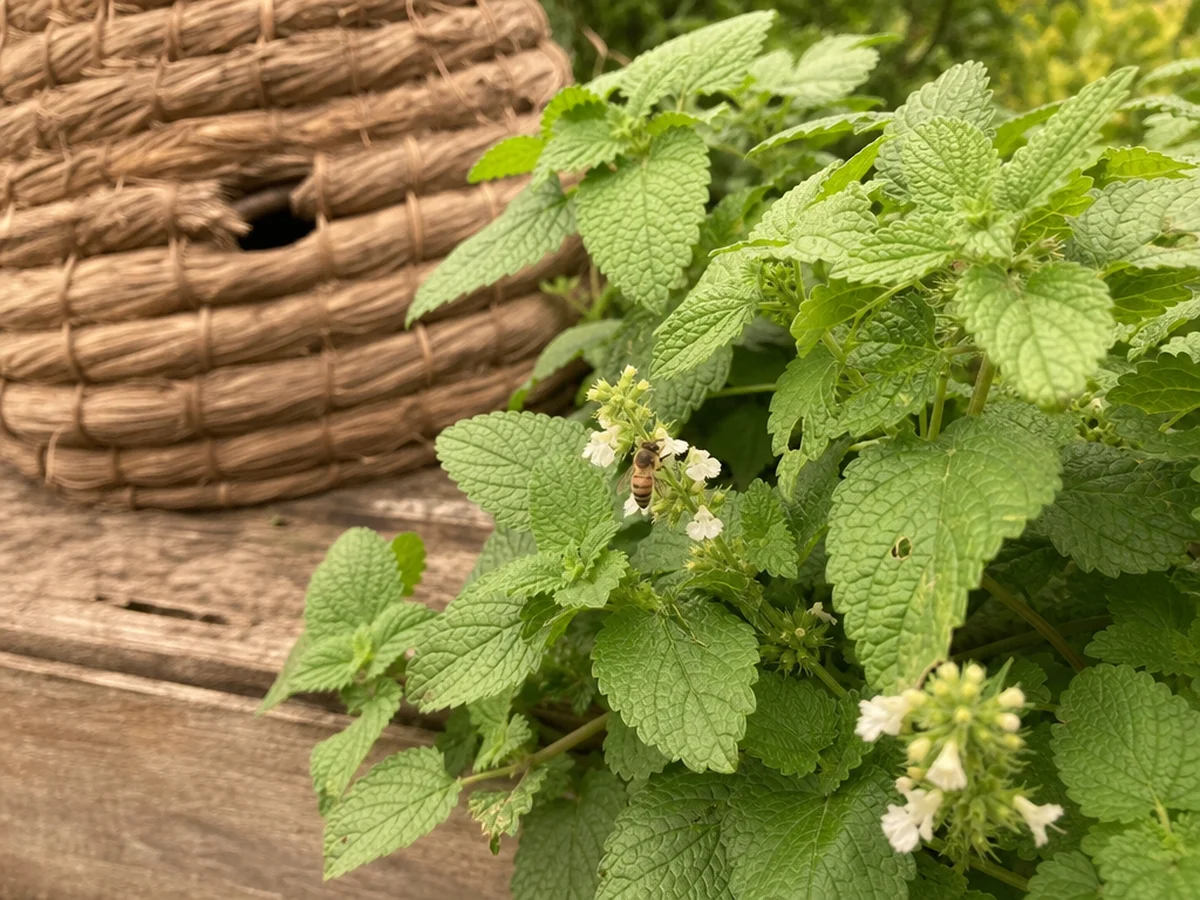
Lemon balm carries its history in its name. Melissa is the Greek word for honeybee, and the genus name reflects the plant's old association with attracting bees (Bioactive Compounds, Medicinal Benefits, and Contemporary Extraction Methods for Lemon Balm (Melissa officinalis)). Anyone who has brushed past a patch in summer and caught that sudden lemon smell will understand why people kept it close to the hive and the kitchen door.
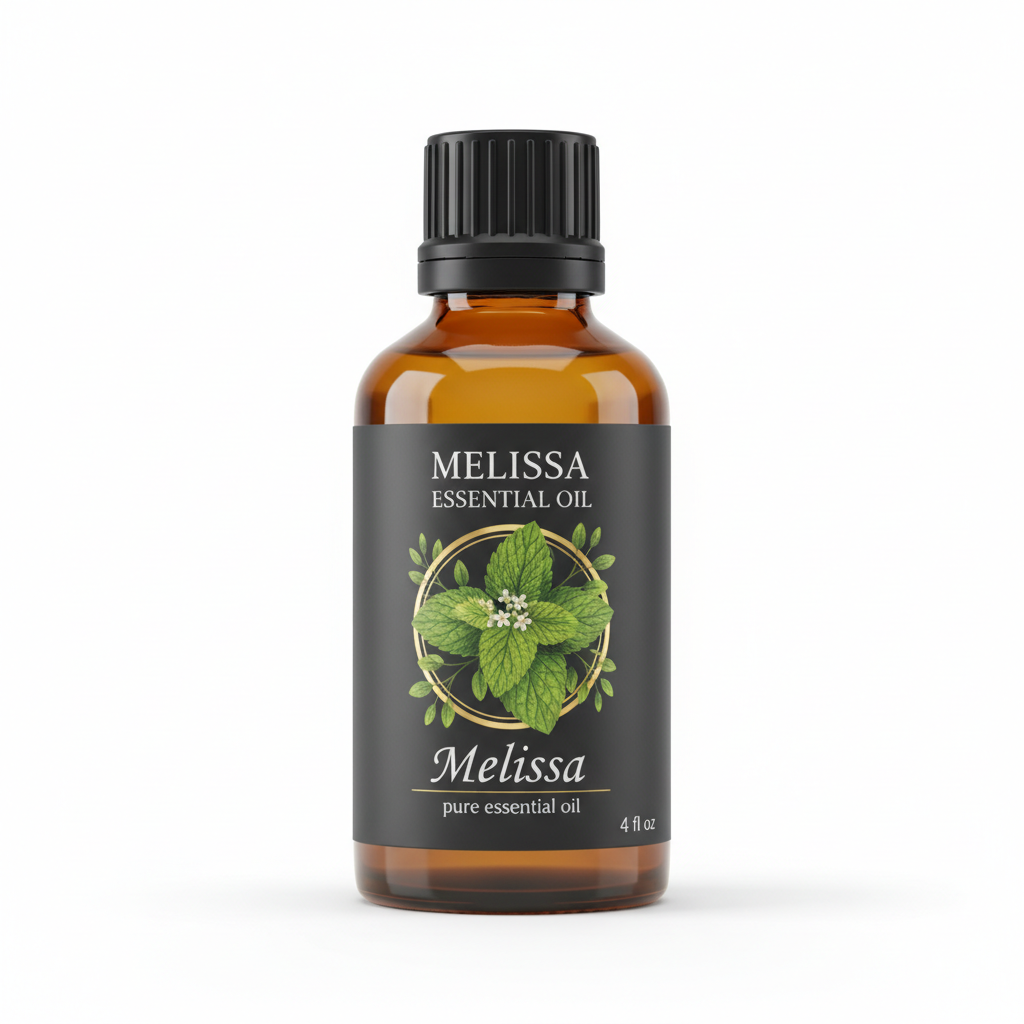
Melissa Essential Oil
Our own Melissa Essential Oil, in sizes from 0.5 oz to bulk.
From $23.99
Shop Now →A plant with a long paper trail
A 2024 review of the plant's research opens by saying lemon balm has a 2000-year history. It dates written mention to a work it calls Historica Plantarum at approximately 300 B.C., and to Dioscorides' De Materia Medica at approximately 50 to 80 B.C. (Clinical Efficacy and Tolerability of Lemon Balm (Melissa officinalis L.) in Psychological Well-Being: A Review). Those are the review's own approximate dates, so treat them as a rough outline rather than a footnote to quote.
The extraction review adds that in Greek and Roman times the herb was used traditionally for the digestive tract and for wounds, and that it later became part of what it calls Saracen medicine. We mention this as history, the way you would mention that a plant was kept in old herbals. It tells you what people did with the leaf, not what any essential oil does, and we make no health claims for ours.
What we cannot do is repeat the prettier legends with a straight face. The stories about monastery gardens and famous waters are everywhere online, but we could not trace them to a source we could read, so they are not here. A good history is one you can check.
Why it spread so easily
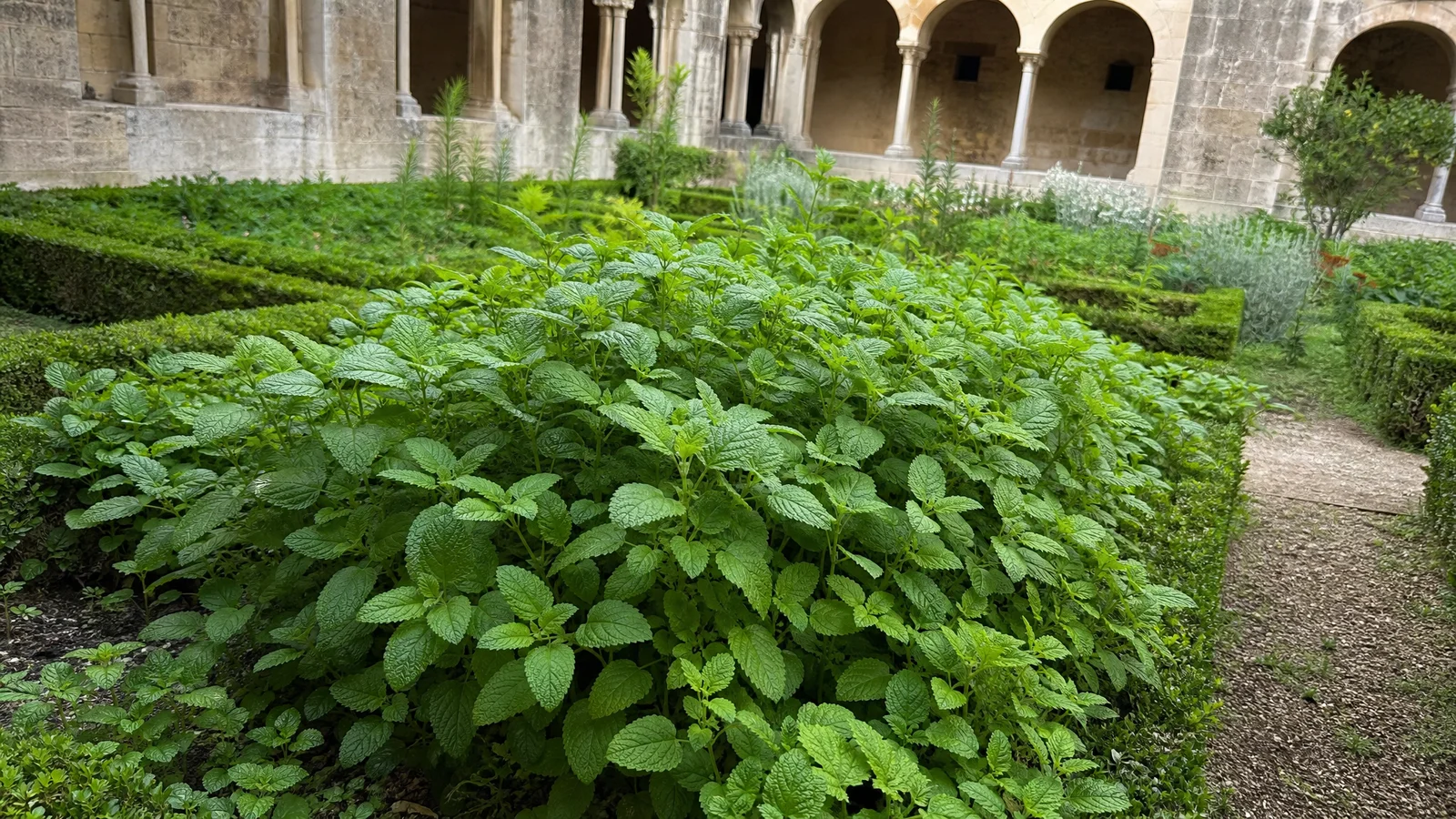
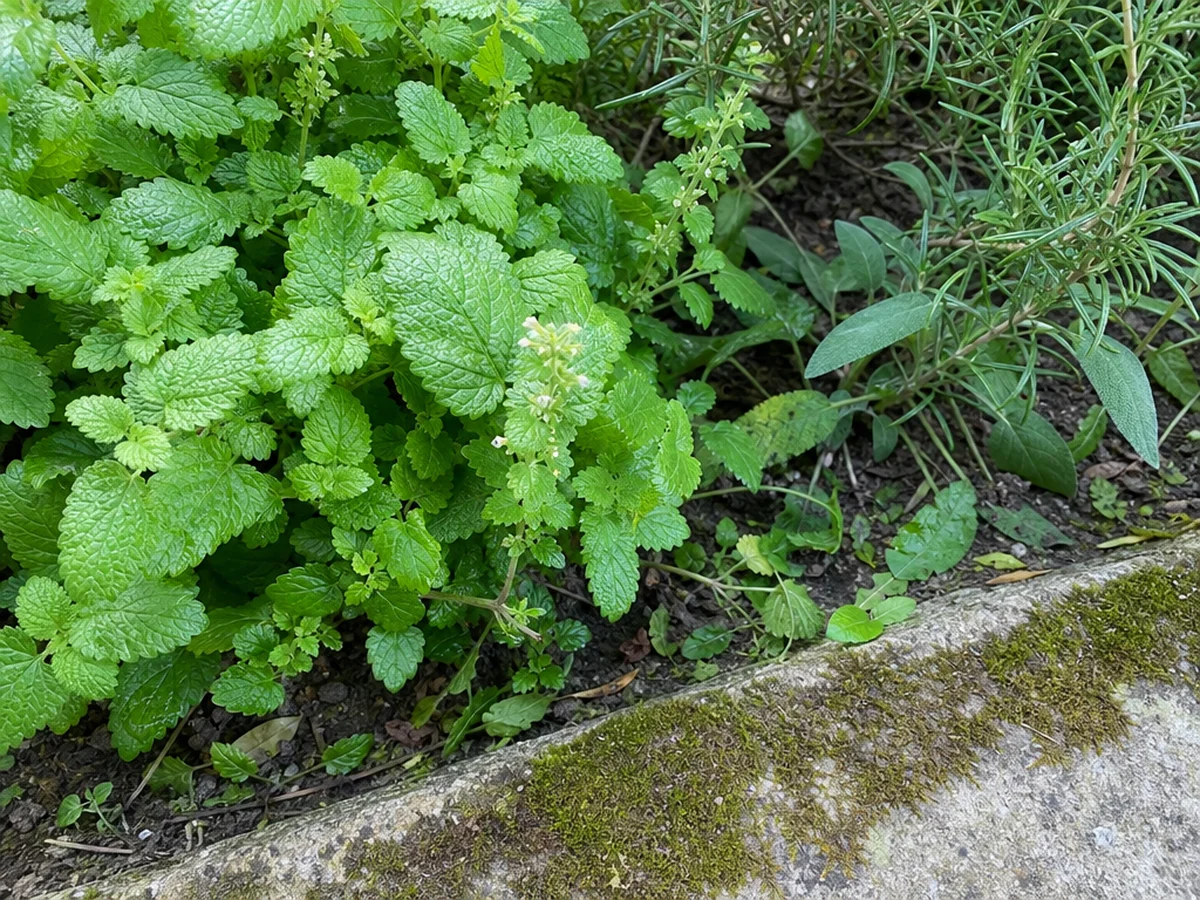
The garden story is easier to confirm, because it is happening in yards today. The University of Wisconsin-Madison Extension describes lemon balm as a perennial that grows in zones 3 to 9, in full sun and fertile, well-drained soil, to about two feet tall, with plants spaced 16 to 18 inches apart. It warns that the plant may reseed aggressively, and suggests dividing or replacing plants after three to four seasons (Lemon Balm, Melissa officinalis - Wisconsin Horticulture). That one detail goes a long way toward explaining how a herb ends up in so many gardens and so many centuries of records: it is generous, hardy and almost impossible to lose.
It is also good to know that the ASPCA lists lemon balm as non-toxic to dogs, cats and horses as a garden plant (Toxic and Non-toxic Plants: Lemon Balm). That refers to the living plant, not to a concentrated oil, which is a separate matter and one we keep away from pets. If you want to grow your own, our growing guide has the details.
Smelling the history yourself
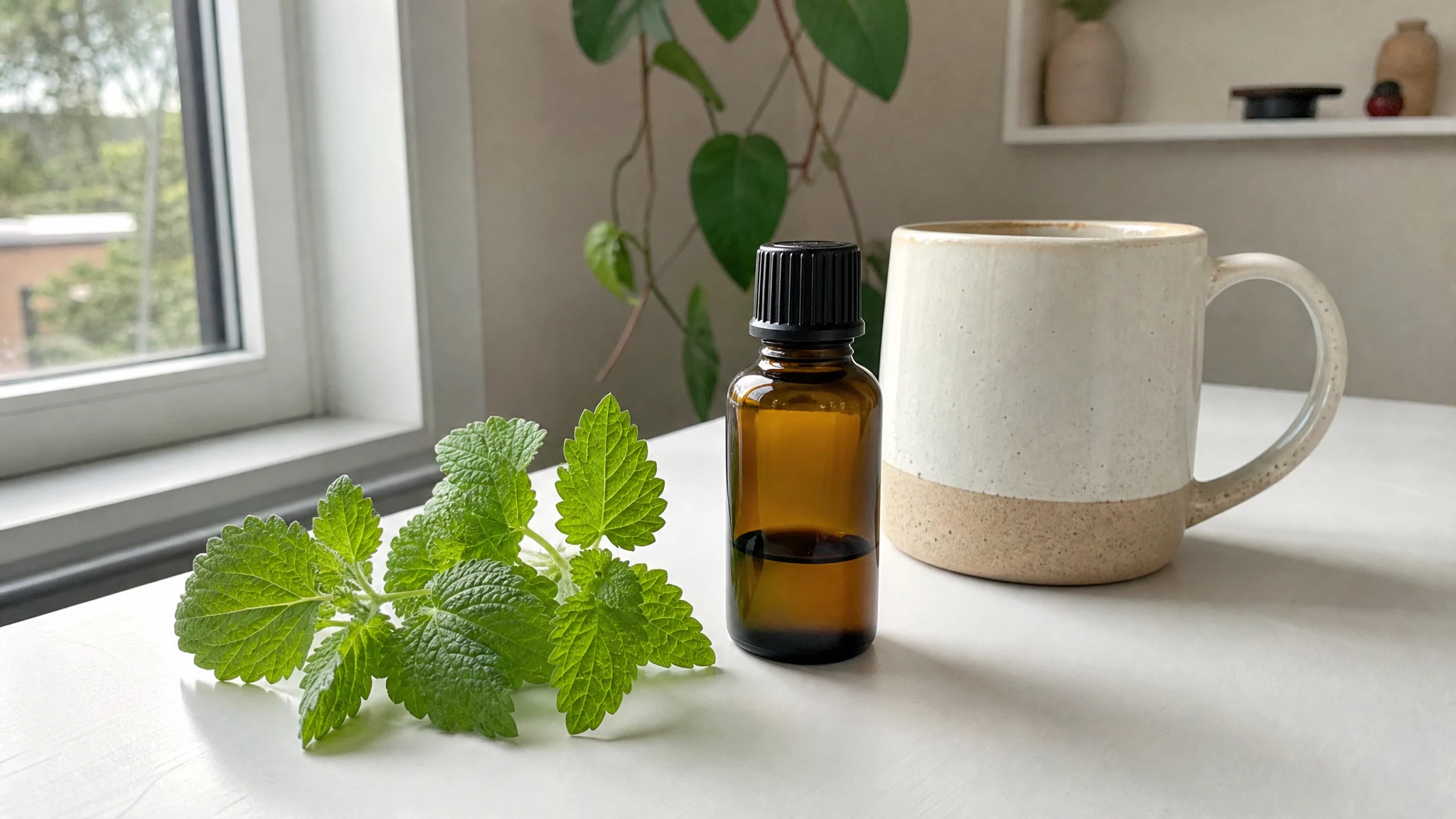
One lovely thing about an old plant is that you can get a feel for it without a library. Brush a lemon balm leaf, or put a drop of the oil on a strip of paper, and notice that sudden lemon with a green edge. That is the smell people have been noticing in gardens for a very long time, and it is not hard to see why they wanted it near the hive and the doorway.
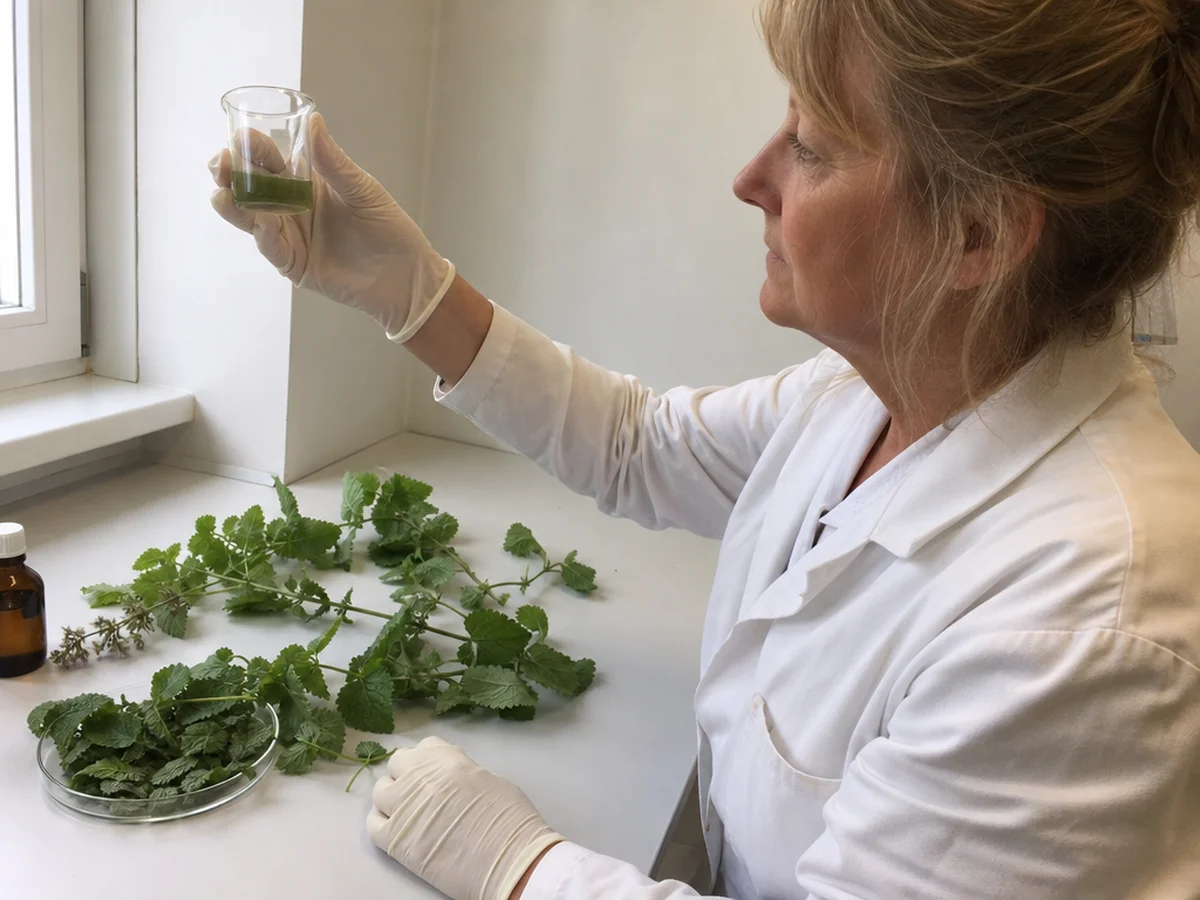
The old texts themselves are interesting to browse, and a good habit is to read any summary of them with a few questions in mind. Who wrote this, and when? Is the date approximate? Is the story something the source documents, or something repeated from one website to the next? A plant this old collects plenty of legends, and the ones worth keeping are the ones you can check.
From a handful of leaves to a few drops
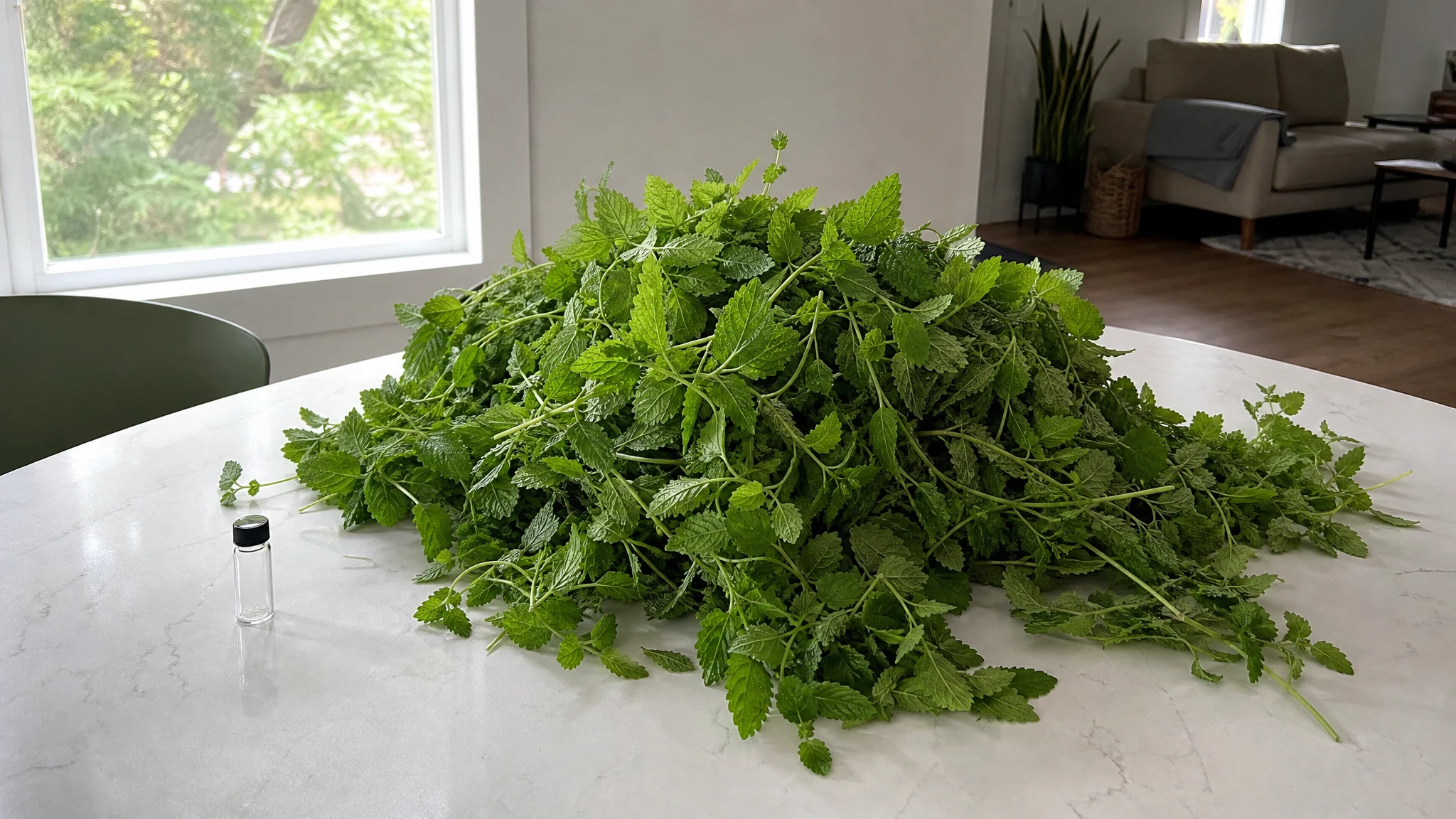
The essential oil is a very different thing from a leaf in a cup. Steam-distilling the herb concentrates its aromatic compounds into a tiny volume, and the yields reported in the literature show just how tiny. A review of melissa's composition collects figures such as 0.17%, 0.08% to 0.20%, and 0.37% oil from the plant material (Melissa officinalis: Composition, Pharmacological Effects and Derived Release Systems-A Review). By our arithmetic, 0.37% means a gram of oil from roughly 270 grams of herb, and 0.17% takes closer to 590. It is why we say tons of fresh herb yield only ounces of oil, and why a small bottle of melissa deserves to be treated as precious. Our article on how melissa oil is made goes further on yield.
The same review describes the oil's aroma as a fresh lemon odor and attributes the citrus-like character to citral isomers along with lesser citronellal and geranyl acetate. Those molecules are also why the oil is used in tiny amounts; our composition article explains the link.
Old herb, modern bottle
Put the timeline together and you get something rather charming: a plant named for bees, a long record in old texts, a spot in the garden, and eventually a still. Today it is a scent as much as a plant, one we describe as delicate, lemony and herbal, with a soft green heart. If you are curious how the plant itself relates to the oil, our overview of what melissa essential oil is is a good next stop.
Whatever else the old texts got right or wrong, they agree on one thing: people have always liked having this plant nearby.
Melissa Essential Oil
Melissa Essential Oil from our own shop, in sizes from 0.5 oz to bulk.
From $23.99
Shop Now →Sources & Further Reading
- Bioactive Compounds, Medicinal Benefits, and Contemporary Extraction Methods for Lemon Balm (Melissa officinalis), Food Science & Nutrition, 2025
- Clinical Efficacy and Tolerability of Lemon Balm (Melissa officinalis L.) in Psychological Well-Being: A Review, Nutrients, 2024
- Lemon Balm, Melissa officinalis - Wisconsin Horticulture, University of Wisconsin-Madison Extension
- Toxic and Non-toxic Plants: Lemon Balm, ASPCA
- Melissa officinalis: Composition, Pharmacological Effects and Derived Release Systems-A Review, International Journal of Molecular Sciences, 2022