How Is Melissa Oil Made? Yields, Stills and Variation
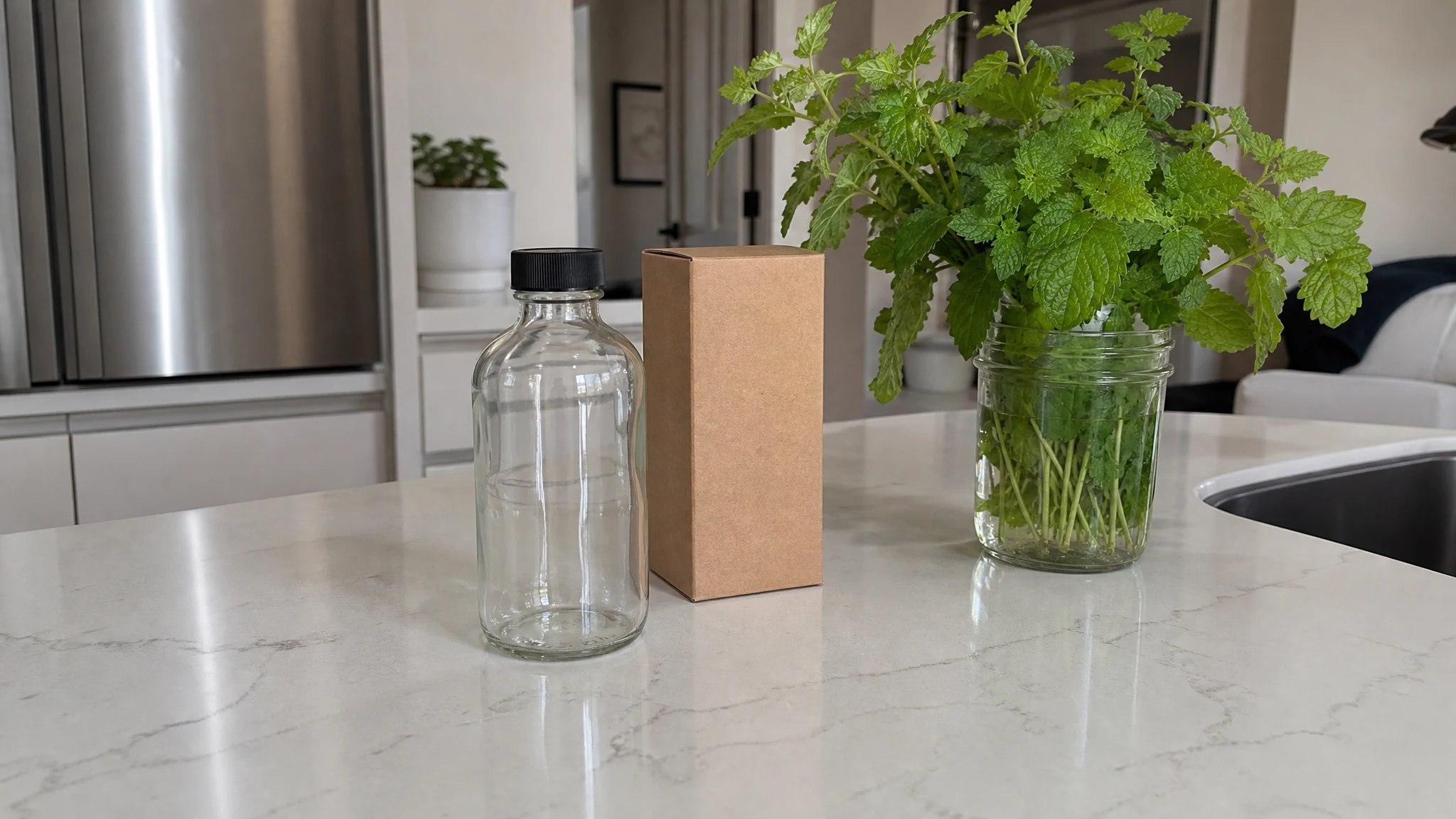
Pick up a 0.5 oz bottle of melissa oil and you are holding the distilled essence of a great deal of green. Lemon balm gives up its oil grudgingly, and that single fact explains most of what makes this oil special: why it is treated as a precious oil, why it is used by the drop, and why bottles can smell a little different from one another.
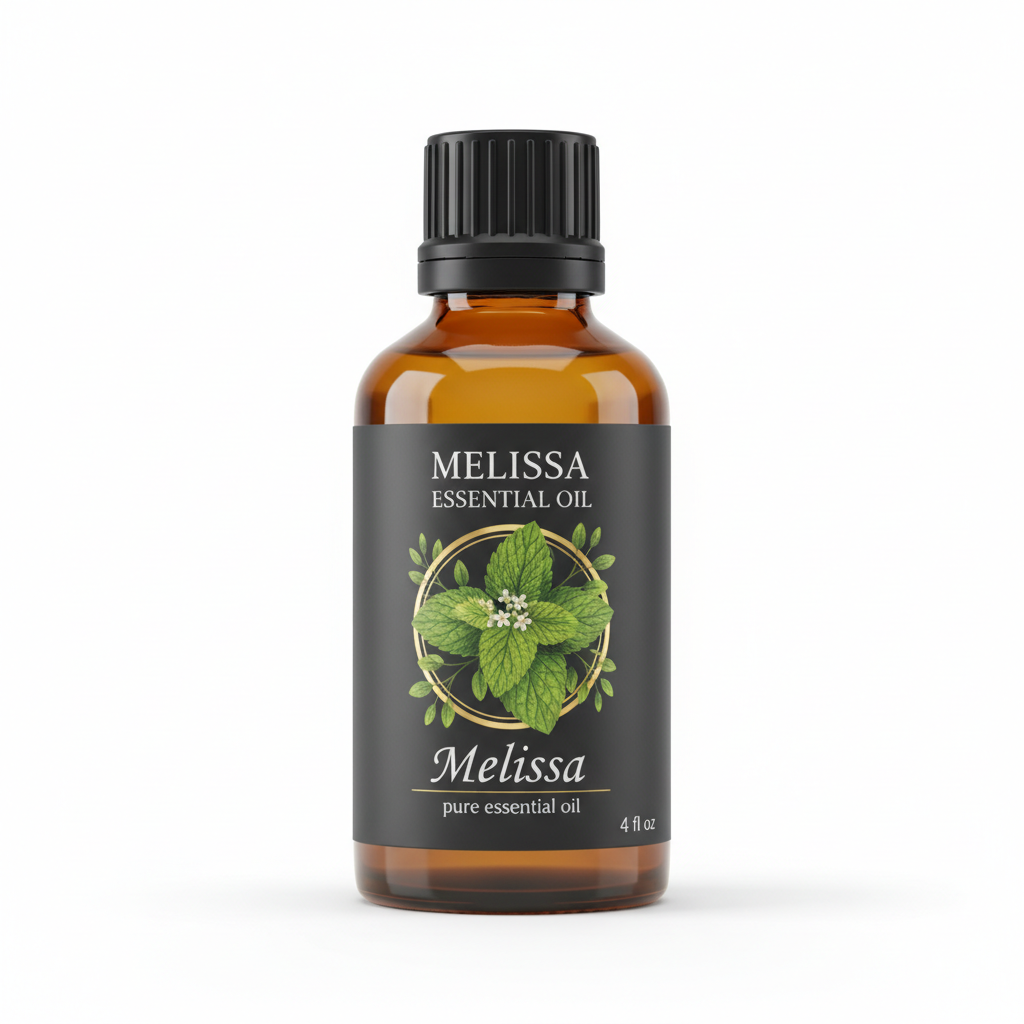
Melissa Essential Oil
Our own Melissa Essential Oil, in sizes from 0.5 oz to bulk.
From $23.99
Shop Now →How little oil is in the leaf
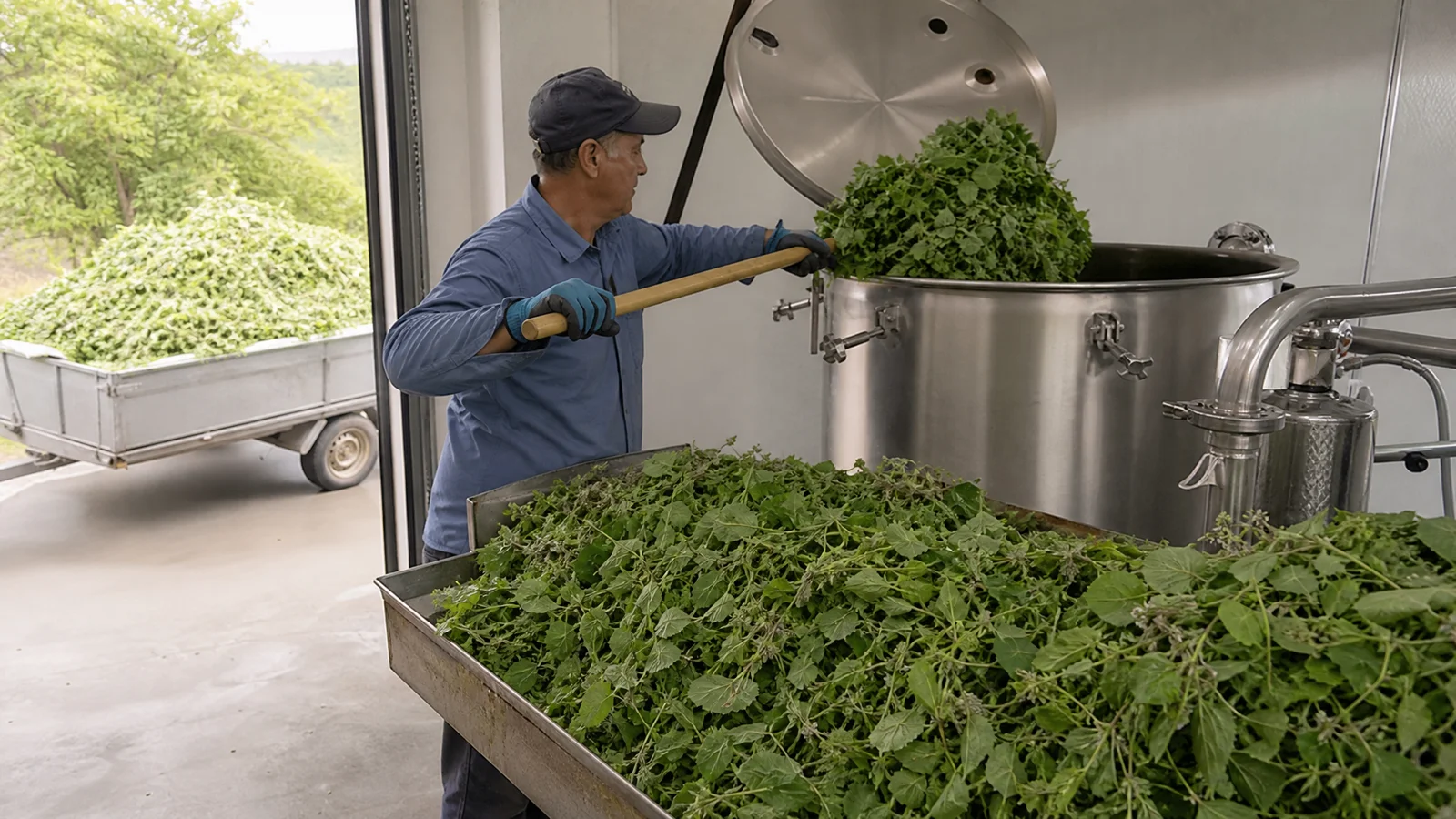
Our line is that tons of fresh herb yield only ounces of oil, and the research backs the spirit of it while showing the range is wide. The 2022 Petrisor review gathers yields from several agronomy papers. One study reports 0.17% oil in the herb, which the review calls very low compared with related mints. Another reports 0.08% to 0.20% depending on the year and the weather. A study of 28 different plant lines found anything from 0.01% to 0.72%. Hydrodistilled leaves in other papers gave 0.3% to 0.37%.
Turn that into something you can picture. At 0.17%, a metric ton of herb gives about 1.7 kg of oil, roughly 60 ounces. At the bottom of the range, a ton gives about 3.5 ounces, and at the top about 254. So "ounces" is a fair description of the lean end, and the real answer depends on the plant, the season and the cut. Most of these papers also do not say whether the percentage refers to fresh or dried herb, which changes the picture again, so think of these as orders of magnitude and not a promise about any one bottle.
What happens in the still
Steam distillation is the classic way to separate a plant's aromatic oil. In a 2026 paper on essential oil quality, the authors describe it as steam passing through the plant material "without immersing the material directly in boiling water," and call it an industrial benchmark because it is simple, scalable and uses no organic solvent. The steam carries the volatile molecules out, then cools back to water and oil. The oil, being lighter than water, floats, and can be collected.
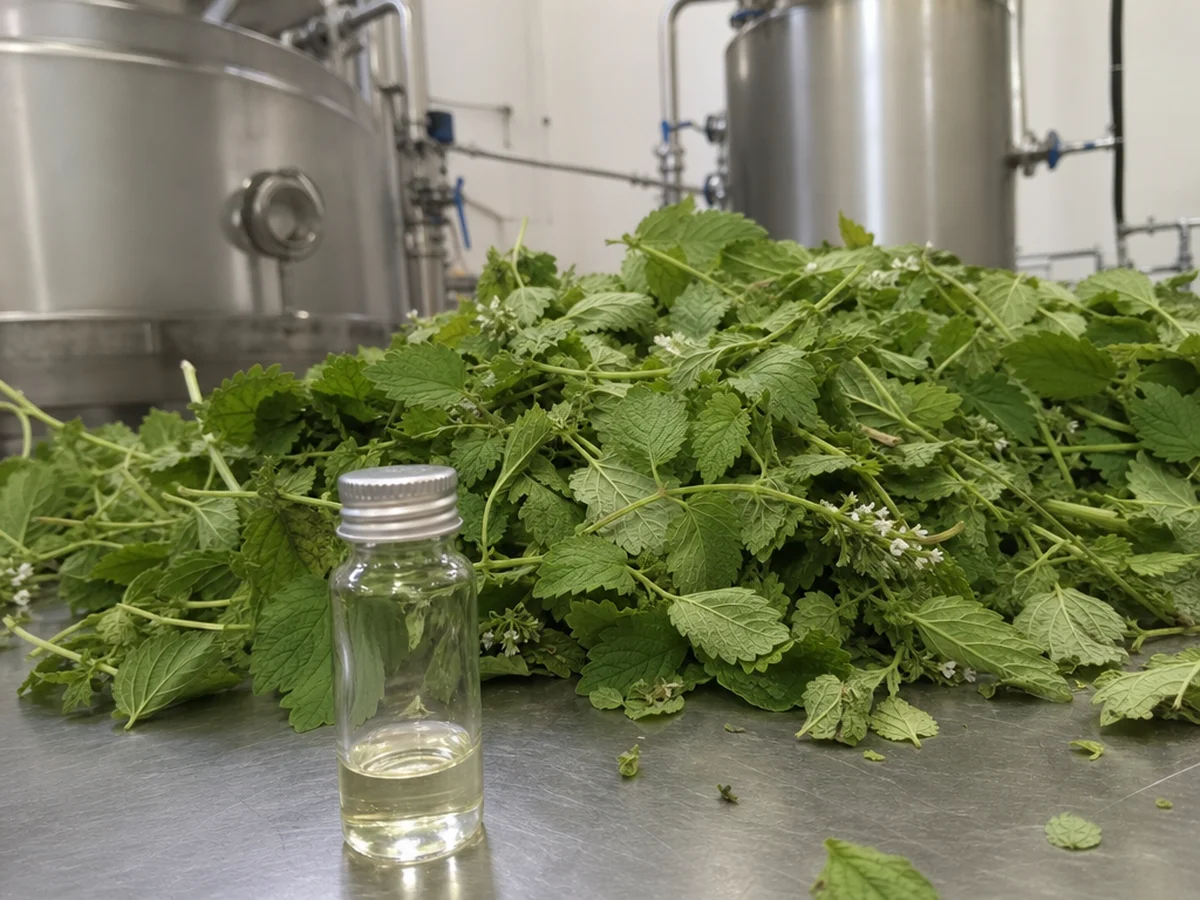
One laboratory run on lemon balm shows the scale. Stini and colleagues steamed 450 g of ground dried herb over boiling water in a 17 litre copper still, and the oil content came out at 0.06%, within a literature range they give as 0.02% to 0.3%. What the distillation leaves behind is interesting too. The authors treated the spent herb as a by-product, and their lab extraction of it showed it still held plant phenolics, evidence that a still takes only the volatile fraction and leaves most of the plant behind.
We sell our Melissa Essential Oil as steam-distilled Melissa officinalis, and the Certificate of Analysis we publish for one batch records that extraction method.
Why two bottles can smell different
Because the oil is so dependent on the plant, melissa oils vary. The Petrisor review reports geranial, one half of the citral pair that gives melissa its lemon note, anywhere from about 6% to 51% of the oil across studies, with neral from about 4% to 35% and citronellal from under 1% to about 20%. It attributes the spread to origin, climate, harvest time and extraction technique. In Stini's lab run, a single sample gave neral at 49.6%, a compound called 1,3,8-p-menthatriene at 28.8% and beta-caryophyllene at 16.6%. Those figures describe that dried herb, distilled their way, not any oil on the market including ours.
That is a feature as much as a caveat. It is why melissa smells slightly different from one lot to the next, and why specialists like to compare. The Certificate of Analysis we publish for one batch lists a relative density of 0.888, a refractive index of 1.484 and an optical rotation of -1.08 degrees, each within its listed standard. Those are physical checks. If you want the full chemical picture, ask any supplier for a GC-MS report; for ours, write to us through the contact page before ordering. Our guide to reading a COA and GC-MS report and the composition explainer go deeper.
Something to try before you read on
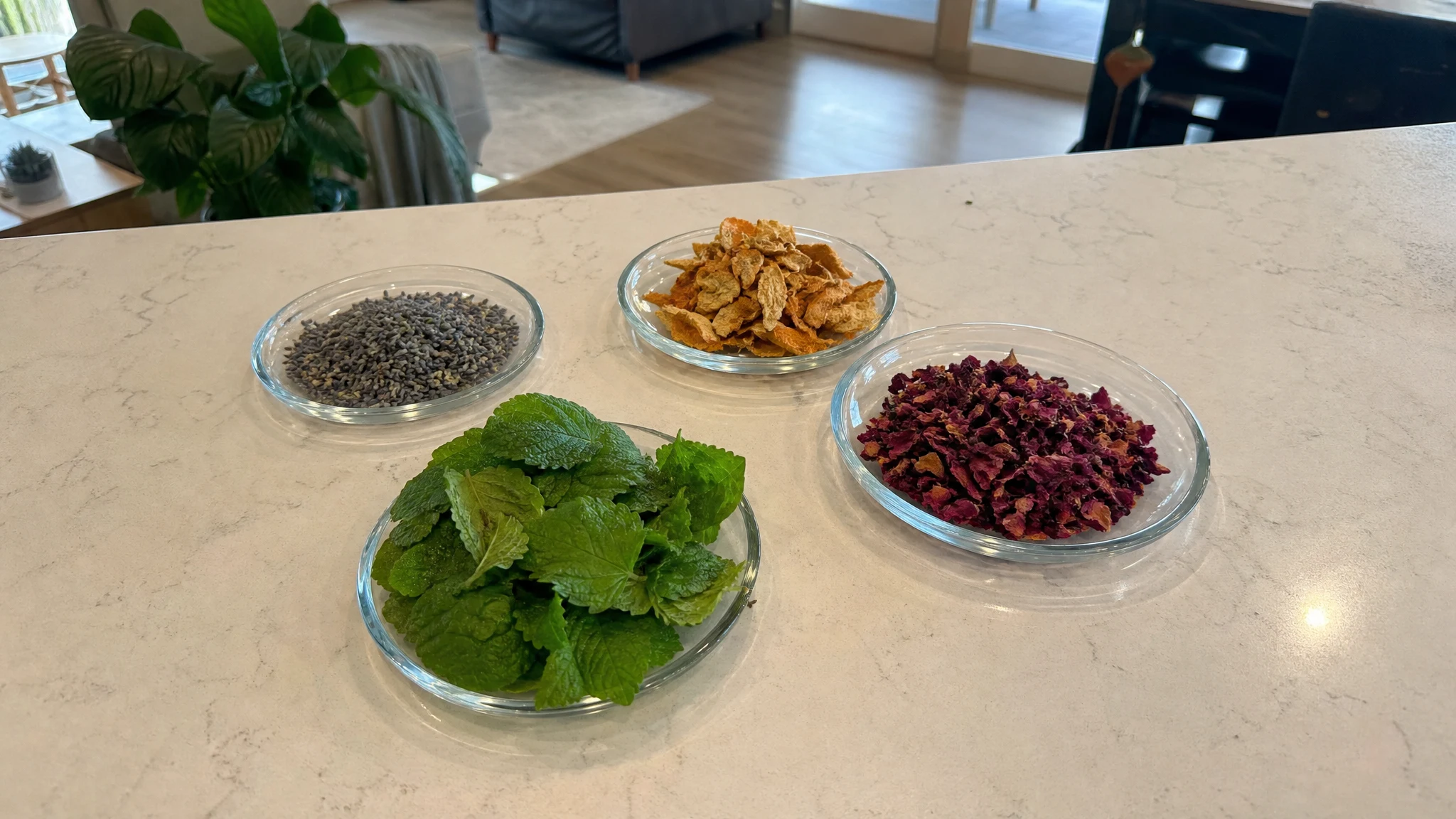
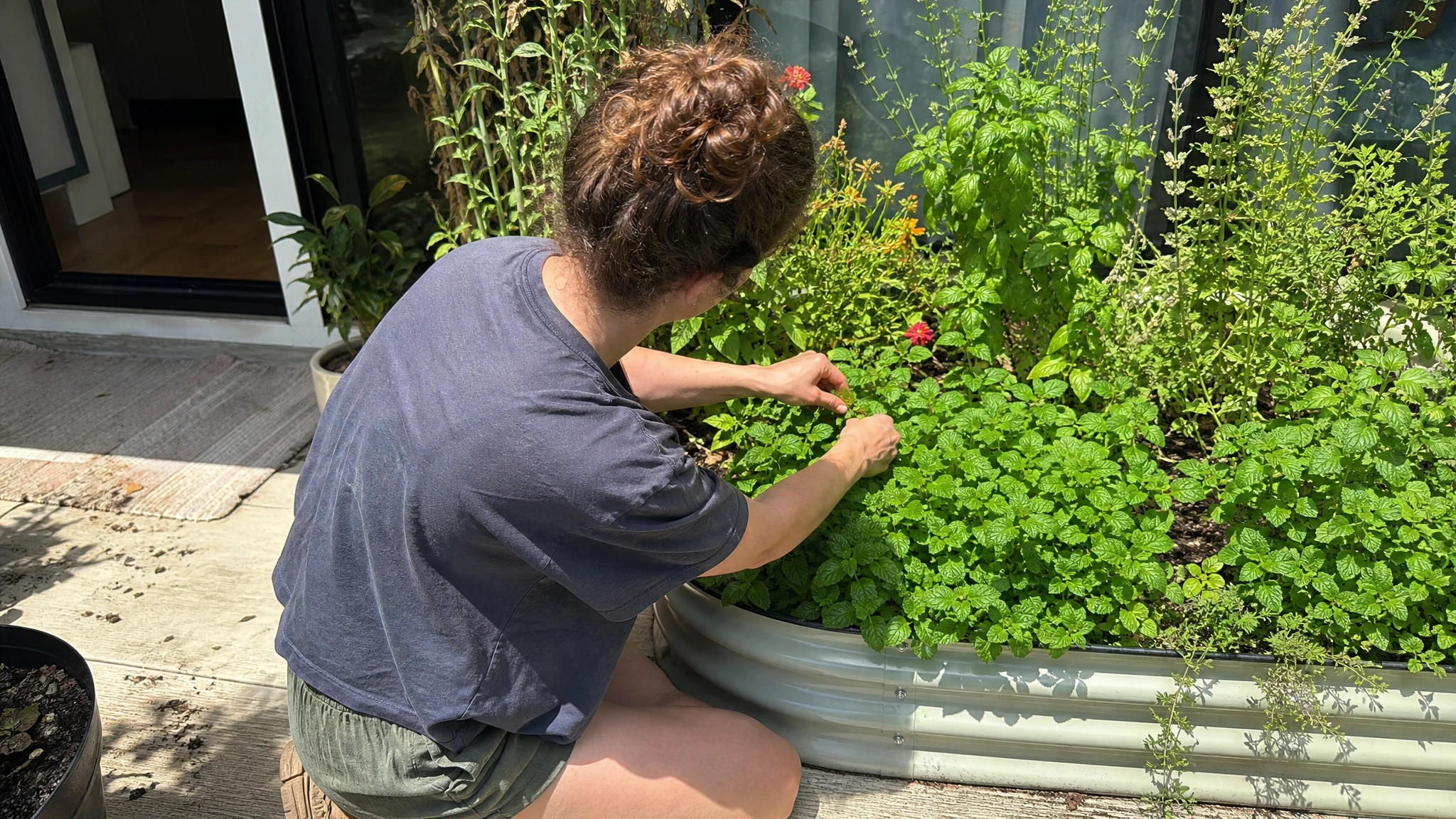
If you have a lemon balm plant or can get a handful of fresh leaves, here is a small experiment. Crush a leaf between your fingers and smell it, then put a drop of melissa oil on a strip of paper and smell that. You will probably notice that the leaf smells greener and looser, and the oil smells more focused and more intensely lemon. Neither is better. It is just a good way to see what a still keeps, and it makes the next time you open a bottle feel a little more meaningful.
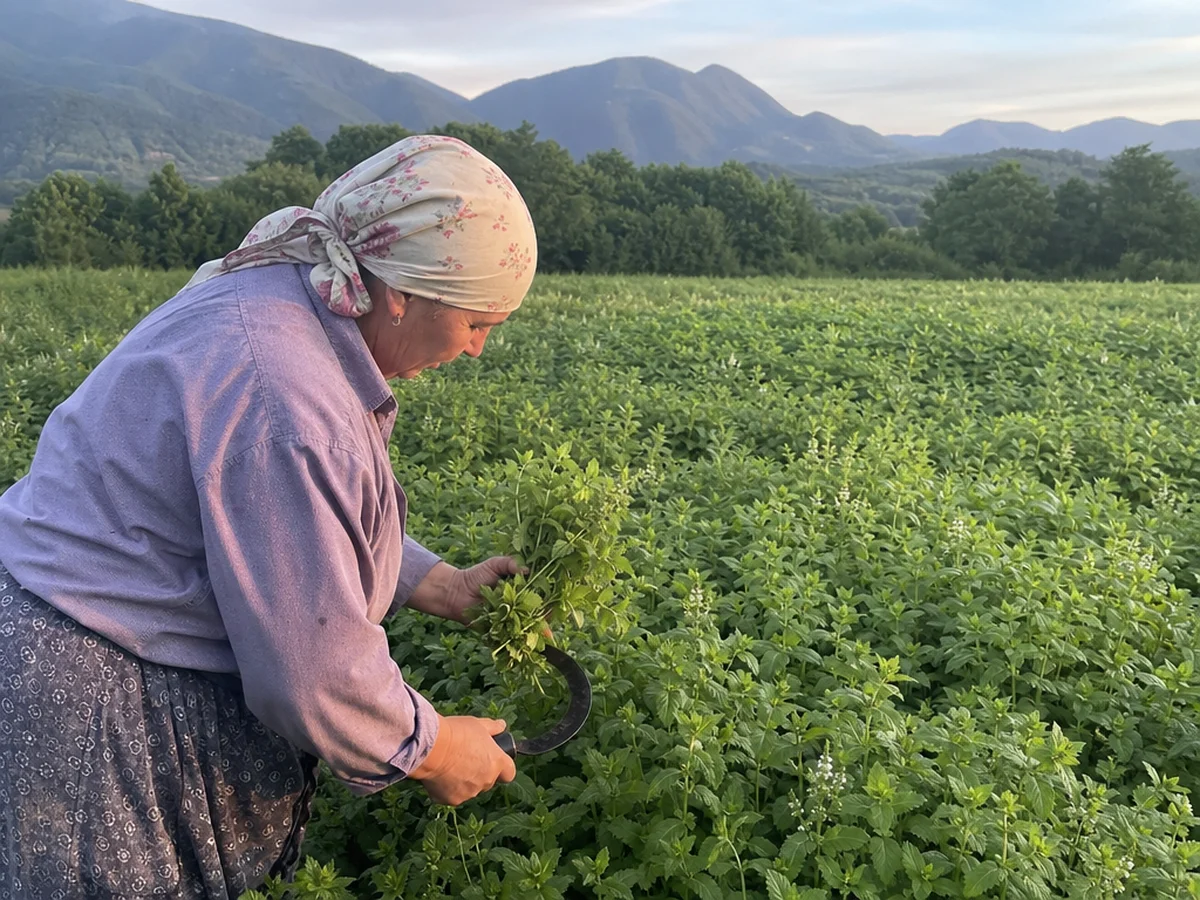
When you hold a half-ounce bottle afterwards, think of how much leaf stood behind it. It tends to make people measure more carefully.
What it means when you use it
- Use it by the drop. A little goes a long way. Our guide to using melissa oil sparingly shows how far a half-ounce bottle stretches.
- Read "steam-distilled" as a method. It describes how the oil was separated, and it works best alongside a Certificate of Analysis and, for chemistry, a GC-MS report.
- Appreciate the price for what it is. A yield range spanning seventy-two times explains why melissa costs what it does; our economics guide goes through the drivers.
Because melissa is concentrated, we dilute it to 0.5% to 2% in a carrier for skin and start at the low end; IFRA's sensitization-based standard for melissa oil is lower still, 0.15% in body creams, oils and lotions. Our skin guide compares the two. Patch test first, and ask a dermatologist about any skin concern.
Next time you open a bottle, take one slow breath of it. That lemony green top note took a lot of leaf to make.
Melissa Essential Oil
Melissa Essential Oil from our own shop, in sizes from 0.5 oz to bulk.
From $23.99
Shop Now →Sources & Further Reading
- Petrisor G et al., 2022. Melissa officinalis: Composition, Pharmacological Effects and Derived Release Systems-A Review. Int J Mol Sci. PMC8998931
- Ben Youchret-Zallez O et al., 2026. Essential Oil Quality in Medicinal and Aromatic Plants: Linking Plant Biosynthesis, Matrix Selection and Extraction Strategy. Plants. PMC13610020
- Stini E, Tsimogiannis D, Oreopoulou V, 2024. The Valorisation of Melissa officinalis Distillation By-Products for the Production of Polyphenol-Rich Formulations. Molecules. PMC10819686
- IFRA Standards, 51st Amendment: Melissa oil (genuine Melissa officinalis L.), Amendment 49. ifrafragrance.org