Melissa Oil in a Diffuser: How Much and How Long
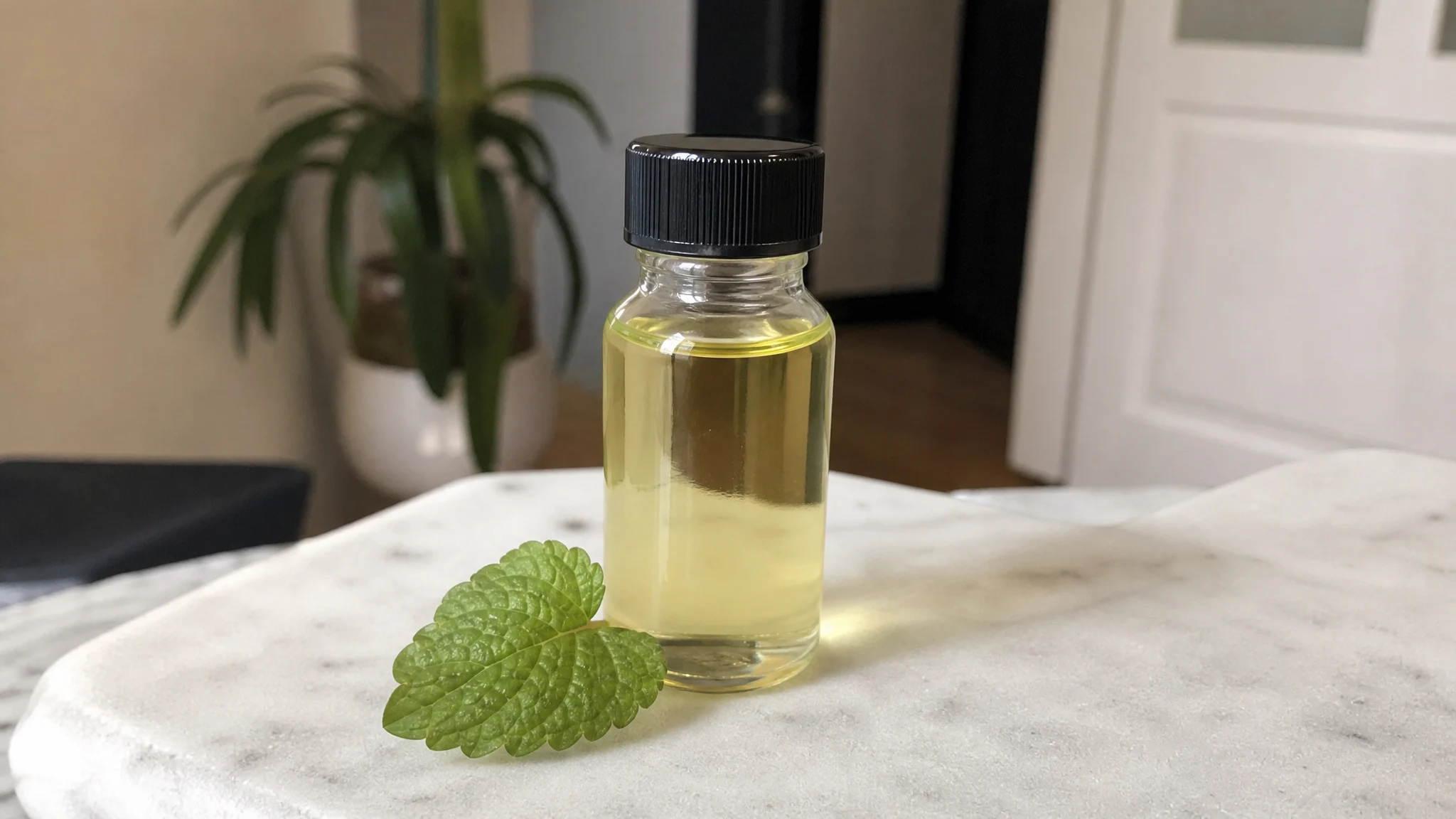
Melissa is the oil you reach for when you want a room to smell like a lemon-scented garden after rain: bright and citrusy up top, soft and green underneath. It is also a potent oil, which is why our advice for the diffuser is simple. Start with one drop, run the diffuser in short stretches, and let the room tell you whether you need more.
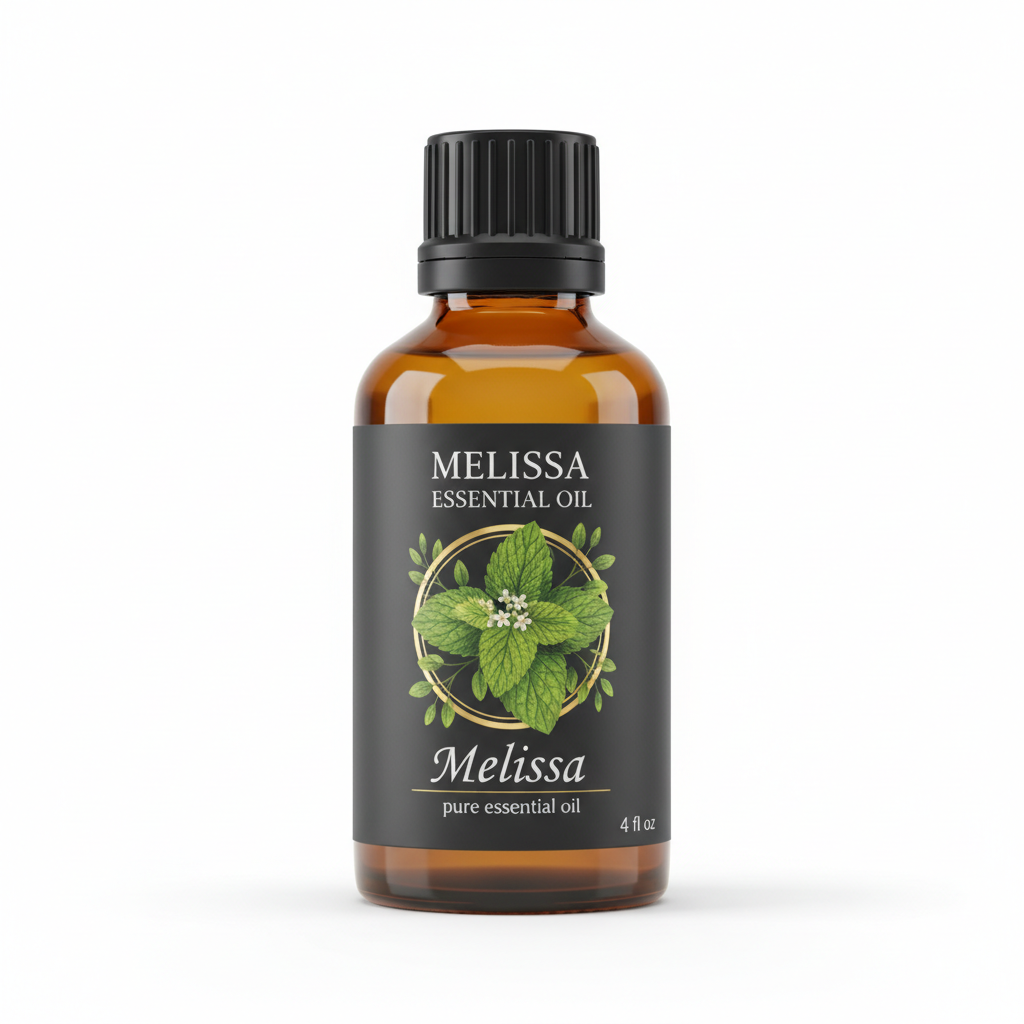
Melissa Essential Oil
Our own Melissa Essential Oil, in sizes from 0.5 oz to bulk.
From $23.99
Shop Now →Why one drop, and why short sessions
We suggest a single drop beside lavender as a starting blend, and that is a starting point, not a rule, because nobody has published a drop count for melissa in a diffuser. What the Tisserand Institute does publish, in its safety guidelines for diffusing essential oils at home, is a schedule: 30 to 60 minutes on, then 30 to 60 minutes off. The page calls that intermittent approach "much more effective, as well as being safer, than continuous diffusion," and notes that very low levels, where the oil is barely noticeable, are fine anywhere. That is good news for a bright oil like this one. Your nose gets used to a scent quickly, so the second hour of a continuous session mostly adds oil rather than pleasure.
The American Lung Association takes a more cautious line in Essential Oils: More Harmful Than Helpful?. It says adding anything to the air you breathe is not recommended, asks you to follow the diffuser maker's directions in a well-ventilated space, and says people with asthma or COPD should check with a professional first. Taken together, the sensible approach is a small amount, an open window or door, and a timer.
Know what your drop is
A drop is not a standard unit. It changes with the dropper and with the oil. The Certificate of Analysis we publish for one batch lists a relative density of 0.888, so by our arithmetic, at the usual convention of about 20 drops to the millilitre, a drop of melissa weighs roughly 0.044 g. If you like to be precise, weigh a clean bottle cap on a scale that reads to 0.01 g, add ten drops, weigh again and divide by ten. That tells you what your dropper really delivers, and it lets you repeat a scent you enjoyed.
Pairing it by nose
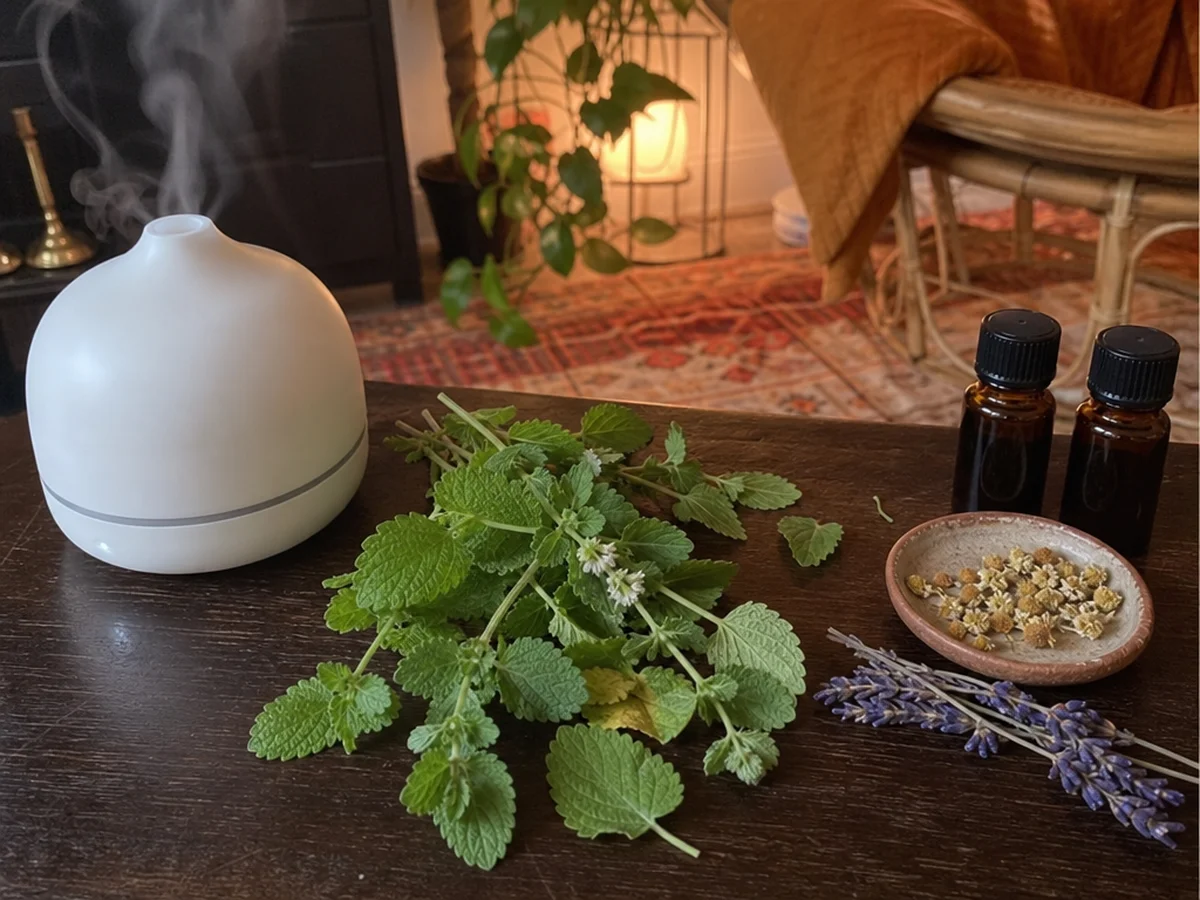
We describe melissa as blending well with lavender, rose, geranium, chamomile, bergamot and ylang ylang. The ratios below are suggestions to adjust by nose, not formulas from a study, and we sell only melissa, so you will find the partner oils at a craft shop or pharmacy.
| Pairing | Starting proportion | The idea |
|---|---|---|
| Melissa and lavender | 1 drop to 1 drop | Citrus over a soft floral; add a second lavender before a second melissa |
| Melissa and geranium | 1 drop to 2 drops | Rosy and green, with melissa as the lift |
| Melissa and chamomile | 1 drop to 1 drop | Gentle and herbal; keep the total barely noticeable |
If it is the lemon note you love most, our guides to lemon-scented oils compared and melissa against lemon explain how they differ, and our pairing guide goes further into partners.
Notice the room, not just the oil
A good diffuser session is partly about the room. A small, closed room gathers a scent quickly, while a big open one swallows it. Stand in the doorway after the first twenty minutes and then walk in, because the walk resets your nose and lets it tell you the truth. If you can just catch a thread of lemon and herb, you are done; there is no prize for filling the house. Try it at different times of day, morning, afternoon and evening, and note when it feels right to you.
A first session
- Open a window or door and make sure any pet can leave the room.
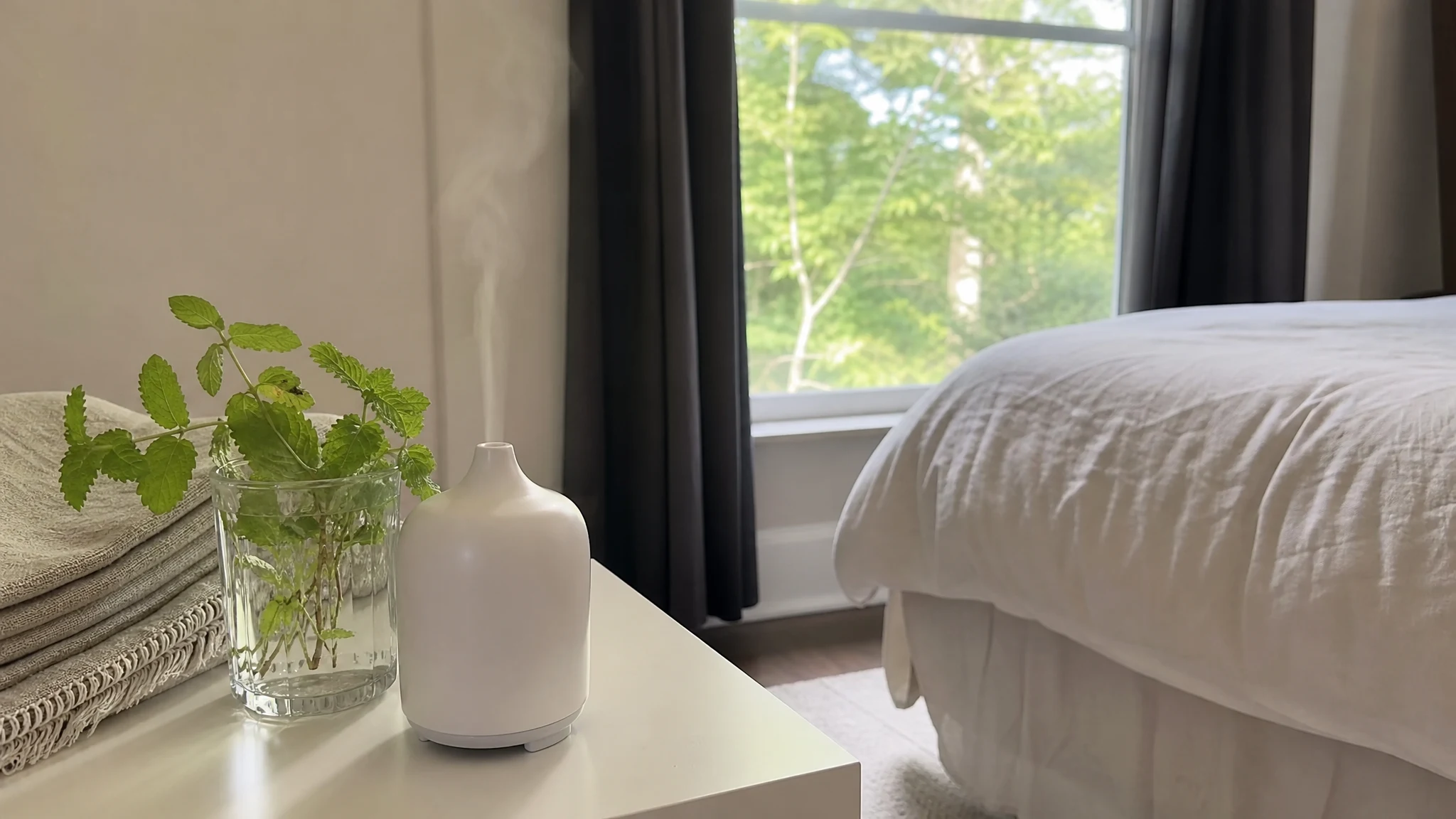
- Fill the diffuser to its marked line, following the maker's instructions, and add one drop.
- Run it for 30 to 60 minutes, then switch it off for at least as long.
- If you cannot smell it after a few minutes, remember that noses adapt quickly before adding more. If anyone coughs, gets a headache or feels irritated, stop and rest the room.
When to skip it or ask first
- Birds. ASPCApro's Are Essential Oils Dangerous to Pets? says not to use an essential oil diffuser in a house with birds.
- Cats and other pets. The Tisserand Institute's Cats and Essential Oil Safety says to diffuse around cats only with good ventilation, small amounts, limited time and the freedom to leave the room. A veterinarian can advise on your own animals.
- Asthma, COPD, infants. Ask a physician or paediatrician. We recommend keeping the oil away from children and pets.
- Pregnancy. Ask your obstetrician or midwife; our pregnancy guide sets out what the references say.
What a diffuser gives you
A diffuser gives you a fragrance in a room, and that is the whole promise. We do not claim the oil does anything for sleep, mood or stress; the FDA's Aromatherapy page treats such claims as drug claims, and we sell an aroma oil. If you want more ways to enjoy it around the house, see how to use melissa oil at home.
Keep the bottle tightly capped and away from a warm diffuser. Heat and light are what age an oil fastest, as the Tisserand Institute explains in Is my bottle of essential oil oxidized or no longer good to use?.
Melissa Essential Oil
Melissa Essential Oil from our own shop, in sizes from 0.5 oz to bulk.
From $23.99
Shop Now →Sources & Further Reading
- Tisserand Institute. Safety guidelines for diffusing essential oils at home. tisserandinstitute.org
- American Lung Association. Essential Oils: More Harmful Than Helpful? lung.org
- ASPCApro. Are Essential Oils Dangerous to Pets? aspcapro.org
- Tisserand Institute. Cats and Essential Oil Safety. tisserandinstitute.org
- FDA. Aromatherapy. fda.gov
- Tisserand Institute. Is my bottle of essential oil oxidized or no longer good to use? tisserandinstitute.org