Melissa Oil and Pregnancy: What the References Say
If you are pregnant or nursing and curious about melissa oil, you are asking a good question, and the honest answer starts with a person rather than a page. Your obstetrician, midwife or pharmacist knows your history, and we do not. What we can do is lay out what the reference sources say, which of them are actually about an oil like ours, and what to bring to that conversation.
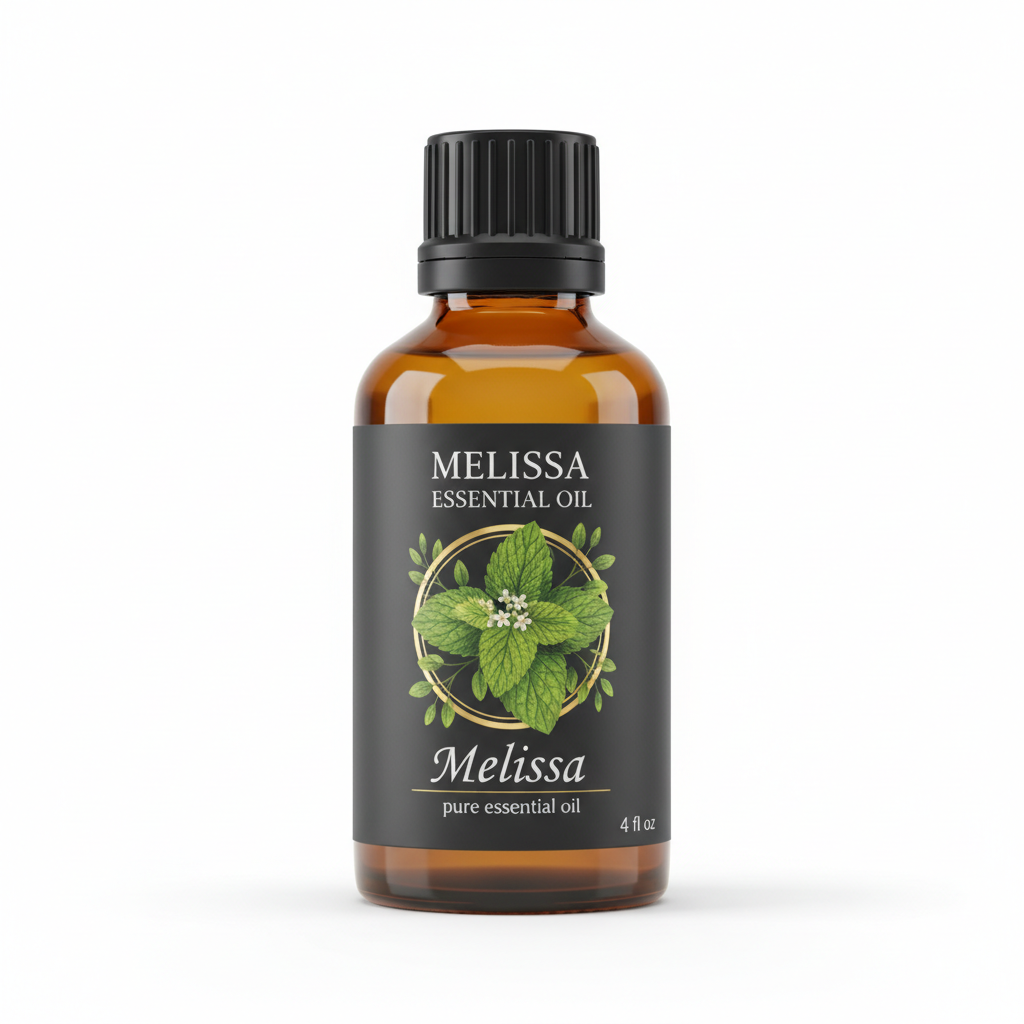
Melissa Essential Oil
Our own Melissa Essential Oil, in sizes from 0.5 oz to bulk.
From $23.99
Shop Now →What to bring to the appointment
Take the bottle or its label (Melissa officinalis), how you plan to use it and how often, and the dilution if it is going on skin. Our general guidance for skin is 0.5% to 2% in a carrier oil with a patch test, and to keep the oil away from eyes, children and pets. That is general-use guidance, not pregnancy guidance, and the sensitization limits discussed in our skin and citral guide sit below it. Treat it as a general-use range, and let your clinician set the number for you.
What the references say
The NIH's lactation database has a record on lemon balm that covers the herb as a tea or supplement. It states that no data exist on the excretion of any component of lemon balm into breast milk, or on the safety of lemon balm alone in nursing mothers or infants. That is about the plant taken by mouth, not a diffused or diluted oil, so it does not answer the aroma question directly. What it does show is that even for the herb, the reference bodies do not have the data for a confident yes.
The constituent people raise most is citral, the pair of molecules geranial and neral that gives melissa its lemon note. A 2021 review by Dosoky and Setzer, Maternal Reproductive Toxicity of Some Essential Oils and Their Constituents, gathers the laboratory and animal findings. Oral citral given to pregnant rats caused fetal harm at high doses. In the same review, citral inhaled by pregnant rats as a vapour did not cause teratogenicity. The authors conclude that oils high in citral, melissa among them, should have their internal use restricted during pregnancy.
It helps to read that carefully:
- The concern is about swallowing, and the doses in the rat work were large.
- We found no study measuring how much citral reaches the bloodstream of pregnant women from a diffuser or a diluted body oil.
- The review uses a citral figure of 64.4% for melissa oil, while a compilation in Petrisor and colleagues' 2022 review shows geranial anywhere from about 6% to 51% and neral from about 4% to 35%. Melissa oils vary widely, and the certificate of analysis we publish does not list citral, so it cannot show where a particular bottle sits.
Some retail pages cite a lower pregnancy dilution for melissa attributed to Tisserand and Young's Essential Oil Safety. We could not read that book, so we do not repeat the figure. A clinician or a qualified aromatherapist working from the current edition can give you a real number.
Is there research on melissa oil itself?
We searched Europe PMC for studies pairing lemon balm or Melissa with pregnancy, lactation or breastfeeding in their titles. The results were plant-science papers, a cattle feeding study and a news commentary that happens to share a name. We found no study of melissa essential oil safety in pregnant or breastfeeding women. A database search is not proof of anything, but it does mean the question has not been answered in a form a clinician can lean on.
Three ways of using it
- Swallowed. Never. Our label says not for internal use. If any essential oil is swallowed, call the poison help line (1-800-222-1222 in the US, as Poison Control's essential oils page lists) and tell your clinician. Our ingestion guide explains more.
- On skin. Dilution and a patch test are the starting points, but pregnancy changes the question, and it does not move the limits upward. Ask first.
- In a diffuser. We found no melissa-specific pregnancy data for diffusing. Good ventilation and short, intermittent sessions are practical points to raise with your clinician, and they are not a clearance. Our diffuser guide covers the practicalities.
Questions you might write down
Appointments go quickly, and it is easy to leave without asking the thing you came for. A few questions on paper can help:
- Is there any form of melissa you are comfortable with me using, and any you want me to avoid?
- Does it matter how often or for how long I am around it?
- Is there anything in my history that changes your answer?
- Should I think about children or pets in the home?
Take notes, and ask your clinician to repeat anything unclear. It is your appointment, and no question about a bottle on your shelf is too small.
What we do and do not say
We sell an external aroma oil. We do not claim it eases nausea, sleep, mood or anything else during pregnancy, and none of these sources makes such a claim either. The FDA's Is It a Cosmetic, a Drug, or Both? (Or Is It Soap?) explains why: intended use is what makes a product a drug. Our FAQ has the other quick answers.
If you simply love the smell of lemon balm, there is no hurry. A short chat with your midwife or obstetrician, bottle in hand, is the right next step.
Melissa Essential Oil
Melissa Essential Oil from our own shop, in sizes from 0.5 oz to bulk.
From $23.99
Shop Now →Sources & Further Reading
- Lemon Balm. Drugs and Lactation Database (LactMed), National Institute of Child Health and Human Development. ncbi.nlm.nih.gov
- Dosoky NS, Setzer WN, 2021. Maternal Reproductive Toxicity of Some Essential Oils and Their Constituents. Int J Mol Sci. PMC7956842
- Petrisor G et al., 2022. Melissa officinalis: Composition, Pharmacological Effects and Derived Release Systems-A Review. Int J Mol Sci. PMC8998931
- FDA. Is It a Cosmetic, a Drug, or Both? (Or Is It Soap?) fda.gov
- Poison Control. Essential oils: Poisonous when misused. poison.org