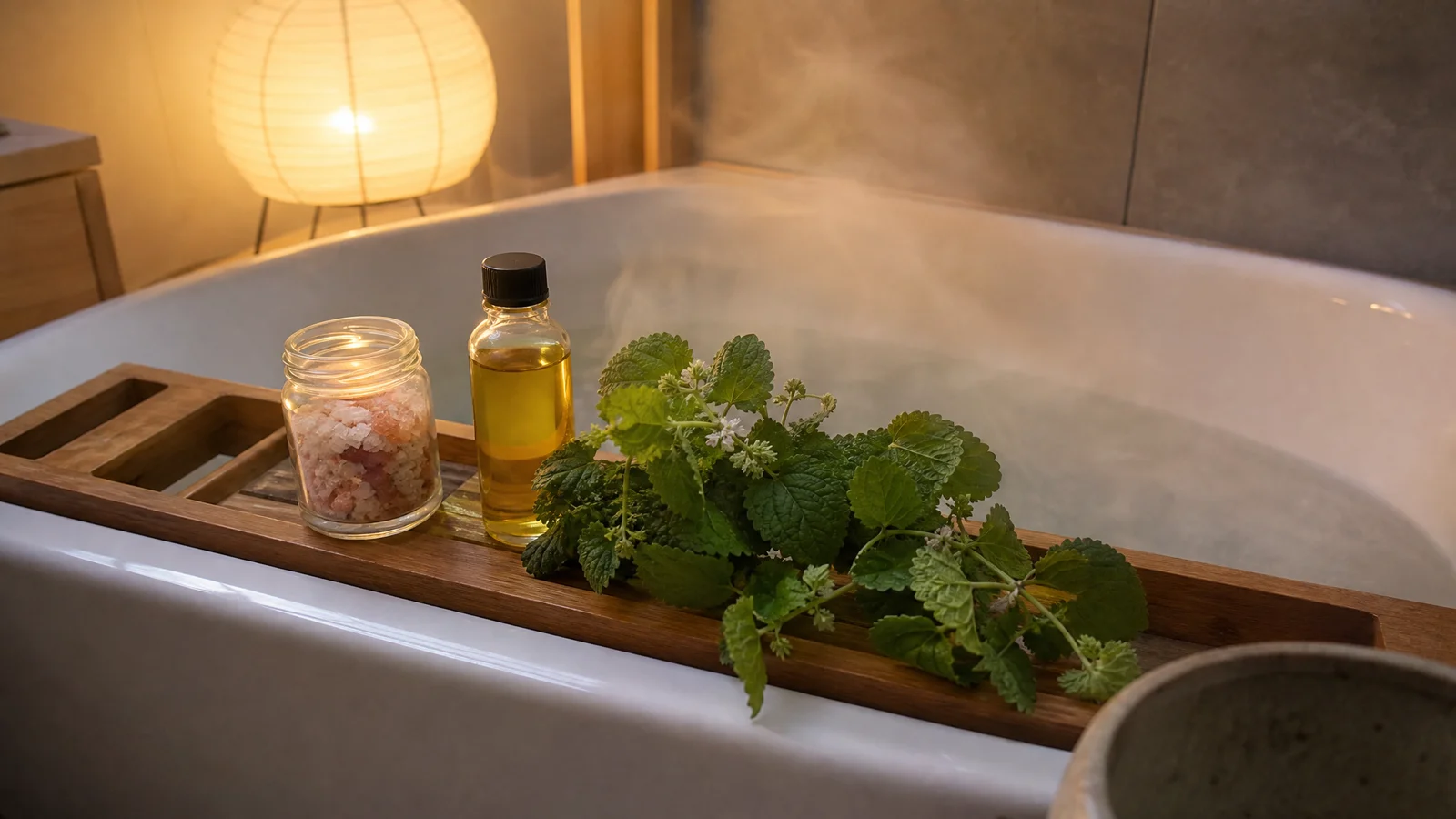
Melissa Bath Oil: How to Make It Actually Disperse
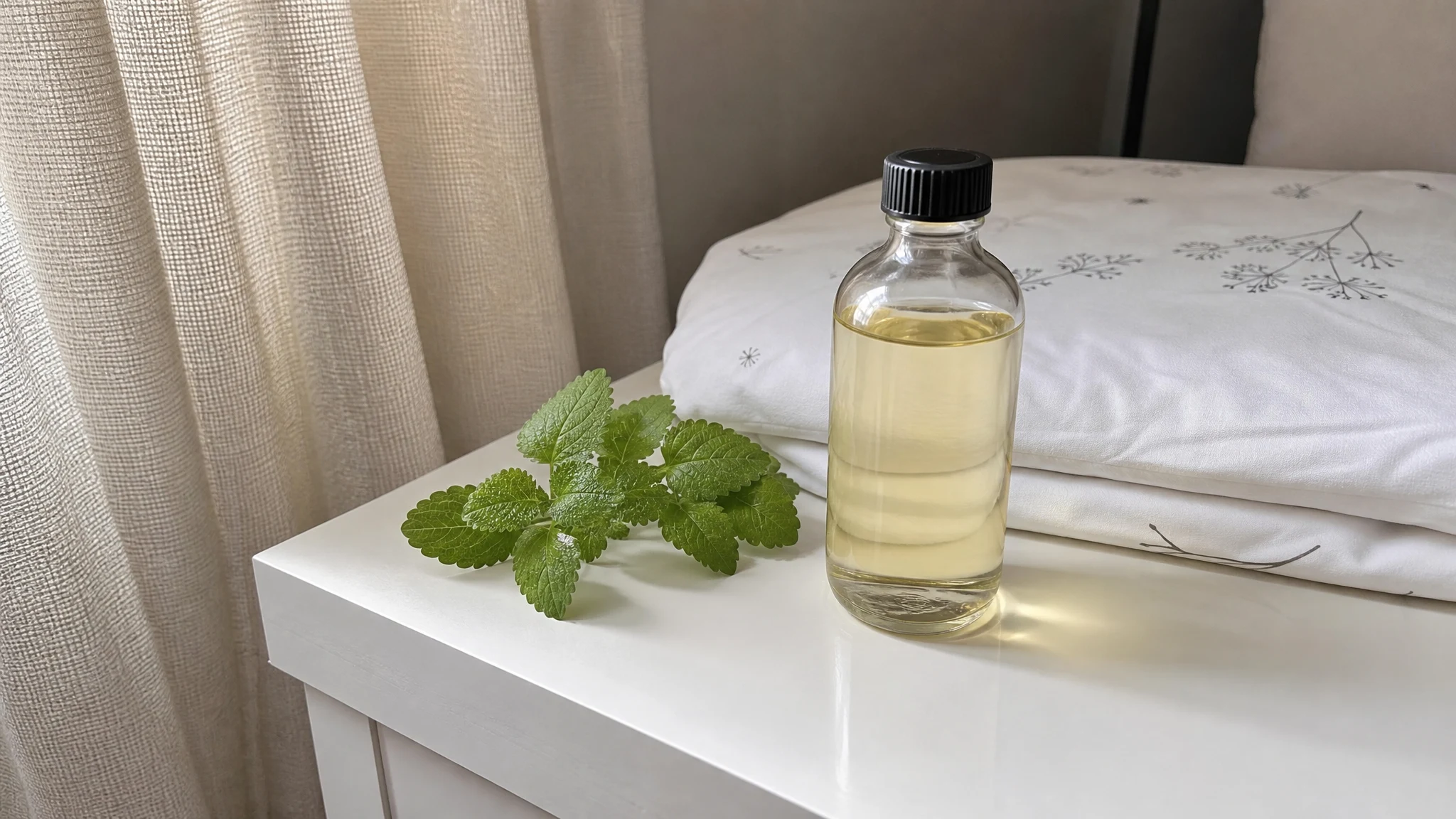
Picture the usual bath-salt recipe: a handful of salts, a few drops of oil stirred in, a jar that smells wonderful. The trouble starts when the water runs. Oil and water do not mix, so the aroma you stirred into the salts ends up floating on the surface. For melissa, a lemony oil with a firm published ceiling, a little chemistry makes for a much nicer bath.
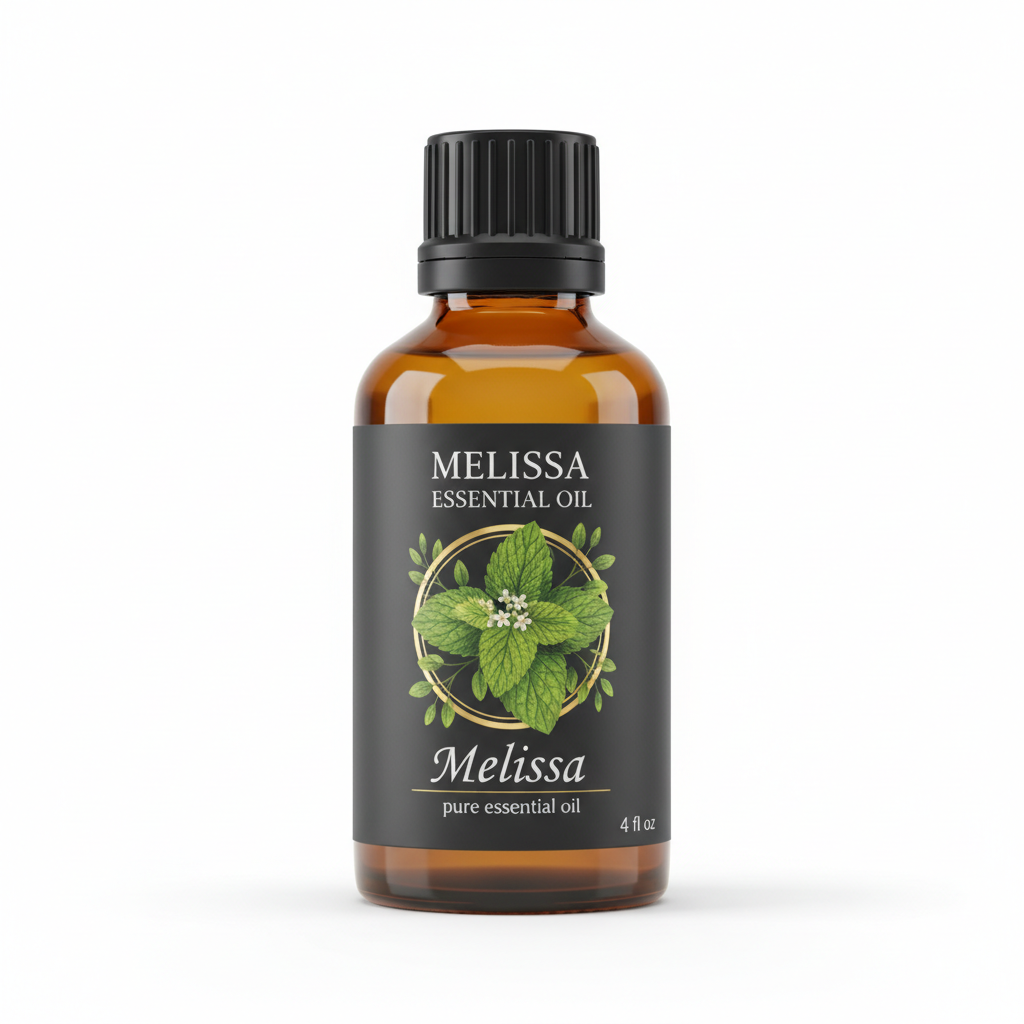
Melissa Essential Oil
Our own Melissa Essential Oil, in sizes from 0.5 oz to bulk.
From $23.99
Shop Now →Why oil needs a go-between
The Tisserand Institute's bath safety guidance explains the issue plainly: essential oils are not water soluble, so oil added straight to the tub leaves a film of undiluted oil on top, and warm water can make some oils sting. The same page lists what does not disperse oil, and it covers most of a typical recipe: Epsom and ordinary salt, baking soda, cornstarch, milk, glycerin, witch hazel and aloe. Strong alcohol works only at 160 proof or more (190 is better), so ordinary vodka does not do the job.
What does work is a dispersant. The page names polysorbate 80 for mixing an essential oil into a carrier oil, and a modified tapioca starch called Natrasorb Bath, among others. We do not sell either, so you will find them at a cosmetic-ingredient or craft supplier, along with a carrier oil.
The number that sets the amount
For melissa, the guide to the amount is the IFRA standard. IFRA's standard for melissa oil allows 1.2% in category 9, and IFRA's guidance document puts bath gels, salts and oils added to bathwater in that category. The standards for citral and citronellal give 1.2% and 1.4% there, so 1.2% is the lowest and the one to keep in mind. It is far above the 0.15% for leave-on body products because a bath product rinses off, and that is also why dispersal matters: the ceiling assumes the oil does not sit on your skin.
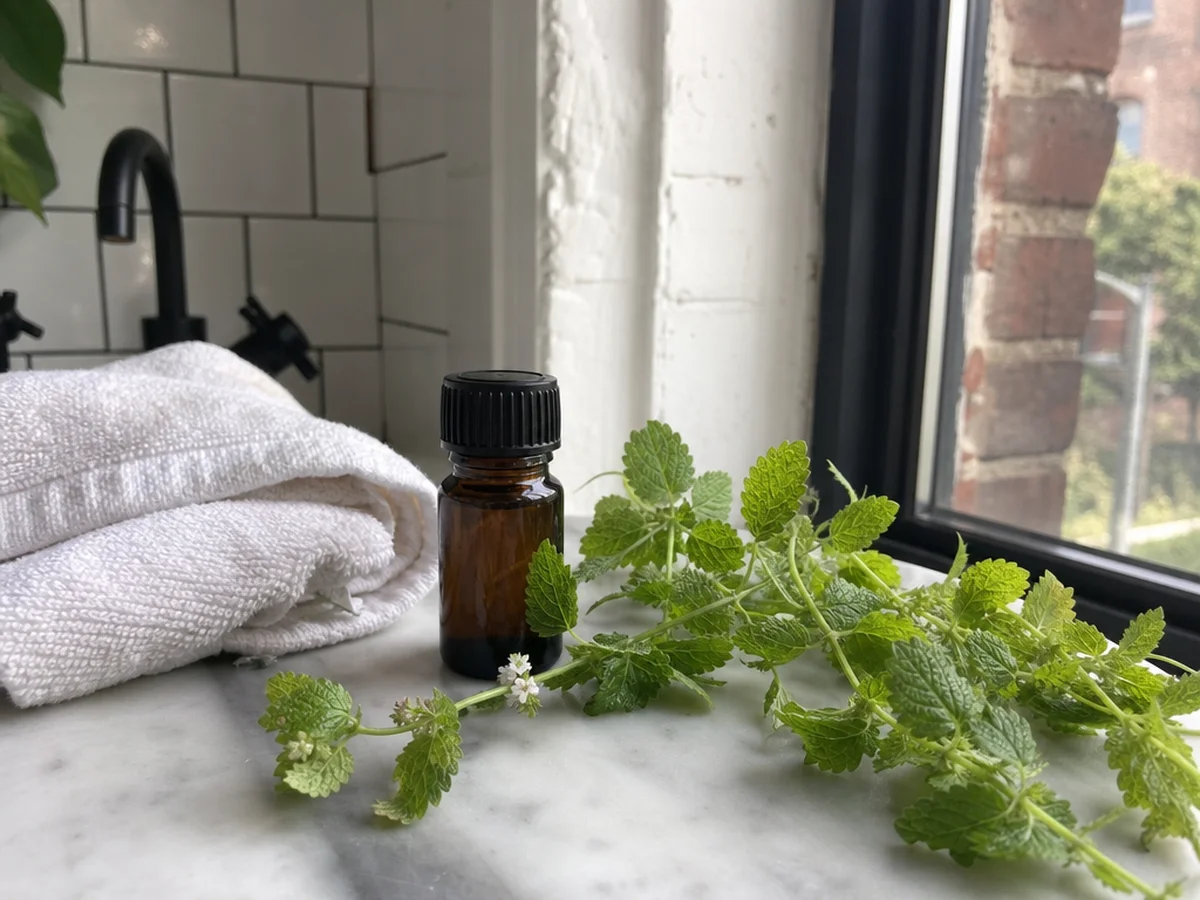
Tisserand's general frame for bath mixes is 5 to 20 drops of essential oil per half ounce (a tablespoon) of dispersing base, and it says to keep each oil's own maximum in mind. Here is what that means for melissa. A drop is about 0.044 g (arithmetic from the 0.888 relative density on our published Certificate of Analysis and roughly 20 drops per ml). Five drops in a tablespoon of base comes to about 1.5%, already past 1.2%, and 20 drops would be around 6%. So the bottom of the usual range is the place to start, and a gentler mix is better still.
A bath oil worked out by weight
This is a 100 g batch, with melissa at half a percent, so a scale that reads to 0.01 g is helpful. It is a formulation built from the figures above.
| Ingredient | Grams | Share |
|---|---|---|
| Melissa essential oil | 0.50 | 0.5% |
| Polysorbate 80 (food grade) | 0.50 | 0.5% |
| Fractionated coconut oil or jojoba oil | 99.00 | 99.0% |
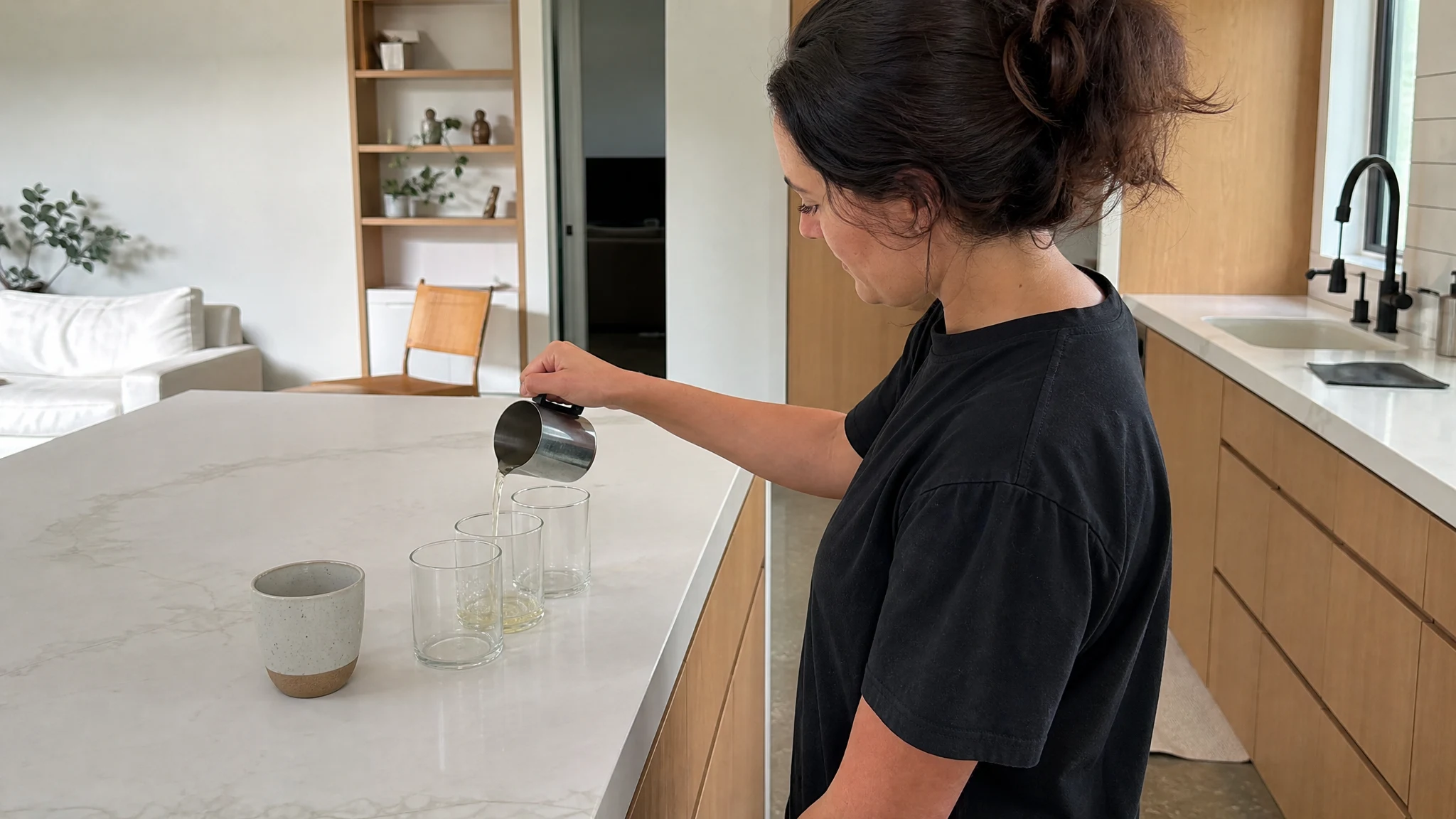
Weigh the melissa and the polysorbate 80 into a small glass jar and stir them together first, in equal parts, until clear. Then add the carrier a little at a time, stirring as you go. A tablespoon of the finished oil, about 14 g, holds roughly 0.07 g of melissa, a bit over one and a half drops. That is deliberately light, and in a full tub it gives a quiet, fresh lemon-herb aroma rather than a loud one. It is also a good example of why the oil is sold in small bottles: half a gram per batch stretches a long way.
What about the salts?
If you love the look and feel of salts, add them for texture and keep the melissa in the dispersed oil above, or use the starch dispersant according to its maker's directions and work the melissa share back to the 1.2% ceiling. Mixing oil straight into dry salt gives a lovely jar and a bath where the oil floats.
Setting up before you run the water
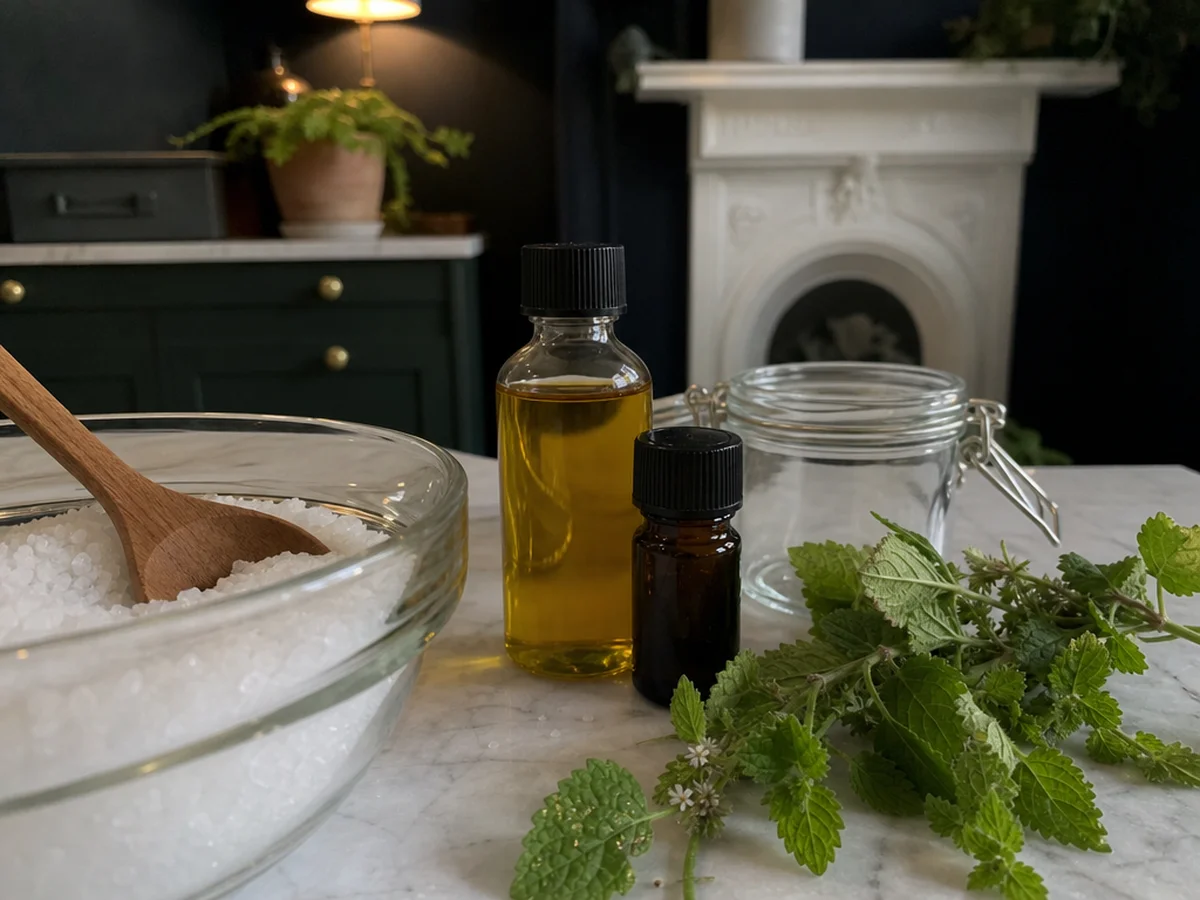
A bath oil is a small pleasure, so prepare for it. Measure out your tablespoon with a spoon you keep for crafts, not one from the kitchen drawer, and label the jar so nobody mistakes it for something edible. Put a towel and a non-slip mat within reach, since carrier oil will leave the tub slick. Run the water first, then stir in the dispersed oil, and give the surface a swirl so it spreads before you step in.
You will notice a soft lemon-herb scent that rises with the warmth and fades gently as you bathe. If it seems light, resist the urge to add more. That is what the numbers allow, and a subtle scent is part of the charm.
Before you step in
Patch test the finished mix on a small area first, which is also our standing advice for any dilution of this oil. Our dilution guidance for skin is 0.5% to 2% in a carrier; for melissa we start at the lower end, and the formulation above sits right there. Carrier oil makes a tub slippery, so rinse it afterward and step out carefully. Keep the oil away from eyes, children and pets, and it is for external use only. Anyone who is pregnant, bathing a child, or living with eczema or a fragrance allergy should ask a doctor or dermatologist first; our pregnancy article sets out what is on record.
Oxidation is driven by heat, light and moisture, according to the Tisserand Institute's page on oxidized essential oils, so make small batches, label the jar with the date, and keep it capped and out of the shower steam. For hot-bowl steaming, see why we lean away in our facial steam post, and for the limit for each use, our use-by-use guide.
A good bath is mostly patience, warm water and a scent you enjoy; this version just lets the oil actually join the water.
Melissa Essential Oil
Melissa Essential Oil from our own shop, in sizes from 0.5 oz to bulk.
From $23.99
Shop Now →Sources & Further Reading
- Tisserand Institute. Bath Safety: how to use essential oils safely in the bath.
- Tisserand Institute. Is my bottle of essential oil oxidized or no longer good to use?
- IFRA, January 2024. The complete IFRA Standards (Melissa oil, Citral, Citronellal).
- IFRA, 30 June 2023. Guidance for the Use of IFRA Standards.