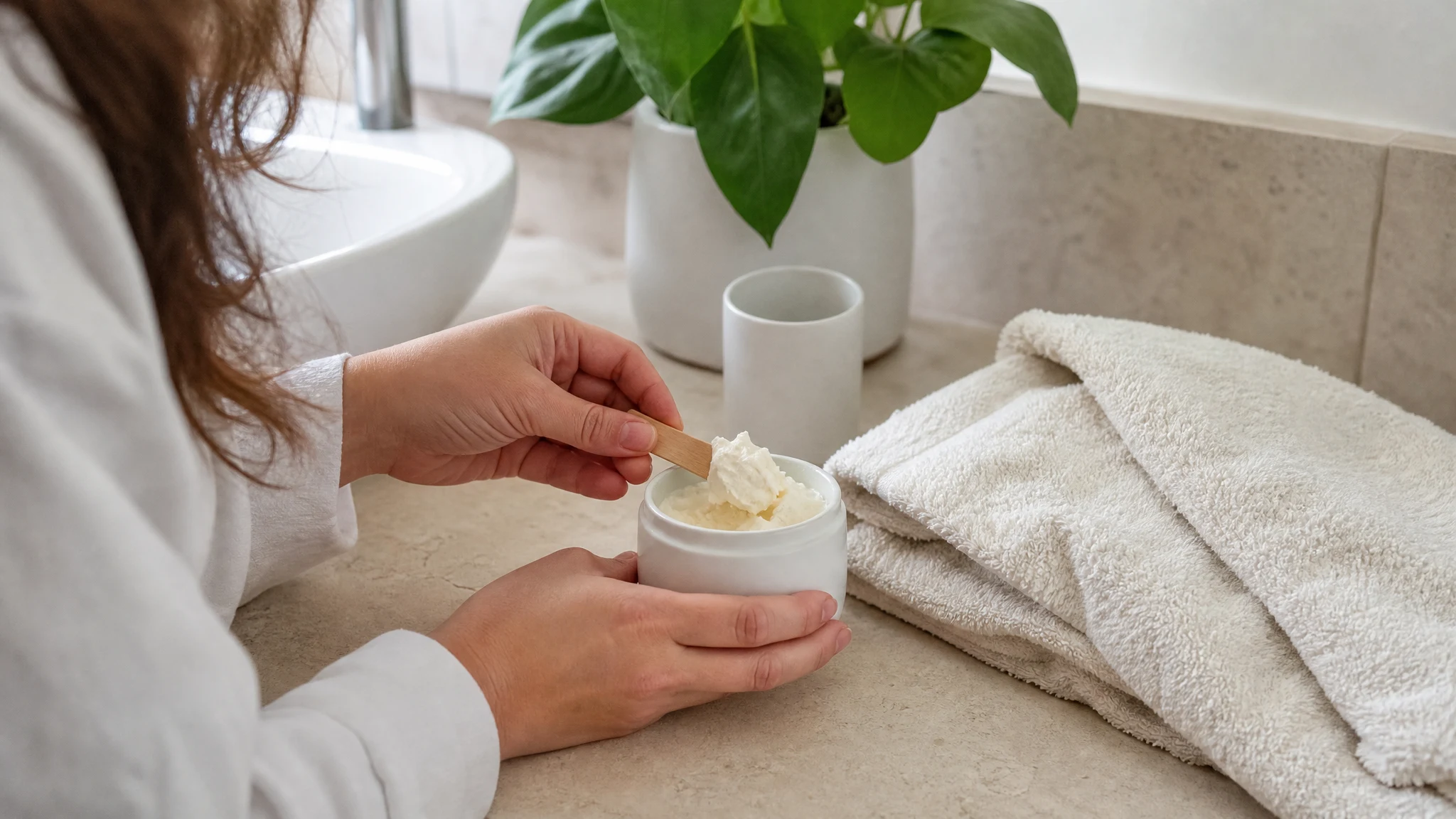
Melissa Body Butter Recipe: Whipped and Waterless
A jar of whipped body butter is one of the nicest things to make at home, and one of the easiest to over-scent. A popular supplier recipe suggests about 2% essential oil for the whole batch. For melissa, that would be many times the published limit for something you leave on your skin, so this is a butter built from the numbers instead.
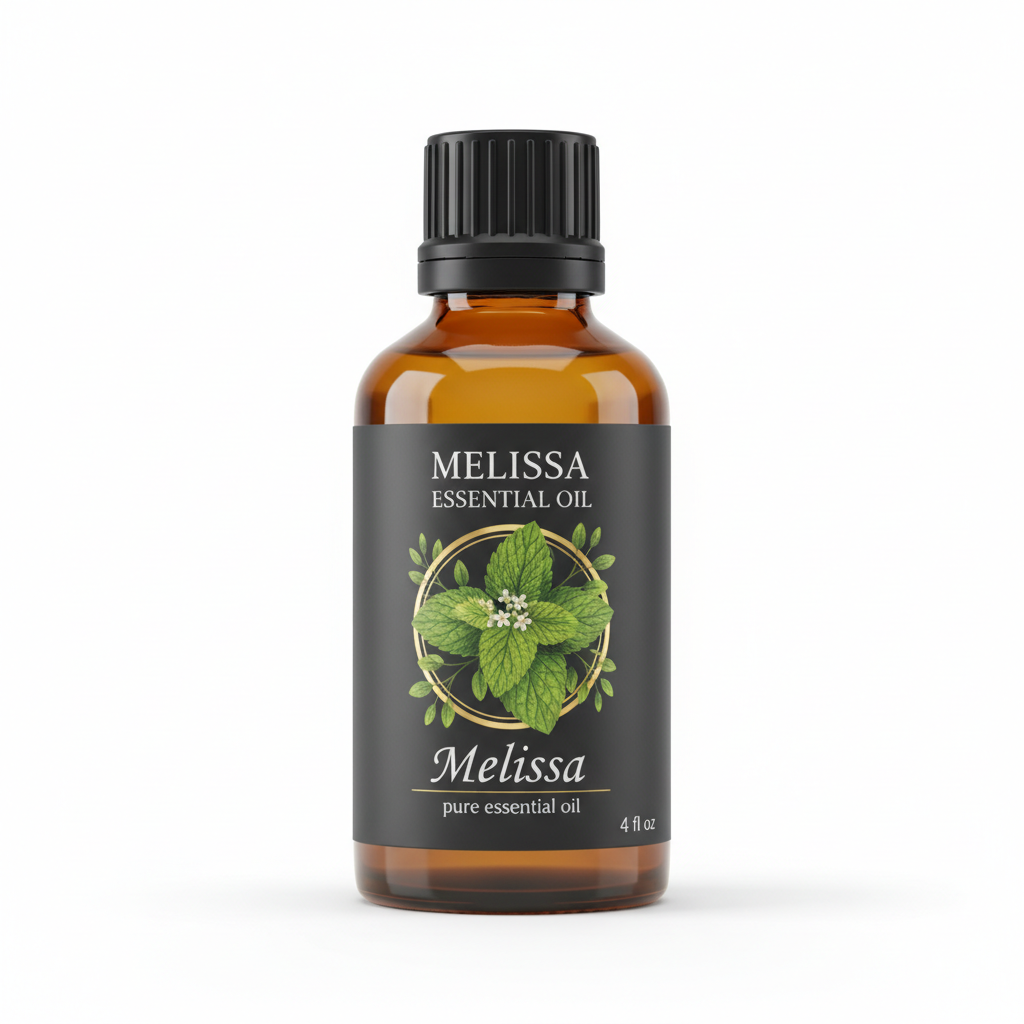
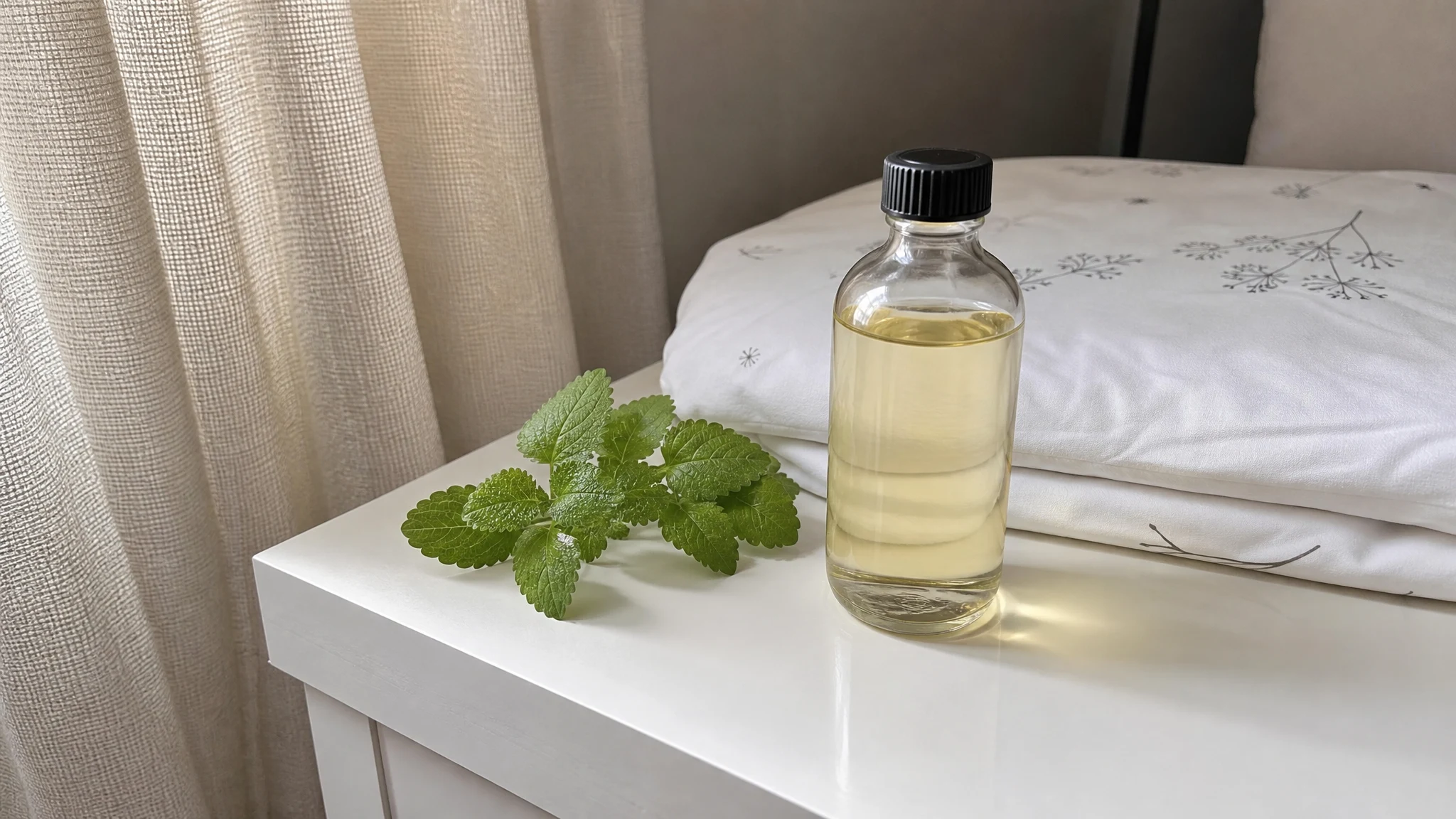
Melissa Essential Oil
Our own Melissa Essential Oil, in sizes from 0.5 oz to bulk.
From $23.99
Shop Now →Why 0.15%
IFRA's standard for melissa oil sets 0.15% of the finished product for category 5A, with dermal sensitization as the concern. IFRA's guidance document lists body creams, oils and lotions of all types in that category, and face moisturizer and hand cream carry the same 0.15%.
Our own dilution guidance is 0.5% to 2% in a carrier oil with a patch test first. For leave-on butters and creams we start from the lower published figure, and we suggest you do too. In a 100 g butter, 0.15% is 0.15 g of oil, about three drops. At 0.5% it is about 11 drops, and at 2% it would be about 45, thirteen times the limit. The oil is potent, so the amount is small, and a bottle goes a very long way.
Why we keep water out
A lotion contains water, and the FDA's page on microbiological safety and cosmetics lists an ineffective preservation system among the ways products become contaminated. It also names dipping fingers into a jar and warm or damp storage as risks. Choosing and testing a preservative is a job for a preservative supplier's technical team, and we do not sell preservatives, emulsifiers or bases, so we keep to a waterless butter. That is also the more natural fit for the recipe style below. A waterless butter is not risk-free, since wet fingers get into jars, so use a clean spatula and keep it out of the shower.
A 100 g whipped butter, worked out
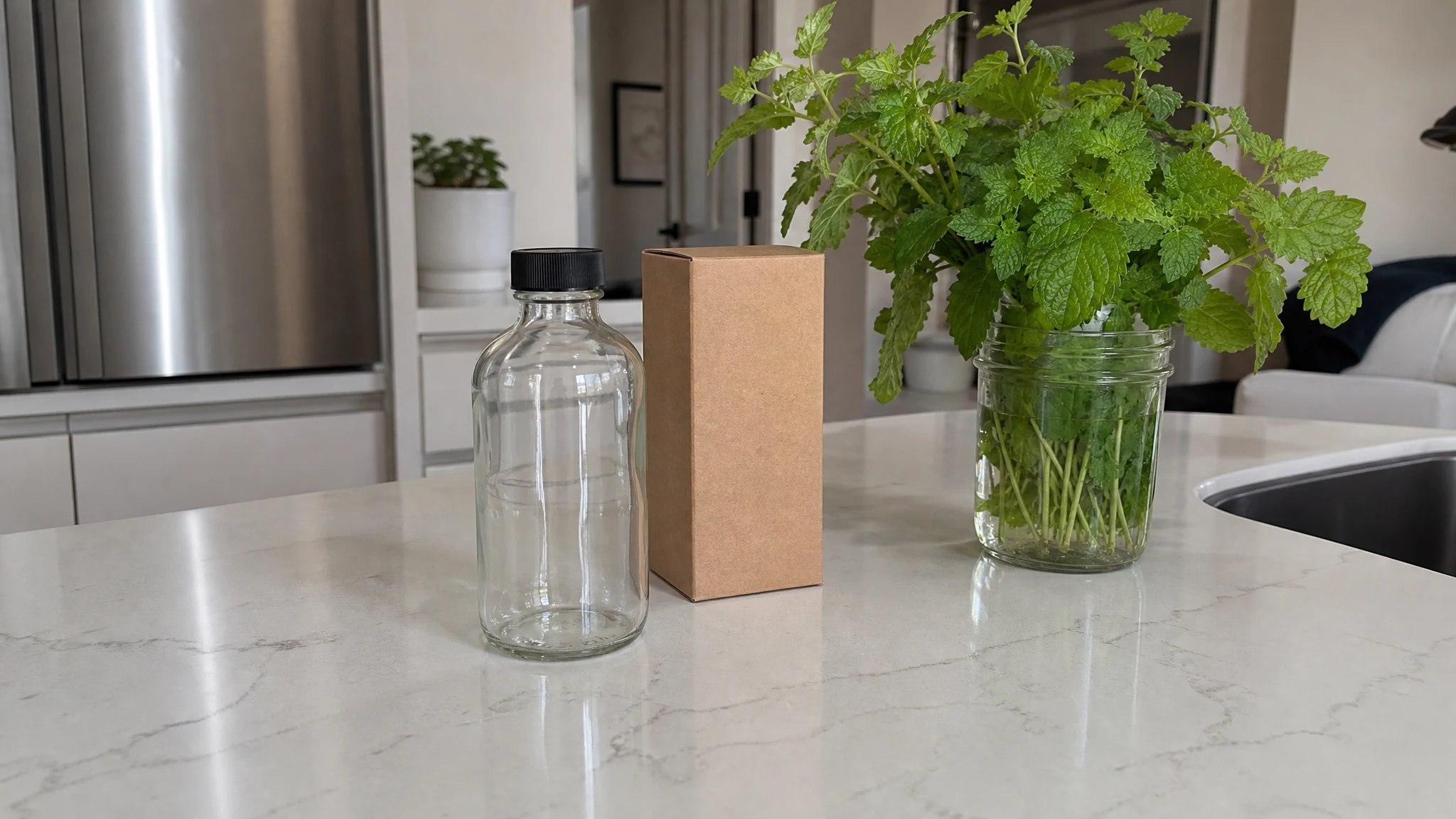
The base follows the whipped body butter guide from Wholesale Supplies Plus, which suggests 75% butter and 25% solid oils, vitamin E at 1%, and nothing water-based. It warns that water-based additions such as extracts or aloe will separate out. Because 0.15 g is hard to weigh, the formulation uses a weighed predilution: 1 g of melissa into 9 g of a liquid carrier, such as jojoba, makes a 10% mix, and 1.5 g of that holds exactly 0.15 g of oil.
| Ingredient | Weight | Note |
|---|---|---|
| Shea butter | 74.0 g | Soft enough to whip without melting |
| Coconut oil | 23.5 g | The solid-oil share |
| Vitamin E | 1.0 g | The supplier's 1% |
| 10% melissa predilution | 1.5 g | Holds 0.15 g melissa oil, about 3.4 drops |
| Total | 100.0 g | Melissa is 0.15% of the whole |
Stir the oils together, add the vitamin E and predilution, then whip as the mixture cools. The supplier says harder butters can be warmed to roughly 120 to 140 F, though shea is soft enough to skip that. Whipping adds air: it says 4 oz of whipped butter fills an 8 oz jar, so a 100 g batch wants a jar of about 200 ml. A scale that reads to 0.01 g and a little patience are the only special equipment.
The supplier recommends oils with a long shelf life but gives no shelf life for the butter, and neither will we. Write the weights and date on the jar so any change in smell can be traced to its batch, and discard a butter that smells rancid. The "typically 1 to 2 years" on our shop page is for the neat oil in a capped, cool, dark bottle, not for what you make with it.
What you will notice while whipping
The fun part of a whipped butter is watching it change. Cool, dense butter turns lighter and paler as you beat it, and you will see soft peaks begin to form that hold their shape on the spatula. It looks a little like thick frosting. A tiny lemon-herb scent rises as it fluffs, so lean in and smell it now and again, because with so little oil you will be glad to know it is there.
A few practical habits help. Use a clean, dry bowl and spatula, since a stray drop of water works against everything we said about keeping this butter waterless. Pick a wide-mouthed jar so you can fill it easily, and scoop it out later with a clean spatula rather than your fingers. If you are making a gift, a plain label with the date and the weights is a nice touch.
Using it well
Keep the butter off the face, lips and eyes, and skip it on broken skin. Patch test a little on your inner arm first. Anyone with eczema or a fragrance allergy should ask a dermatologist before using it, and questions about pregnancy or babies belong with a doctor. Our skin and citral guide covers how the published limits compare with our dilution range.
At this level, the aroma is a gentle lemon-herb freshness, not a bold one; that is simply what a tiny dose of an oil this potent gives, and it is lovely against shea. If you want a bigger scent hit, our bath oil uses a limit that allows more oil, and the handmade products guide compares the rest. Planning to sell butter? Our labeling article works through the numbers, and a regulatory consultant should check the final label. Shea butter, coconut oil, vitamin E and jars all come from a craft or supply shop.
A first batch this small is a pleasure to make, and it teaches you how far a few drops can stretch.
Melissa Essential Oil
Melissa Essential Oil from our own shop, in sizes from 0.5 oz to bulk.
From $23.99
Shop Now →Sources & Further Reading
- IFRA, January 2024. The complete IFRA Standards (Melissa oil, genuine Melissa officinalis L., Amendment 49).
- IFRA, 30 June 2023. Guidance for the Use of IFRA Standards.
- Wholesale Supplies Plus. How to Make Whipped Body Butter.
- US FDA. Microbiological Safety and Cosmetics.