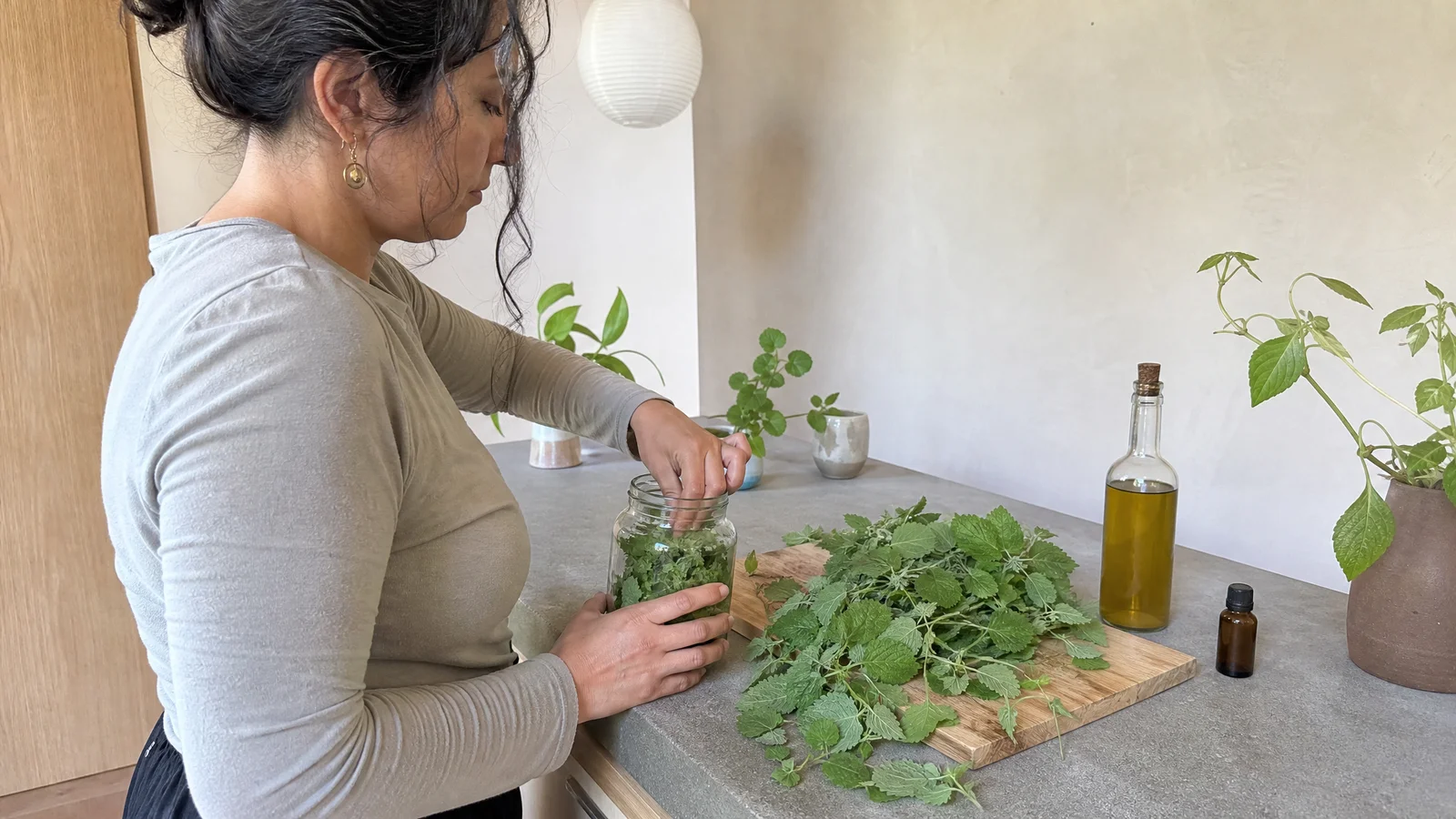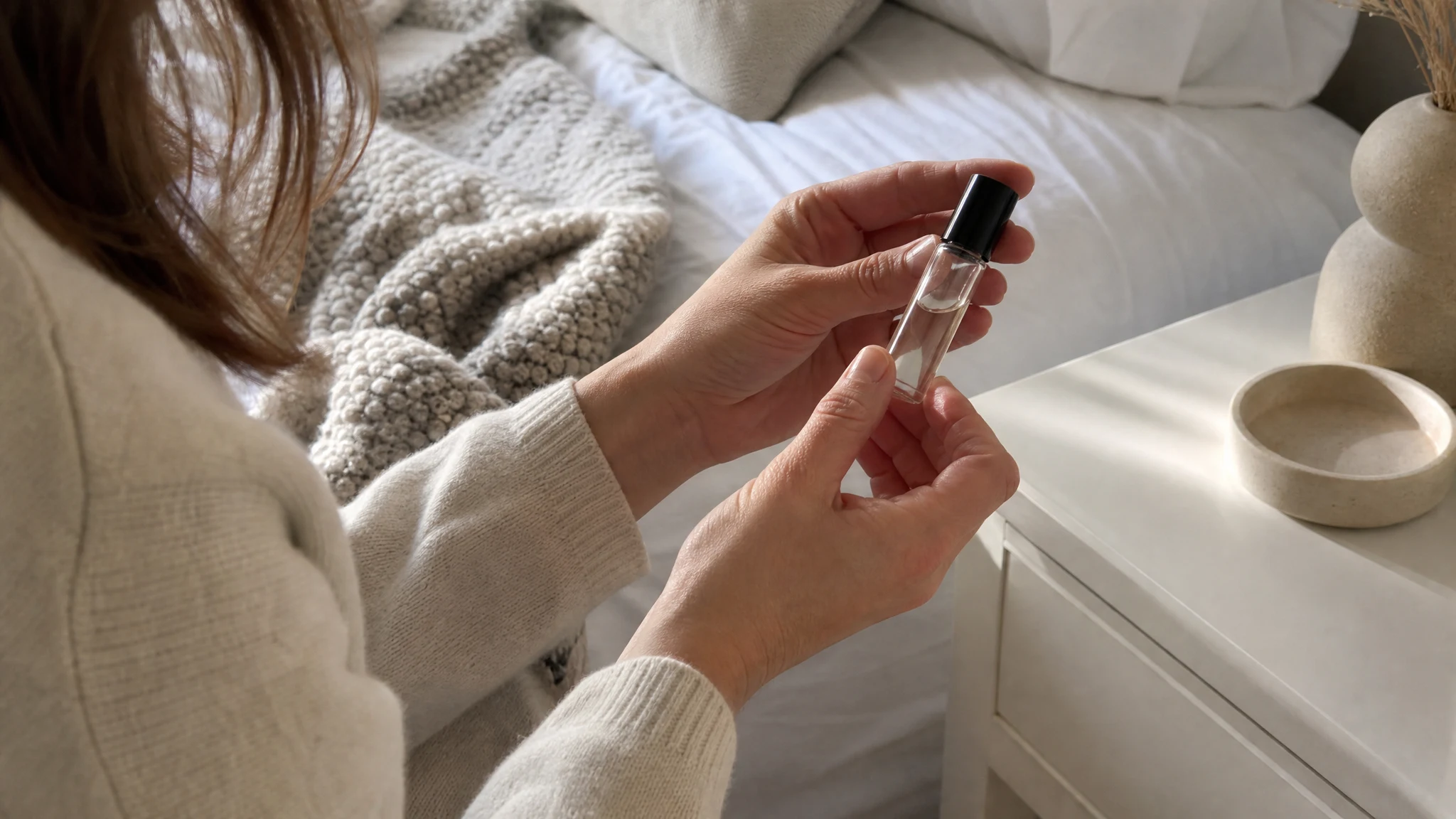
Melissa Pillow Spray: How Few Drops Is Enough?
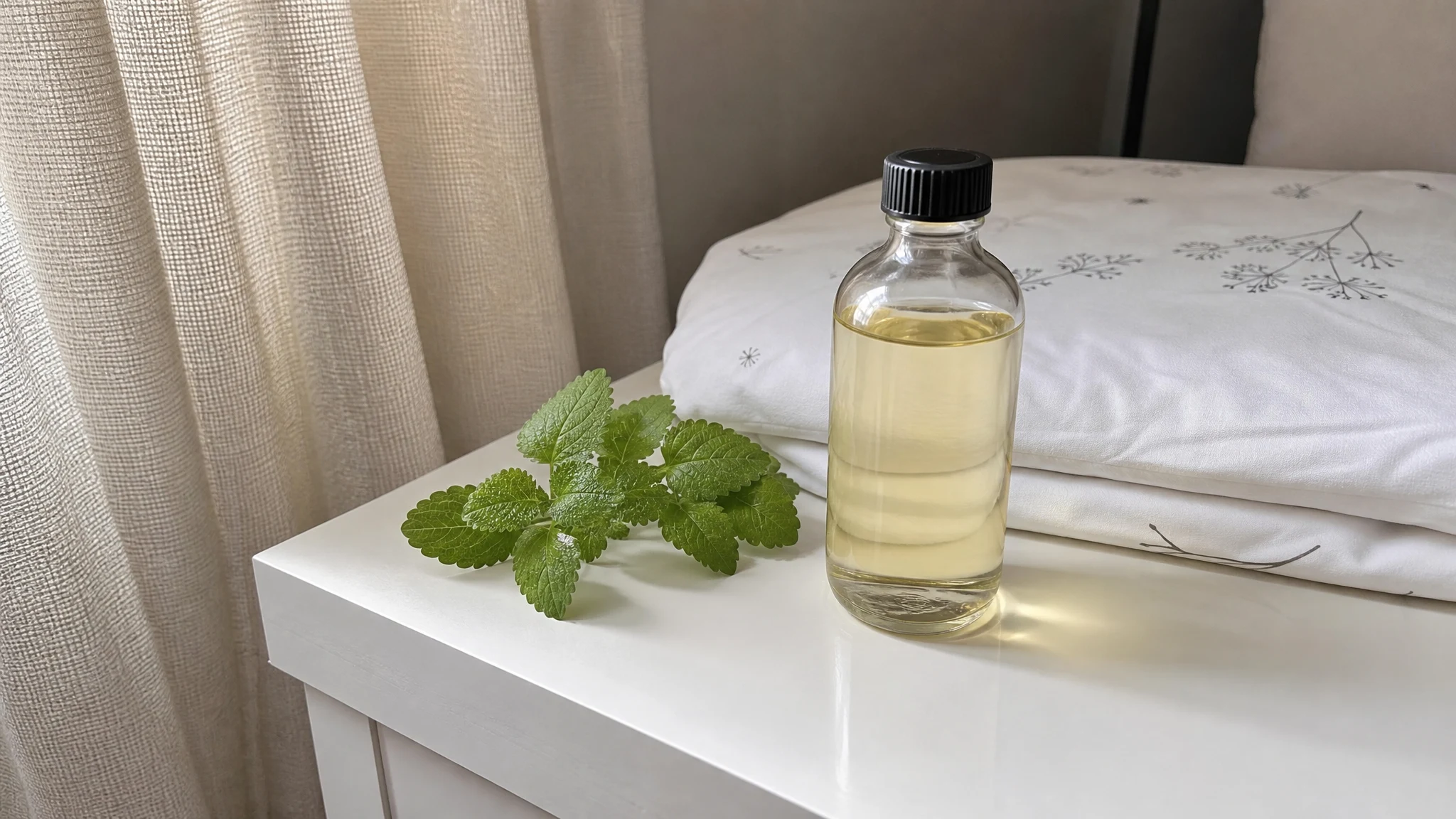
Most pillow spray recipes ask for a few drops of oil in a bottle of water and witch hazel. With melissa, that is a lot of oil for something that sits against your face, and a base that cannot hold it anyway. The good news is that a very small amount is enough, and the arithmetic is more interesting than it sounds.
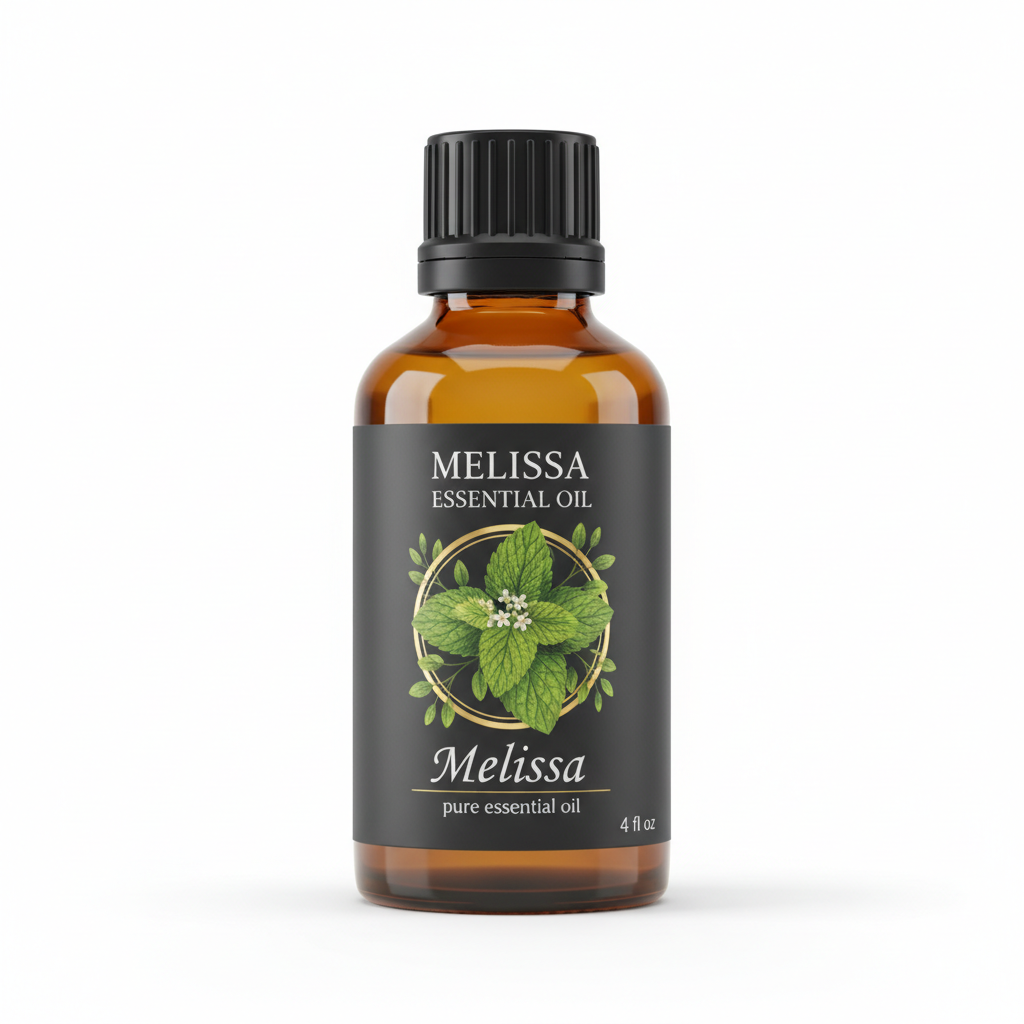
Melissa Essential Oil
Our own Melissa Essential Oil, in sizes from 0.5 oz to bulk.
From $23.99
Shop Now →Two limits, and why the smaller one wins
IFRA's guidance document puts pillow spray in category 11B. Its reasoning is worth knowing: it assumes the spray goes on the pillow's top surface, that a person lies down before the fabric has dried, and that about 20% of the product ends up on the skin. In the IFRA standards, melissa oil is allowed at 2.3% in that category, which looks generous.
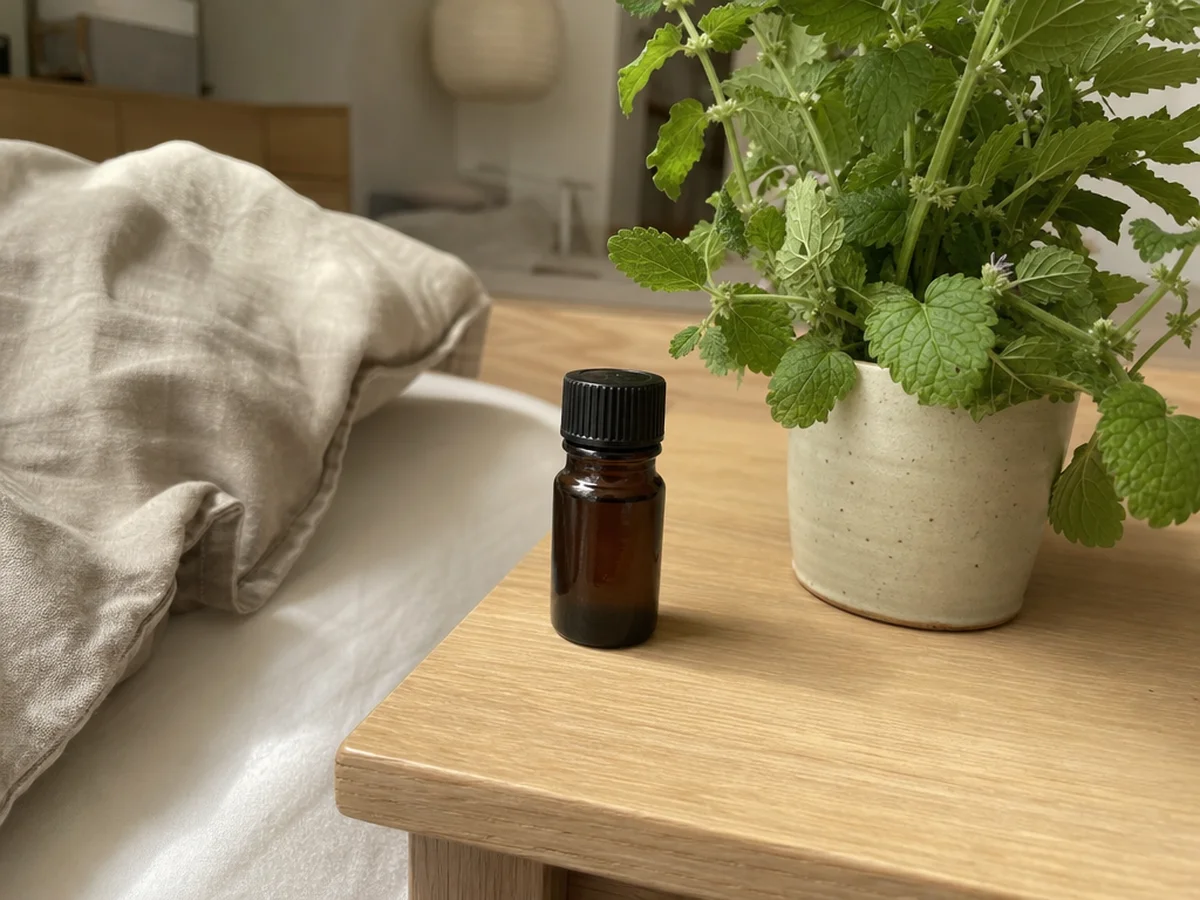
But melissa oil contains citral and citronellal, and each has its own standard. Citral is capped at 0.051% in category 11B and citronellal at 0.017%. The Petrisor review reports geranial from 6% to 51%, neral from 4% to 35% and citronellal up to about 20% of the oil across studies. The Certificate of Analysis we publish for one batch lists density, refractive index and optical rotation, so we do not quote a citral figure for our oil, and the sensible approach is to choose a dose that works across the whole reported range.
That dose is 0.05% oil in the finished spray. Even if every drop of the oil were citral, that would sit just under the 0.051% limit, and citronellal stays under 0.017% as long as it is under about a third of the oil, well above the highest reported figure. It is a deliberately small number, chosen so the published limits are respected whatever the batch.
What a light spray is like
If you are used to bold room sprays, this one will feel almost shy. That is the point. Melissa is a delicate oil, and when you keep the amount tiny, what you get is a soft lemon-herb note that you catch when you lean in, not when you walk into the room. We think that suits linens better than a heavy perfume would, because a pillowcase is something you hold close to your face, not something you want to announce.
Why the usual base separates
Water and witch hazel do not carry oil, and the Tisserand Institute's bath safety page says the same about milk, salt and aloe. It also notes that alcohol needs to be at least 160 proof, ideally 190, to carry essential oil, so vodka falls short. That page is written about baths, but the chemistry is the same in a spray bottle: oil shaken into a watery base floats, and the first spritz comes out stronger than the last. A water-based spray also needs a preservative, which is a supplier's data-sheet job, so we have built the formulation on strong ethanol instead.
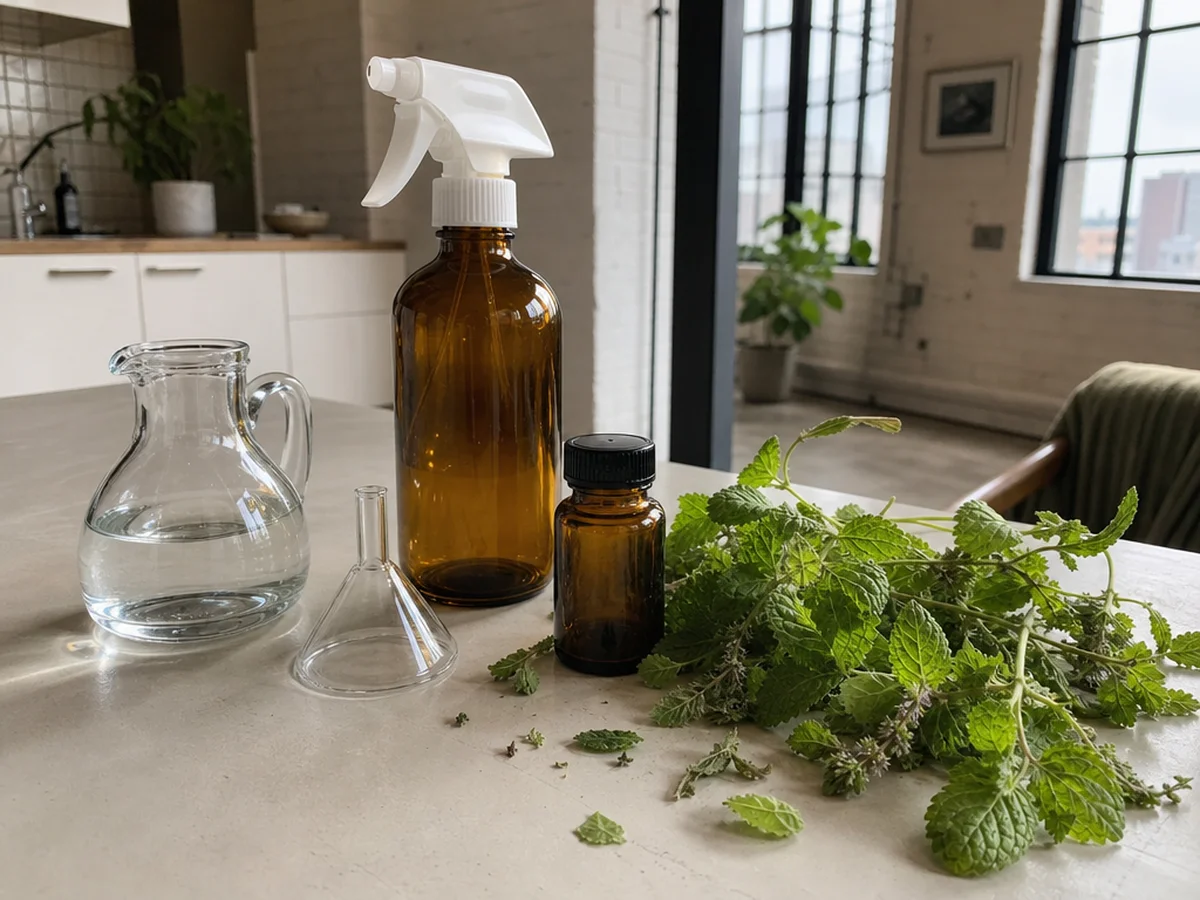
A weighed formulation
You need a scale that reads to 0.01 g, because one drop of oil is about 0.044 g (arithmetic from the 0.888 relative density on our published Certificate of Analysis and about 20 drops per ml). One drop cannot be metered, so we make a stock first.
| Step | Weigh | Result |
|---|---|---|
| 1. Stock | 1.00 g melissa oil + 9.00 g ethanol (190 proof) | 10 g of 10% stock |
| 2. Spray | 0.50 g stock + 99.50 g ethanol (190 proof) | 100 g spray at 0.05% melissa |
To scale up, keep the ratio: 1.25 g stock into 248.75 g ethanol makes 250 g at the same strength. About 126 ml of 95% ethanol weighs 100 g, so a 125 ml spray bottle fits a batch. Buy cosmetic-grade ethanol from a craft or perfumery supplier, ask what denaturant it carries, and keep it away from flames and warm appliances, since it is flammable.
Little habits that help
- Shake or swirl the bottle gently before each use, since the stock and the ethanol should be fully blended.
- Spray a test patch on a spare cotton cloth first, so you can see how the mist falls and how it smells once dry.
- Write the strength and the date on the bottle, and keep it with your other craft supplies, not with the kitchen.
- Keep the cap on tight between uses, since a light, volatile oil does not like being left open.
How to use a spray this light
At 0.05% the scent is soft: a clean, lemony-herbal whisper rather than a statement. That fits how the spray is meant to be used. Our judgment, reasoning from IFRA's own assumption about lying down on a wet pillow, is to spritz from arm's length and let it dry before anyone lies down. Add nothing else without checking its own limit, since other oils bring their own citral and citronellal shares, which is why this is a melissa-only spray. A "relaxing" blend with extra drops of lavender or chamomile is a different formulation.
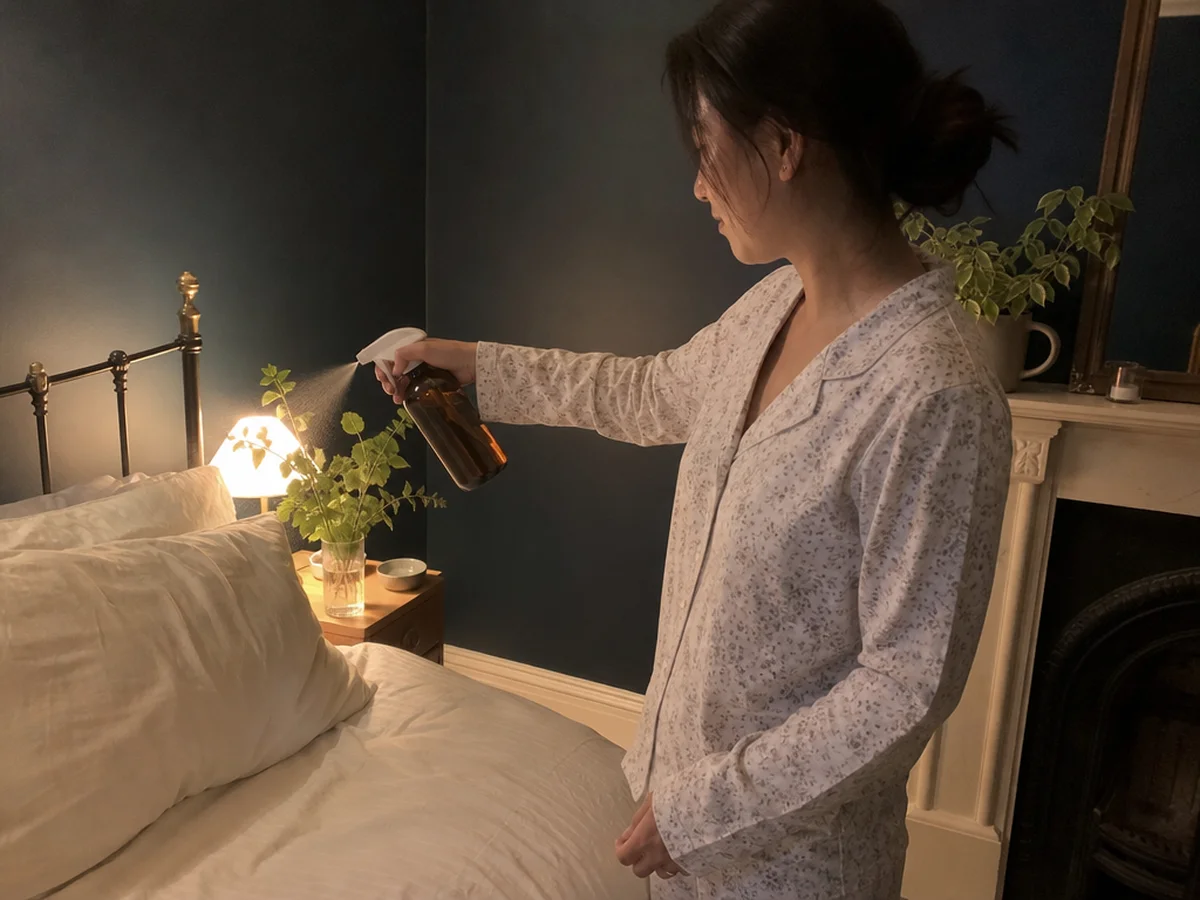
We describe this as a scented linen spray, not anything that does something for sleep. Keep it away from children's bedding, ask a veterinarian before scenting a room that a pet shares, and if someone in the house has asthma or a fragrance sensitivity, ask their doctor first. Our pregnancy article sets out what is on record for that situation.
Ethanol, bottles and scales are craft-shop items. For how a diffuser compares, our diffuser post has the numbers, and the handmade products guide compares the limits for each product type side by side. A little goes a long way with melissa, and a pillow spray is a lovely place to see it.
Melissa Essential Oil
Melissa Essential Oil from our own shop, in sizes from 0.5 oz to bulk.
From $23.99
Shop Now →Sources & Further Reading
- IFRA, January 2024. The complete IFRA Standards (Melissa oil, Citral, Citronellal).
- IFRA, 30 June 2023. Guidance for the Use of IFRA Standards.
- Petrisor G. et al., 2022. Melissa officinalis: Composition, Pharmacological Effects and Derived Release Systems-A Review. International Journal of Molecular Sciences.
- Tisserand Institute. Bath Safety: how to use essential oils safely in the bath.