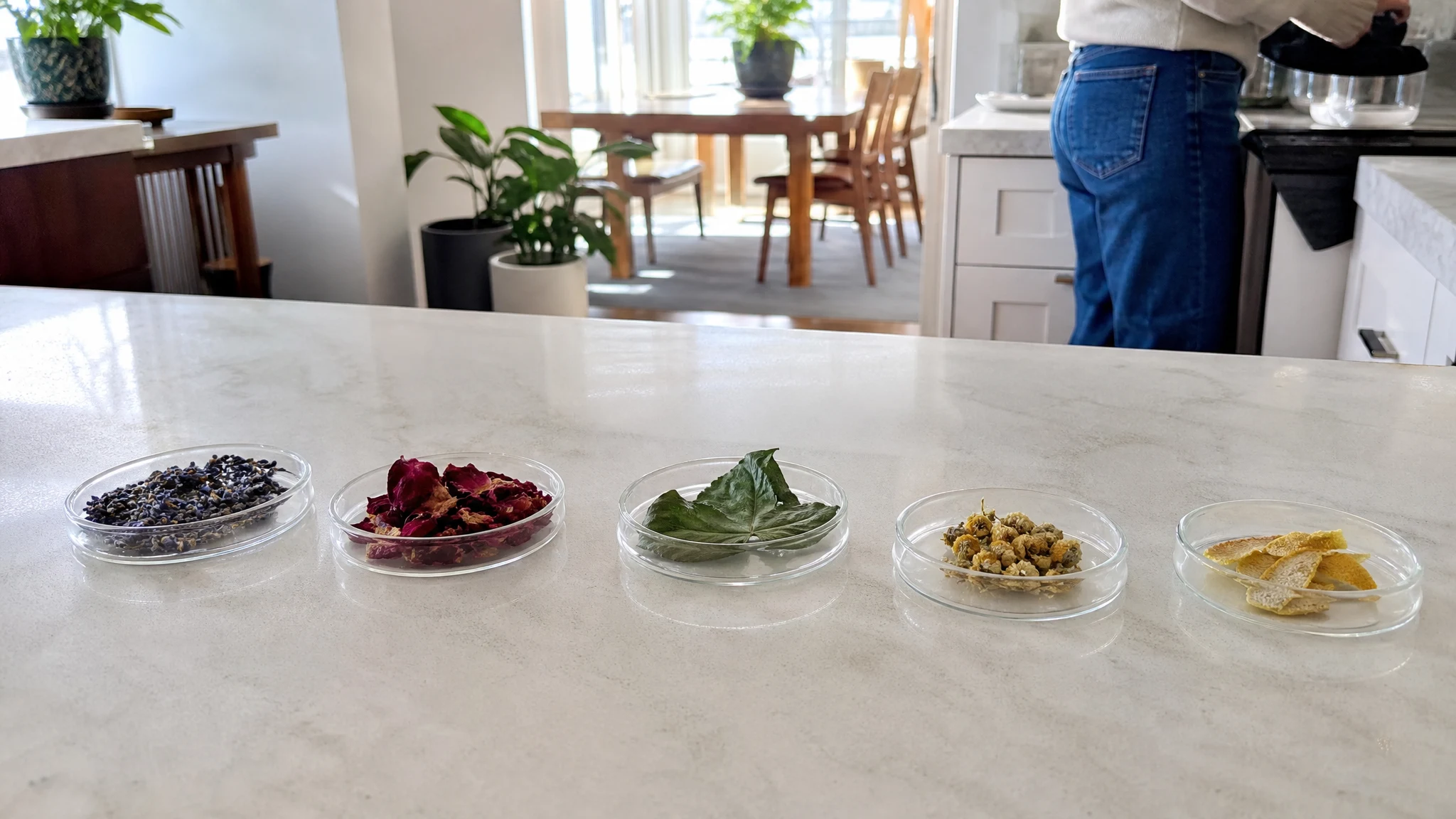
Melissa Perfume Accords: Three Blends for a Tiny Dose
Every melissa perfume starts with a budget. IFRA caps melissa oil at 0.60% of a finished fine fragrance, so the lemony top of your blend has a ceiling before you pick a single partner. The fun part is that a tiny amount is enough to lift a floral or herbal heart, and the three accords below show how to spend it.
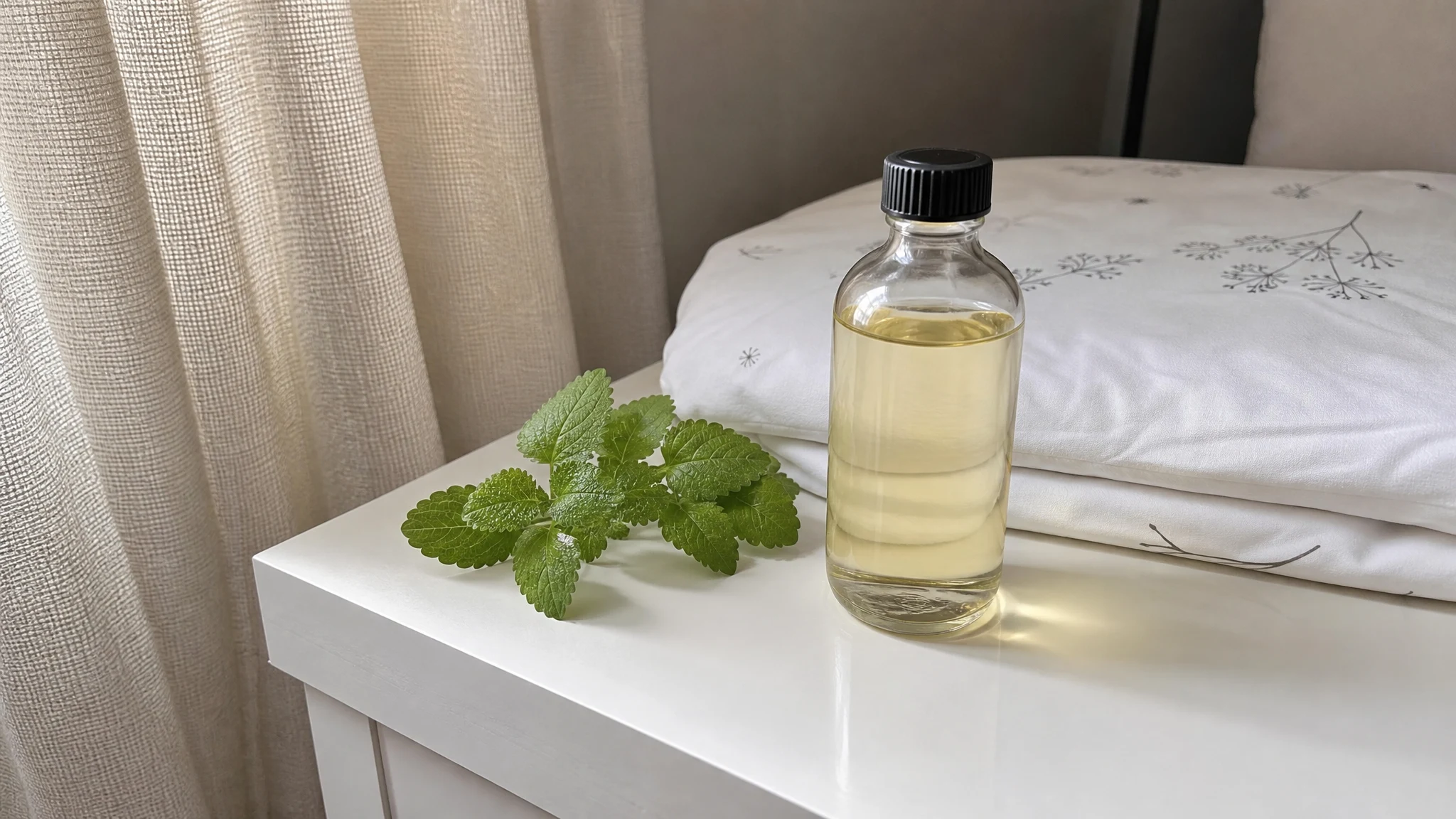
Melissa Essential Oil
Our own Melissa Essential Oil, in sizes from 0.5 oz to bulk.
From $23.99
Shop Now →The limits behind the numbers
IFRA's guidance puts eau de toilette, parfum, cologne and solid perfume in category 4. The IFRA standards then give these caps for the finished perfume: melissa oil 0.60% (dermal sensitization is the reason), bergamot oil expressed 0.40% when the furocoumarin content is unknown, ylang ylang extracts 0.73%, and citral 0.60%, which matters because melissa contains it. Lavender, rose, geranium and chamomile oils have no standard under those names in IFRA's index, though standards on their constituents can apply, so ask each supplier for an IFRA certificate for the batch you buy. Those are materials we do not sell.
Our own dilution guidance is 0.5% to 2% in a carrier, and a Tisserand Institute handout lists melissa at 0.9% maximum for skin. For perfume we work from the lowest figure, and every accord here keeps melissa at 0.45% of the finished perfume or less.
From limits to grams
Take a 10 g batch of perfume with a 15% concentrate: 1.5 g of blended oils in 8.5 g of perfumer's alcohol. (Dave Lackie's Your Guide to Scent Concentrations gives 12 to 20% for eau de parfum.) A share of 3 g per 100 g of concentrate then becomes 0.45% of the finished perfume. Melissa at that share is 0.045 g in the batch, about one drop (a drop is roughly 0.044 g, arithmetic from the 0.888 relative density on the Certificate of Analysis we publish and about 20 drops per ml). One drop cannot be metered, so make a 10% dilution, 1 g oil to 9 g alcohol, and weigh 0.45 g of it.
Before you weigh anything
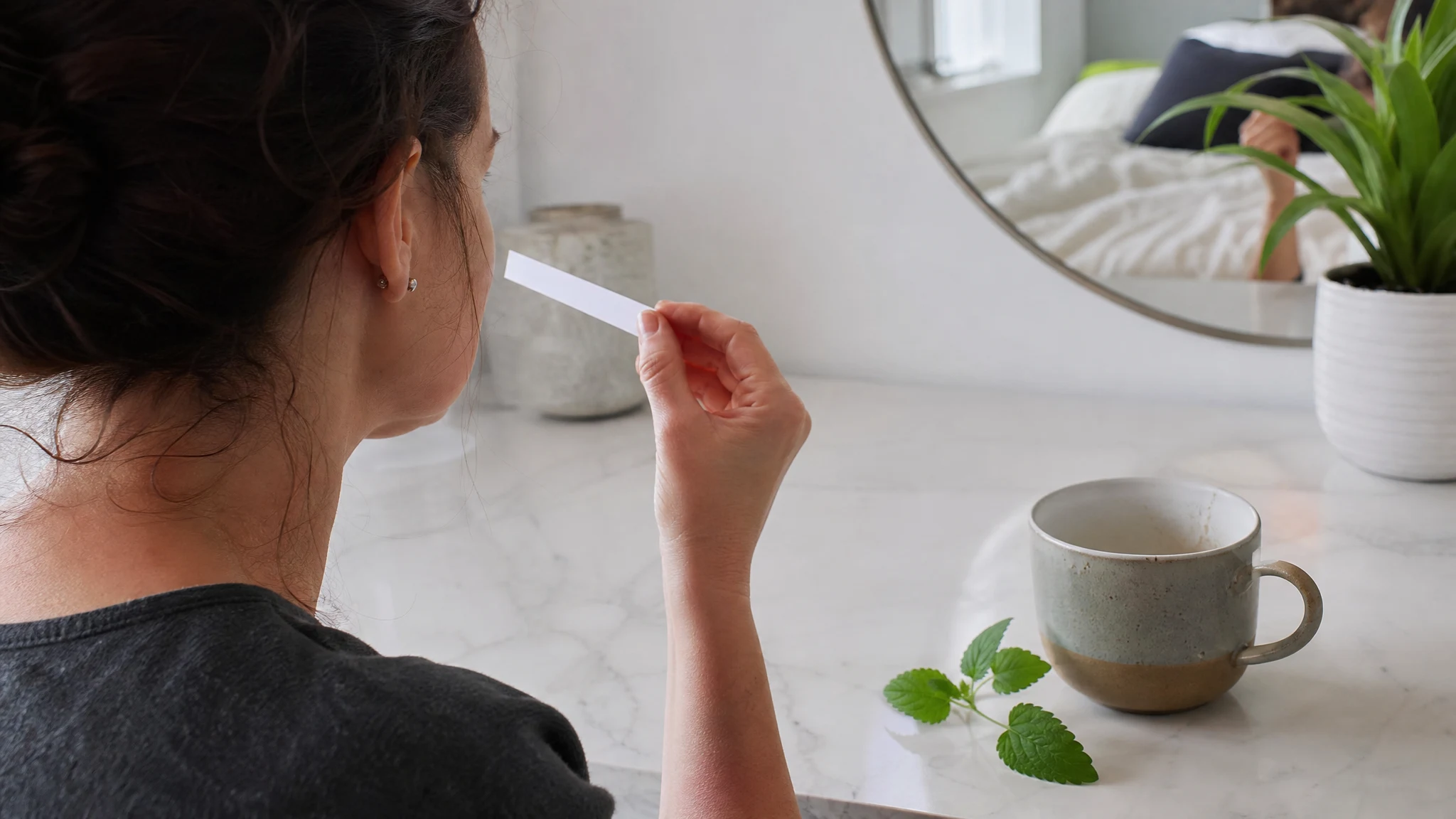
We love how quiet a melissa perfume is. Because the dose is so small, you are not making a loud scent, you are making a bright little lift at the top of a floral or herbal heart. Smell the neat oil once from a paper strip held a hand's width from your nose, and note the delicate lemon over a soft green middle. That is the picture to keep in your head while you build, because the other oils will push and pull around it.
Three accords
Shares are grams per 100 g of concentrate. The partners come from the oils our shop lists as blending well with melissa: lavender, rose, geranium, chamomile, bergamot and ylang ylang. Our shop describes melissa as a top-to-middle note with a bright citrus lift over a soft green heart, and each structure is built around that idea.
| Accord | Melissa | Lavender | Geranium | Rose | Chamomile | Ylang ylang | Bergamot |
|---|---|---|---|---|---|---|---|
| Green herbal | 3 | 60 | 25 | 0 | 10 | 2 | 0 |
| Rose and geranium | 3 | 20 | 30 | 45 | 2 | 0 | 0 |
| Citrus lift | 3 | 55 | 25 | 0 | 11.5 | 3 | 2.5 |
Check each against the caps, as a share of the finished perfume. Melissa is 0.45% in all three, 75% of its 0.60% cap. Ylang ylang is 0.30% in the green herbal accord and 0.45% in the citrus lift, well under 0.73%. The citrus lift also holds bergamot at 0.375%, close to its 0.40% cap by design. It is the tightest of the three, and a supplier who gives a measured furocoumarin content may allow more, though bergamot's limit exists because of phototoxicity, so keep sun off skin where a bergamot perfume was applied.
For the green herbal accord in a 10 g batch, weigh 0.45 g of the melissa dilution (0.045 g of oil), 0.90 g lavender, 0.375 g geranium, 0.15 g chamomile and 0.03 g ylang ylang, then add about 8.1 g of alcohol to reach 10 g. The rose and geranium structure suits a softer, more floral perfume, with lavender and chamomile as quiet support.
Checking the citral
Melissa's own cap and the citral cap are both 0.60% in category 4, so melissa on its own cannot pass the citral limit, whatever share of the oil is citral. At 0.45% it sits comfortably below even if all of it were citral. The Petrisor review reports that the citral content of melissa oils varies widely between studies, and the Certificate of Analysis we publish lists no citral figure, so we leave the calculation at the safe end. Other oils in a blend may add citral of their own, which is one more reason to ask suppliers for their certificates. Our skin and citral guide goes deeper.
Reading your own accord
Dip a fresh paper strip in the finished blend and smell it right away, then again after a few minutes, then after an hour. You'll notice the lemony top fade first and the greener, floral middle take over. If the lemon is gone too soon for your taste, resist the urge to add more melissa. The number is capped for a reason, and the better fix is to change a partner oil's share or to try a different accord from the table. Keep a small notebook with the grams, the date and one line about how it smelled, because a blend you love is only repeatable if you wrote it down.
It also helps to make the smallest batch you can. A 10 g batch is plenty for a first try, and it means a miss costs you almost nothing.
Patience and a patch test
Let each batch rest for a few weeks before judging it; scent blends settle and change. Patch test the finished perfume on a small area before wearing it. Ethanol is flammable, so mix away from flame. Our pairing ideas continue in the pairing guide and the Garden Dusk blend, and the same budget applies to a roll-on and a cologne.
Start small, weigh carefully and trust your nose. A quarter-ounce of melissa dilution makes a surprising number of batches.
Melissa Essential Oil
Melissa Essential Oil from our own shop, in sizes from 0.5 oz to bulk.
From $23.99
Shop Now →Sources & Further Reading
- IFRA, January 2024. The complete IFRA Standards (Melissa oil, Citral, Ylang ylang extracts, Bergamot oil expressed).
- IFRA, 30 June 2023. Guidance for the Use of IFRA Standards.
- Tisserand R., 2013. Essential Oils & The Skin, Part 4 of 9 - Irritation & Allergy. Tisserand Institute.
- Petrisor G. et al., 2022. Melissa officinalis: Composition, Pharmacological Effects and Derived Release Systems-A Review. International Journal of Molecular Sciences.
- Lackie D., 2025. Your Guide to Scent Concentrations.