Is Pre-Diluted Melissa Oil Worth Using?
A bottle marked "melissa oil, 10%" looks like a friendly shortcut: someone else has done the diluting, so you can just use it. The arithmetic tells a different story. Against the published leave-on limit for melissa oil, even a 1% blend is several times stronger than a body product should be. What a pre-diluted bottle really gives you is something else, and it is worth appreciating: a quantity you can measure.
Melissa Essential Oil
Our own Melissa Essential Oil, in sizes from 0.5 oz to bulk.
From $23.99
Shop Now →Start from the limit and work backwards
The fragrance industry's IFRA standard for melissa oil sets a ceiling of 0.15% of the oil in body creams, lotions, oils, face and hand products, and baby products, with dermal sensitization as the driving risk. Fine fragrance gets 0.60%. These are voluntary industry limits for fragrance suppliers, not laws that bind a home maker, but they are the clearest published yardstick we have for this oil.
Our own guidance for skin use is 0.5% to 2% in a carrier with a patch test first, roughly 3 to 12 drops per ounce, and many people stay near the low end. For a leave-on body product the IFRA figure sits below that range, so we start at 0.15% and suggest you do the same.
What each strength means in practice
Here is the arithmetic, using about 20 drops to the milliliter (droppers vary) and aiming for 1 oz (29.57 ml) of finished product at 0.15%:
| What you hold | Times the 0.15% figure | Amount needed for 1 oz at 0.15% |
|---|---|---|
| Neat oil (100%) | about 667 | about 0.044 ml, under one drop |
| 10% pre-dilution | about 67 | about 0.44 ml, roughly 9 drops |
| 5% pre-dilution | about 33 | about 0.89 ml, roughly 18 drops |
| 1% pre-dilution | about 6.7 | about 4.4 ml |
Two things stand out. First, "prediluted" describes a format, not a safety status: a 1% stock is still almost seven times the body-product figure, so it is an ingredient to dilute further, not a finished oil. Second, the table shows why pre-dilution is genuinely handy. Reaching 0.15% in an ounce from neat oil means less than one drop, which no dropper meters well. From a 10% stock it means about nine drops, which you can count.
When a pre-dilution earns its place
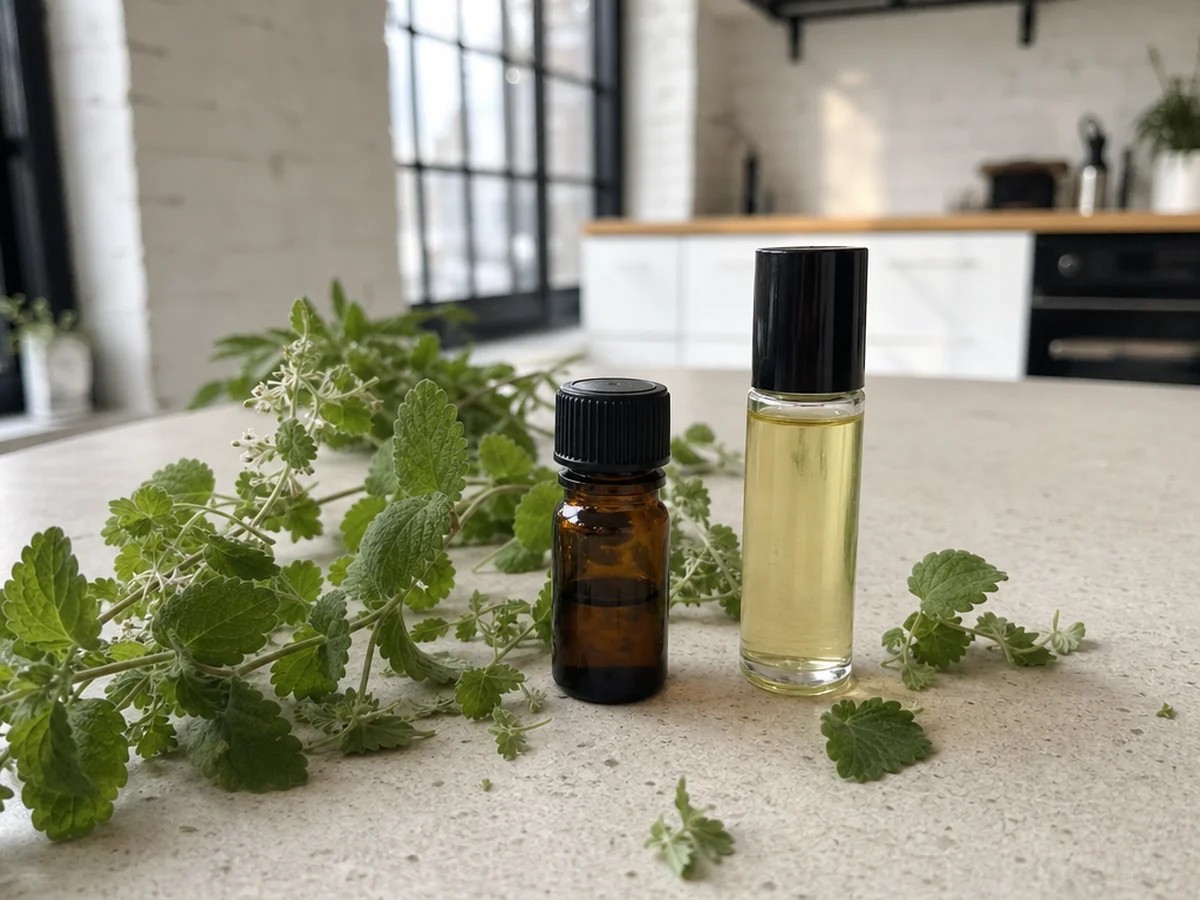
If you make small batches of leave-on products at a low strength, a stock bottle you mix once is a sound idea. Mix it yourself in a small clean bottle, label the strength and date, and make less than you think you need. Because we sell one thing, Melissa Essential Oil, neat, the stock is yours to make: carrier oils, droppers and small bottles come from a craft or supply shop. Our shop and bulk pages describe every size as the same standard poured into different containers, so the oil in a 0.5 oz bottle is the oil in a larger one.
Three habits keep pre-diluted stock honest:
- Read the percentage and the carrier on any bottle you buy. A label that says only "melissa" cannot be dosed.
- Do the sum for the finished product, not the stock. A 5% stock applied straight to skin delivers 5%.
- Ask what else is in a "melissa blend." Other oils bring their own limits, and you cannot add them up without an ingredient list.
When neat oil is the better buy
For perfume, soap, candles and room scenting, a stock bottle mostly adds carrier you do not need. A fatty carrier does not evaporate, so it adds nothing to a diffuser and may not suit one, which is a question for the diffuser maker's instructions. For perfume, the fine-fragrance ceiling is 0.60%, so you are already working with a few drops in a whole bottle, and our handmade products guide and roll-on post work through the amounts. Neat oil also lets you pick the base: if you prefer jojoba or know a carrier does not suit you, you are the only one who can choose.
Making your own stock, tidily
If you decide to make a stock, set yourself up so it is easy. Pick a small amber bottle that your stock will nearly fill, so there is little air at the top. Wash it with hot soapy water, rinse it well and let it dry completely before you start. Weigh the oil first and then the carrier, write the percentage, the carrier and the date on a label before you cap it, and keep it in the same cool, dark place as your neat oil. A label written afterwards is a label that gets forgotten.
Keeping either one fresh
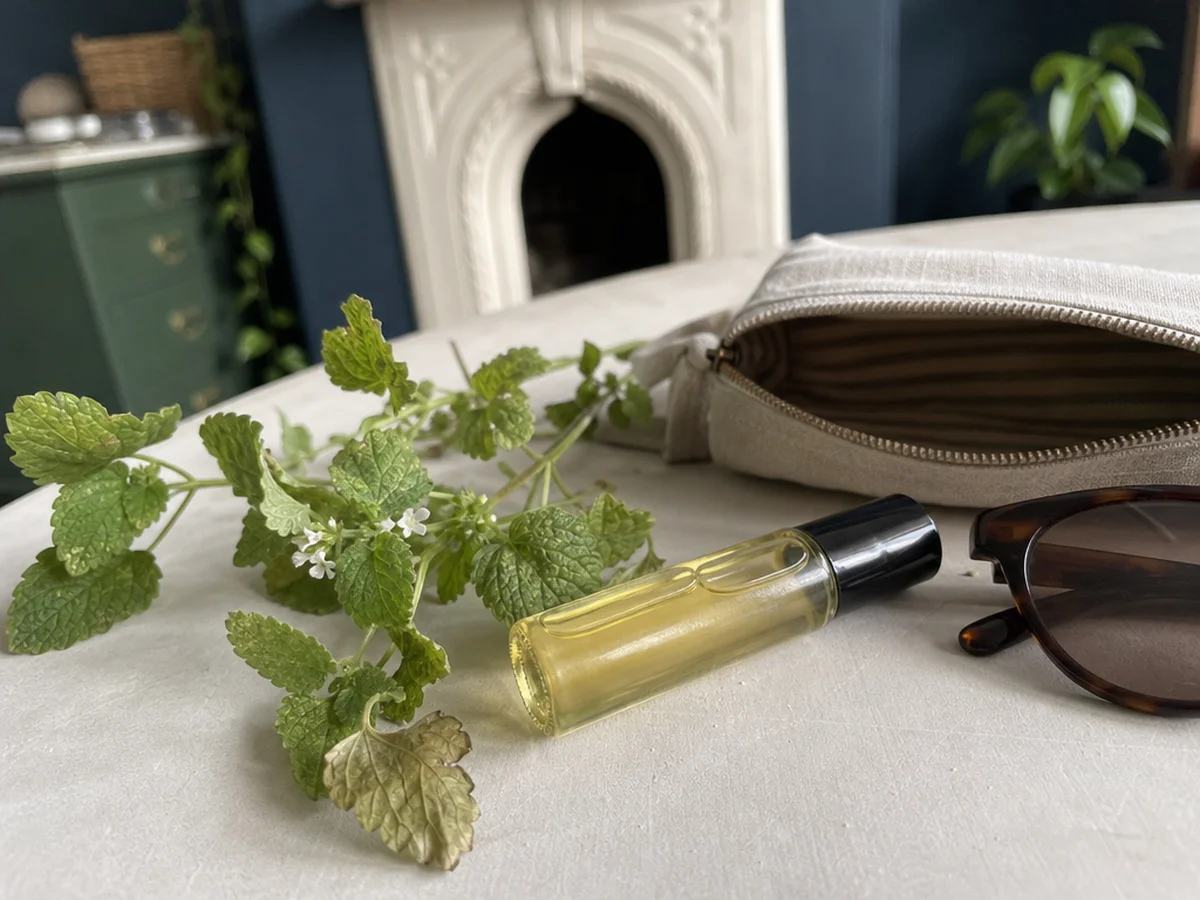
The Tisserand Institute notes that oxidation is encouraged by heat, light and moisture, that most essential oils keep well for at least a year or two, and that "the more air there is in the bottle the faster the oil will oxidize." We suggest typically 1 to 2 years in a cool, dark place, tightly capped. A half-empty bottle holds more air, so decanting a working amount into a smaller bottle is sensible, and our storage post goes further. A pre-dilution you mix yourself deserves a date on the label and a check against the carrier supplier's own guidance.
If you run a business and want a finished pre-diluted product, tell us about it through the wholesale page: we offer sample bottles, private label filling and custom formulations where we can help. Whichever format you pick, patch test first, keep melissa away from eyes, children and pets, and ask a dermatologist or pharmacist if you have eczema, a fragrance allergy or broken skin. Our skin and citral post covers the steps.
A pre-dilution makes tiny amounts easy to handle; the number you are aiming for is still the one on the standard.
Melissa Essential Oil
Melissa Essential Oil from our own shop, in sizes from 0.5 oz to bulk.
From $23.99
Shop Now →Sources & Further Reading
- IFRA. "Melissa oil (genuine Melissa officinalis L.)," Amendment 49 (2020), in IFRA Standards, 51st Amendment compendium. ifrafragrance.org
- Tisserand Institute. "Is my bottle of essential oil oxidized or no longer good to use?" tisserandinstitute.org