Melissa Harvest Time: How Cutting Date Shapes the Oil
Lemon balm is a garden plant that grows with abandon, and every cutting is a different crop. Cut it in May and in August and you get different leaf, different oil and sometimes a different amount of both. For an oil made from this plant, harvest timing is a quiet driver of character, and it helps explain why melissa oil is so varied from one source to the next.
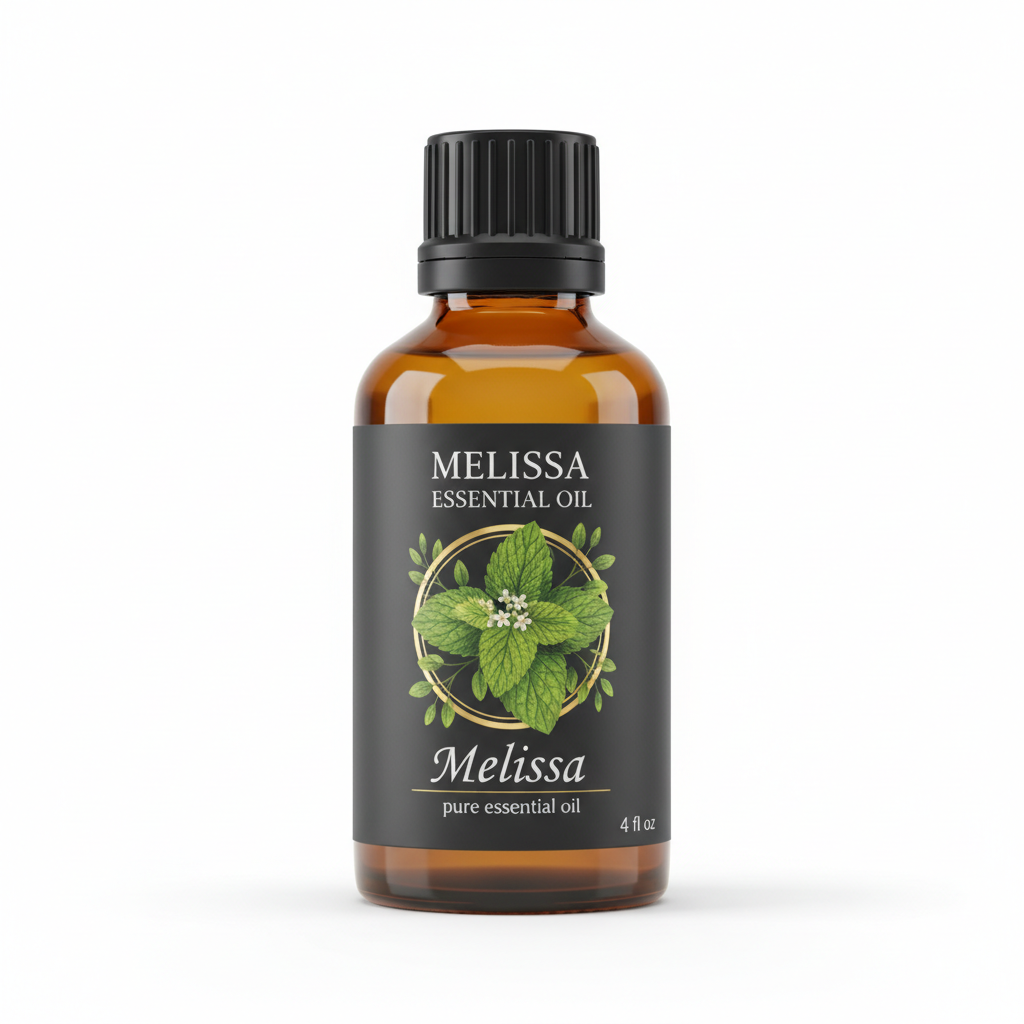
Melissa Essential Oil
Our own Melissa Essential Oil, in sizes from 0.5 oz to bulk.
From $23.99
Shop Now →What a grower does
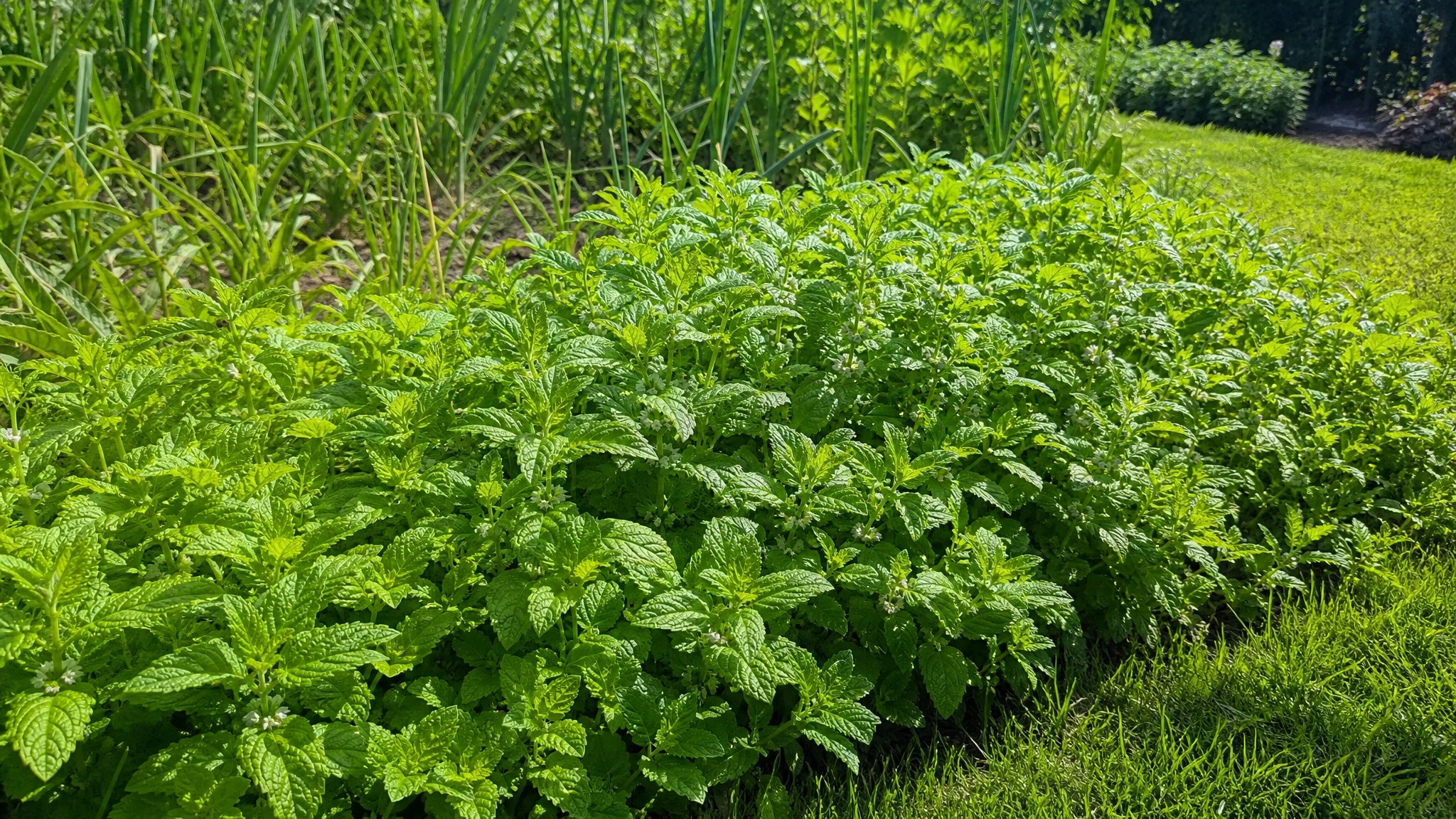
Lemon balm is a perennial that comes back year after year. University of Wisconsin horticulture guidance suggests that in the first year you cut several inches of top growth when the plants flower, and that established plants can be cut two or three times a season, with a hard cut after flowering encouraging a fresh flush. The same source notes that plants generally decline after three to four seasons and are then divided or replaced, and that dried leaves lose much of their aroma (Wisconsin Horticulture). We say more about growing in our garden guide.
Field trials on timing
An Indian field trial harvested lemon balm at 120, 140, 160 and 180 days after planting. The 160-day cut gave the most fresh herb, the most dried herb and the most oil per hectare, with 140 days second (Singh and colleagues, 2014). Because it counts days from planting, that result is tied to one site and one planting date, so it points to a window rather than a calendar date.
A broader review pulls together other work. It reports that, in one study, the highest oil yields came from August, September and October harvests and the lowest from January to March, and that the geranial share of the oil from fresh leaves ranged from about 24% to 51% across harvest months and the neral share from about 20% to 35%. It also reports that citral levels rose with greater sunshine in another trial (Petrisor and colleagues, 2022). In another trial's first and second growing years, though, the citral shares were almost identical. In plain terms, timing can move the lemon note noticeably in one setting and hardly at all in another.
Why yields are so small
Whatever the schedule, the oil content of the plant is low. The same review lists reported yields from 0.01% to 0.72% across 28 accessions, with other studies at 0.08% to 0.37%. A single Algerian wild sample gave 0.47% of dry weight, with geranial at about 45% and neral at about 32% (Abdellatif and colleagues, 2021). As arithmetic, one metric ton of herb at 0.01% gives 0.1 kg of oil and at 0.72% gives 7.2 kg. That is why we say tons of fresh herb yield only ounces of oil, and why melissa is priced differently from commodity citrus oils. Our article on what drives melissa's price and our look at how the oil is made go further.
Following the plant through the season
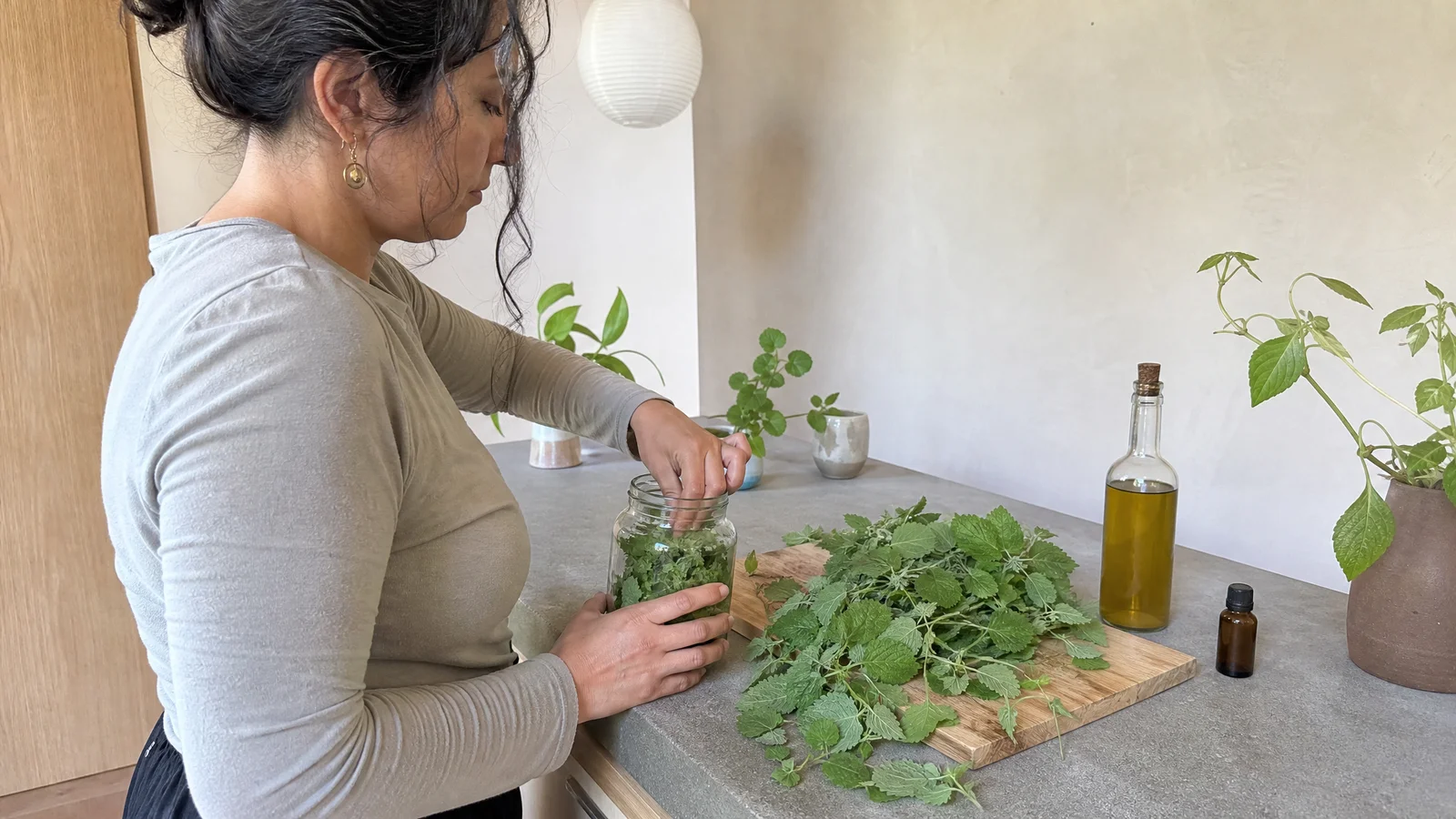
If you grow lemon balm, or have a neighbour who does, you can build your own feel for how the plant changes. Rub a leaf in spring, again in midsummer and again after a hard cut has grown back, and write down what you notice: how strong the lemon is, how green it smells, how sticky the leaf feels. Keep it casual. Your notes will not be a laboratory result, but they will teach you to pay attention to the plant, and that is what makes a person a better judge of the oil in the bottle.
It is also a good reminder of why one batch of oil can differ from the next. The plant is alive, and it responds to its conditions.
Genetics sit underneath the calendar
Harvest timing works on top of plant type. The same review reports a 28-accession study that sorted lemon balm into a citral type and a germacrene D type, and mentions studies where citral was lacking in Greek and Tunisian material. Two lots harvested on the same day can still smell different if the plants differ. So a harvest date alone cannot predict the oil, and the best summary is that variation is part of the plant's nature.
Questions to ask any supplier
If harvest timing matters for your project, ask whoever you buy from what they can document about a batch, and ask in writing so you have the answer on file. Be clear about what you need: a date, a constituent report, a batch number. Then judge the reply by what they send, not by what they say. A filed document is worth more than a good adjective, and it is a perfectly friendly thing to ask for.
Making use of the variety
If you formulate to a citral limit, variation means the citral share of your batch matters to your recipe, a point we work through in our lotion worked example. The Certificate of Analysis we publish for one batch lists density, refractive index and optical rotation. If you want GC-MS data for a batch, ask us in writing through the contact page before ordering, and the supplier documentation checklist lists other useful questions.
It is a pleasing thing to know about an oil: the same plant, cut at a different time, tells a slightly different story. That is part of why smelling a bottle for yourself is always worth the minute.
Melissa Essential Oil
Melissa Essential Oil from our own shop, in sizes from 0.5 oz to bulk.
From $23.99
Shop Now →Sources & Further Reading
- Lemon Balm, Melissa officinalis - Wisconsin Horticulture. University of Wisconsin-Madison Extension. hort.extension.wisc.edu
- Effect of time of harvesting on yield and quality of melissa officinalis L. In doon valley, India. Singh and colleagues. Indian J Pharm Sci, 2014. PMC4243263
- Melissa officinalis: Composition, Pharmacological Effects and Derived Release Systems-A Review. Petrisor G, et al. Int J Mol Sci, 2022. PMC8998931
- Minerals, Essential Oils, and Biological Properties of Melissa officinalis L. Abdellatif and colleagues. Plants (Basel), 2021. PMC8229312