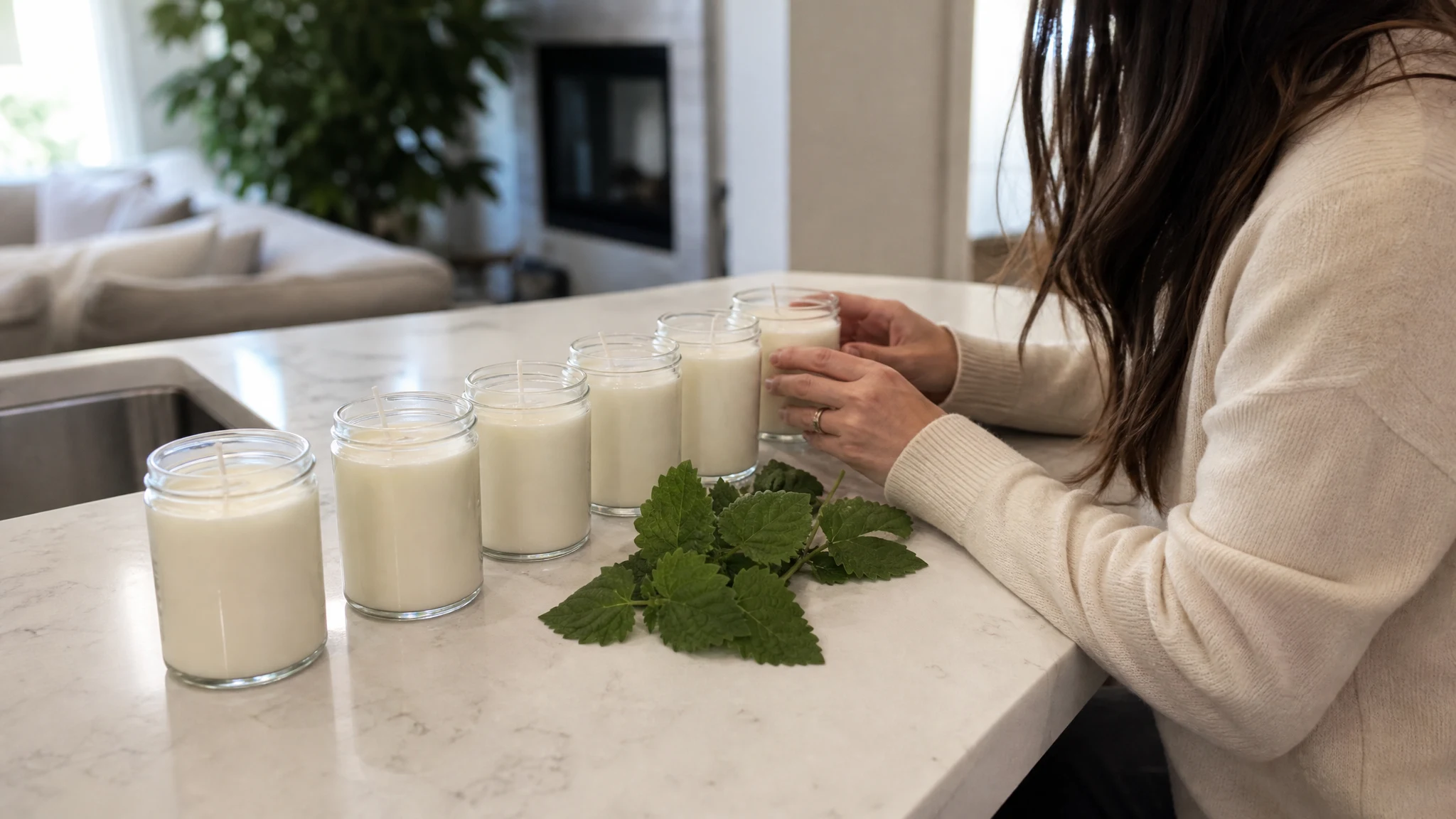
Melissa Oil in Candles: Is It Worth the Wax?
A bright, herbal lemon is an obvious fit for a quiet evening candle. Before you reach for the bottle, though, it is worth doing a little arithmetic, because wax is the place where a small, rare bottle of melissa oil disappears fastest.
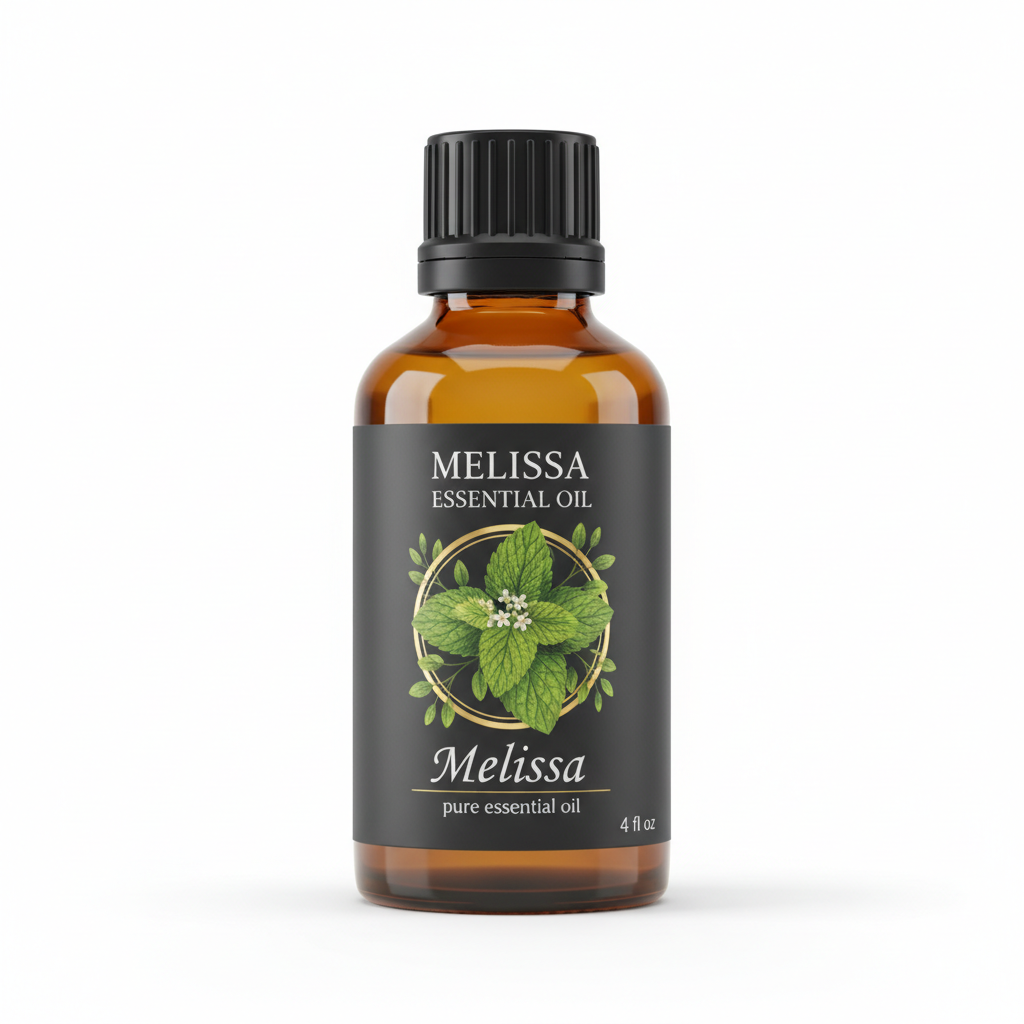
Melissa Essential Oil
Our own Melissa Essential Oil, in sizes from 0.5 oz to bulk.
From $23.99
Shop Now →The numbers behind a candle
The Certificate of Analysis we publish for one batch gives a relative density of 0.888, so a half-ounce bottle holds about 13 grams of oil. Wax makers talk in percentages of the wax by weight. One data sheet for a container soy wax says it can be used with fragrance at levels up to 10% to 12% (Technical Data Sheet - Soy Wax Container). That figure refers to fragrance oils, not essential oils, but it gives a sense of scale for how much scent a candle is designed to carry.
Here is what that looks like for a 200 gram candle, as arithmetic, not a recommendation:
| Oil load (by weight of wax) | Melissa oil in 200 g of wax | Candles from one 0.5 oz bottle |
|---|---|---|
| 1% | 2 g | about 6 |
| 3% | 6 g | about 2 |
| 6% | 12 g | about 1 |
| 10% | 20 g | less than 1 |
For comparison, the same bottle would cover something like eighty batches of body lotion at the IFRA ceiling for body products (0.15%). Candles are simply the most appetite-heavy use of the oil there is. That is not a reason to skip them, but it is a good reason to decide on purpose.
What the rules say about wax
IFRA's standard for melissa oil limits it in products that touch skin, with dermal sensitization as the concern. Candles fall into category 12, which covers products not intended for direct skin contact, and there the standard lists no restriction (IFRA Standards library). That tells you skin sensitization is not what limits a candle. It does not mean there is nothing to think about, and the FDA notes that scented candles are regulated by the Consumer Product Safety Commission rather than as cosmetics (Aromatherapy). If you plan to sell candles, check what applies to you.
What the wax maker asks for
The most useful guidance for a first candle comes from the wax itself. The data sheet above advises letting the wax cool to your pour temperature before adding fragrance and mixing well, and warns that high temperatures can discolor the wax. It says test burning should wait until the candle has sat for 48 hours after pouring, and that fragrance, color and wick all affect the result, so the right wick has to be found for each combination. It also notes that some fragrances react poorly with the wax and cause bleeding, rough surfaces or poor flame quality, and that burn pool size and depth greatly affect fragrance throw.
Reading those lines together, our takeaway is simple. Treat each new oil as a new combination, add it late and cool rather than into hot wax, and give every pour a day or two before you judge it. We would also add it as reasoning, not as a rule from the sheet: a delicate lemon top note does not need to be cooked, so the lower end of the temperature range is where we would keep it.
A sensible way to test
If you decide to go ahead, a little discipline goes a long way. Ask your wax supplier whether the wax is suited to essential oils and what load it supports, since many data sheets speak only of fragrance oil. Pour one candle with no scent in the same container, wax and wick, so any burn issue is not blamed on the oil. Then change one thing at a time, starting at a low load, and write down wax weight, oil weight, the temperature when you stirred it in, and the date. After the 48 hour rest, check the melt pool, flame and scent both lit and unlit, and ask someone who did not make it for an opinion, because makers know what is in the pot.
Burn candles attended and in a ventilated room. The American Lung Association says that adding anything, including essential oils, to the air you breathe is not recommended, and advises people with asthma or COPD to talk to a healthcare professional first (Essential Oils: More Harmful Than Helpful?). That page is about essential oils in the air in general, not candles specifically, so we pass it along as a sensible habit.
The candle you do not pour yet
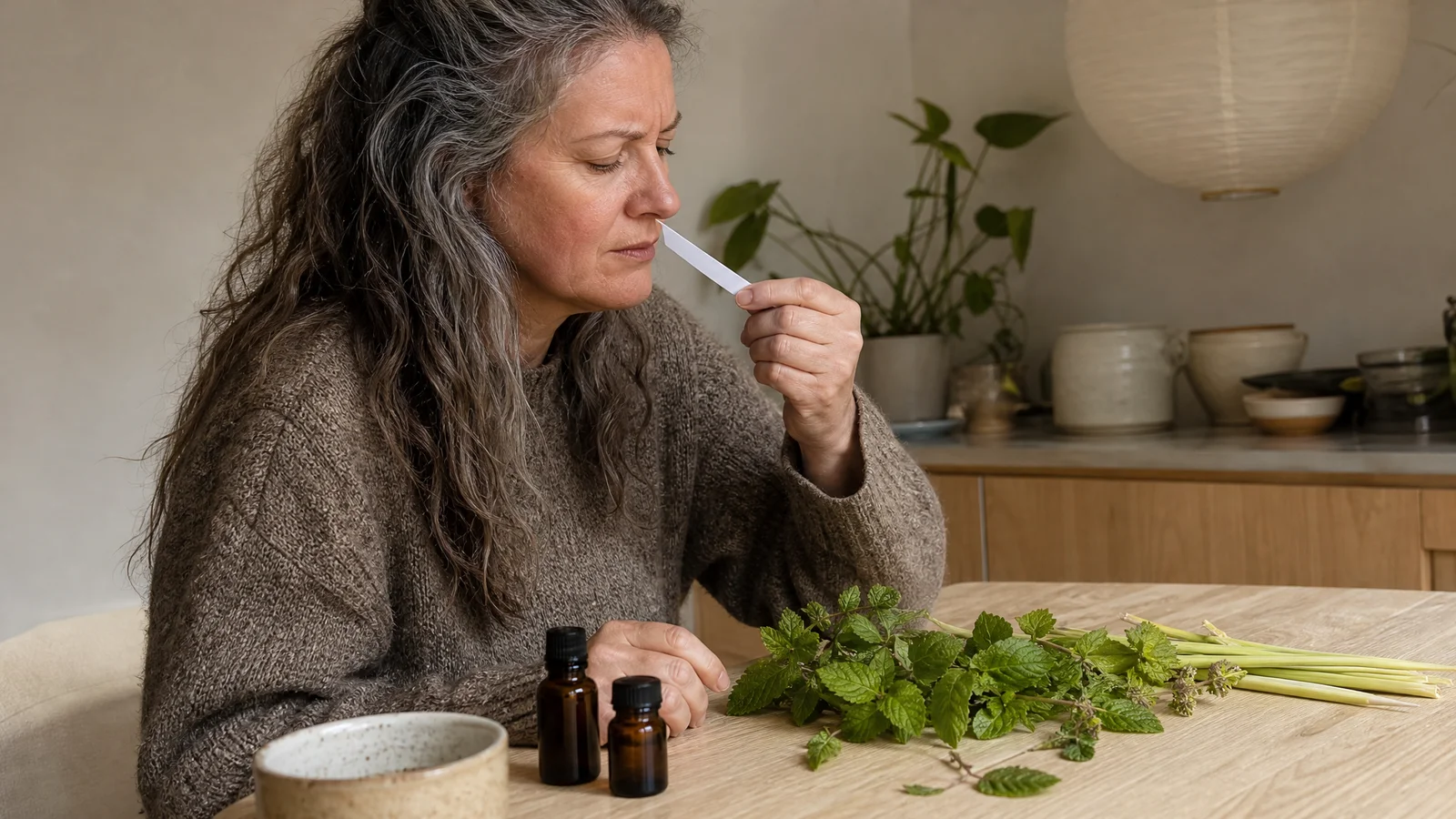
There is something to be said for imagining the candle first. Put a drop of melissa on a paper strip, set it beside an unlit candle, and picture the room. If what you imagine is a soft lemon-and-herb glow, a quiet note, a candle with a light touch may suit it. If you picture scent filling the room to the corners, you may be happier giving a delicate oil a smaller stage, such as a diffuser blend or a handmade perfume.
Where else the bottle goes
If the arithmetic gives you pause, you are not alone, and there is a cheerful alternative: use melissa where tiny amounts show. Our cost per batch guide compares soap, candle and perfume costs side by side, and the handmade products guide covers limits for each product type. Candle supplies such as wax, wicks and containers come from a craft or candle supply shop; we sell only the oil.
A melissa candle can be lovely, and with a small test pour you will know quickly whether it earns its place in the bottle.
Melissa Essential Oil
Melissa Essential Oil from our own shop, in sizes from 0.5 oz to bulk.
From $23.99
Shop Now →Sources & Further Reading
- Technical Data Sheet - Soy Wax Container, wax supplier data sheet, version 5.0
- IFRA Standards library, IFRA
- Aromatherapy, FDA
- Essential Oils: More Harmful Than Helpful?, American Lung Association