
A Calm Evening Ritual with Melissa Oil: Diffuser Recipes for Winding Down
Melissa oil is one of the rarest citrus-herb oils in aromatherapy. Distilled from fresh Melissa officinalis leaves, it carries a soft, green-lemon brightness that feels simultaneously energizing and settling. For people who want to build a more intentional melissa oil evening routine, the diffuser is the most accessible starting point. No skin preparation required, no dilution arithmetic under pressure. Just water, oil, and a quiet room.
This guide walks through everything you need: the materials, the recipes, the step-by-step process, and the small adjustments that separate a pleasant experience from a genuinely memorable one. If you are new to melissa oil, you may also want to read our broader overview: how to use melissa oil at home for a calm evening. It provides useful context before you start blending.
Why Melissa Oil for Evening Diffusion?
Most lemon-family oils in the diffuser deliver a clean, bright note. Melissa does that too, but with more depth. The scent contains aldehyde-rich compounds like citral, alongside linalool and geraniol, which give it a floral, herb-garden quality that synthetic lemon fragrances simply cannot replicate. That complexity is exactly why calming diffuser blends featuring melissa tend to smell less like a cleaning product and more like a summer evening garden.
Melissa oil is also one of the most adulterated oils on the market. A 5 mL bottle produced from pure Melissa officinalis costs significantly more than lemon, lemongrass, or citronella oils, all of which are sometimes blended in and sold as melissa. When purchasing for home use, look for suppliers who publish GC/MS (gas chromatography-mass spectrometry) test results and name the country of origin. France, Bulgaria, and Germany are the primary production regions for quality material. This sourcing diligence matters, because adulterated oils may not perform the same way aromatically, and the scent is the entire point here.
Materials You Will Need
- Ultrasonic diffuser: A standard 100 mL to 300 mL water-tank model works well for an average bedroom or living room. Larger rooms may benefit from a 500 mL capacity unit.
- Melissa essential oil (pure): GC/MS-tested, from a reputable supplier. See sourcing notes above.
- Carrier oils for the blend: Not needed for diffusion, but listed here because several recipes below include companion oils. You will want at least one or two of the following on hand: lavender (Lavandula angustifolia), cedarwood (Atlas or Virginian), Roman chamomile, frankincense (Boswellia carterii or sacra), and sweet orange.
- Filtered or distilled water: Tap water works, but mineral buildup over time can affect diffuser performance. Filtered water extends the life of your equipment.
- Small dropper or pipette: Melissa oil is expensive. Precise drop counts prevent waste.
- A clean, dry diffuser: Residue from previous oils can muddy the scent profile. A quick wipe with a cotton ball dampened with a small amount of rubbing alcohol, then a rinse and dry, takes about two minutes.
Safety Considerations Before You Begin
Diffusing essential oils is generally considered a low-risk aromatherapy method, but a few points are worth noting before you start.
- Ventilation matters. Diffuse in a room with some air circulation. Running a diffuser in a completely sealed space for hours at a time is not recommended.
- Pets and children. Cats in particular are sensitive to many essential oils. If you share your home with cats, diffuse in a room they can exit freely, or consult your veterinarian. For infants and young children, seek guidance from a qualified healthcare provider before diffusing essential oils in shared spaces.
- Session length. Most aromatherapists suggest 30 to 60 minute sessions with breaks, rather than continuous all-night diffusion. Many ultrasonic diffusers have interval settings; use them.
- Pregnancy and nursing. Consult a qualified healthcare provider before using melissa oil aromatically during pregnancy or while nursing.
- Photosensitivity note: Diffusion does not carry the same photosensitivity risks as topical application, so this is not a concern for these recipes.
The Recipes: Four Calming Diffuser Blends with Melissa Oil
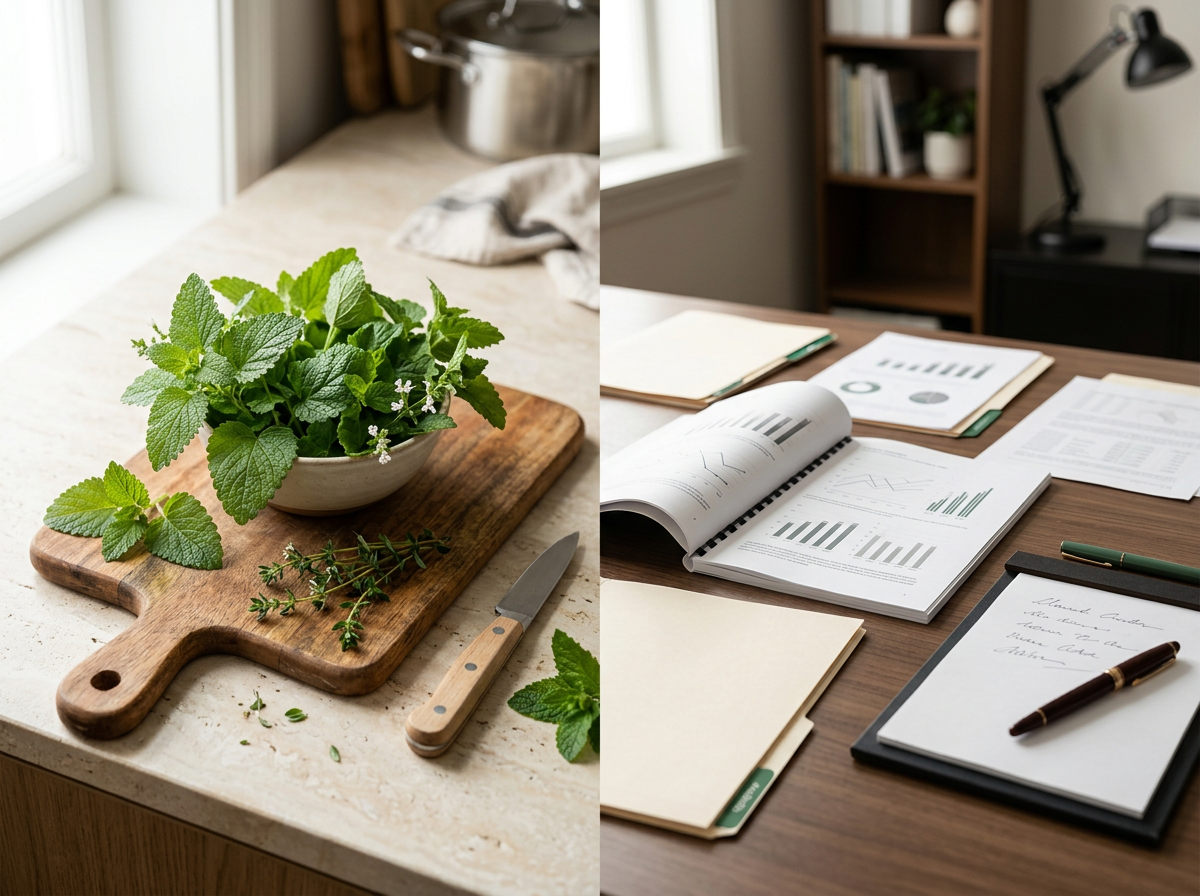
Each recipe below is scaled for a 100 mL diffuser tank. If your diffuser holds more water, scale the drops proportionally. A 200 mL tank would use double the drops, and so on. These blends are starting points. Write down what you use and adjust from there.
Recipe 1: The Classic Wind-Down (Melissa and Lavender)
This is the entry point. Lavender's familiar floral warmth supports melissa's citrus-herb brightness without overpowering it. Many people find this combination makes a room feel noticeably softer and more inviting during a bedtime wind-down.
| Oil | Drops (100 mL tank) |
|---|---|
| Melissa (Melissa officinalis) | 3 |
| Lavender (Lavandula angustifolia) | 4 |
Character: Soft, floral-citrus, green herbal undertone.
Recipe 2: Melissa and Cedarwood Grounding Blend
Cedarwood adds a woody, slightly smoky depth that grounds melissa's brightness. This combination works well if you find purely citrus-based diffuser blends feel too energizing for late evening. The contrast creates something more complex and, for many people, more conducive to slowing down.
| Oil | Drops (100 mL tank) |
|---|---|
| Melissa (Melissa officinalis) | 3 |
| Cedarwood (Atlas) | 4 |
| Frankincense (Boswellia carterii) | 2 |
Character: Earthy, resinous, with a clean citrus lift.
Recipe 3: The Garden Dusk Blend (Melissa, Roman Chamomile, and Sweet Orange)
Roman chamomile is one of the few oils that genuinely complements melissa's complexity rather than competing with it. Both are expensive and both are frequently adulterated, so quality sourcing is especially important for this recipe. Sweet orange rounds out the blend with a familiar, approachable sweetness that makes the overall effect feel less clinical.
| Oil | Drops (100 mL tank) |
|---|---|
| Melissa (Melissa officinalis) | 2 |
| Roman chamomile (Anthemis nobilis) | 2 |
| Sweet orange (Citrus sinensis) | 4 |
Character: Fruity-floral, honeyed, warm.
Recipe 4: Melissa Solo (The Purist Approach)
Sometimes a single oil deserves the full stage. Melissa's scent profile is complex enough that it does not require supporting players to hold a room's attention. This approach also makes it easier to understand what pure melissa actually smells like, which helps when you want to build more complex blends later.
| Oil | Drops (100 mL tank) |
|---|---|
| Melissa (Melissa officinalis) | 5 to 6 |
Character: Bright citrus-lemon opening, followed by a softer green-floral dry-down.
Step-by-Step: How to Run Your Evening Diffusion Session
- Choose your recipe and gather your materials. Lay out your diffuser, your chosen oils, a dropper if you have one, and your filtered water. Doing this before you sit down to unwind means you are not hunting for a bottle cap in a dark room twenty minutes later.
- Clean your diffuser if needed. If you diffused a different oil in the past 24 to 48 hours, a quick wipe helps. Empty any standing water, use a cotton ball with a small amount of rubbing alcohol on the interior surfaces, rinse with clean water, and dry. Skip this step if the diffuser was last used with melissa or a compatible oil.
- Fill the tank to the appropriate line. Most ultrasonic diffusers have a max fill line. Fill to that line, or slightly below if you prefer a more subtle scent output. More water dilutes the oil concentration in the mist.
- Add your drops in order. For multi-oil blends, add the oil you are using the least of first. This allows the drops to mix more evenly before you add the dominant oil. For melissa, add it last. Count carefully: at the price point of true melissa oil, one or two extra drops matters.
- Place the diffuser thoughtfully. Set it on a stable, elevated surface at least a foot away from any fabric, books, or electronics. The fine mist should circulate into the room freely. Corner placement limits air circulation; a central or near-central position works better.
- Set your session length. If your diffuser has an interval mode (for example, 30 seconds on, 30 seconds off), use it. This extends both the life of your blend and the life of your diffuser. A 45-minute session is a reasonable starting point for most room sizes.
- Begin your wind-down routine while the diffuser runs. The scent will reach full expression in the room within about 5 to 10 minutes. Use that time to dim lights, change into comfortable clothing, or make a cup of herbal tea. The ritual around the scent matters as much as the scent itself.
- Note your observations. Keep a small notebook nearby. Record the recipe, the drop counts, the room size, and how the scent evolved over the session. Melissa oil's top notes are bright but relatively brief; the dry-down is softer and more floral. Understanding this arc helps you adjust future sessions.
Tips for Better Results
Start with Fewer Drops
New users consistently over-drop. Melissa oil is potent. Begin with the lower end of the recommended range and increase by one drop at a time in future sessions. A scent that feels pleasant for five minutes but overwhelming at thirty is not doing its job.
Room Temperature Affects Diffusion
Warmer rooms diffuse scent faster and more intensely. If your space is particularly warm, reduce drop counts slightly. Cooler rooms may need one or two additional drops for the same effect.
Pair the Ritual with a Consistent Cue
Some people find that pairing the melissa oil diffuser session with a consistent cue, such as dimming a specific lamp or putting away a phone, helps reinforce an evening wind-down habit over time. The olfactory association builds with repetition.
Store Melissa Oil Properly
Melissa oil oxidizes relatively quickly compared to resinous oils. Store it in a cool, dark place with the cap tightly closed. Some enthusiasts store smaller bottles in the refrigerator, though bringing oil back to room temperature before use prevents condensation from entering the bottle. Properly stored melissa oil typically has a shelf life of 1 to 2 years.
Common Mistakes to Avoid
- Using low-quality or adulterated melissa oil. If the price seems comparable to lemon or lemongrass, it is almost certainly not pure melissa. The scent will be flat and the experience disappointing.
- Running the diffuser all night. More is not better here. Continuous exposure for 8 hours is not recommended and may cause sensory fatigue or minor irritation for sensitive individuals.
- Skipping the cleaning step between very different oils. Woody base notes from a previous session can muddy melissa's bright citrus character significantly.
- Blending melissa with very strong oils like eucalyptus or peppermint in the evening. These oils have a stimulating aromatic character that may counteract the settling quality you are looking for in an evening diffusion session.
- Expecting immediate results. Scent and atmosphere work subtly. Give the room a full session before evaluating the effect.
What to Expect from a Melissa Oil Evening Routine
Most people who build a consistent melissa oil evening routine report that the ritual itself becomes a meaningful signal that the day is ending. The scent is distinctive enough to create strong olfactory memory over time. People describe the atmosphere as feeling greener, softer, and more settled than a typical citrus diffusion session. Some find that melissa's complexity gives it staying power in a room that more one-dimensional citrus oils lack.
Aromatherapy research on melissa is growing, though much of the published work involves direct application rather than diffusion. Some researchers have observed that the aldehyde-rich chemical profile of the oil may be relevant to its aromatic character, though diffusion outcomes vary significantly by individual and environment. Frame your expectations around atmosphere and personal enjoyment, and adjust recipes based on what you actually notice.
Taking the Ritual Further
If diffusion becomes a consistent part of your evenings, you may find yourself wanting to expand the ritual in other directions. A melissa-infused pillow mist is a natural next step: see our recipe guide for a DIY melissa pillow mist with a soft citrus-herb character. For those who want a deeper relationship with this plant beyond the bottle, growing your own source is surprisingly approachable: our guide to growing lemon balm in the garden covers the practical steps from seed to harvest.
Melissa oil rewards patience. It rewards careful sourcing, measured drop counts, and the willingness to sit with a scent long enough to understand what it is actually doing in the room. Start with one recipe, run it consistently for a week, and pay attention. The results are quiet, and that is precisely the point.