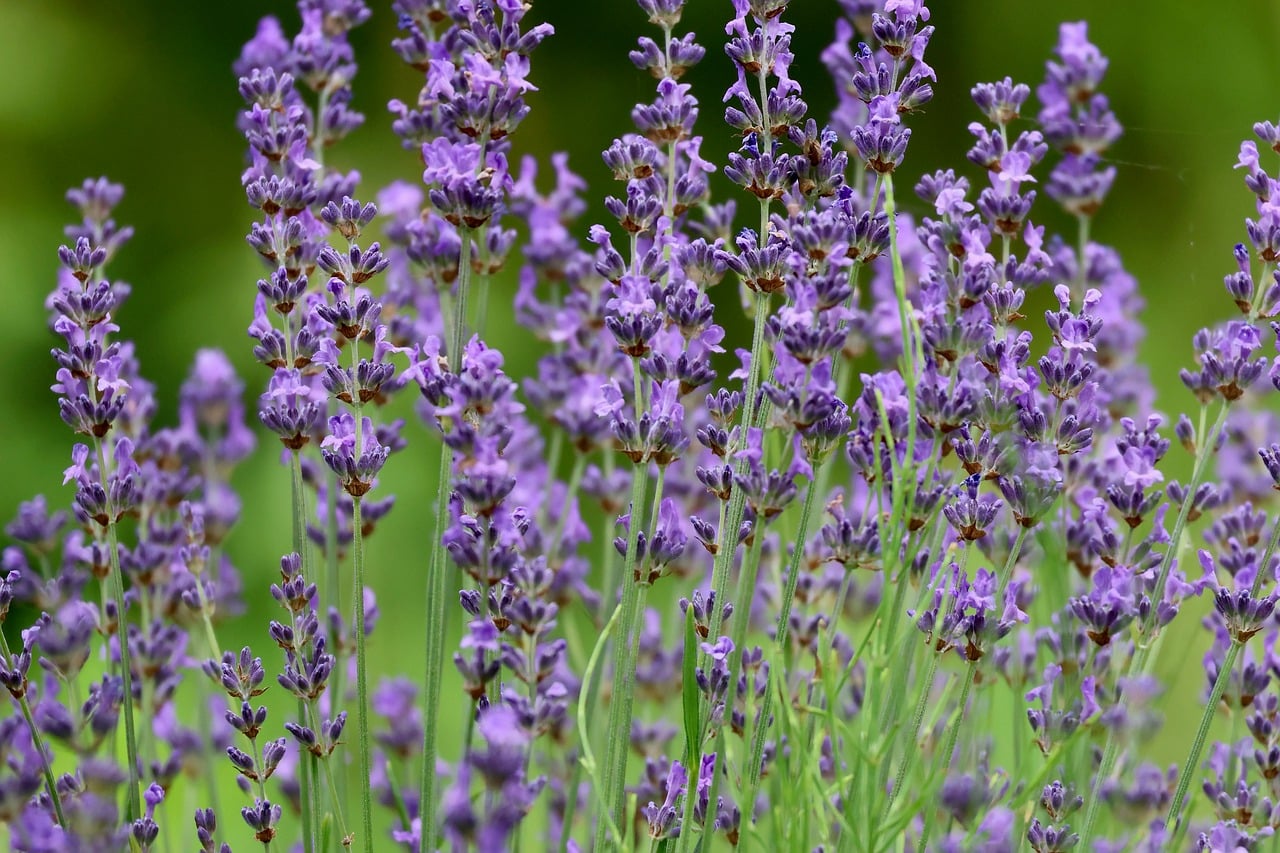
Signature Blend: Garden Dusk. Our Melissa, Lavender, and Bergamot Recipe
Some evenings ask for something more considered than a single note. The light changes, the garden cools, and you want a fragrance that matches the moment: green and soft at first, then warmly citrus, then gently herbaceous as it settles. That is the idea behind Garden Dusk, a melissa oil blend designed around the natural layering of three carefully chosen botanicals.
Melissa essential oil is the anchor here. Its lemon-verbena brightness lifts a blend immediately, yet its herbal green undertone keeps things grounded and genuinely botanical rather than simply citrus-sweet. Lavender brings the familiar floral softness that smooths transitions between notes. Bergamot, the variety chosen for this recipe, contributes a faceted citrus quality that is at once more complex and more refined than a standard lemon note. Together, the three create what perfumers sometimes call an accord: a scent that reads as one coherent thing rather than three separate ingredients.
If you are newer to working with melissa or want to understand how it pairs across a wider range of botanicals, the complete melissa pairing guide is a useful companion to this recipe.
Why These Three Oils Work Together
Melissa: The Rare Top-Heart Note
Genuine melissa essential oil sits in an unusual aromatic position. It behaves partly like a top note because of its bright citral-driven opening, yet it has enough aldehyde and sesquiterpene depth to linger longer than a typical citrus oil. That dual character is what makes it so useful as a blend anchor. It gives you the immediate lift of a citrus top note without disappearing in the first few minutes of diffusion.
The citral content in high-quality melissa is significant, but it is softened by linalool and other terpenes that round the edges. The result is a lemon note that reads as botanical rather than synthetic, closer to crushing a fresh lemon balm leaf than squeezing a fruit.
Lavender: The Connector
Lavender is chosen here specifically for its bridging function. Its linalool content overlaps with melissa's own linalool, creating chemical and aromatic continuity between the two oils. Rather than sitting alongside melissa as a separate ingredient, lavender weaves into it. The floral aspect of lavender also softens bergamot's sharper green-citrus facets, helping all three oils read as a single accord.
For this recipe, a high-altitude Lavandula angustifolia is preferred. The camphor content of lavandin or hybrid lavenders would shift the blend in a more medicinal direction, which works against the soft garden character we are aiming for.
Bergamot: The Chosen Citrus
Bergamot was selected over lemon, lime, or yuzu for one specific reason: its floral depth. Citrus bergamia is not simply a citrus oil. It carries a distinctive floral-spicy undertone from its linalyl acetate content, which gives it a complexity that plain lemon oils cannot match. In this blend, bergamot occupies the space between melissa's herbal citrus and lavender's florals, making a transition that sounds architectural on paper but simply feels natural when you smell it.
Use bergamot FCF (furocoumarin-free) if the blend will be used in any way beyond diffusion. More on that in the safety section below.
Garden Dusk: Full Recipe
Ingredients
| Oil | Drops (diffuser batch) | Milliliters (10 ml roller blend at 3%) |
|---|---|---|
| Melissa essential oil | 3 drops | 0.06 ml (approx. 1 drop) |
| Lavender essential oil (L. angustifolia) | 4 drops | 0.12 ml (approx. 2 drops) |
| Bergamot essential oil (FCF) | 3 drops | 0.12 ml (approx. 2 drops) |
Total diffuser batch: 10 drops per session (adjust up or down based on your diffuser's recommended fill)
Total 10 ml roller blend: 6 drops of essential oil total in 9.7 ml of carrier oil (approximately 3% dilution)
A note on melissa: Genuine melissa essential oil is one of the most labour-intensive oils to produce. It takes roughly 3 to 5 tonnes of fresh lemon balm leaf to yield a single kilogram of oil, which explains its cost. A little goes a long way in any blend. Three drops in a diffuser session is enough to detect its distinctive presence; more is rarely necessary and rarely better.
Step-by-Step Blending Instructions
For the Diffuser
- Fill your diffuser water reservoir to its recommended line (usually 100 ml to 200 ml depending on the model).
- Add bergamot drops first. Bergamot's lighter molecular weight helps it disperse evenly from the base up.
- Add lavender drops directly over the bergamot.
- Add melissa last. Melissa is precious; adding it last ensures none is lost to the dropper bottle or reservoir walls before you seal the lid.
- Run the diffuser for 30 to 45 minutes. Continuous diffusion beyond that point can overwhelm a small space. Intermittent diffusion with breaks is a gentler approach.
For a Pre-Made Blend Concentrate (Easier Repeat Use)
- Gather a clean, dark glass bottle of 5 ml capacity (amber or cobalt).
- Using a calibrated pipette or a steady hand, combine the oils in the ratio 3:4:3 (melissa, lavender, bergamot).
- Cap the bottle and roll it gently between your palms for 20 seconds. Do not shake vigorously as this can introduce air bubbles and accelerate oxidation.
- Label the bottle with the blend name, date of creation, and the constituent oils.
- To use: add 8 to 10 drops of the concentrate to your diffuser per session.
For a Roller Blend (Wrists and Pulse Points)
- Select a 10 ml roller bottle with a stainless steel or glass ball.
- Add your essential oil drops (6 drops total, in the 1:2:2 ratio of melissa, lavender, bergamot) directly into the bottle.
- Fill to the shoulder with a light carrier oil. Jojoba or fractionated coconut oil both work well; jojoba's long shelf life suits melissa's cost.
- Insert the roller ball and cap. Invert gently several times to combine.
- Before first use, always perform a patch test (see safety section).
Dilution Ratios and Safety Notes
Dilution Reference
- Diffusion: No dilution required. Use the drop counts above.
- Roller blends (adults): 2 to 3% dilution. That is 12 to 18 drops of essential oil per 30 ml of carrier oil, or 4 to 6 drops per 10 ml.
- Roller blends (sensitive skin or older adults): Reduce to 1%, roughly 6 drops per 30 ml of carrier.
- Children and pregnancy: Melissa, lavender, and bergamot each carry specific considerations for use around young children or during pregnancy. Consult a qualified healthcare provider before use in those circumstances.
Patch Testing
Before applying any diluted roller blend to a larger area of skin, apply a small amount to the inner forearm. Wait 24 hours. If you notice any redness, itching, or discomfort, discontinue use and consult a healthcare provider. Patch testing is non-negotiable, even with well-known oils.
Photosensitivity
Standard bergamot essential oil contains furanocoumarins, which can cause significant skin reactions in UV light. For any roller blend you plan to apply before going outdoors, use bergamot FCF specifically. The diffuser recipe carries no photosensitivity concern since the oil is not applied to skin.
Melissa Skin Sensitisation
Melissa is a high-citral oil. Citral can cause sensitisation in some individuals, particularly at higher concentrations. Keep dilution at or below 3% for skin applications and do not apply undiluted melissa directly to skin.
For more ways to work with melissa at home across different times of day, the guide on using melissa oil for a calm evening routine covers diffusing schedules, carrier options, and room-by-room ideas in detail.
Storage and Shelf Life
Stored correctly, this blend concentrate will maintain its aroma quality for 12 to 18 months. Proper storage means:
- Dark glass bottles only (amber or cobalt). Clear glass accelerates photo-oxidation.
- Keep away from direct light and heat. A drawer or closed cabinet is ideal.
- Store upright to reduce evaporation around the cap seal.
- Refrigeration is not required but can extend life in warm climates. Bring to room temperature before use.
Bergamot oxidises faster than lavender or melissa. If the blend begins to smell flat, sharp, or faintly plasticky, the bergamot fraction has likely turned. Discard and make a fresh batch. Given melissa's cost, this is a good reason to make smaller batches (5 ml concentrate at a time) rather than large volumes.
Variations on Garden Dusk
Variation 1: Dusk with Green Depth (Add Roman Chamomile)
Reduce lavender to 3 drops and add 1 drop of Roman chamomile (Anthemis nobilis). Roman chamomile brings an apple-like, slightly earthy sweetness that adds a quiet, unusual green note without overtaking the melissa. This version reads as more of a late-summer evening: warmer and slightly deeper than the original.
Variation 2: Bright Morning Version (Increase Bergamot, Reduce Lavender)
Shift the ratio to melissa 3 drops, lavender 2 drops, bergamot 5 drops. The higher bergamot proportion lifts the blend into a fresher, more energetic register. This works better as a morning diffusion: bright, lightly floral, and clearly citrus-forward. The melissa still anchors it and prevents the bergamot from reading as thin or one-dimensional.
Variation 3: Garden Dusk with a Woody Base (Add Cedarwood Atlas)
Add 2 drops of cedarwood Atlas (Cedrus atlantica) to the original 10-drop formula for a 12-drop total session. Cedarwood brings a dry, balsamic base that gives the blend staying power and a sense of warmth as it dries down. This is a particularly pleasant variation for cooler evenings when the garden-citrus top feels too light on its own. If you enjoy spring-inspired blends with herbal top notes, the melissa in spring herb blends guide explores several similar approaches using open-window diffusion.
Sourcing Notes: Why Melissa Quality Changes Everything Here
Garden Dusk is a simple blend in structure: three oils, one accord. That simplicity means there is nowhere for low-quality material to hide. Adulterated or diluted melissa is the most common quality issue in this category. Common adulterants include lemon oil, lemongrass, citronella, and synthetic citral, all of which produce a flatter, harsher lemon note without the complexity that makes genuine melissa distinctive.
When sourcing for this blend, look for melissa with a clear GC/MS report showing the expected citral fraction (geranial and neral combined, typically 40 to 70%), alongside supporting terpene fractions like caryophyllene and germacrene D. Those sesquiterpene components are part of what gives authentic melissa its longevity and its herbal warmth beneath the citrus top.
The difference in a diffuser is noticeable immediately. Genuine melissa sits in a blend. A citral-heavy adulterate sits on top of it, sharp and undifferentiated, and disappears within minutes. Spending well on melissa is, by any reasonable measure, the most important single decision in making this blend work.
Making It a Ritual
A diffuser blend becomes a ritual when it is repeated with intention. Consider preparing Garden Dusk at the same point each evening: as natural light shifts, before the room fully dims. The blend takes about two minutes to put together from the concentrate. That brevity is part of its value. It signals something to the body and mind: the day is ending, the pace is changing, the next few hours are yours.
You do not need elaborate equipment or extensive collections of oils. Three bottles, a diffuser, and a consistent moment in the evening are enough to make this blend feel genuinely yours over time.