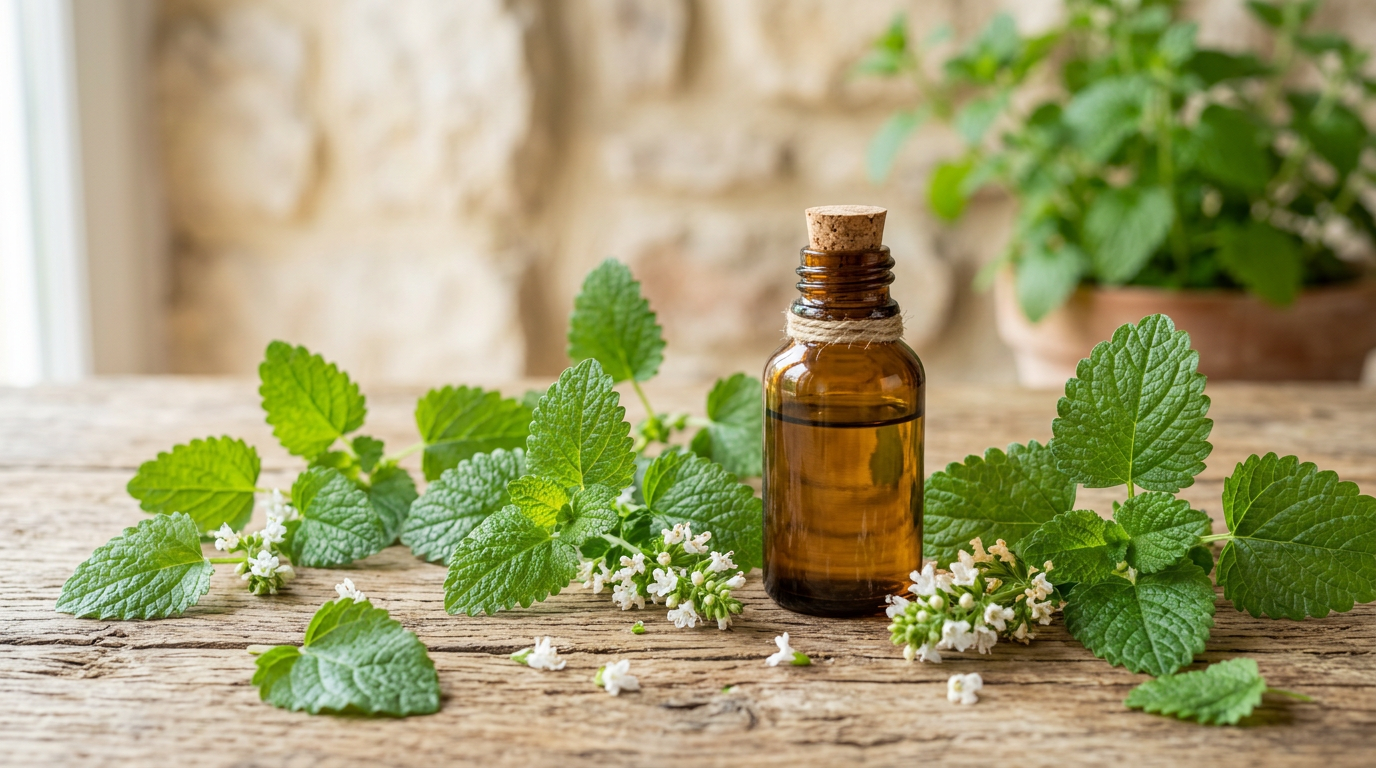
A Candle Studio's Melissa Oil Trial: Six Batches, What We Learned
A small candle studio reached out to us last winter with a question we hear often: does melissa oil in candles actually hold up once wax is involved, or does the famously delicate lemon balm scent just disappear in the pour? Melissa essential oil is prized in perfumery and skin care for its bright, honeyed lemon character, but candle makers have a rougher relationship with it. It's expensive, it's produced in tiny volumes, and it has a reputation for going quiet the moment heat touches it. We wanted an honest answer, so we partnered with the studio on a small, structured lemon balm scent trial and watched six batches unfold over several weeks.
Melissa Essential Oil
Our own Melissa Essential Oil, in sizes from 0.5 oz to bulk.
From $20.99
Shop Now →This is a write-up of what we did, what we saw, and what we'd tell another maker considering the same experiment. Nothing here is a promise about how melissa oil will behave in your specific wax, wick, or vessel combination. Candle chemistry is stubbornly local: your water hardness, your pour temperature, even your workshop's humidity that day can all shift results. Consider this a field note, not a formula.
The Problem: Why Melissa Is a Hard Oil to Work With
Before the first batch went into a pot, it's worth explaining why this trial felt necessary at all. Melissa officinalis oil is steam distilled from lemon balm leaf, and the yield is famously low: it can take a large volume of plant material to produce a single ounce of oil. That scarcity shows up in price, and it also shows up in chemistry. The oil is rich in light, volatile aldehydes (citral and citronellal among them), which is exactly what gives it that fresh, lemony brightness in the bottle. Those same molecules are also the first to evaporate or break down under sustained heat, which is precisely the environment a burning candle creates.
The studio's concern was straightforward: they had customers asking for a true lemon balm candle rather than a generic "lemon" blend, but nobody on staff had tested whether melissa oil's cold throw (the scent strength from an unlit candle) would survive into a usable hot throw (the scent thrown once the candle is burning). If you've read our guide on what blends well with melissa oil, you'll know it's often paired with heavier or more stable notes for exactly this reason. We wanted to see, in a controlled way, whether that pairing logic held up in wax specifically.
The Approach: Designing a Six-Batch Trial
We kept the design simple on purpose. Six batches let us vary one or two variables per batch while still finishing the whole trial in a reasonable window, and it gave us enough repeats to notice patterns rather than one-off flukes.
- Batch 1: Soy wax, melissa oil only, 6% fragrance load, cotton wick.
- Batch 2: Soy wax, melissa oil only, 8% fragrance load, cotton wick.
- Batch 3: Soy wax, melissa oil blended with a small percentage of lemongrass and a base note (10% total load), cotton wick.
- Batch 4: Coconut-soy blend wax, melissa oil only, 8% load, wood wick.
- Batch 5: Paraffin wax, melissa oil only, 8% load, cotton wick.
- Batch 6: Soy wax, melissa oil blended per Batch 3's ratio, but with the oil added at a lower pour temperature to test whether heat exposure during mixing was part of the scent loss.
Every batch used the same testing space: a ventilated but draft-free room, burned for one-hour and four-hour intervals, evaluated by three people independently (the studio's two candle makers and one of our writers) using simple 1 to 5 scores for cold throw, hot throw at 30 minutes, and hot throw at the end of the burn. We logged notes rather than trying to force numbers into false precision. Anecdotally, individual noses vary a lot on citrus-forward scents, so we cared more about whether the three scorers agreed on direction (stronger, weaker, unchanged) than about the exact number they landed on.
We also ran a basic melissa oil hot throw test on its own, outside of any candle, by warming a few drops on a diffuser plate at candle-burning temperature and comparing that scent profile to the same oil straight from the bottle. This gave us a baseline for how much the raw material changes under heat before wax, wick, and vessel are even part of the equation.
Observations: What Actually Happened Across the Batches
Cold Throw Was Never the Problem
Every batch, without exception, smelled strongly of lemon balm before being lit. Scorers described it as bright, green-lemon, and in a few notes, almost like fresh-cut lemon balm leaves rubbed between your fingers. This matched what we'd expect from the oil itself and confirmed the studio's melissa essential oil candle making concerns weren't about the raw material being weak. It's a genuinely potent oil in its unburned state.
Hot Throw Dropped Off, But Unevenly
This is where the batches diverged. Batch 1 (6% load, soy, cotton wick) lost most of its scent by the 30-minute mark. Scorers rated hot throw as faint or barely perceptible from more than a couple feet away. Batch 2, at 8% load, held on a little longer but still faded noticeably compared to its own cold throw, suggesting the drop wasn't purely a concentration issue.
Batch 3, the blended version with lemongrass and a base note, performed best of the soy batches. The base note appeared to give the lighter top notes something to cling to, a pattern that lines up with general candle-making wisdom that citrus and other volatile top notes often need a heavier partner to stay perceptible once heat is introduced. This mirrors what's discussed in our piece on pairing melissa oil with complementary notes, though that guide is written for skin and home use rather than candles specifically.
Batch 4 (coconut-soy blend, wood wick) was a pleasant surprise to the studio's team. The wood wick's slightly hotter, wider melt pool seemed to release more of the oil's remaining volatile compounds, and two of the three scorers rated its hot throw noticeably higher than the cotton-wick soy batches at equivalent load. We'd hedge this observation heavily: it was one wick type in one wax blend, and wood wicks introduce their own variables (burn rate, char pattern) that could be doing some of that work independent of the fragrance.
Batch 5, the paraffin version, held its hot throw better than any of the soy batches at the same 8% load. Paraffin's lower melting point and different molecular structure are commonly cited reasons why some fragrance oils, and apparently some essential oils, throw more assertively in it. None of the scorers preferred paraffin's overall candle experience for other reasons (soot and burn cleanliness among them), but for scent alone, it was the strongest single-note performer.
Batch 6, the cooler-pour version of the Batch 3 blend, did not show a meaningful difference from Batch 3 itself. If anything, one scorer noted slightly weaker cold throw, possibly because the lower temperature didn't fully incorporate the oil into the wax. This told us the pour temperature wasn't the main driver of scent loss during the trial, at least not compared to wax type and blend composition.
The Isolated Hot Throw Test Matched the Candle Results
The standalone melissa oil hot throw test (warming the oil on a diffuser plate, no wax involved) showed the same general pattern as the candle batches: strong at first exposure to heat, then a fairly quick shift toward a flatter, less citrusy profile as the warming continued. This suggests the scent change we observed in the candles wasn't purely a wax-and-wick issue. Some of it appears to be inherent to how melissa oil's more volatile components respond to sustained heat, independent of the vessel they're burning in.
Key Learnings
A few patterns held up across the trial, though we want to be clear these are observations from one small batch of testing, not a scientific study, and a different studio with different wax suppliers or wick brands might see different results.
- Cold throw is not a reliable predictor of hot throw for this oil. Every batch smelled great in the jar. That told us almost nothing about how it would perform lit.
- Blending with a base note appeared to help retention. Batch 3's pairing with a heavier note outperformed the single-note soy batches at similar loads. This lines up with general fragrance-layering guidance rather than being unique to melissa.
- Wax type mattered more than we expected. Paraffin and the coconut-soy wood-wick batch both showed stronger hot throw than plain soy at the same fragrance load, though we'd want a larger trial before treating this as settled.
- Fragrance load alone didn't fix the fade. Going from 6% to 8% helped a little, but it didn't close the gap the way a straightforward more-oil-equals-more-scent assumption would predict.
- Some scent loss seems to happen in the oil itself under heat, not just in the candle system, based on the standalone diffuser-plate comparison.
For a studio deciding whether to bring a lemon balm candle to market, our honest read is that melissa oil alone, in a straightforward soy tealight or jar candle at a modest load, is a tough sell for hot throw. Blending it as a supporting note, choosing a wax and wick that runs a bit hotter, and setting customer expectations toward a softer, ambient scent rather than a room-filling one all seem like more realistic paths based on what we saw. If your studio sources oil from multiple suppliers, it's also worth reviewing how to spot true melissa oil quality before running your own trial, since a diluted or adulterated batch could easily produce misleadingly weak (or misleadingly strong) results that have nothing to do with wax chemistry.
What We'd Test Next
Six batches answered our first-round questions but opened a few more. We'd like to see a trial that isolates fragrance load more precisely (10%, 12%, and higher, where safe for the wax type) to find where the ceiling actually is. We'd also want to test whether stabilizing the oil, either through a slower cure time before burning or a different blending sequence, changes anything about how quickly the citrus top notes fade. And we're curious whether a straight lemongrass or litsea cubeba comparison batch, run alongside melissa under identical conditions, would confirm that this fade pattern is specific to melissa's chemistry rather than common to citrus-forward oils generally.
If you're planning your own trial, keep records as detailed as the ones we kept here, note humidity and ambient temperature on testing days, and resist the urge to trust a single sniff test. Scent perception drifts over the course of a session, and what smells strong at minute five can genuinely seem different by minute forty. Anyone working with melissa oil for candle or home fragrance projects should also review basic handling guidance, including the dilution and patch-test information in our melissa oil safety basics guide, since neat essential oil handled during blending and pouring is not the same as a finished, cured candle.
This trial was about wax, wick, and nose, and the results say more about candle chemistry than about the oil's broader reputation. A studio weighing melissa oil against more forgiving citrus options should treat scent-throw performance as one input among several, alongside cost, supply reliability, and what their customers are actually asking for.